Flower Necklaces for Women: A Beginner's Guide to Floral Jewelry
Discover how to choose, style, and care for flower necklaces for women. Learn about metal grades, enamel types, and chain lengths in our beginner guide.

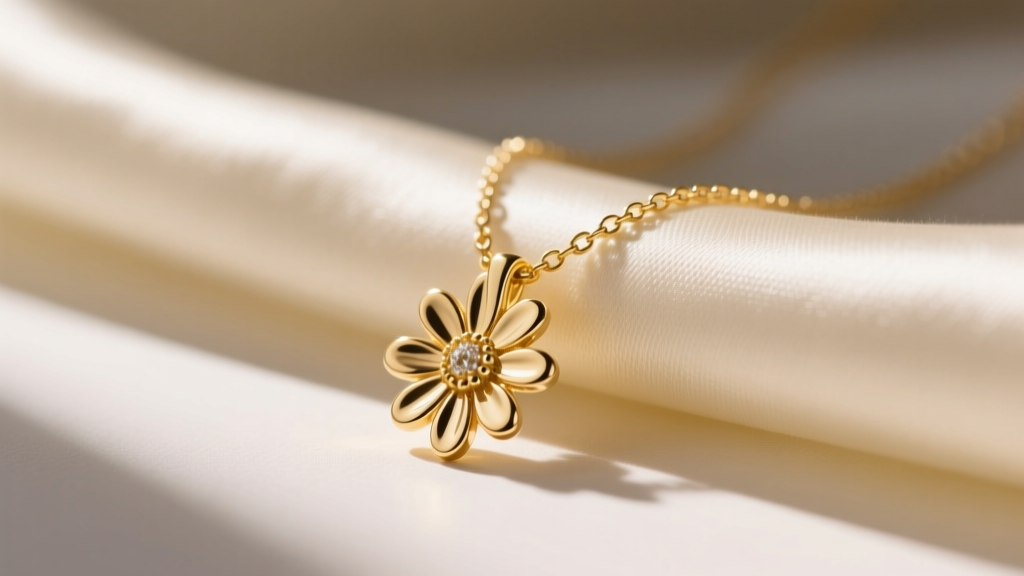
Why Floral Necklaces Remain a Jewelry Box Staple
Floral motifs have dominated jewelry design since the Victorian era, symbolizing everything from romance to resilience. For beginners building a curated jewelry collection, flower necklaces for women offer an unparalleled blend of versatility and femininity. Unlike highly specific novelty pendants, botanical designs bridge the gap between everyday minimalism and statement elegance. Whether you are drawn to the geometric symmetry of an Art Deco lotus or the organic asymmetry of a wild rose, understanding the construction, materials, and styling mechanics of floral jewelry is essential for making smart, lasting investments.
Decoding the Materials: What Your Flower Necklace is Actually Made Of
The longevity of a floral pendant depends entirely on its material composition. Beginners often fall into the trap of buying 'gold-toned' or 'silver-colored' pieces without understanding the underlying metallurgy. Here is what you need to look for:
Base Metals and Plating Standards
- 925 Sterling Silver: The gold standard for affordable luxury. Stamped '.925', this alloy contains 92.5% pure silver and 7.5% copper for structural integrity. It is highly recommended for intricate floral metalwork.
- 14k Gold Vermeil: Not to be confused with standard gold plating. According to industry standards, vermeil requires a sterling silver base coated with a minimum of 2.5 microns of 10k, 14k, or 18k gold. This thickness prevents the underlying silver from showing through the petals and leaves.
- Gold-Filled: Composed of a brass core with a thick outer layer of gold (at least 5% of the total weight). Gold-filled floral chains are incredibly durable and resist tarnishing far better than vermeil.
Enamel: Vitreous vs. Cold
Many colorful flower necklaces utilize enamel to mimic vibrant petals. Vitreous enamel is essentially glass fused to metal at extreme temperatures (around 1400°F). It yields a brilliant, scratch-resistant, and permanent gloss. Conversely, cold enamel (epoxy resin) is cured at room temperature. While cheaper, cold enamel will eventually yellow, chip, and degrade when exposed to UV light and perfumes. Always check the product specifications for 'vitreous' or 'kiln-fired' enamel if you want a lifelong piece.
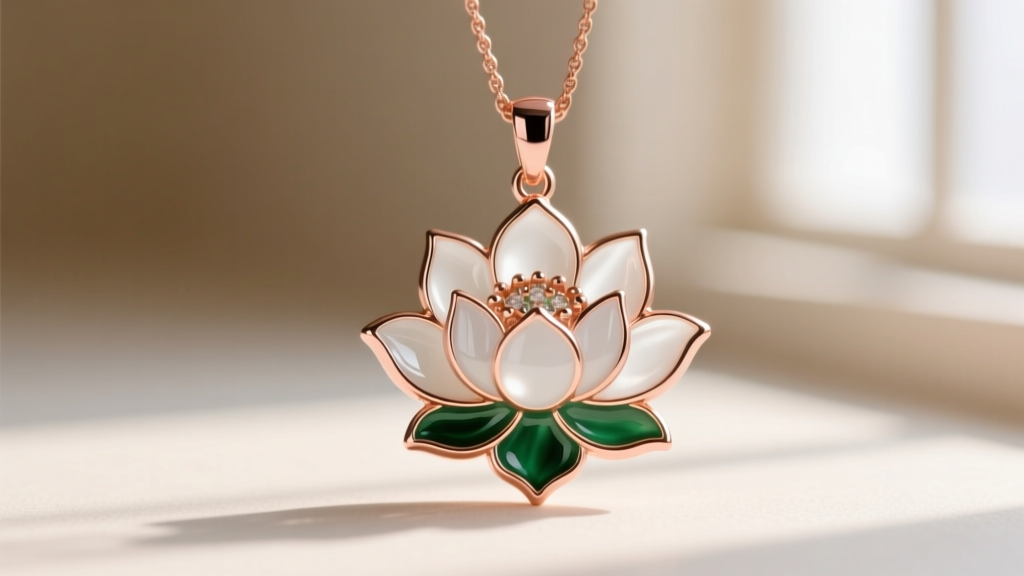
The Anatomy of Floral Pendant Styles
Flower necklaces for women are not a monolith. The design approach drastically changes how the piece interacts with your wardrobe. Below is a framework to help you identify which floral style aligns with your personal aesthetic.
| Design Style | Visual Characteristics | Best Wardrobe Pairing | Durability Note |
|---|---|---|---|
| Botanical Realism | Highly detailed, textured petals, asymmetrical leaves, matte finishes. | Bohemian dresses, linen blouses, casual denim. | High; textured metal hides micro-scratches well. |
| Geometric / Art Deco | Symmetrical, sharp edges, stylized lotus or lily motifs, often pave-set. | Tailored blazers, evening wear, sharp necklines. | Moderate; pave stones require prong maintenance. |
| Silhouette / Cutout | Negative space designs, simple outlines of daisies or sunflowers. | Minimalist basics, turtlenecks, layered setups. | Very High; solid metal with no delicate protrusions. |
| Gemstone Cluster | Petals formed by clustered pearls, opals, or mother-of-pearl inlays. | Bridal wear, silk camisoles, romantic aesthetics. | Low to Moderate; organic gems require strict moisture avoidance. |
Chain Lengths and Neckline Pairings for Floral Pendants
A common beginner mistake is pairing the wrong chain length with a specific neckline, causing the floral pendant to clash with the garment's hem or get lost in fabric folds. Use this actionable guide to match your chain to your outfit:
The 16-Inch Choker Length
A 16-inch chain places a small floral pendant (under 10mm) directly in the hollow of the collarbone. This is ideal for V-necklines and scoop necks, as the pendant echoes the downward angle of the fabric. Avoid this length with high crew necks, as the flower will compete with the collar's seam.
The 18-Inch Princess Length
The most versatile length in jewelry. An 18-inch chain allows a medium-sized botanical pendant (12mm - 20mm) to rest just below the collarbone. This perfectly complements button-down shirts (resting elegantly over the placket) and square necklines. If your floral pendant features a heavy gemstone cluster (over 5 grams), opt for a 1.2mm box chain at this length to prevent the chain from snapping under the pendant's kinetic swing.
The 20 to 24-Inch Matinee Length
Reserved for large, statement floral bibs or oversized enamel blossoms. This length is strictly for turtlenecks, high boat necks, or wearing over lightweight knit sweaters. The pendant should rest on the sternum, acting as a focal point that breaks up large expanses of solid-colored fabric.
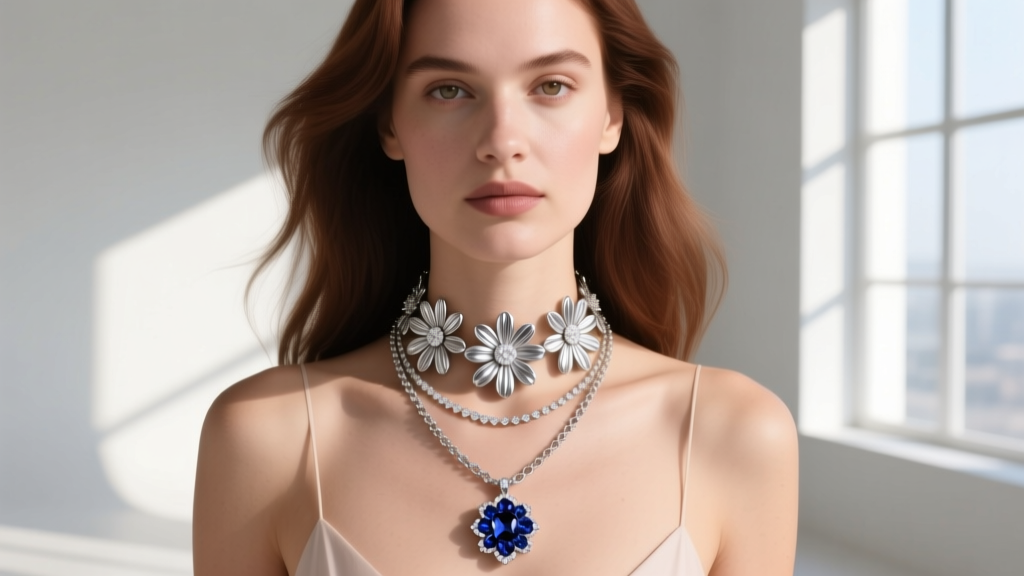
Layering Florals: The Rule of Scale and Motif
Layering flower necklaces for women requires a strategic approach to scale. The most common error is layering two pendants of the exact same size, which creates visual clutter rather than a curated stack.
Expert Layering Formula: Combine a 14-inch delicate chain with a 4mm micro-daisy, an 18-inch chain with a 12mm primary floral pendant, and a 22-inch chain featuring a simple, non-floral geometric anchor (like a small gold disc or bar). This creates depth, prevents the chains from tangling, and ensures the floral motif remains the star of the stack.
Furthermore, avoid mixing conflicting botanical species in a single stack. Pairing a highly detailed rose with a minimalist geometric daisy creates a disjointed look. Stick to a cohesive theme—either all wildflowers, all tropical blooms, or all abstract geometric florals.
Care and Maintenance: Preventing Tarnish and Enamel Cracking
Floral jewelry often features deep crevices between petals and intricate milgrain detailing that trap oils, lotions, and environmental pollutants. According to the Gemological Institute of America (GIA), proper maintenance is critical for preserving both the metal and any organic inlays.
- Cleaning Crevices: Do not use harsh ultrasonic cleaners on floral pendants with gemstone clusters or enamel, as the high-frequency vibrations can shatter glass enamel or loosen delicate prongs. Instead, use a soft-bristled baby toothbrush dipped in warm water and a drop of mild, phosphate-free dish soap to gently agitate dirt from between the metal petals.
- Protecting Organic Inlays: If your flower necklace features Mother of Pearl or natural opals, never expose it to perfumes, hairsprays, or acidic skin pH. The GIA notes that organic gems are highly porous and can lose their lustrous nacre or 'craze' (develop micro-cracks) when dehydrated or exposed to harsh chemicals.
- Storage Mechanics: Always store floral pendants flat. Hanging a heavy, asymmetrical floral pendant by its chain for months can cause permanent stress and warping to the delicate jump ring connecting the flower to the chain.
Where to Invest: Pricing Tiers and What to Expect
When shopping for flower necklaces for women, price is a strong indicator of material integrity and manufacturing ethics. Here is a realistic breakdown of what your budget should secure:
- $30 - $80 (Entry Level): Expect 925 sterling silver with simple silhouette cutouts or cold enamel. Chains will likely be lightweight (0.7mm) cable chains with spring-ring clasps. Perfect for trendy, seasonal wear.
- $80 - $250 (Mid-Tier / Everyday Luxury): This tier unlocks 14k gold vermeil, vitreous enamel work, and genuine gemstone accents (like freshwater pearl centers). Chains should be sturdy (1.0mm+) and feature secure lobster claw clasps.
- $250 - $800+ (Heirloom / Fine Jewelry): Solid 14k or 18k gold, hand-engraved botanical realism, and precision-set diamonds or high-grade sapphires. These pieces are designed to be passed down and will not degrade with daily wear.
By understanding the metallurgy, design anatomy, and styling mechanics behind floral jewelry, you can confidently select pieces that elevate your wardrobe and stand the test of time. A well-chosen flower necklace is never just an accessory; it is a wearable piece of art that celebrates the enduring beauty of the natural world.


