Flat Chain Gold Necklace: Solid vs Plated Material Guide
Compare solid, filled, and plated options for your flat chain gold necklace. Learn which material grades resist tarnish and scratching best.

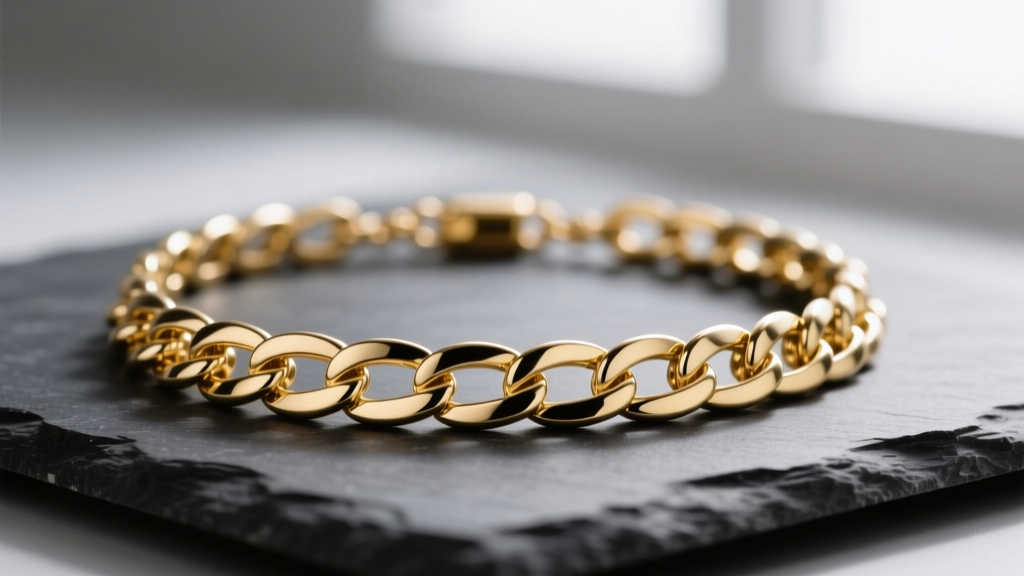
Flat chain gold necklaces—encompassing iconic styles like the Cuban link, herringbone, figaro, and flat curb—offer a striking, reflective aesthetic that traditional round chains simply cannot match. The broad, planar surfaces of these links catch the light beautifully, creating a liquid-metal effect that has made them a staple in both minimalist and statement jewelry wardrobes. However, this very geometry introduces unique metallurgical challenges. When shopping for a flat chain gold necklace, understanding how different gold applications interact with the chain's expansive surface area is critical to avoiding premature wear, tarnishing, and structural failure.
The Anatomy of Flat Chain Friction and Wear
Unlike cable or rope chains, where wear is distributed across curved, low-friction nodes, flat chains feature broad, planar surfaces. When a flat curb link rubs against the skin, collarbones, or clothing, the entire face of the link acts as a friction pad. This means that any surface-level gold treatment—such as flash plating or thin vermeil—is subjected to significantly more abrasive force than it would be on a rounded chain. Furthermore, the edges of flat links, particularly in styles like the Figaro or Cuban, are prone to micro-impacts that can chip or wear away surface coatings, exposing the base metal underneath. Therefore, the material composition of a flat chain gold necklace dictates not just its color, but its fundamental lifespan.
Solid Gold: The Benchmark for Flat Chain Longevity
For flat chains, solid gold is the only material that guarantees the broad faces will not eventually rub through to a contrasting base metal. However, not all solid gold is created equal. The karat weight directly impacts the alloy's hardness, which is a crucial factor for flat links that are prone to surface scratching.
14K vs. 18K: Hardness and Scratch Resistance
According to the Gemological Institute of America (GIA), pure 24K gold is far too soft for jewelry. It is alloyed with metals like copper, silver, and zinc to increase durability. An 18K gold flat chain contains 75% pure gold, yielding a rich, deep yellow hue but a relatively low Vickers hardness (approximately 105-115 HV). While beautiful, an 18K flat herringbone or curb chain will accumulate micro-scratches on its broad faces relatively quickly from daily wear.
Conversely, a 14K gold flat chain (58.5% pure gold) boasts a higher Vickers hardness (around 130-140 HV). The increased alloy content makes 14K significantly more resistant to the surface abrasion that plagues flat chains. For styles like the flat Cuban link, where the links interlock tightly and grind against one another during movement, 14K solid gold is the superior metallurgical choice for maintaining a pristine, reflective surface over decades of wear.
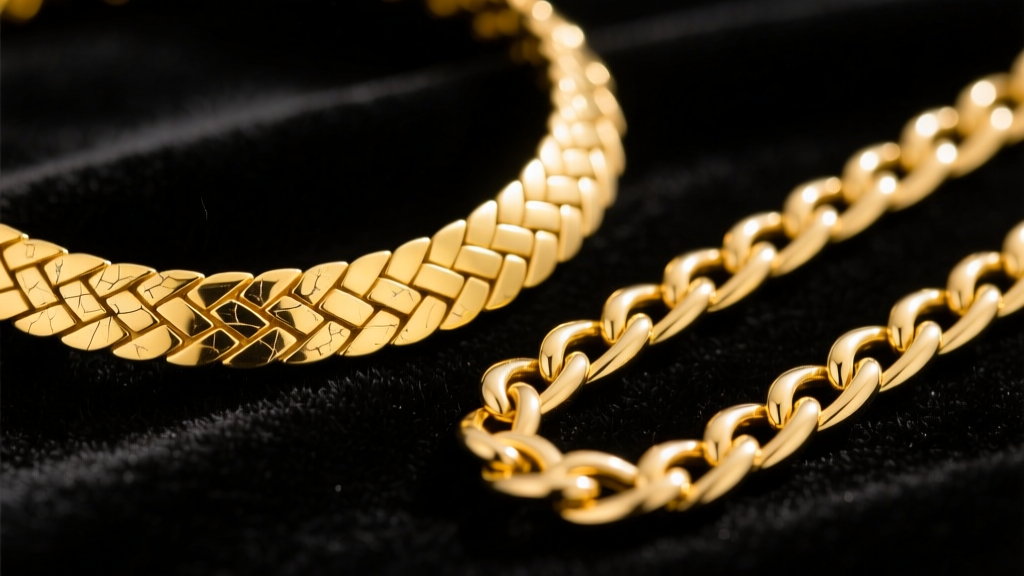
Mid-Tier Alternatives: Gold Filled vs. Gold Vermeil
If solid gold exceeds your budget, the mid-tier market offers two primary alternatives. Their performance on a flat chain gold necklace varies drastically due to how the gold is bonded to the core metal.
14K Gold Filled (1/20 GF)
Gold filled material is created by mechanically bonding a thick layer of solid gold to a brass or copper core using heat and pressure. The Federal Trade Commission (FTC) strictly regulates this term, requiring the gold layer to constitute at least 5% of the total weight of the item. On a flat chain, gold filled is an excellent compromise. The gold layer is typically 50 to 100 times thicker than standard plating, meaning the broad faces of the links can withstand years of friction before the base metal is exposed. A 14K gold filled flat figaro chain will closely mimic the wear characteristics of solid gold for a fraction of the price.
Gold Vermeil
Vermeil consists of a sterling silver base plated with at least 2.5 microns of gold. While the sterling silver core is a premium base metal, the 2.5-micron gold layer is still relatively thin. On a flat chain necklace, the high-friction planar surfaces can wear through this 2.5-micron layer in a matter of months if worn daily. Vermeil is best reserved for flat chains worn only occasionally, such as a delicate flat herringbone layered over evening wear.
Material Comparison Data Matrix
To contextualize the engineering and economic differences, below is a comparative breakdown based on a standard 18-inch, 4mm flat curb chain profile.
| Material Grade | Gold Layer Thickness | Base Metal Core | Friction & Scratch Resistance | Avg. Market Price (2026) |
|---|---|---|---|---|
| Solid 14K Gold | Solid throughout | None (Alloyed) | Excellent (High HV hardness) | $450 - $650 |
| Solid 18K Gold | Solid throughout | None (Alloyed) | Good (Prone to micro-scratches) | $700 - $950 |
| 14K Gold Filled | ~15 to 25 microns | Jeweler's Brass | Very Good (Mechanical bond) | $90 - $140 |
| Gold Vermeil | 2.5 microns minimum | Sterling Silver | Fair (Wears on flat faces) | $75 - $120 |
| Flash Gold Plated | < 0.5 microns | Brass / Steel | Poor (Rapid friction loss) | $20 - $45 |
Specific Failure Modes in Flat Chain Designs
When evaluating materials, it is vital to understand how specific flat chain weaves fail when constructed from inferior materials.
The Herringbone Kink and Plating Fracture
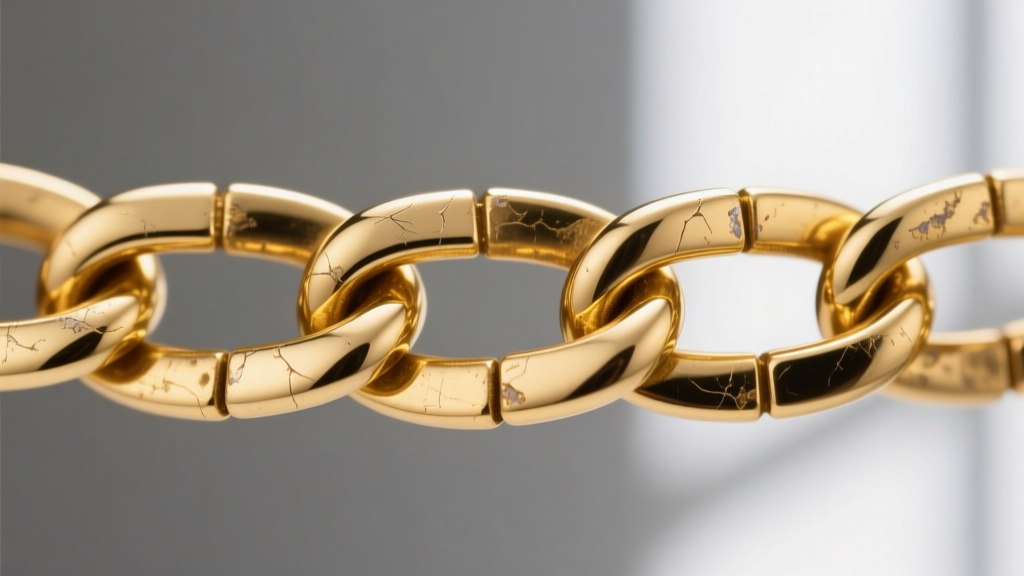
The herringbone is a beloved flat chain style known for its fluid, fabric-like drape. However, it is structurally fragile and highly susceptible to kinking. If a solid gold herringbone kinks, a skilled jeweler can sometimes carefully roll it flat to repair the bend. If a gold-plated or vermeil herringbone kinks, the bending force instantly fractures the microscopic gold layer, exposing the dark base metal beneath. The plating cannot be stretched or compressed without cracking, making kinks in plated flat chains permanently visible.
Edge Wear on Interlocking Links
In flat curb and Cuban chains, the edges of the links are often diamond-cut or polished to maximize light return. On plated chains, these sharp, polished edges are the first points of contact when the chain folds upon itself. The gold plating rapidly wears off these high points, resulting in a two-tone effect where the silver or brass core shows through the edges while the flat centers remain gold. This is a hallmark sign of a degraded flat chain gold necklace and cannot be polished out without stripping the rest of the plating.
The 2026 Buyer's Decision Framework
Choosing the right material for your flat chain gold necklace requires aligning your budget with your wearing habits. Use this practical framework to make your purchase:
- The Daily Driver (Worn 5+ days a week): Invest exclusively in Solid 14K Gold or high-quality 1/20 14K Gold Filled. The constant friction against the skin and clothing will destroy vermeil or flash plating on broad flat surfaces within six months.
- The Statement Piece (Worn for events/evenings): Gold Vermeil is highly acceptable here. A wide, 10mm flat Cuban link in vermeil provides the heavy, luxurious look of solid gold without the $3,000+ price tag, provided it is stored flat and kept away from moisture when not in use.
- The Layering Base (Worn under pendants): Opt for a Solid 14K or 18K flat cable or figaro chain. The pendant bail will constantly scrape against the flat links of the chain; only solid gold will resist the localized abrasive wear caused by the pendant's movement.
Ultimately, the expansive beauty of a flat chain gold necklace demands a material that can withstand the unique friction its geometry creates. By prioritizing metallurgical integrity over superficial flash, you ensure your chain remains a brilliant, enduring staple in your collection.


