Anatomy of an Ankh Symbol Necklace: Metals, Casts & Bails
Discover the technical anatomy of an ankh symbol necklace. We analyze metal grades, bail construction, casting methods, and chain pairings for lasting wear.
The Engineering of the Ankh: Beyond the Symbolism
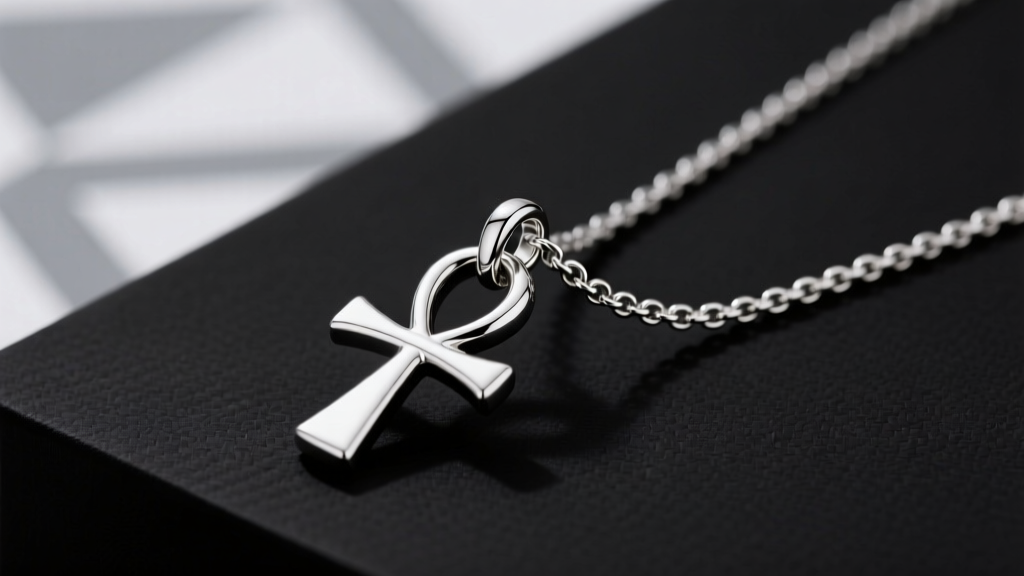
The ankh, often referred to as the crux ansata or 'key of life,' is one of the most recognizable motifs in ancient Egyptian iconography. While its historical significance as a symbol of eternal life and divine authority is well-documented by institutions like the Metropolitan Museum of Art, translating this ancient shape into a durable, modern ankh symbol necklace presents unique structural challenges for jewelers. The distinct anatomy of the ankh—featuring a teardrop or oval loop (the tau) perched atop a crossbar and a vertical shaft—creates specific stress points that demand precise metallurgical and engineering decisions.
As we navigate the jewelry landscape in 2026, consumers and collectors are moving past superficial aesthetics, demanding transparency regarding alloy compositions, casting integrity, and wear mechanics. This deep dive dissects the technical specifications that separate a fragile, mass-produced trinket from a heirloom-grade ankh pendant.
Metallurgy & Material Grades: Hardness vs. Malleability
The longevity of an ankh pendant is intrinsically tied to the Vickers hardness (HV) and tensile strength of the chosen alloy. Because the crossbar of the ankh is relatively narrow and prone to bending if snagged, the metal must possess adequate rigidity without becoming so brittle that it snaps under impact.
Silver Alloys: Sterling vs. Argentium
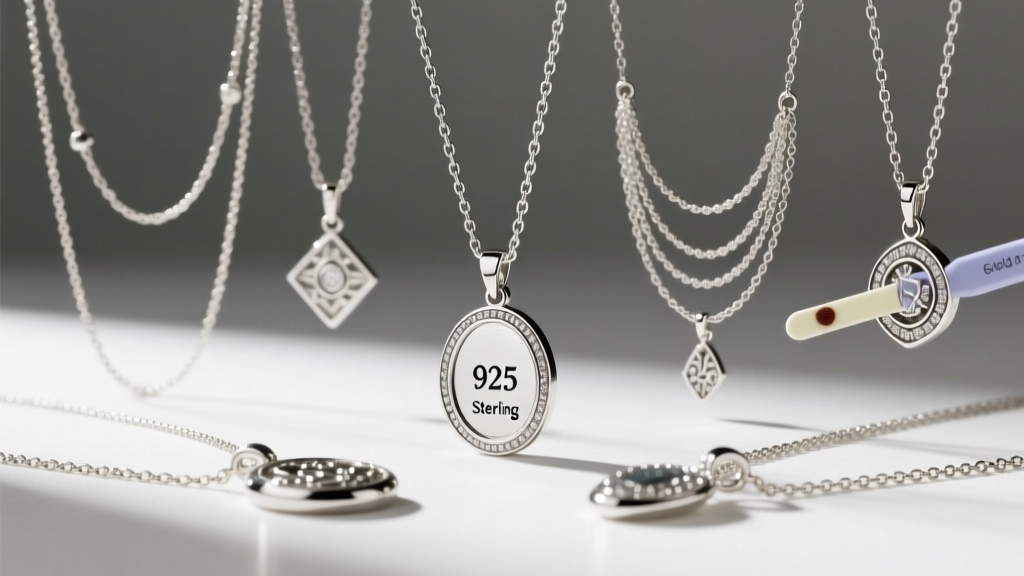
Standard 925 Sterling Silver (92.5% silver, 7.5% copper) remains the industry baseline, offering a Vickers hardness of roughly 60-70 HV in its annealed state. However, copper introduces a major vulnerability: oxidation and firescale during the soldering process, as well as long-term tarnishing. For a superior ankh symbol necklace, experts recommend Argentium Silver (typically 935 or 960 purity). By replacing a portion of the copper with germanium, Argentium achieves a hardness of up to 110 HV after heat treatment and forms a transparent germanium dioxide layer that drastically inhibits tarnish. According to technical resources on Ganoksin, Argentium's fusion-welding capabilities also allow for cleaner, stronger bail attachments without the messy flux residues associated with traditional soldering.
Gold Carats and Platinum Density
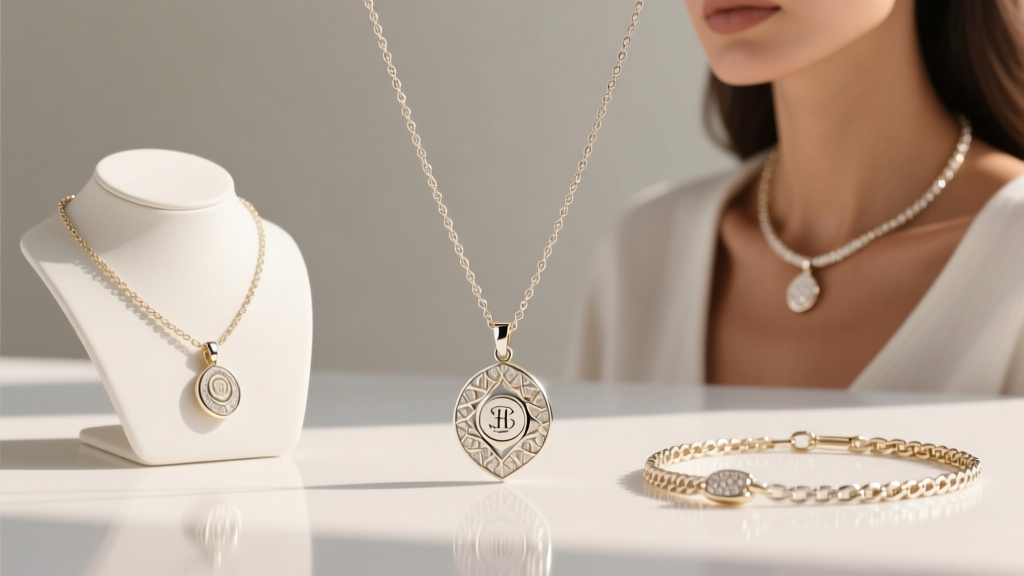
When selecting gold, the karat weight dictates both color and structural integrity. 18k yellow gold (75% gold) offers a rich, warm hue that complements the Egyptian origins of the symbol, but its softer nature (approx. 90-110 HV) requires the crossbar to be cast slightly thicker—ideally no less than 1.8mm in diameter. 14k gold (58.5% gold), alloyed with silver, copper, and zinc, pushes the hardness to 120-150 HV, making it highly resistant to the bending forces applied to the ankh's horizontal arms. For ultimate durability, Platinum 950 alloyed with Ruthenium (Pt950/Ru) provides a density and scratch-resistance that ensures the intricate surface engravings on the ankh will survive decades of daily friction.
Casting Techniques & Structural Integrity
The method used to form the ankh pendant dictates its internal grain structure and susceptibility to microscopic porosity. The two dominant manufacturing methods are lost-wax casting and die-striking.
- Lost-Wax Casting: The standard for intricate, three-dimensional ankh designs. However, if the molten metal cools too quickly in the narrow shaft of the ankh, it can trap gas bubbles, creating porosity. High-end manufacturers utilize Hot Isostatic Pressing (HIP) post-casting, which subjects the pendant to extreme heat and argon gas pressure, effectively crushing internal pores and increasing the metal's density and fatigue life.
- Die-Striking: Ideal for flat, two-dimensional ankh pendants. A high-tonnage press forces sheet metal into a steel die. This compresses the metal's crystalline grain structure, resulting in a pendant that is significantly harder and more durable than a cast equivalent, though limited in dimensional depth.
Bail Construction: The Hidden Failure Point
The most critical engineering flaw in poorly designed ankh necklaces is the bail—the component that connects the pendant to the chain. Many mass-market jewelers simply thread the chain directly through the top oval loop of the ankh. This 'integrated bail' design forces the chain to act as a friction saw against the interior of the silver or gold loop, eventually wearing through the metal and causing the pendant to detach and be lost.
| Bail Type | Friction Coefficient | Wear Rate | Expert Recommendation |
|---|---|---|---|
| Integrated Loop (Chain through top) | High (Metal-on-Metal) | Rapid (1-3 years) | Avoid for daily wear |
| Soldered Tube Bail | Low (Chain-on-Tube) | Very Slow (10+ years) | Best for cast pendants |
| Hidden / Pinch Bail | Minimal | Negligible | Best for flat die-struck pieces |
A properly engineered ankh symbol necklace will feature a separately cast or machined tube bail that is laser-welded or hard-soldered to the top curve of the ankh loop. This preserves the historical silhouette of the symbol while providing a hardened, replaceable wear surface for the chain.
Chain Pairing & Gauge Specifications
The chain you select must harmonize with the pendant's weight and bail aperture. Ankh pendants, particularly those cast in solid gold or platinum, are bottom-heavy due to the vertical shaft. This pendulum effect requires a chain with high tensile strength and a clasp that can withstand sudden lateral shocks.
For pendants weighing between 4 and 12 grams, a 1.5mm to 2.2mm Wheat (Spiga) chain or a Rope chain is optimal. Wheat chains offer a smooth, continuous surface that minimizes friction against the bail, while their interwoven link structure prevents the kinking that plagues Box or Herringbone chains. Avoid chains thinner than 1.2mm, as the sheer weight of a solid metal ankh will stretch the links over time. Furthermore, always ensure the clasp is a forged lobster claw rather than a hollow spring ring, which can easily deform under the dynamic load of a swinging pendant.
Expert Verdict & Sourcing Framework
When evaluating an ankh symbol necklace, look past the initial polish. Inspect the crossbar for adequate thickness, verify the alloy composition (favoring Argentium or 14k/18k gold over base-metal alloys), and critically examine the bail. A pendant that utilizes a reinforced, soldered bail and a HIP-treated casting will not only honor the eternal symbolism of the ankh but will physically endure long enough to become a genuine family heirloom. For further reading on precious metal properties and jewelry manufacturing standards, consult the GIA Gem Encyclopedia and technical manufacturing archives.