How to Buy a White Gold Necklace: The 24k Purity Myth Explained
Learn how to buy a white gold necklace and uncover the truth behind the 24k purity myth. Expert guide on karats, alloys, and rhodium plating.

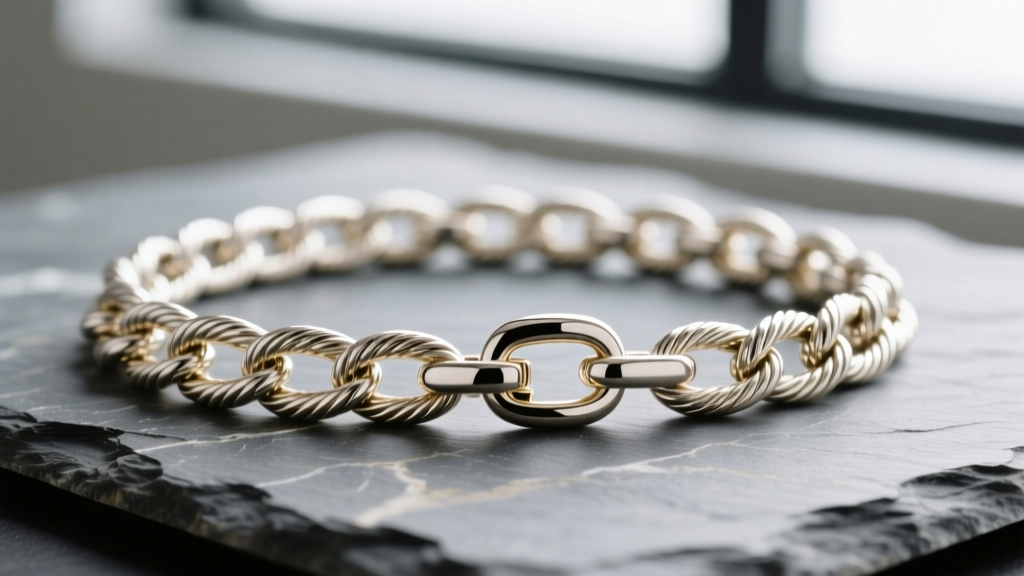
If you have ever typed white gold necklace 24k into a search engine, you are not alone. Many buyers assume that higher karatage always equals higher quality, leading them on a frustrating quest to find pure 24-karat white gold. However, as any master jeweler or metallurgist will tell you, a "24k white gold necklace" is a physical and chemical impossibility.
In the modern jewelry market, navigating alloy compositions, rhodium plating thicknesses, and misleading marketplace listings requires a solid understanding of metallurgy. This step-by-step guide will deconstruct the myth of 24k white gold, explain how white gold is actually created, and provide a definitive framework for choosing the perfect white gold chain for your neckline and lifestyle.
The Science of White Gold: Why 24k is a Physical Impossibility
To understand why a 24k white gold necklace cannot exist, we must look at the periodic table. Pure gold (24 karats) is 99.9% gold and possesses a distinct, rich yellow-orange hue. It is also incredibly soft—so soft that a pure 24k gold chain would stretch, warp, and break under the weight of even a lightweight pendant.
To create "white" gold, metallurgists must bleach the natural yellow color of pure gold by alloying it with white metals. According to the Gemological Institute of America (GIA), a gold alloy must contain at least 20% to 25% white metals (such as palladium, nickel, silver, or zinc) to achieve a silvery-white appearance.
Because the gold content must be diluted to change its color, the absolute maximum karatage for white gold is 18k (75% pure gold). Any listing advertising a "24k white gold necklace" is either a blatant scam, a severe misnomer, or a base metal chain that has been flash-plated with a microscopic layer of pure yellow gold over a white metal core.
Step 1: Decode the Alloy Composition (Nickel vs. Palladium)
When shopping for an 18k or 14k white gold necklace, the specific bleaching agents used in the alloy drastically affect the chain's color, weight, and biocompatibility. You must decide between two primary alloy families:
Nickel-Alloyed White Gold
- Composition: Typically 58.3% gold (14k) mixed with nickel, copper, and zinc.
- Pros: Highly durable, excellent tensile strength for fine chains, and significantly more affordable.
- Cons: Nickel is a known allergen. Approximately 15% of the population experiences contact dermatitis when wearing nickel-alloyed jewelry against the sensitive skin of the neck.
Palladium-Alloyed White Gold
- Composition: Usually 75% gold (18k) mixed with palladium, silver, and sometimes a touch of zinc for casting fluidity.
- Pros: Completely hypoallergenic, heavier and more luxurious on the neck, and naturally possesses a cooler, grayer base color that requires less rhodium plating.
- Cons: Palladium is a platinum-group metal, making 18k palladium white gold chains 30% to 50% more expensive than their nickel counterparts.
Step 2: Understand Rhodium Plating and Maintenance
A common misconception is that white gold emerges from the casting crucible looking like bright chrome. In reality, un-plated 18k white gold has a warm, grayish-yellow tint, while 14k white gold looks like dull gunmetal. To achieve the brilliant, mirror-like white finish consumers expect, jewelers electroplate the necklace with rhodium.
Expert Insight: Rhodium is one of the rarest and most expensive precious metals on earth. A high-quality white gold necklace should feature a rhodium plating thickness between 0.10 and 0.15 microns. Budget manufacturers often plate at a mere 0.02 to 0.05 microns, which will wear off the friction points (like the clasp and back of the neck) within a few months.
Maintenance Framework: Factor in the cost of upkeep. Depending on your skin chemistry (acidity levels accelerate wear) and how often you wear the necklace, you will need to have it professionally re-plated every 1 to 3 years. Expect to pay between $45 and $85 per re-plating session at a reputable bench jeweler.
Step 3: Verify Hallmarks and Avoid Marketplace Scams
The Federal Trade Commission (FTC) Jewelry Guides strictly regulate how gold purity is marketed in the United States. When inspecting a white gold necklace, always use a jeweler's loupe to examine the hallmark stamped near the clasp.
| Karatage | Gold Purity | Common Alloys | Base Color | Durability |
|---|---|---|---|---|
| 24k (Myth) | 99.9% | None (Pure Gold) | Rich Yellow | Very Soft |
| 18k White | 75.0% | Palladium, Silver, Zinc | Warm Gray | Moderate |
| 14k White | 58.3% | Nickel, Copper, Zinc | Cool Gray | High |
Red Flags to Avoid: If a listing on an overseas marketplace uses terms like "24k White Gold Plated," it means the chain is likely made of brass or stainless steel, coated in a microscopic flash of pure yellow gold, and then rhodium-dipped. It holds no intrinsic precious metal value and will inevitably tarnish or turn your skin green once the plating breaches.
Step 4: Match the Chain Style to the Alloy Strength
Because white gold is alloyed with harder metals, it is significantly stronger than yellow gold. However, the structural integrity of your necklace depends heavily on the chain gauge (thickness) and the link style. Use this decision matrix to pair your pendant with the correct chain:
For Heavy Pendants (5 Grams and Above)
- Recommended Karat: 14k White Gold (Higher alloy content provides superior tensile strength and resists stretching).
- Recommended Styles: Box chains or Wheat chains. The interlocking geometric links of a box chain distribute weight evenly, while the woven structure of a wheat chain prevents kinking.
- Minimum Gauge: 1.5mm to 2.2mm. Anything thinner risks snapping at the solder points.
For Delicate Layering and Lightweight Charms (Under 3 Grams)
- Recommended Karat: 18k Palladium White Gold (Offers a richer gold content and a luxurious drape without the stiffness of high-nickel alloys).
- Recommended Styles: Cable chains, Paperclip chains, or Snake chains. Snake chains offer a seamless, liquid-like reflection but are notoriously difficult to repair if kinked.
- Minimum Gauge: 0.8mm to 1.2mm.

Step 5: Inspect the Clasp and Solder Points
The clasp is the most common failure point on any necklace. When buying a white gold chain, ensure the clasp material matches the chain. Many mass-produced chains feature a 14k white gold chain but use a lower-karat or base-metal spring ring clasp to cut costs.
For chains 1.5mm and thicker, demand a lobster clasp with a solid cast body. Spring ring clasps rely on a tiny internal steel spring; if that steel spring is exposed to moisture and rusts, the clasp will fail, and you will lose your pendant. Additionally, inspect the jump rings connecting the clasp to the chain. They should be laser-welded or tightly soldered shut, with no visible gaps where a fingernail could catch.
Expert Verdict: What to Buy Instead
Abandon the search for a "24k white gold necklace" and redirect your focus toward quality craftsmanship. If you have sensitive skin or a higher budget, invest in an 18k palladium white gold chain with a thickness of at least 1.0mm. If you prioritize durability for everyday wear with a heavier pendant, a 14k nickel-white gold box chain at 1.8mm will serve you for a lifetime.
By understanding the metallurgical realities of gold alloys, rhodium plating standards, and chain mechanics, you can confidently purchase a white gold necklace that offers brilliant luster, structural integrity, and enduring style.


