How to Tell if a Necklace is Real Silver: Expert Testing Guide
Learn how to tell if a necklace is real silver using expert at-home tests, hallmark decoding, and acid testing to avoid counterfeit jewelry.

The market for counterfeit jewelry has grown increasingly sophisticated. With advanced electroplating techniques and base-metal alloys mimicking the luster of precious metals, knowing how to tell if a necklace is real silver is an essential skill for any collector or everyday wearer. While a quick visual inspection might suffice for a trained gemologist, consumers need reliable, actionable frameworks to verify authenticity before making a purchase or attempting aggressive cleaning methods.
Decoding Silver Hallmarks and Stamps
The first step in authentication is examining the clasp, jump rings, or the back of the pendant for a hallmark. In the United States, the Federal Trade Commission (FTC) mandates that silver jewelry sold as "sterling" must contain at least 92.5% pure silver. However, counterfeiters often stamp base metals with fake hallmarks, so visual inspection of the stamp's quality is paramount.
| Stamp | Meaning | Authenticity Notes |
|---|---|---|
| 925 / .925 | Sterling Silver | Standard for authentic sterling. Look for crisp, deep engraving. |
| 999 | Fine Silver | 99.9% pure. Rare for chains due to softness; common for pendants. |
| 900 / Coin | Coin Silver | 90% silver. Vintage US pieces. Highly collectible. |
| EPNS | Electroplated Nickel Silver | Not real silver. Base metal with a microscopic silver wash. |
| SP / Silver Plate | Silver Plated | Brass or copper core. Will eventually flake and reveal base metal. |
According to the FTC Jewelry Guides, quality marks must be accompanied by a registered trademark if the piece is sold in the US. A hallmark without a maker's mark on a modern piece is a red flag that warrants further testing.
The Magnet Test: Quick but Inconclusive
Silver is paramagnetic, meaning it exhibits only a very weak, almost imperceptible attraction to magnetic fields. If your necklace aggressively snaps to a magnet, it contains ferromagnetic metals like iron, cobalt, or nickel, confirming it is a fake.
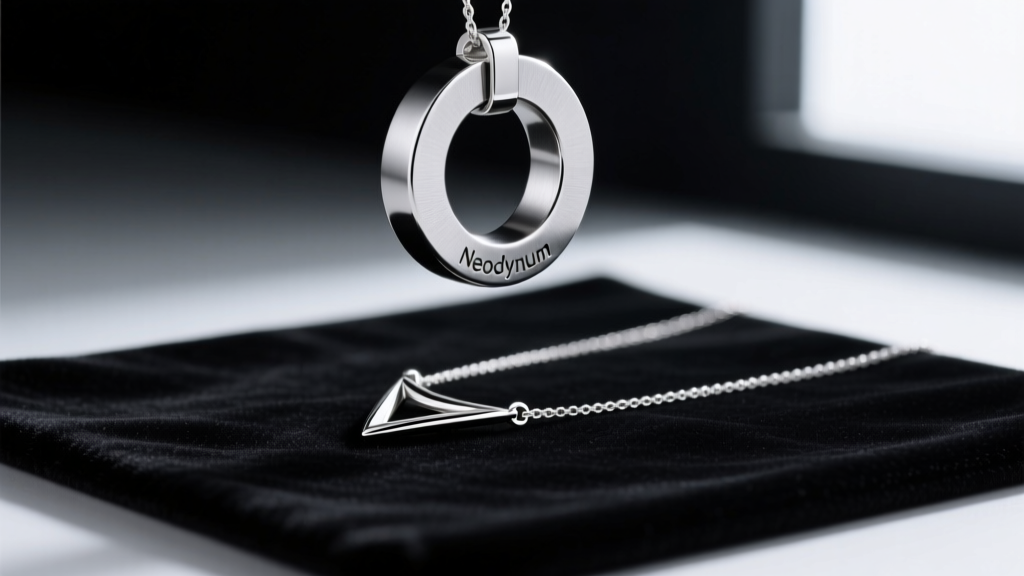
To perform this test accurately, you must use a strong neodymium magnet (N42 grade or higher). Weak refrigerator magnets will not yield reliable results. Slide the magnet down the chain at a 45-degree angle. While real silver will not stick, it will create a slight "braking" effect due to eddy currents if the piece is thick enough. However, because many counterfeiters use non-magnetic base metals like brass, copper, or lead, a lack of magnetic attraction does not guarantee the necklace is real silver.
The Ice Test: Thermal Conductivity in Action
Silver possesses the highest thermal conductivity of any common metal. This physical property allows for a highly effective, non-destructive at-home test. Place an ice cube on a flat surface and lay the silver chain or pendant directly on top of it. Authentic silver will draw the heat from the ambient air and transfer it to the ice almost instantly. You should observe the ice melting rapidly, and the silver necklace itself will become freezing cold to the touch within seconds. If the ice melts at a standard room-temperature rate, or if the metal remains relatively warm, you are likely dealing with stainless steel, aluminum, or a silver-plated alloy.
Chemical and Acid Testing for Definitive Proof
For definitive verification, professional jewelers rely on silver testing acid. This solution typically contains a precise mixture of nitric acid and muriatic acid.
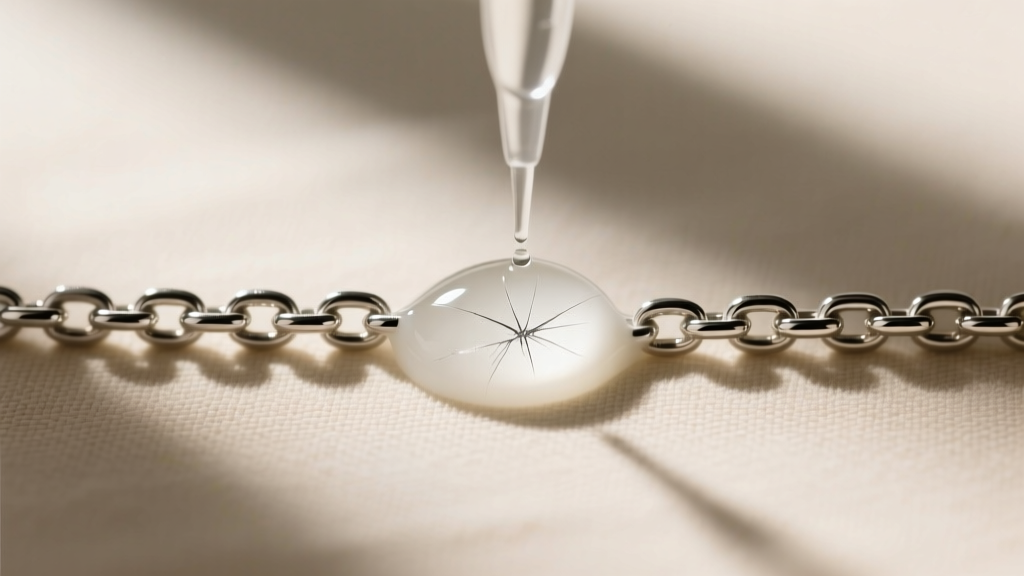
To execute this test safely, find an inconspicuous area of the necklace, such as the inside of the clasp. Use a jeweler's file to make a tiny, shallow scratch through the top layer of metal (crucial for bypassing silver-plated fakes). Apply a single drop of testing acid to the scratch.
- Creamy White: Authentic .925 sterling silver.
- Bright Red: Fine .999 silver.
- Green: Base metal or silver-plated brass/copper.
- Blue: Nickel or nickel-silver alloy.
Always wear nitrile gloves and eye protection when handling testing acids, and neutralize the acid with a baking soda and water solution immediately after observing the reaction. The Gemological Institute of America (GIA) notes that chemical testing remains the most accessible definitive method for consumers outside of a laboratory setting.
Advanced Verification: Specific Gravity Testing
If you cannot damage the piece with a file for an acid test, specific gravity (SG) testing offers a non-destructive alternative based on the Archimedes principle. Pure silver has an SG of 10.49 g/cm³, while sterling silver (.925) typically measures around 10.36 g/cm³ due to the copper alloy. You will need a highly precise digital scale (accurate to 0.01g), a cup of distilled water, and a piece of string.
- Weigh the dry necklace and record the mass.
- Suspend the necklace in the water using the string, ensuring it is fully submerged but not touching the bottom or sides of the cup.
- Record the submerged weight.
- Divide the dry weight by the difference between the dry weight and submerged weight.
If the resulting number is close to 10.36, the necklace is highly likely to be genuine sterling silver. Lead (SG 11.34) and steel (SG 7.8) will yield drastically different results, instantly exposing heavy counterfeits.
Cleaning Clues: Electrochemical Baths and Tarnish
How a necklace reacts to wear and cleaning provides vital diagnostic clues. Real sterling silver oxidizes when exposed to sulfur compounds in the air, creating a dark, blackish-brown tarnish. This tarnish sits on the surface and can be easily removed via an electrochemical bath. Line a glass bowl with aluminum foil (shiny side up). Add boiling water, a tablespoon of baking soda, and a tablespoon of salt. Submerge the tarnished necklace. Real silver will undergo an ion-exchange reaction, transferring the sulfur tarnish to the aluminum foil within minutes, leaving the silver bright. Plated metals will not trigger this specific galvanic reaction and may suffer irreversible damage to their thin surface wash. Furthermore, if you notice green or black marks on your skin after wearing the necklace, it is a strong indicator of a copper or brass base metal reacting with your skin's acidity.
When to Seek Professional Appraisal
While at-home tests are highly effective for standard chains and pendants, intricate antique pieces or necklaces with heavy gemstone settings require professional evaluation. A certified gemologist can utilize X-ray Fluorescence (XRF) spectrometry, a non-destructive technology that bombards the metal with X-rays to read its exact elemental composition. XRF testing will instantly reveal the precise percentage of silver, copper, and any trace elements, providing absolute certainty without risking damage to delicate chains or historical patinas.


