Buying Guide: Floating Diamond Necklace Gold Settings
Discover how to choose the perfect floating diamond necklace gold chain. Expert advice on gauges, settings, and 2026 pricing for slide pendants.

The Anatomy of a Floating Diamond Necklace Gold Design
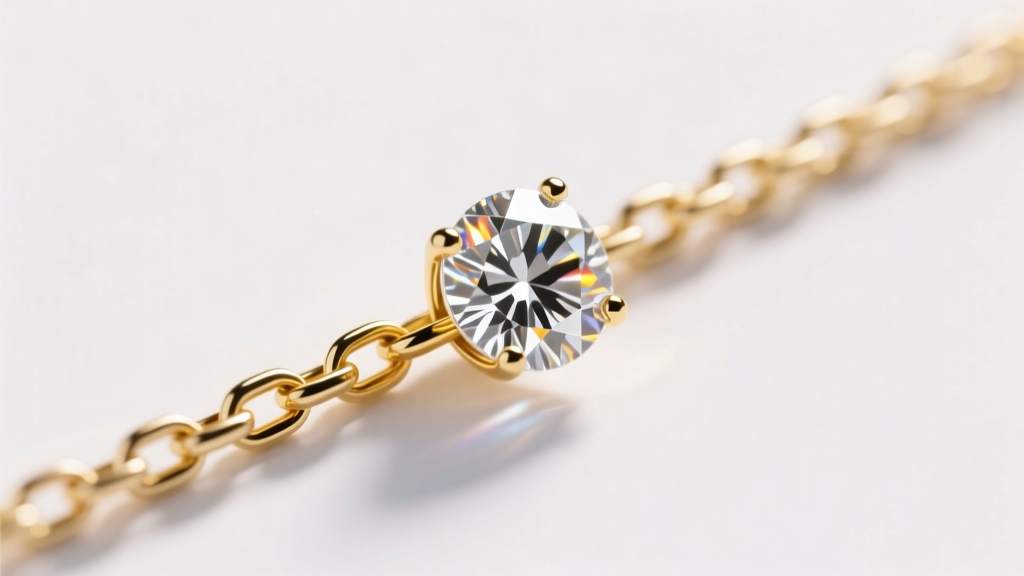
The allure of a floating diamond necklace gold design lies in its minimalist illusion. Often referred to as a "slide pendant" or "illusion necklace," this style features a single solitaire diamond that appears to hover magically along the chain. Unlike traditional pendants that hang from a fixed bail, a floating diamond is either threaded directly through a horizontal drill hole in the setting or attached to a hidden, integrated bail that allows the chain to pass seamlessly through the piece. Popularized by luxury houses like Messika and widely adopted by fine jewelers globally, this style demands precise engineering. If the chain gauge, gold purity, and diamond proportions are not perfectly calibrated, the pendant will snag, tilt, or prematurely wear through the metal.
Gold Purity and Chain Selection: The Foundation
When selecting the metal for your necklace, you must balance color richness with structural durability. The constant friction of the diamond slide moving back and forth across the chain acts like a mild abrasive over time.
14K vs. 18K Gold for Sliding Pendants
While 18K gold offers a deeper, warmer yellow hue and higher hypoallergenic properties, it is inherently softer due to its 75% pure gold content. For a floating diamond necklace that will be worn daily, 14K gold (58.3% pure gold) is often the superior choice. The higher alloy content (typically mixed with copper, silver, or zinc) creates a harder metal that resists the micro-abrasions caused by the sliding diamond. If you prefer 18K gold for its color, opt for a slightly thicker chain gauge to compensate for the softer metal.
Chain Styles and Gauge Specifications
The chain is the most critical failure point in a floating necklace. According to the Jewelers of America, choosing the wrong chain weave will ruin both the chain and the diamond's setting.
- Box Chains (0.9mm - 1.2mm): The absolute best choice. The flat, interlocking square links provide a smooth surface for the diamond to glide across without catching.
- Cable Chains (1.0mm - 1.5mm): A classic alternative, though the tiny gaps between oval links can occasionally trap the diamond's hidden bail if the gauge is too thin.
- Snake Chains (Avoid): Never use a snake chain for a floating pendant. The tightly wound, microscopic grooves trap skin oils, lotions, and diamond dust. This creates a sticky residue that halts the sliding motion and eventually causes the chain to kink and snap.
Diamond Selection: Optimizing the 4Cs for Solitaire Slides
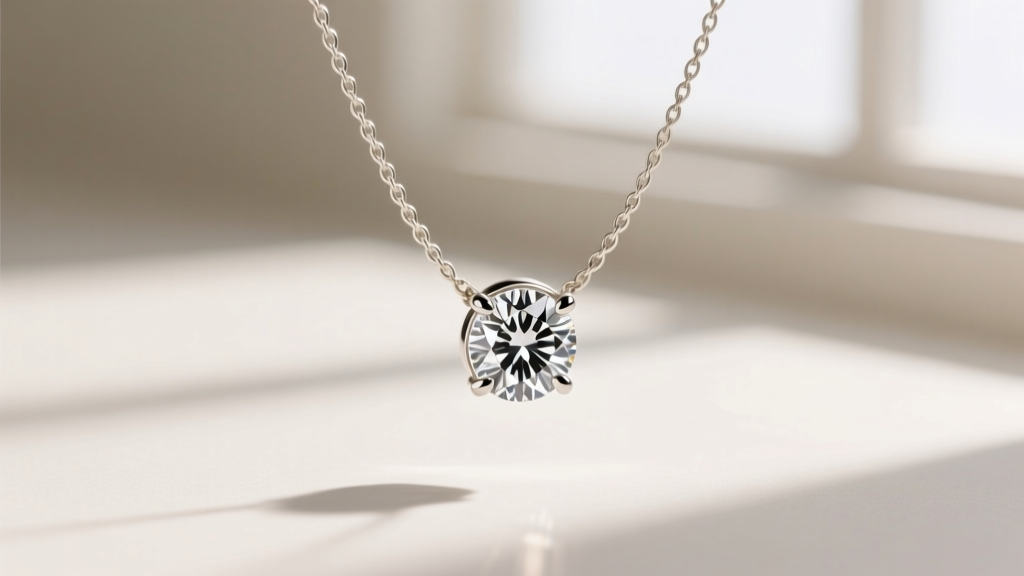
Because a floating necklace features a single, unaccompanied diamond, the stone's optical performance is entirely exposed. There are no side stones or elaborate halos to mask poor light return. The Gemological Institute of America (GIA) emphasizes that Cut is the most vital metric for solitaire pieces.
Carat Weight to Chain Gauge Matrix
Matching your diamond's physical weight to the chain's tensile strength is non-negotiable. A chain that is too thick will not fit through the pendant's bail; a chain that is too thin will stretch and break under the pendulum effect of a heavy stone.
| Diamond Carat Weight | Approx. Diameter (mm) | Recommended Chain Gauge | Best Chain Style |
|---|---|---|---|
| 0.25ct - 0.50ct | 4.1mm - 5.1mm | 0.7mm - 0.9mm | Box or Fine Cable |
| 0.75ct - 1.00ct | 5.8mm - 6.4mm | 1.0mm - 1.2mm | Standard Box |
| 1.25ct - 2.00ct | 6.9mm - 8.1mm | 1.3mm - 1.5mm | Reinforced Box or Wheat |
Setting Types: Security vs. Aesthetics
The way the diamond is secured within the floating mechanism dictates both its safety and its visual footprint.
- Bezel Settings: A rim of gold completely encircles the diamond's girdle. This is the safest option for floating necklaces, as the smooth metal edge prevents the diamond from catching on clothing. It also protects the girdle from chipping when the slide abruptly stops against the clasp.
- Prong Settings: Usually featuring 3 or 4 prongs, this style allows maximum light entry, making the diamond appear larger. However, prongs on a moving slide pendant are prone to snagging on knitwear, which can lift the prong and loosen the stone over time.
- Horizontal Drill (Tension-Illusion): Pioneered by modern luxury brands, the diamond is set in a gold frame with a hole drilled directly through the center of the setting. The chain passes entirely through the diamond's housing. This offers the truest "floating" effect but requires a perfectly calibrated box chain to prevent the gold housing from acting as a file against the chain links.
The Centering Problem: Stoppers and Friction
The most common complaint among owners of floating diamond necklaces is the "sliding dilemma." Gravity and movement constantly pull the diamond toward the lowest point of the neckline, requiring the wearer to repeatedly adjust it. To solve this, jewelers utilize necklace stoppers.
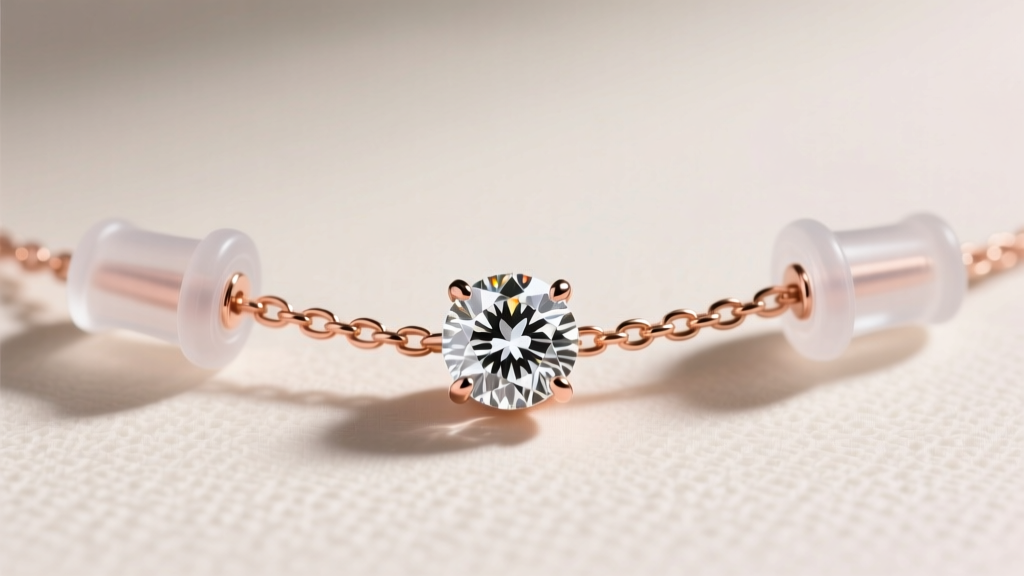
These are tiny, discreet silicone or 14k gold discs (often called O-rings or friction beads) that are threaded onto the chain on either side of the diamond. Placed about two inches apart, they create just enough friction against the chain to hold the diamond in the center of the collarbone, while still allowing the wearer to manually slide the stone to adjust the neckline. If purchasing a high-end floating diamond necklace gold piece in 2026, ensure the retailer includes custom-fitted silicone stoppers, as generic craft-store O-rings can degrade and discolor over time.
2026 Pricing Expectations and Value
The market for floating solitaire necklaces has shifted dramatically with the mainstream acceptance of lab-grown diamonds. Because this design relies on a single, prominent center stone, the price disparity between natural and lab-grown options is highly visible.
- Lab-Grown Diamond Slides (14K Gold): A high-quality, 1.00 carat lab-grown floating necklace with a VS1 clarity and Excellent cut currently retails between $850 and $1,400. This makes the 1-carat floating illusion accessible for everyday wear.
- Natural Diamond Slides (14K/18K Gold): A comparable 1.00 carat natural diamond pendant, complete with GIA certification and a premium box chain, will range from $4,500 to $7,500, depending on the color grade and fluorescence.
- Designer Premium: Buying from legacy luxury brands that utilize the patented horizontal-drill floating mechanism can push the price of a 0.50 carat pendant well past $3,500 due to brand equity and proprietary chain engineering.
Expert Maintenance Tip: Once every six months, unclasp your floating necklace and run the chain through a soft cloth dampened with mild dish soap and warm water. The sliding motion of the diamond acts as a magnet for microscopic skin oils and lotions, which build up inside the hidden bail. Cleaning the bail ensures the diamond continues to glide smoothly without putting stress on the gold links.


