Ultimate Care Guide for Your Floating Diamond Pendant Necklace
Learn expert cleaning and maintenance tips for your floating diamond pendant necklace. Protect delicate chains and maximize diamond brilliance safely.

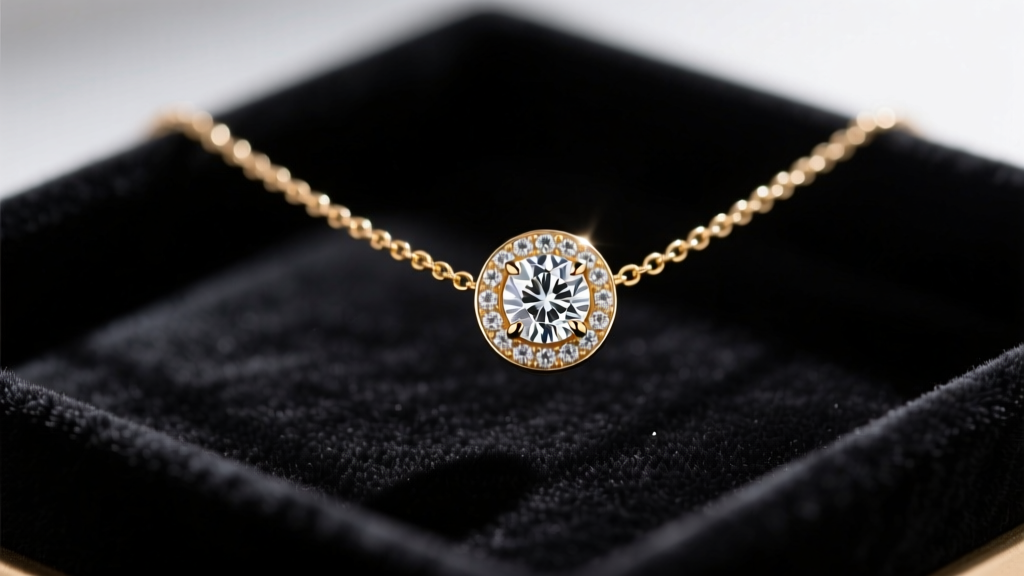
The Unique Anatomy of a Floating Diamond Necklace
The floating diamond pendant necklace—often referred to as an illusion necklace—is a masterpiece of minimalist jewelry design. By threading an ultra-fine chain directly through a hidden bail or a silicone-lined tube within the diamond's setting, jewelers create the breathtaking illusion that the gemstone is hovering directly on the skin. However, this structural elegance introduces unique vulnerabilities that standard necklaces do not face.
Most floating diamond necklaces utilize exceptionally delicate chains, typically ranging from 0.6mm to 0.9mm in thickness. These are usually crafted as micro-box or fine cable chains in 14k or 18k gold, or sometimes platinum. Because the chain slides freely through the pendant's bail to maintain the 'floating' effect, this junction becomes a high-friction wear point. Furthermore, the diamond itself is usually secured in a low-profile bezel or a micro-prong setting, meaning the gemstone takes the brunt of any physical impacts against the collarbone. Understanding these mechanical realities is the first step in preserving both the structural integrity and the optical brilliance of your piece.
Daily Wear Rules: Preventing Snaps and Friction Wear
Because the chain gauge is so thin, tensile stress and friction are your biggest enemies. Adopting a few strict daily habits will exponentially increase the lifespan of your necklace.
- The 'Last On, First Off' Rule: Always put your floating diamond necklace on after applying cosmetics, perfumes, and lotions. Conversely, it should be the very first piece of jewelry you remove when undressing. This prevents chemical degradation of the gold alloys and stops cosmetic buildup inside the hidden bail tube.
- Avoid the 'Pinch Point': The area where the 0.6mm chain enters the diamond bail is highly susceptible to friction wear. Over time, the constant sliding can actually shave microscopic layers of gold off the chain. To mitigate this, avoid wearing the necklace during high-movement activities like gym workouts or yoga, where the pendant will violently slide back and forth.
- Nighttime Removal is Non-Negotiable: Sleeping in a sub-1mm chain is the leading cause of fatal kinking. Tossing and turning can wrap the chain around your neck or catch it on bedding, applying lateral torque that the micro-links simply cannot withstand.
Step-by-Step Cleaning Protocol for Maximum Brilliance
Diamonds are inherently lipophilic, meaning their carbon structure naturally attracts and holds onto oils, sebum, and lotions. Even a microscopic film of oil on the pavilion (the bottom facets) will drastically reduce the stone's light return, making it look dull and gray. According to the Gemological Institute of America (GIA), regular degreasing is essential for maintaining a diamond's optical performance.
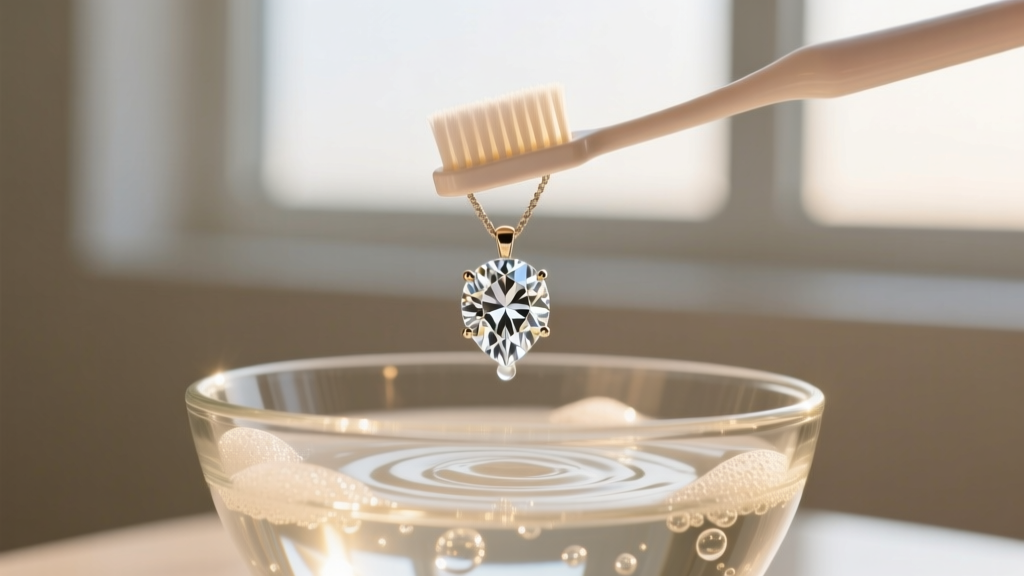
- Prepare a Mild Degreasing Bath: Fill a small glass bowl with warm (not hot) water and add three to four drops of a mild, non-moisturizing dish soap. Avoid soaps with heavy lotions or citrus additives, which can leave a secondary film.
- Soak to Loosen Lipids: Submerge the floating diamond pendant necklace and let it soak for 15 to 20 minutes. This allows the surfactants to break down the hardened sebum trapped underneath the bezel setting and inside the chain bail.
- Targeted Agitation: Using an extra-soft baby toothbrush, gently tap the bristles against the back of the diamond. Critical Warning: Never pull or drag the ultra-thin chain through the bristles of the brush. This will stretch the micro-links and cause irreversible kinking.
- The Distilled Rinse: Rinse the necklace under a gentle stream of lukewarm distilled water. Using distilled water instead of tap water prevents hard water minerals (like calcium and magnesium) from drying onto the gold and diamond.
- Pat Dry: Lay the necklace flat on a clean microfiber cloth. Gently pat the diamond dry. Do not rub the chain, as friction can cause the fine links to tangle or snap.
Cleaning Solutions: What to Use and What to Avoid
Not all jewelry cleaners are safe for the delicate architecture of a floating diamond necklace. Below is a comparison of common cleaning agents and their safety profiles for this specific jewelry type.
| Cleaning Agent | Safety for Diamond | Safety for Ultra-Thin Chain | Expert Verdict |
|---|---|---|---|
| Mild Dish Soap & Warm Water | Excellent | Excellent | The gold standard for weekly at-home maintenance. |
| Commercial Liquid Dips | Good (if not fracture-filled) | Poor | Harsh chemicals like ammonia can weaken the solder points on 0.6mm chains over time. |
| Ultrasonic Cleaners | Excellent (for untreated stones) | Dangerous | The high-frequency vibrations can easily snap ultra-thin box chains and loosen micro-prongs. |
| Toothpaste or Baking Soda | Poor | Poor | Abrasives will scratch 18k gold and dull the polish on the diamond's girdle. |
Inspecting the Micro-Prongs and Chain Links
Visual inspection should be performed every three months. You do not need professional equipment; a standard 10x triplet jeweler's loupe is sufficient. The American Gem Society (AGS) recommends regular at-home inspections to catch minor wear before it results in stone loss.

Pro-Tip: When inspecting the chain, look specifically for 'work-hardening.' If a section of the chain feels stiff or holds a slight curve instead of draping fluidly, the metal has been work-hardened from stress. This section is highly prone to snapping and should be replaced by a jeweler immediately.
Focus your loupe on the bail tube where the chain threads through. If you see deep grooves worn into the metal tube, the chain is acting like a saw and will eventually cut through the setting. Additionally, check the bezel or prongs holding the diamond. If the metal is no longer sitting perfectly flush against the diamond's girdle, the stone is at risk of falling out.
Troubleshooting Common Floating Necklace Issues
The Diamond Remains Cloudy After Cleaning
If your stone still looks dull after a thorough soapy soak, the issue is likely trapped debris inside the hidden bail tube or a buildup of hardened lotion directly beneath the bezel. Do not use metal needles to dig it out, as you risk scratching the gold or chipping the diamond. Instead, use a wooden toothpick to gently dislodge the debris, or take the piece to a jeweler for a professional high-pressure steam cleaning.
The Chain Keeps Tangling at the Clasp
Fine chains naturally seek out the heaviest part of the necklace, causing the clasp to slide around to the front and tangle with the bail. To counter this, ensure your clasp has a slightly heavier counterweight tag, or ask a jeweler to add a tiny silicone 'stopper' bead on the chain near the clasp to prevent it from sliding too close to the diamond pendant.
Proper Storage to Preserve the Illusion
How you store your floating diamond pendant necklace is just as critical as how you clean it. Tossing it into a communal jewelry box guarantees a tangled, knotted mess that is nearly impossible to untangle without breaking the micro-links.
- Flat Lay Trays: Store the necklace completely flat in a velvet-lined drawer or tray. This prevents gravity from pulling the chain through the bail and causing friction wear while in storage.
- Necklace Busts: If you prefer hanging storage, use a padded necklace bust. Ensure the clasp is securely fastened so the chain doesn't slip off and bunch up at the bottom.
- Individual Pouches: If traveling, lay the necklace flat inside a soft flannel pouch, and place that pouch inside a hard-shell sunglasses case to prevent crushing.
When to See a Professional Jeweler
Even with impeccable at-home care, a floating diamond pendant necklace requires professional attention every 12 to 18 months. A master jeweler will use specialized equipment to check the structural integrity of the hidden bail and the security of the diamond setting. If the ultra-thin chain does break, ensure your jeweler uses laser welding rather than traditional torch soldering. Laser welding allows for pinpoint accuracy on 0.6mm chains without melting the surrounding links or leaving a visible, bulky solder joint that ruins the delicate aesthetic of the piece.


