Is a Flower Necklace Designer Piece Worth It? 2026 Value Guide
Assess the true value of a flower necklace designer piece in 2026. We break down pricing tiers, material grades, and resale reality.

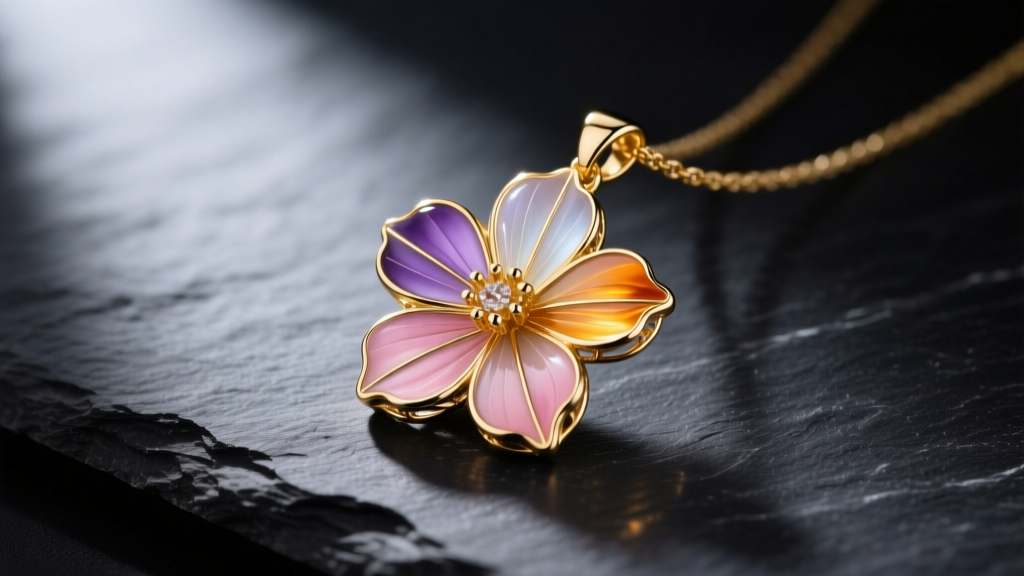
Floral motifs have anchored jewelry design for centuries, but the modern market presents a complex web of pricing. When you search for a flower necklace designer piece, you are immediately confronted with a massive price delta. A generic 18k gold daisy pendant might cost $450, while a heritage designer floral motif from a maison like David Webb or Tiffany & Co. can easily command $4,500 or more.
As we navigate the 2026 luxury market, consumers are increasingly scrutinizing the 'brand tax.' Is the premium attached to a designer floral necklace justified by superior craftsmanship and material integrity, or are you simply paying for a logo? This guide dissects the exact material grades, structural engineering, and market dynamics that determine the true value of designer flower necklaces.
The True Cost of a Flower Necklace Designer Label
To understand value, we must separate intrinsic melt value from horological and jewelry craftsmanship. A standard 5-gram 18k gold flower pendant contains roughly 3.75 grams of pure gold. At current market rates, the raw material cost is under $300. When a heritage brand prices that same pendant at $2,800, the markup is funding three specific pillars: proprietary design patents, advanced lapidary work, and secondary market liquidity.
Unlike abstract or geometric shapes, floral designs require organic, asymmetrical casting. Achieving the delicate taper of a petal in 18k gold without creating structural weak points requires master-level wax carving and precise centrifugal casting. Mass-market brands often stamp or cast thick, uniform petals to reduce failure rates, resulting in a heavy, lifeless aesthetic. True designer pieces utilize varying metal thicknesses—sometimes tapering down to 0.4mm at the petal edges—which requires meticulous hand-finishing to prevent tearing during polishing.
Material Breakdown: Where Your Money Actually Goes
The justification for a designer premium largely hinges on the materials used to bring the floral motif to life. Here is where accessible luxury brands cut corners, and where heritage maisons invest heavily.
Enamel Techniques and Durability
Many designer flower necklaces utilize enamel to create vibrant, lifelike petals. However, not all enamel is created equal:
- Cold Enamel (Epoxy Resin): Common in the $300–$800 'accessible luxury' tier. It is essentially a hardened resin poured into metal recesses. While initially vibrant, cold enamel has a low Vickers hardness, scratches easily, and will yellow or cloud after 3 to 5 years of UV exposure and contact with skin oils.
- Vitreous Enamel: The standard for high-end designer pieces ($2,000+). This is crushed glass fused to gold at temperatures exceeding 800°C. Techniques like plique-à-jour (where the enamel is suspended without a metal backing, resembling stained glass) have a massive failure rate during the firing process. The high cost of a designer vitreous enamel flower necklace directly reflects the labor and lost inventory required to achieve a flawless, translucent finish.
Gemstone Inlays: Hardness and Wearability
Floral inlays frequently rely on opaque or banded stones to mimic the natural variance of petals and leaves. The GIA Gem Encyclopedia notes that material hardness dictates a piece's lifespan.
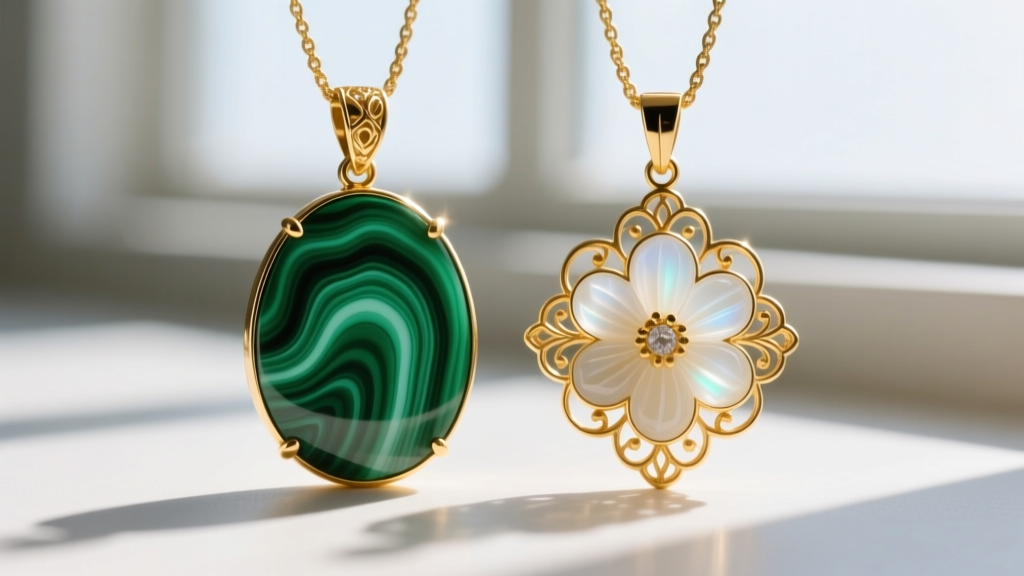
Heritage designers often use Malachite (Mohs 3.5–4) for its striking green banding. However, malachite is highly porous and sensitive to the acids in human sweat and the alcohols in perfume. A designer piece will typically use a closed-back bezel setting with a protective gold lip to shield the malachite edges from chipping. Conversely, budget brands may use Chalcedony (Mohs 6.5–7) or dyed howlite. While chalcedony is vastly more durable for daily wear, it lacks the prestigious, organic banding of true malachite. Paying a premium for a designer piece guarantees you are getting the authentic, ethically sourced stone, properly shielded by engineered bezels.
2026 Pricing Tiers: Artisan vs. Heritage Designer
When evaluating a flower necklace designer piece, it is crucial to identify which tier the brand occupies. The table below outlines the expected specifications and market realities across three distinct price brackets in 2026.
| Tier | Price Range | Metal & Weight | Floral Execution | Resale Value Retention |
|---|---|---|---|---|
| Independent Artisan | $400 – $1,200 | 14k or 18k Gold (3-6g) | Hand-carved wax, basic vitreous enamel or raw sapphire accents. | Low (20-40% of retail) |
| Accessible Luxury | $1,200 – $3,500 | 18k Gold (5-10g) | Cast from master molds, cold enamel or pave diamond centers. | Medium (40-60% of retail) |
| Heritage Maison | $4,500 – $15,000+ | 18k Gold/Platinum (10g+) | Complex articulation, plique-à-jour, rare cabochon inlays. | High (70-95% of retail) |
The Depreciation and Resale Reality of Floral Motifs
According to data from the Bain & Company Luxury Market Report, hard luxury goods (jewelry and watches) have shown remarkable resilience in retaining value compared to soft luxury (leather goods and apparel). However, the specific motif matters.
"Floral and nature-inspired motifs possess a unique cross-cultural, evergreen appeal that insulates them from the rapid depreciation seen in hyper-trendy or logo-heavy designs."
If you purchase a heritage designer flower necklace, you are buying into a secondary market that actively seeks these specific motifs. Brands like Van Cleef & Arpels (with their floral-adjacent Alhambra and Frivole collections) or Tiffany & Co. (Schlumberger daisy motifs) command high liquidity on platforms like The RealReal and Worthy. An independent artisan piece, while potentially featuring superior hand-forged craftsmanship, will depreciate by up to 70% the moment it is purchased, simply due to a lack of brand recognition on the secondary market.
How to Spot Value: A Buyer’s Checklist
Before authorizing a high-ticket purchase for a designer floral necklace, inspect the piece against these structural benchmarks. These details separate genuine horological/jewelry engineering from mass-produced luxury.
- The Bail Integration: On a high-end piece, the bail (the loop connecting the pendant to the chain) should be integrated into the wax model and cast as one piece, or seamlessly soldered with laser precision. Avoid pieces where the bail looks 'glued' or poorly brazed, as the organic weight distribution of a flower pendant puts immense torque on this single point.
- Articulated Petals: In the $5,000+ tier, look for articulation. Some heritage designers engineer the petals on micro-hinges or use tension-setting techniques so the flower moves and catches light dynamically against the collarbone, rather than sitting flat and rigid.
- Prong vs. Bezel Settings: If the center of the flower features a soft stone (like opal or malachite), the designer must use a bezel or flush setting. Prongs will eventually loosen and allow a soft cabochon to fall out. Diamond accents (Mohs 10), however, should be set with microscopic pave prongs to maximize light return.
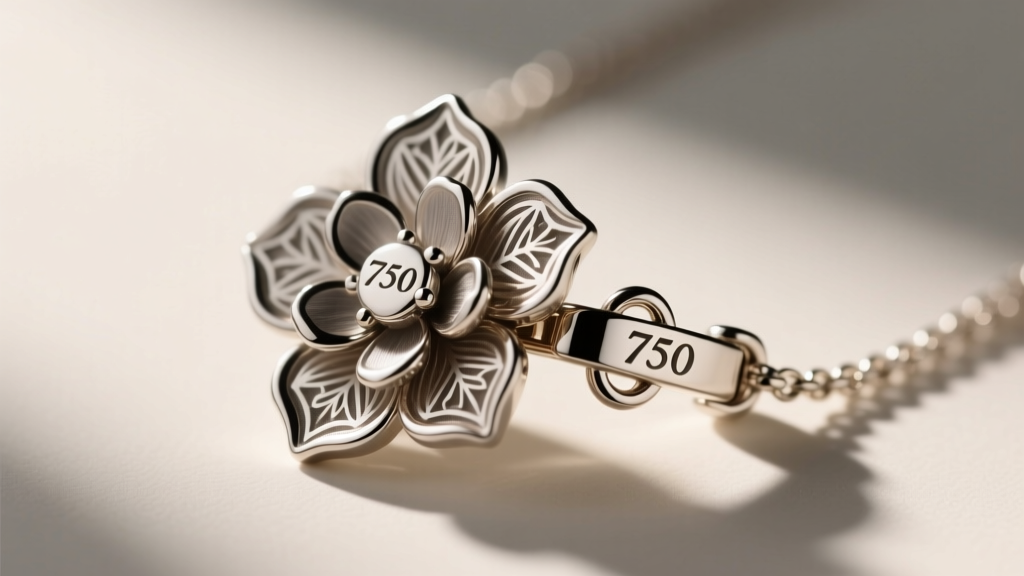
- Hallmarks and Maker's Marks: A true designer piece will feature a laser-engraved or stamped maker's mark, a metal purity mark (e.g., 750 for 18k gold), and often a serial number on the clasp or pendant edge.
Final Verdict: When to Pay the Premium
Is a flower necklace designer label worth the investment? If your goal is purely aesthetic and you are buying from an independent goldsmith who uses vitreous enamel and 18k gold, you can achieve exceptional quality in the $800–$1,500 range. You are paying strictly for materials and labor.
However, if you view the necklace as a store of wealth, or if you demand the microscopic perfection of plique-à-jour enamel and perfectly matched, ethically sourced malachite inlays, the $4,000+ heritage designer premium is entirely justified. In these upper echelons, you are not just buying a flower; you are funding centuries of lapidary expertise and securing an asset that will retain its financial and aesthetic bloom for generations.


