Pearl Necklace with Gold Heart: The Ultimate Buying Guide
Discover how to choose the perfect pearl necklace with gold heart pendant. Expert guide on pearl grades, gold karats, stringing, and 2026 pricing.

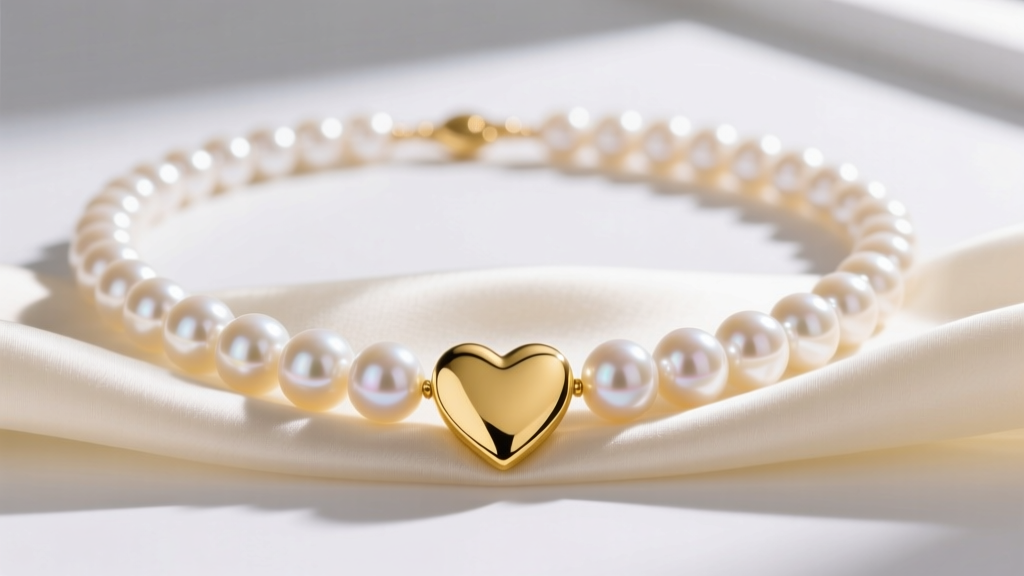
The Anatomy of a Pearl Necklace with Gold Heart Pendant
Few jewelry pieces capture the balance of vintage romance and modern elegance quite like a pearl necklace with gold heart pendant. As we navigate the 2026 jewelry market, buyers are increasingly prioritizing heirloom-quality craftsmanship over fast-fashion alternatives. Whether you are investing in a piece for a milestone anniversary or seeking a timeless everyday staple, understanding the metallurgical and gemological nuances is critical. This guide breaks down the exact specifications, grading metrics, and structural details you must evaluate before making a purchase, ensuring your investment lasts for generations.
Pearl Selection: Luster, Nacre, and Varieties
When evaluating the pearls, luster and nacre thickness are your primary indicators of longevity and value. The GIA Pearl Quality Factors dictate that high-quality Akoya pearls should exhibit a 'sharp' luster, meaning reflections on the surface are bright, distinct, and mirror-like. For Akoya pearls, demand a minimum nacre thickness of 0.4mm; anything less risks peeling or flaking within a few years of regular wear.
Freshwater pearls, while generally more affordable and composed of solid nacre, often lack the intense luster of Akoya. However, premium 'Edison' freshwater pearls have significantly closed this gap in recent years, offering large sizes (10-13mm) and deep colors at a fraction of the cost of South Sea pearls. If you are buying a classic white strand, Akoya remains the gold standard for that iconic, luminous glow.
Decoding the Gold Heart: Karats, Weight, and Bail Mechanics
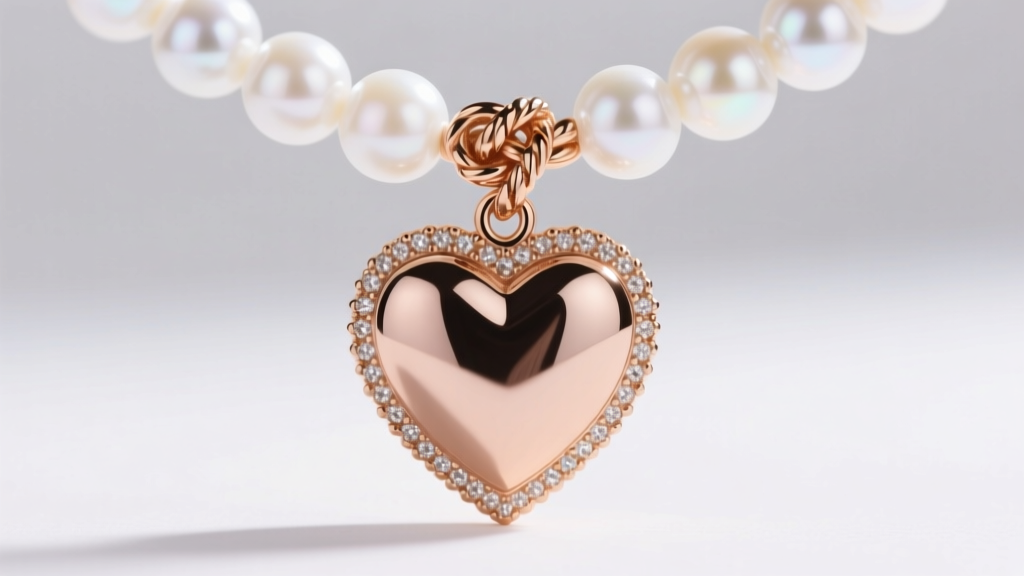
According to the Gemological Institute of America (GIA), 14k gold contains 58.5% pure gold, offering superior durability and scratch resistance. This makes it ideal for a pendant that rests against the collarbone and is prone to daily impact. Conversely, 18k gold (75% pure) provides a richer, warmer yellow hue but is inherently softer. If you opt for 18k, ensure the heart pendant is cast with adequate structural thickness (at least 1.2mm at the widest point) to prevent warping over time.
The Bail: A Hidden Point of Failure
The bail—the component that connects the gold heart to the pearl strand—is a frequent point of failure in poorly constructed necklaces. Avoid 'pinch bails' that rely on glue or tension, as the natural oils from your skin and the weight of the gold will eventually compromise the bond. Instead, look for a heart pendant with a cast-in-place loop or a securely soldered jump ring. Furthermore, ensure the interior of the bail is perfectly smooth; a rough, unpolished bail will act like a file, slowly fraying the silk thread every time the necklace moves.
Stringing Materials and Clasp Mechanics
High-end pearl necklaces are traditionally strung on 100% silk thread, typically Size F (0.30mm) for 6-7mm pearls and Size G (0.35mm) for 8-9mm pearls. The silk provides a supple, fluid drape that synthetic wires cannot replicate. Crucially, inspect the ends of the necklace for 'French wire' (also known as gimp)—a tiny coiled metal spring that protects the silk thread from abrading against the metal clasp. If a necklace lacks French wire and the silk passes directly through the metal clasp loop, it will inevitably snap.
For clasps, a fishhook clasp is the hallmark of luxury Akoya strands, offering a seamless look and high security. For mid-tier pieces, a sturdy lobster clasp with a soldered jump ring is perfectly acceptable. Avoid cheap spring-ring clasps, which frequently fail and can result in the loss of the entire strand.
2026 Market Pricing and Tier Comparison
Understanding the pricing landscape helps you identify true value and avoid overpaying for subpar materials. Below is a breakdown of what to expect in the current market:
| Tier | Pearl Type | Gold Purity | Bail Type | Price Range |
|---|---|---|---|---|
| Entry | Freshwater (AA) | 14k Vermeil | Pinch Bail | $80 - $150 |
| Mid | Akoya (AA+) | 14k Solid | Soldered Ring | $400 - $850 |
| Luxury | Hanadama Akoya | 18k Solid | Cast Loop | $1,200 - $2,500+ |
Note: 'Hanadama' is a specific certification from the Pearl Science Laboratory of Japan, indicating the absolute top tier of Akoya pearls with exceptional luster and nacre quality.
Sizing, Proportions, and Styling
Proportion is paramount in jewelry design. A massive gold heart will overwhelm a delicate strand of 6mm pearls, while a microscopic heart will get lost against 9mm South Sea pearls. The golden rule of pendant-to-pearl ratio is roughly 2:1 or 2.5:1. For a classic 18-inch necklace featuring 7-7.5mm Akoya pearls, a gold heart measuring 12mm to 15mm across provides the most visually balanced silhouette.
Neckline Pairing Strategies
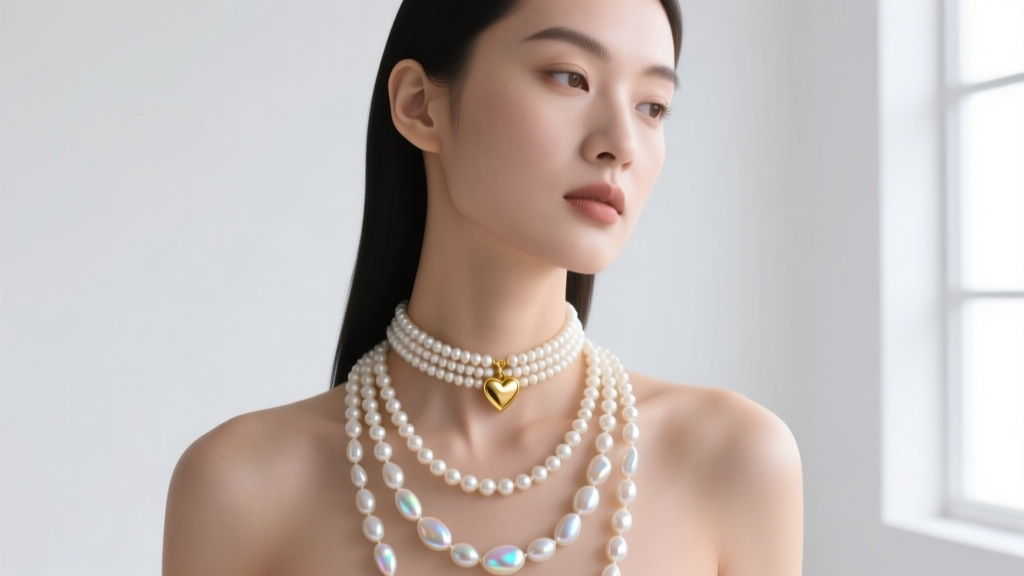
A pearl necklace with a gold heart pendant is remarkably versatile, but its impact changes drastically depending on the neckline. For a crew neck or high boatneck, opt for a shorter 16-inch choker length with a smaller 10mm heart to prevent the pendant from resting awkwardly on the fabric seam. Conversely, a V-neck or scoop neck perfectly frames an 18-inch princess length, allowing the gold heart to sit precisely in the negative space of the neckline, drawing the eye downward and elongating the neck. In 2026, the trend of 'mixed metal layering' has also gained traction; pairing your yellow gold heart pendant with a secondary, longer 22-inch oxidized silver or white gold chain creates a dynamic, contemporary aesthetic that prevents the piece from looking overly traditional.
Care, Maintenance, and Restringing Timelines
Pearls are organic gemstones with a Mohs hardness of just 2.5 to 3.0, making them highly susceptible to acids, perfumes, and cosmetics. Adopt the 'last on, first off' rule: put your necklace on only after applying makeup, hairspray, and perfume. After wearing, wipe the pearls and the gold heart with a soft, damp microfiber cloth to remove skin oils. Never use ultrasonic cleaners or steamers, as the high-frequency vibrations will shatter the nacre and the heat will melt the glue in the bail.
Expert Restringing Tip: Even with meticulous care, silk thread stretches and degrades. If you wear your necklace weekly, have it professionally restrung every 18 to 24 months. A telltale sign that restringing is overdue is when you can see gaps of thread between the pearls when the necklace is laid flat on a table.
Final Verdict: What to Inspect Before Checkout
Before finalizing your purchase, whether in a boutique or online, verify these three non-negotiable details to ensure you are acquiring a piece of genuine quality:
- Nacre Guarantee: Request documentation or a verbal guarantee regarding nacre thickness (minimum 0.4mm for Akoya).
- French Wire Presence: Visually confirm the presence of metal gimp at the clasp connections to protect the silk.
- Bail Polish: Run a piece of soft thread through the pendant bail; if it snags, the interior is rough and will eventually cut your necklace.
By focusing on these structural and gemological details, you will secure a pearl necklace with gold heart pendant that is not only breathtakingly beautiful but engineered to endure.


