How to Clean and Polish a Silver Horseshoe Necklace
Learn how to clean, polish, and store your silver horseshoe necklace to prevent tarnish and keep your lucky charm shining like new for years.

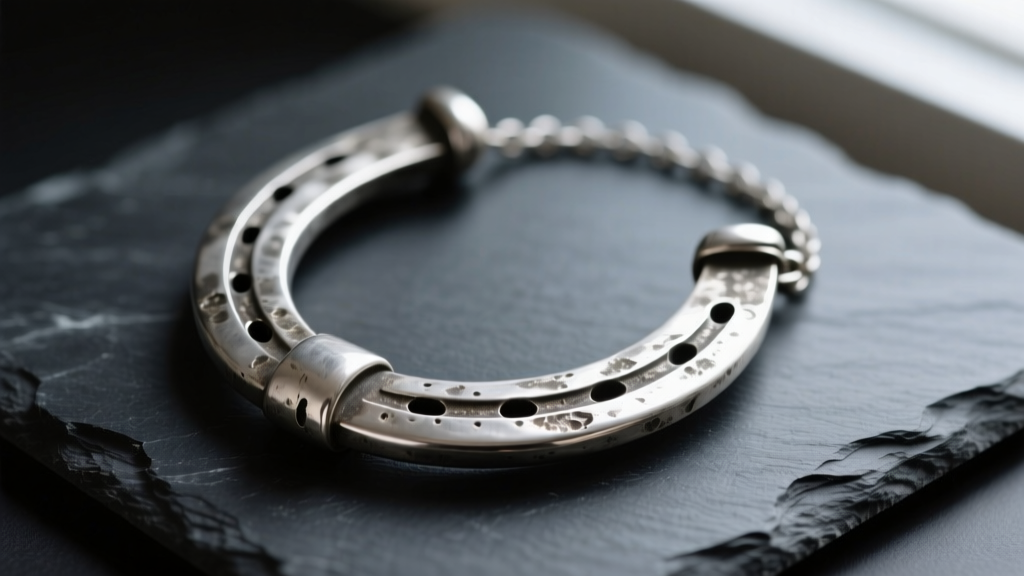
A silver horseshoe necklace is more than just a striking piece of jewelry; it is a timeless talisman of luck, protection, and equestrian heritage. Whether you wear it pointing upwards to "catch" good fortune or downwards to shower it upon you, maintaining its brilliant shine requires specific metallurgical knowledge. Unlike simple, flat silver pendants, a horseshoe pendant features intricate anatomy—including the fuller (the grooved channel), the calks (the blunt ends), and recessed nail holes. These textured crevices are notorious for trapping sebum, cosmetic residues, and sulfur compounds, leading to localized, stubborn tarnish.
In this comprehensive 2026 care guide, we break down the exact chemistry of silver tarnish, outline safe cleaning protocols that protect intentional antiquing, and provide professional storage strategies to keep your silver horseshoe necklace pristine.
The Chemistry of Tarnish: Why Your Lucky Charm Darkens
To properly care for your necklace, you must first understand what you are fighting. Pure silver (999 fine silver) is highly resistant to tarnish, but it is far too soft to be used for durable jewelry. Therefore, almost all high-quality silver horseshoe pendants are crafted from 925 Sterling Silver. This alloy consists of 92.5% pure silver and 7.5% copper.
The copper is the culprit behind tarnish. When copper is exposed to hydrogen sulfide in the air, as well as sulfur compounds found in human sweat, wool, and certain foods (like eggs and onions), it undergoes a chemical reaction that forms silver sulfide (Ag2S). This manifests as a yellowish tint that eventually deepens into a brown or black crust. According to the Victoria and Albert Museum's conservation guidelines, high humidity and airborne pollutants drastically accelerate this oxidation process.
The Danger of "Quick Fixes" for Horseshoe Pendants
If you search for silver cleaning hacks, you will inevitably encounter the "aluminum foil and baking soda" method, or commercial liquid dips like Tarn-X. Do not use these on a detailed horseshoe pendant.
Why You Must Avoid Chemical Dips and Electrochemical Baths
- Stripping Intentional Oxidation: Many premium horseshoe necklaces feature "antiqued" or "oxidized" details. Jewelers intentionally blacken the fuller groove and the nail holes to create contrast and highlight the equestrian texture. Electrochemical baths and liquid dips will strip this intentional patina in seconds, leaving your pendant looking flat and washed out.
- Micro-Pitting: Liquid dips often contain thiourea, a harsh chemical that dissolves silver sulfide but also micro-pits the surface of the silver. Over time, this leaves the metal porous, meaning it will actually tarnish faster after every subsequent cleaning.
- Chain Damage: If your horseshoe hangs on a delicate box chain or rope chain, harsh chemical dips can weaken the microscopic solder points at the links, leading to sudden chain breakage.
Step-by-Step Safe Cleaning Protocol
The safest, most effective way to clean a sterling silver horseshoe necklace without damaging its textured details is the mild surfactant method. The Gemological Institute of America (GIA) recommends this gentle approach for all sterling silver jewelry with intricate detailing.
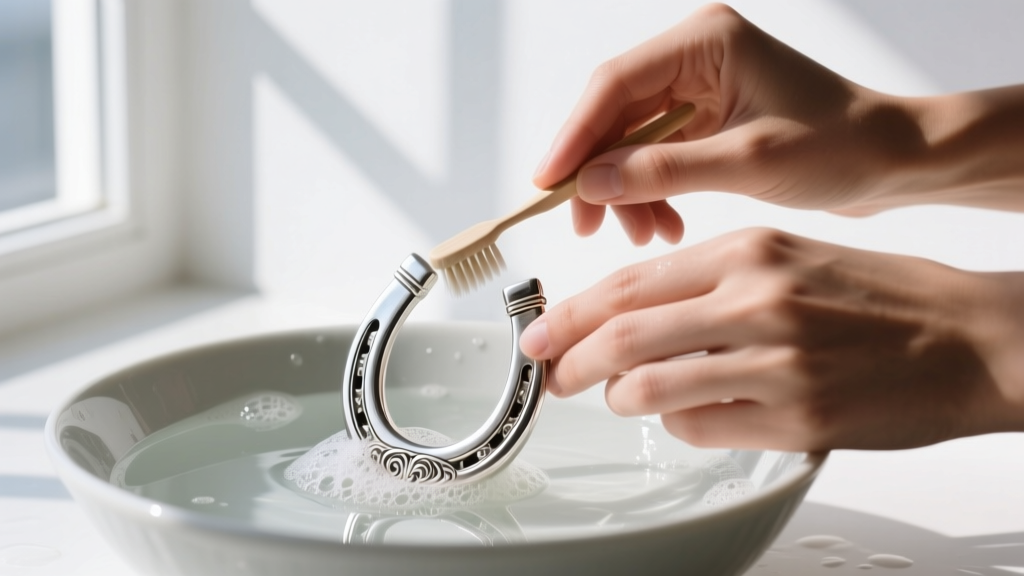
What You Will Need:
- Phosphate-free, mild liquid dish soap (e.g., Dawn or Castile soap)
- Lukewarm distilled water (tap water contains chlorine and minerals that can spot silver)
- An extra-soft baby toothbrush or a dedicated jewelry cleaning brush
- A lint-free microfiber cloth
- Wooden toothpicks or cotton swabs
The Cleaning Process:
- Prepare the Bath: Mix a few drops of mild soap into a glass bowl of lukewarm distilled water. Avoid hot water, which can shock any gemstones set into the horseshoe.
- Soak Briefly: Submerge the necklace for 3 to 5 minutes. This softens hardened sebum and cosmetic buildup trapped in the nail holes.
- Agitate Gently: Using the baby toothbrush, gently brush the surface of the horseshoe. Pay special attention to the calks (ends) and the bail (the loop where the chain attaches), as these are high-friction areas that accumulate dead skin cells.
- Detail the Crevices: If grime remains in the fuller groove, use a wooden toothpick to gently dislodge it. Wood is softer than silver and will not scratch the metal. Wrap a cotton swab in a microfiber cloth to polish the inside of the nail holes.
- Rinse and Dry: Rinse thoroughly under distilled water. Immediately pat dry with a microfiber cloth. Never let silver air-dry, as water spots will form.
Cleaning Agents: Safe vs. Destructive
Use this quick-reference table to ensure you are treating your silver horseshoe necklace with the correct compounds.
| Agent / Method | Verdict | Why? |
|---|---|---|
| Mild Dish Soap & Water | ✅ Safe | Removes oils and dirt without stripping silver or antiquing. |
| Sunshine Polishing Cloth | ✅ Safe | Contains micro-abrasives and anti-tarnish agents; great for high spots. |
| Baking Soda Paste | ❌ Destructive | Highly abrasive; will scratch the mirror finish and ruin oxidized grooves. |
| Aluminum Foil & Salt Bath | ⚠️ Conditional | Strips ALL oxidation. Only use on plain, un-antiqued, highly tarnished silver. |
| Commercial Liquid Dips | ❌ Destructive | Contains thiourea; causes micro-pitting and leaves a porous, fast-tarnishing surface. |
| Toothpaste | ❌ Destructive | Contains silica and calcium carbonate abrasives that permanently scratch sterling silver. |
Polishing Techniques for Intricate Horseshoe Details
Once the pendant is clean and dry, it is time to restore the mirror finish. For this, you need a high-quality impregnated polishing cloth, such as a Sunshine Cloth. These cloths contain specialized micro-abrasives that remove the microscopic layer of silver sulfide without scratching the underlying metal.
Pro-Tip for the Fuller Groove: Fold the polishing cloth into a tight wedge to slide it into the grooved channel of the horseshoe. Rub back and forth along the curve of the fuller. Avoid aggressively rubbing the blackened nail holes if you wish to preserve the antique contrast. If your horseshoe features a high-polish finish on the nail holes, wrap a small piece of the cloth around the tip of a wooden skewer to reach deep inside the recesses.
Special Considerations for Gemstone-Set Horseshoes
Many modern horseshoe necklaces feature pavé cubic zirconia, turquoise, or lapis lazuli accents. Never use ultrasonic cleaners on these pieces. The high-frequency vibrations can easily shatter turquoise and loosen the adhesive or prongs holding pavé stones in place. Stick strictly to the damp cloth and baby toothbrush method around gemstone settings.
Long-Term Storage & Environmental Control
Prevention is vastly superior to cure. Because silver sulfide requires moisture and sulfur to form, controlling the micro-climate of your jewelry storage is the ultimate maintenance hack.
"Silver should ideally be stored in a dry environment with a relative humidity (RH) below 50%. Tarnishing accelerates exponentially once RH levels exceed 65%." — Jewelry Conservation Best Practices.
The Ultimate Storage Setup:
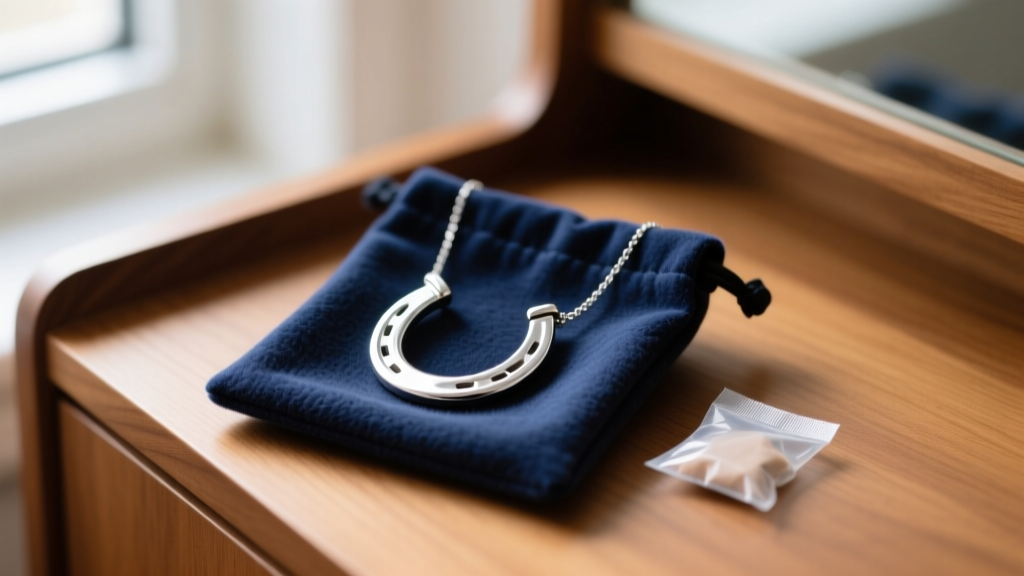
- Anti-Tarnish Pouches: Store your necklace in a Pacific Silvercloth pouch or a treated anti-tarnish flannel bag. These fabrics are embedded with microscopic silver particles that sacrifice themselves to sulfur gases, pulling the tarnish away from your actual necklace.
- Desiccants: Drop a small silica gel packet into your jewelry box or pouch to control ambient moisture. Replace the packets every 6 months.
- 3M Anti-Tarnish Strips: Place a strip of 3M anti-tarnish paper in your jewelry drawer. These strips absorb airborne sulfides and are highly effective in enclosed spaces.
- Wear It Often: Ironically, the best way to prevent tarnish on the high-contact areas of a silver horseshoe necklace is to wear it. The natural, gentle friction against your skin and clothing acts as a continuous, micro-polishing mechanism that keeps the surface bright.
When to Seek Professional Jeweler Services
While routine maintenance can be handled at home, certain situations require a professional bench jeweler. If your horseshoe necklace has heavy, black, pitted tarnish that does not respond to a polishing cloth, or if the lobster clasp on the chain has become stiff and springy, it is time to visit a professional. A jeweler can safely use a magnetic tumbler or a gentle ultrasonic bath (if no stones are present) to restore the piece without compromising its structural integrity or equestrian detailing.
By understanding the unique anatomy of your pendant and respecting the chemistry of sterling silver, your silver horseshoe necklace will remain a brilliant, lucky companion for decades to come.


