How to Fix and Maintain Your Freya Necklace: A Troubleshooting Guide
Is your Freya necklace tarnishing, tangling, or suffering from cloudy amber? Discover expert troubleshooting tips to restore your Norse jewelry.

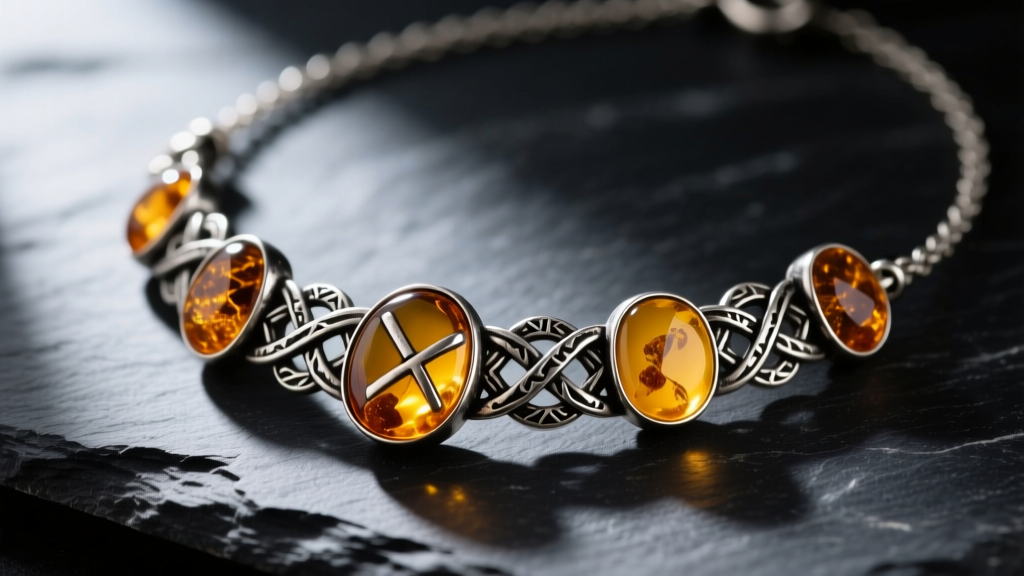
The Allure and Agony of the Freya Necklace
Inspired by the Norse goddess of love, beauty, and seiðr, the modern Freya necklace is a staple in mythological and Viking-inspired jewelry collections. Often characterized by intricate knotwork, chainmaille weaves, and the inclusion of raw or polished amber (a nod to the legendary Brísingamen), these pieces are visually striking. However, as of 2026, the market has seen a massive surge in mixed-media Viking revival pieces, bringing a unique set of metallurgical and gemological challenges to the forefront.
Unlike standard minimalist pendants, a traditional Freya necklace combines porous organic gemstones, complex interlocking metal weaves, and frequently mixed alloys. This combination creates a perfect storm for tangling, galvanic corrosion, and surface degradation. Whether you own a high-end artisan piece crafted from 925 sterling silver and Baltic amber, or a bronze and copper alloy replica, understanding the specific failure modes of your jewelry is essential for long-term preservation.
This comprehensive troubleshooting guide will walk you through the exact methodologies required to diagnose, repair, and maintain the structural and aesthetic integrity of your Freya necklace.
Problem 1: Cloudy or Scratched Amber and Resin Inlays
Amber is not a stone; it is fossilized tree resin. On the Mohs scale of mineral hardness, amber ranks between 2.0 and 2.5, making it softer than a human fingernail. This extreme softness means that the amber cabochons in your Freya necklace are highly susceptible to micro-scratches from everyday dust (which contains quartz, ranking 7.0 on the Mohs scale) and chemical clouding from skin oils, lotions, and perfumes.
The Science of Amber Degradation
When amber becomes cloudy, it is usually due to a combination of surface oxidation and the absorption of lipids from your skin. Over time, these oils penetrate the micro-fissures in the stone, altering its refractive index and giving it a dull, yellowish-brown haze. Furthermore, exposing amber to ultrasonic cleaners or harsh chemical dips (often used for silver cleaning) will cause catastrophic thermal shock, resulting in internal fracturing or complete shattering.
Step-by-Step Polishing and Restoration
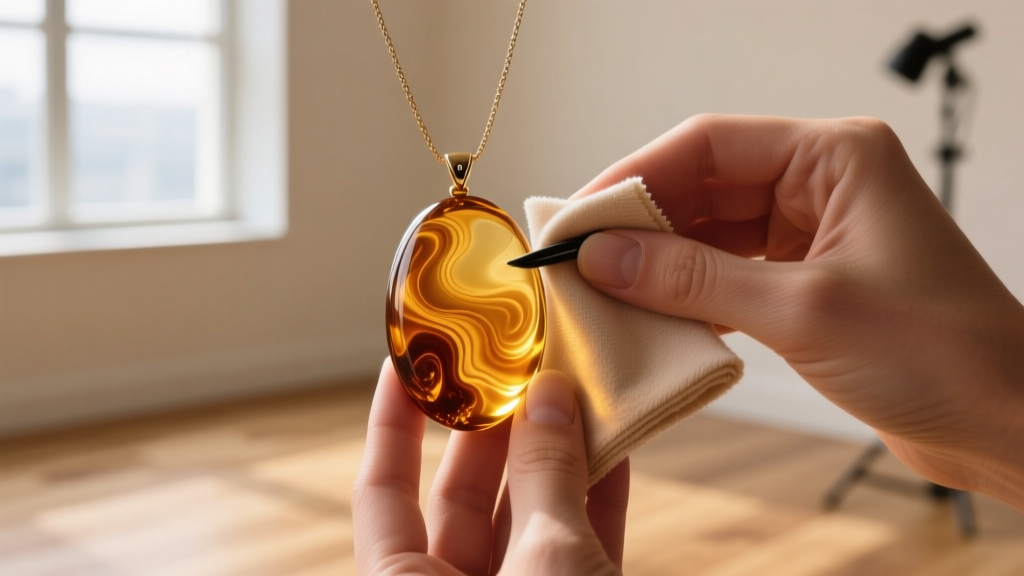
To restore the vitreous luster of your amber inlays without damaging the surrounding oxidized silver knotwork, follow this precise protocol:
- Isolate the Stone: Use painter's tape to mask off the sterling silver or bronze bezels immediately surrounding the amber. This prevents polishing compounds from stripping the intentional oxidation (patina) from the metal crevices.
- Remove Surface Grime: Wipe the amber gently with a damp, lint-free microfiber cloth. Do not use soap, as surfactants can leave a film.
- Apply Specialized Polish: Use a plastic-safe polishing compound, such as Novus 2 Fine Scratch Remover. Apply a pea-sized amount to a soft cotton swab.
- Buff in Circular Motions: Apply zero downward pressure. Let the mild abrasives in the compound do the work. Buff for 60 to 90 seconds.
- Final Seal: Wipe away the residue and apply a microscopic layer of pure mineral oil to rehydrate the surface and restore optical clarity.
Expert Note: According to the Gemological Institute of America (GIA), amber should never be exposed to prolonged sunlight or high heat, as this can cause the succinic acid within the resin to break down, leading to irreversible internal crazing (a network of fine cracks).
Problem 2: Knotwork and Chainmaille Tangling
Freya necklaces frequently utilize complex Viking knit, Trichinopoly chains, or interlocking knotwork designs. While historically accurate and visually stunning, these chains act like mechanical traps. A single bent link or kink can cause the entire necklace to collapse into a rigid, tangled bird's nest.
The Metallurgy of Kinking
Most high-quality Freya necklaces are crafted from 925 sterling silver (92.5% silver, 7.5% copper) or architectural bronze. The copper content in both alloys provides tensile strength but also makes the wire susceptible to work hardening. When a knotwork chain is bent sharply, the crystalline structure of the metal deforms and locks into place. If you try to forcefully pull a kinked chain apart, the work-hardened wire will snap rather than bend back into shape.
The 'Needle and Tension' Untangling Method
Never use your fingers to pull a tight knot in a Viking chain; the oils and friction will only tighten the bind. Instead, employ the needle and tension method:
- Lay the necklace flat on a dark, non-slip jeweler's mat.
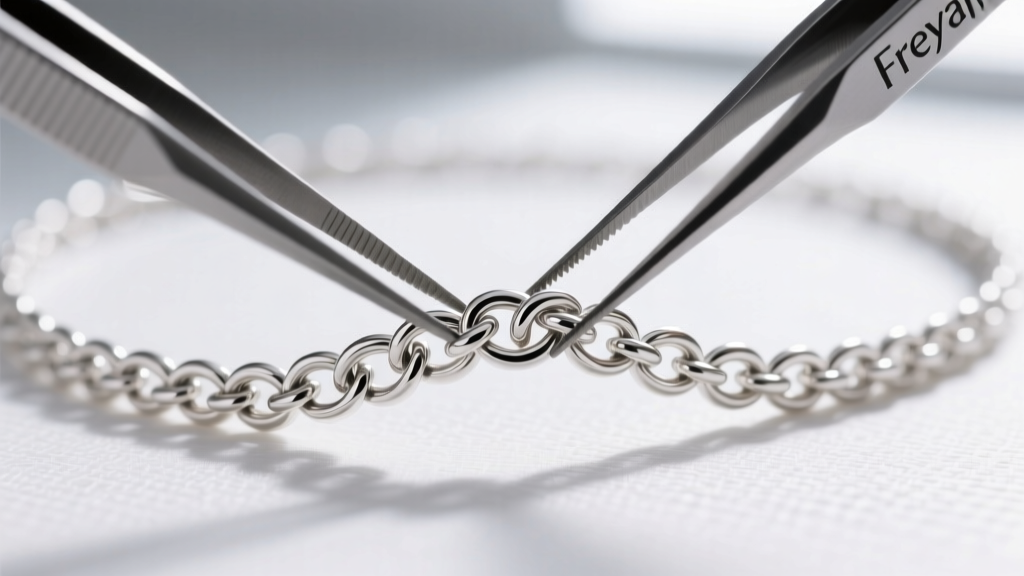
- Insert two fine-tipped titanium tweezers or beading needles into the center of the knot.
- Gently push the needles apart to create internal tension and expand the knot's core.
- Use a third tool (a single needle) to 'walk' the outermost loop over the expanded core.
- If the metal is severely work-hardened and resistant, apply a single drop of synthetic watch oil to the friction point to reduce surface drag.
Problem 3: Galvanic Corrosion in Mixed-Metal Designs
Many contemporary Freya necklaces feature mixed metals to create visual contrast—such as a bright sterling silver chain with dark oxidized bronze runes or copper accents. While beautiful, this creates a high risk for galvanic corrosion.
Understanding the Galvanic Series
When two dissimilar metals are in physical contact in the presence of an electrolyte (like human sweat or high humidity), an electrochemical reaction occurs. The less noble metal (the anode) will corrode rapidly to protect the more noble metal (the cathode). In a silver/copper pairing, the copper will degrade, leaving behind a green, powdery copper chloride residue that stains the skin and damages the silver.
| Metal Pairing | Galvanic Risk Level | Recommended Mitigation Strategy |
|---|---|---|
| Sterling Silver & Bronze | High | Use leather or enamel spacers to prevent direct metal-to-metal contact. |
| Sterling Silver & Copper | Severe | Apply a micro-crystalline wax (like Renaissance Wax) to the copper elements. |
| Sterling Silver & 14k Gold | Low | Safe for daily wear; standard polishing is sufficient. |
| Bronze & Raw Brass | Moderate | Keep completely dry; remove before exercising or swimming. |
To halt active galvanic corrosion on your Freya necklace, you must neutralize the affected area. Create a paste of baking soda and distilled water, apply it strictly to the corroded copper/bronze elements with a cotton swab, let it sit for three minutes to neutralize the acidic salts, and rinse thoroughly with distilled water. Dry immediately with compressed air.
Problem 4: Heavy Pendant Bail and Clasp Failures
A fully realized Freya necklace, complete with a large amber focal stone, bronze runes, and a heavy chainmaille collar, can easily weigh between 40 and 80 grams. Standard jewelry findings are simply not engineered to support this static and dynamic load.
Upgrading to Soldered Jump Rings and Lobster Clasps
The most common failure point on heavy Norse jewelry is the unsoldered jump ring connecting the pendant bail to the chain. Under the weight of a 50-gram pendant, a standard 20-gauge (0.81mm) unsoldered ring will slowly pull apart at the seam, resulting in the loss of the pendant.
The Fix: Take your necklace to a professional jeweler and request the following hardware upgrades:
- Replace the Bail Jump Ring: Upgrade to a 16-gauge (1.29mm) or 14-gauge (1.63mm) soldered jump ring. Soldering fuses the seam shut, increasing the tensile strength by over 400%. According to Rio Grande Jewelry Supply, soldered rings are mandatory for any pendant exceeding 15 grams.
- Replace the Clasp: Discard the standard 5mm spring ring clasp. Upgrade to a 10mm or 12mm cast lobster clasp with a heavy-duty internal spring mechanism. Ensure the lobster clasp is attached to the chain via a soldered oval link to prevent lateral twisting.
Routine Maintenance and Storage Protocols
Troubleshooting is only half the battle; preventative maintenance is what keeps a Freya necklace looking pristine for decades. Never store your necklace hanging on a standard jewelry tree. The constant gravitational pull on the knotwork chain will cause the links to stretch and elongate over time, permanently altering the drape of the piece.
Instead, store the necklace coiled loosely in a figure-eight pattern inside an anti-tarnish flannel pouch. Include a packet of silica gel desiccant and a 3M anti-tarnish strip inside the pouch to control ambient humidity and absorb sulfur compounds that cause silver sulfide (black tarnish) to form. By respecting the unique material properties of amber, bronze, and complex silver weaves, your Freya necklace will remain a powerful, flawless tribute to Norse mythology for years to come.


