Green Evil Eye Necklace Buying Guide: What to Look For
Discover what to look for when buying a green evil eye necklace. Learn about glass vs. enamel, chain pairings, and pricing in our expert guide.

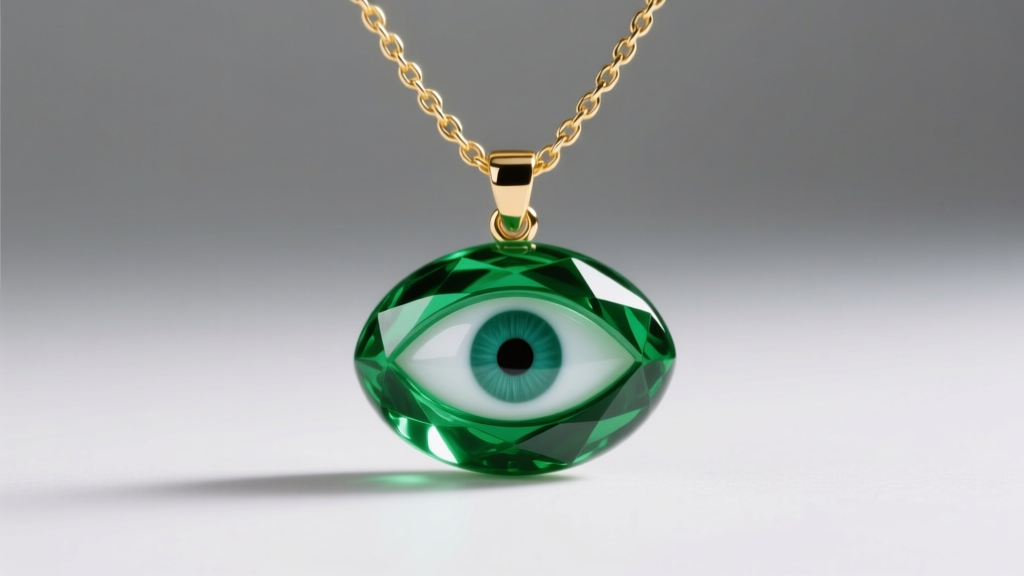
The Evolution of the Green Evil Eye Amulet
While the traditional cobalt blue Nazar amulet has dominated Mediterranean and Middle Eastern jewelry for centuries, the green evil eye necklace has emerged as a highly sought-after alternative in contemporary fine jewelry. In many Levantine and Anatolian traditions, green represents health, vitality, and a deep connection to nature. From a stylistic perspective, emerald, mint, and olive-toned evil eyes offer a versatile, earthy aesthetic that pairs seamlessly with both warm and cool metal tones. However, the market is currently flooded with mass-produced imitations that lack the structural integrity and cultural authenticity of true amulet jewelry. This buying guide will dissect the material science, hardware engineering, and pricing tiers you need to navigate before making a purchase.
Material Science: Glass, Enamel, and Resin
The most critical factor in determining the value, durability, and authenticity of a green evil eye pendant is the material used to create the "eye" itself. Understanding the difference between traditional lampwork, vitreous enamel, and synthetic resins is essential for any serious buyer.
Traditional Hand-Blown Lampwork Glass
Authentic Turkish evil eyes are crafted using lampwork, a technique where glass rods are melted over a high-temperature torch and wound around a mandrel. The green coloration is typically achieved using copper oxide or iron-rich glass frits. The most vital step in this process is annealing. Because glass has a specific Coefficient of Expansion (COE), the finished bead must be placed in a kiln at approximately 960°F and slowly cooled. If a manufacturer skips this step to save time, internal stress remains trapped in the glass, causing the pendant to spontaneously shatter weeks or months later. Always ask jewelers if their lampwork glass is kiln-annealed.
Vitreous Enamel and Cloisonné
For buyers seeking a more refined, fine-jewelry approach, vitreous enamel is the premier choice. Enamel is essentially powdered glass fused to a metal backing (usually 14k or 18k gold) in a kiln at temperatures exceeding 1400°F. According to the Gemological Institute of America (GIA), true vitreous enamel is incredibly durable, scratch-resistant, and will never yellow or fade, unlike synthetic alternatives. Cloisonné techniques use fine gold wires to separate the white, black, and green enamel pools, creating a crisp, high-end finish.
Mass-Produced Resin and Epoxy
Budget-friendly options often utilize cold enamel (epoxy resin) or poured acrylic. While these materials can mimic the glossy finish of glass, they are highly susceptible to micro-scratches, UV degradation (yellowing), and chemical damage from perfumes or lotions. Resin pendants are lightweight and suitable for seasonal fashion jewelry, but they hold no heirloom value.
| Material | Durability & Maintenance | Weight Profile | Price Range |
|---|---|---|---|
| Kiln-Annealed Lampwork Glass | High (shatter-resistant if annealed); clean with mild soap | Heavy (10-25g depending on diameter) | $45 - $180 |
| Vitreous Enamel on Solid Gold | Exceptional; scratch and UV resistant | Medium (4-8g) | $350 - $1,500+ |
| Epoxy Resin / Cold Enamel | Low; prone to scratching and yellowing | Very Light (1-3g) | $15 - $60 |
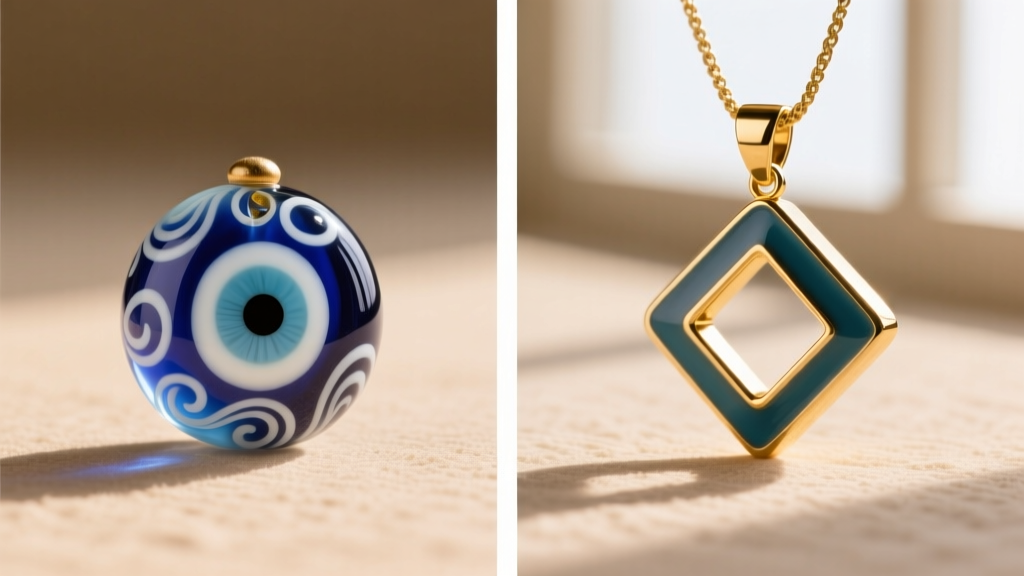
Chain Engineering: Supporting the Weight of Glass
A common failure point in evil eye necklaces is the chain snapping under the pendulum effect of a heavy glass bead. A standard 25mm solid glass evil eye pendant weighs between 12 and 18 grams. If you hang this on a delicate 0.8mm cable chain, the constant friction and kinetic movement will cause metal fatigue at the jump ring or clasp within a few months.
Optimal Chain Styles for Heavy Pendants
- Box Chains (1.2mm - 1.5mm): The interlocking square links distribute weight evenly and resist kinking. A 1.5mm solid 14k gold or 925 sterling silver box chain can easily support up to 30 grams of pendant weight.
- Rope Chains (1.5mm - 2.0mm): The twisted links offer excellent tensile strength and a beautiful light-reflecting texture that complements the glossy surface of the green glass.
- Avoid Snake Chains: While sleek, snake chains are notorious for trapping moisture and bending irreparably if subjected to the heavy, swinging motion of a glass amulet.
Clasp and Jump Ring Integrity
Ensure the pendant is attached via a soldered jump ring or a heavy-duty oval jump ring. Standard open round jump rings will slowly pull apart under the weight of glass. For the clasp, a sturdy lobster clasp with a reinforced swivel joint is mandatory for pieces exceeding 15 grams. The FTC Jewelry Guides strictly regulate metal stamping, so always verify that your chain's clasp or end tag bears a clear "14K", "18K", or "925" hallmark alongside a manufacturer's trademark to guarantee you are not buying plated base metals that will degrade.
Sizing and Proportion: Matching the Pendant to Your Neckline
The visual impact of a green evil eye necklace relies heavily on the diameter of the bead and the length of the chain. Choosing the wrong proportions can make the piece look either overwhelmingly bulky or disappointingly subtle.
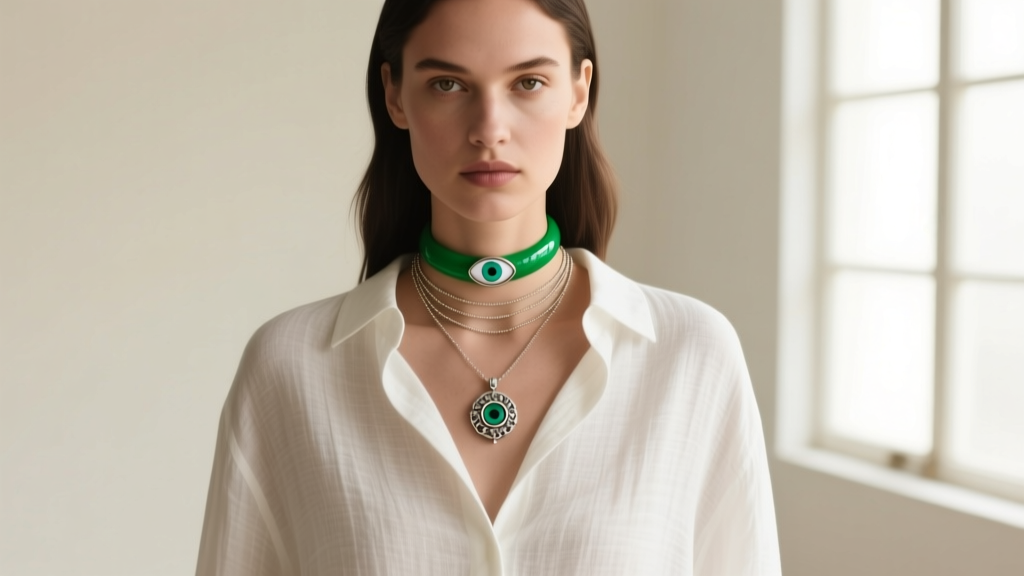
Diameter Guidelines
- 10mm - 15mm (Micro/Subtle): Ideal for choker lengths (14-16 inches) and intricate layering stacks. These sit perfectly in the suprasternal notch and pair beautifully with delicate gold herringbone chains.
- 20mm - 25mm (Standard Everyday): The most versatile size. Best worn on an 18-inch chain, allowing the pendant to rest just below the collarbone. This size is large enough to showcase the intricate green, white, and black layers of the eye without dominating the outfit.
- 35mm - 50mm (Statement): Reserved for standalone statement pieces. These require heavy rope chains and look best draped over high-necked garments or simple, solid-colored linens where the amulet can serve as the focal point.
Pricing Tiers and Ethical Sourcing
When shopping for a green evil eye necklace, pricing is a direct reflection of metallurgy, glassmaking techniques, and labor ethics. Here is what you should expect to pay in the current market:
Expert Sourcing Tip: If purchasing traditional glass, look for jewelers who partner directly with fair-trade cooperatives in the Izmir or Kemalpaşa regions of Turkey. Mass-produced factory glass often lacks the slight, organic asymmetries that characterize genuine hand-wound lampwork, and the labor conditions in unregulated factories are frequently poor.
- Tier 1: Fashion & Resin ($20 - $60)
Features gold-plated brass or silver chains with epoxy resin eyes. Suitable for temporary trends, but expect the plating to wear off and the resin to scratch within a year. - Tier 2: Artisan Silver & Glass ($80 - $250)
The sweet spot for authenticity. Features solid 925 sterling silver (often rhodium-plated to prevent tarnish) paired with genuine, kiln-annealed Turkish lampwork glass. - Tier 3: Fine Jewelry & Enamel ($400 - $2,000+)
Crafted by high-end designers using solid 14k or 18k gold and vitreous enamel or custom-cut chrysoprase and malachite inlays to create the green eye. These are heirloom-quality pieces designed to last generations.
Final Verdict: Building Your Amulet Wardrobe
A green evil eye necklace is more than a passing trend; it is a fusion of ancient protective symbolism and modern aesthetic sensibility. By prioritizing kiln-annealed glass or vitreous enamel, insisting on structurally sound chains like the 1.5mm box chain, and verifying metal hallmarks, you ensure that your amulet will survive the rigors of daily wear. Whether you opt for the earthy charm of traditional Anatolian lampwork or the sleek luxury of gold and enamel, understanding these technical details guarantees an investment that is as resilient as it is meaningful.


