Frida Kahlo Thorn Necklace And Hummingbird: Material Analysis
Explore the metallurgy and material properties behind the iconic Frida Kahlo thorn necklace and hummingbird pendant replicas for safe, wearable art.

Frida Kahlo’s 1940 masterpiece, Self-Portrait with Thorn Necklace and Hummingbird, remains one of the most visceral and analyzed works in modern art history. The painting features Kahlo wearing a collar of piercing thorns that draw blood from her neck, with a lifeless hummingbird suspended as a pendant. Today, translating this macabre, organic imagery into wearable, skin-safe jewelry requires a masterful understanding of metallurgy, structural engineering, and biocompatibility. As of 2026, artisan jewelers and high-end replica makers have moved far beyond simple cast alloys, utilizing advanced work-hardening techniques and specialized enameling to capture the painting's emotional weight without compromising the wearer's safety.
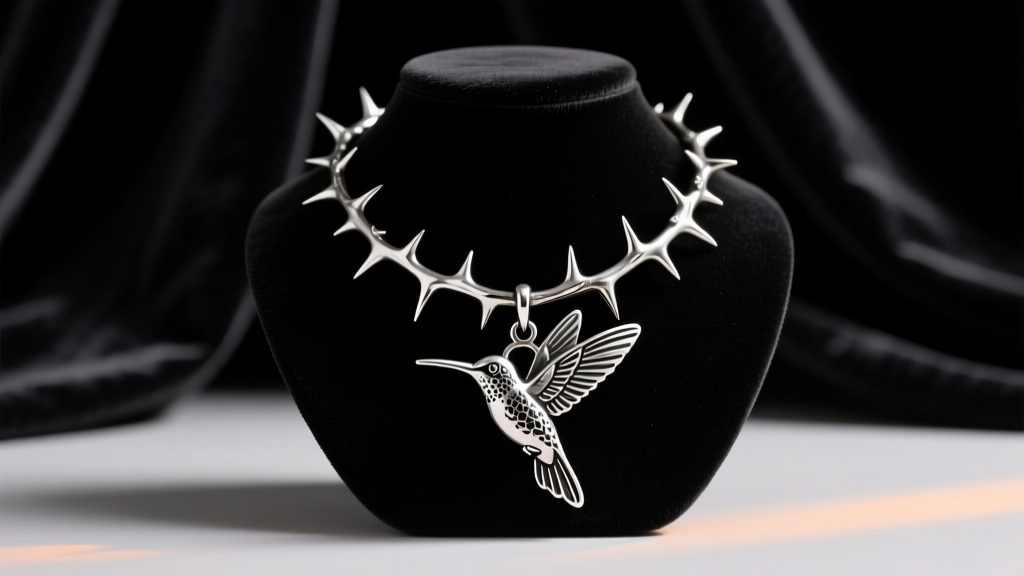
The Anatomy of the Thorn Collar: Metal Comparisons
Recreating the thorn collar demands a material that can hold a sharp, aggressive aesthetic while remaining entirely safe against the sensitive skin of the neck. The thorns must appear piercing but feature micro-blunted tips (usually polished to a 0.5mm radius) to prevent laceration. The choice of base metal dictates the necklace's drape, longevity, and oxidation potential.
Sterling Silver (925) vs. Blackened Steel vs. Grade 5 Titanium
While mass-market replicas often rely on cheap zinc alloys, serious metallurgical approaches to the frida kahlo thorn necklace and hummingbird motif rely on three primary metals. Sterling silver offers traditional luxury and excellent casting properties but requires significant work-hardening to prevent the thorns from bending. Blackened 316L stainless steel provides a dark, oxidized aesthetic straight from the forge with immense tensile strength. Grade 5 Titanium (Ti-6Al-4V) is the premium choice for 2026, offering unparalleled biocompatibility and a strength-to-weight ratio that prevents neck fatigue.
| Material | Vickers Hardness (HV) | Biocompatibility | Oxidation / Finish | Estimated Artisan Price Range |
|---|---|---|---|---|
| 925 Sterling Silver | 65 HV (Annealed) / 115 HV (Work-Hardened) | High (if nickel-free) | Tarnishes naturally; often chemically blackened | $250 - $600 |
| 316L Stainless Steel | 150 - 200 HV | Moderate (contains trace nickel) | Holds blackened PVD coating indefinitely | $120 - $300 |
| Grade 5 Titanium | 330 - 350 HV | Exceptional (100% hypoallergenic) | Anodized dark grey or matte blasted | $450 - $1,200 |
Wire Gauge and Structural Integrity
The structural failure point of any thorn necklace is the junction where the spike meets the base collar. If the wire gauge is too thin, the thorns will warp under the minor pressure of putting on or taking off the garment. Master jewelers construct the base collar using a heavy 10-gauge (2.58mm) or 12-gauge (2.05mm) wire to ensure the necklace maintains its rigid, collar-like shape.
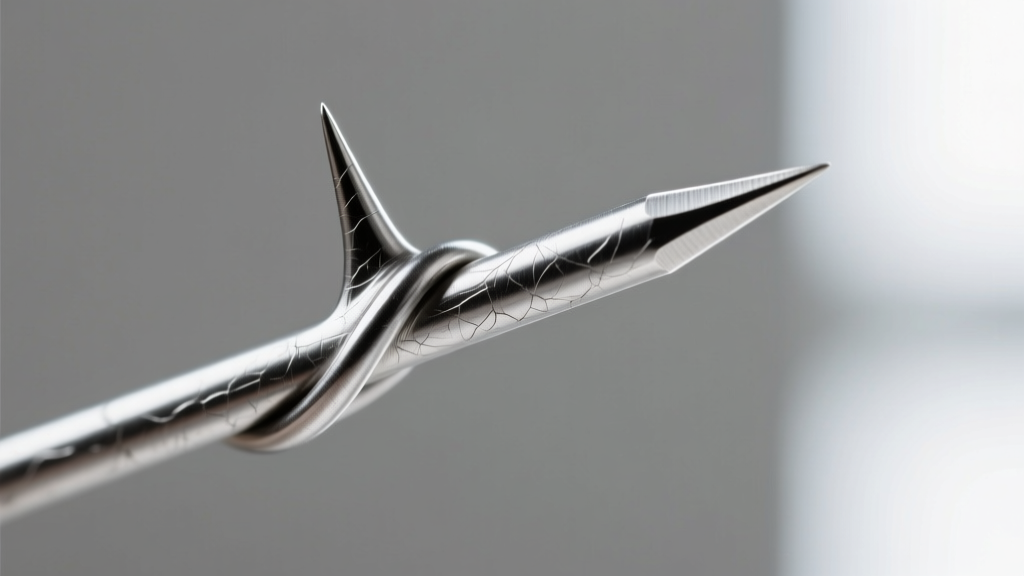
The thorns themselves are typically forged from 14-gauge (1.62mm) wire, tapering down to an 18-gauge (1.02mm) point. To achieve the necessary rigidity in sterling silver, artisans use a process called strain hardening. By repeatedly hammering or drawing the wire through a draw plate, the metal's crystalline structure is compressed, increasing its yield strength. Without this crucial step, a 14-gauge silver thorn would easily bend if caught on a silk scarf or heavy sweater.
The Hummingbird Pendant: Casting vs. Enamel
In Kahlo's painting, the hummingbird is a symbol of fallen luck in love, or perhaps a nod to the Aztec god of war, Huitzilopochtli. Translating this small, intricate, and lifeless bird into a pendant requires a material that captures fine feather detailing while maintaining a somber, dark palette.
Champlevé Vitreous Enamel
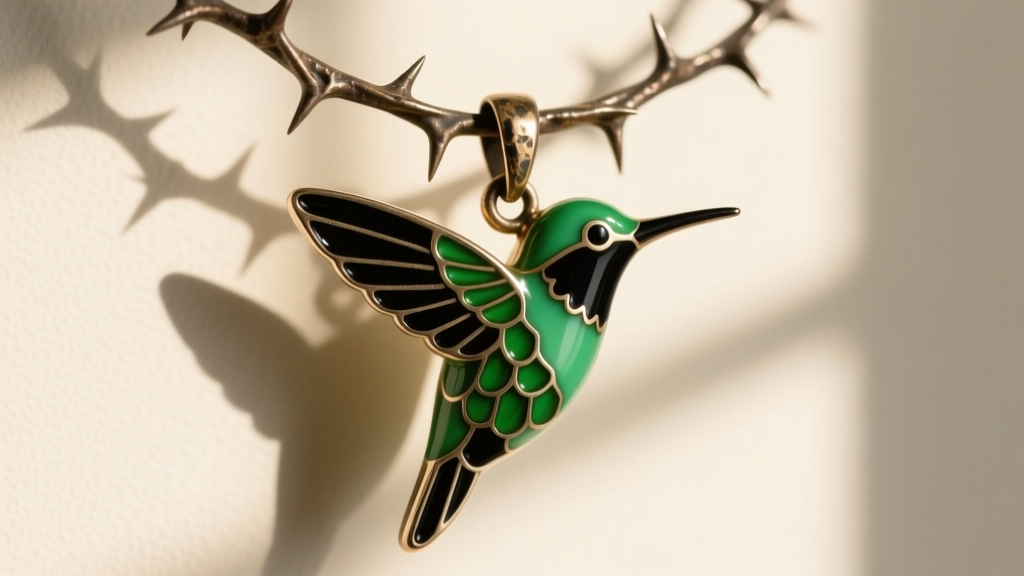
The highest quality replicas utilize champlevé enameling. This involves carving troughs into a thick copper or fine silver base and filling them with powdered glass (vitreous enamel). The piece is then fired in a kiln at approximately 800°C (1472°F). For the hummingbird, artisans use deep blacks, iridescent greens, and bruised purples to mimic the bird's lifeless state. The glass fuses to the metal, creating a permanent, scratch-resistant surface that will not fade over decades of wear.
Oxidized Bronze and Brass Alloys
For a more rustic, archaeological aesthetic, lost-wax casting in silicon bronze is highly effective. Silicon bronze flows exceptionally well into the microscopic crevices of a 3D-printed wax model, capturing individual feather barbs that are less than 0.2mm thick. Once cast, the bronze is submerged in liver of sulfur to create a deep, dark patina, which is then selectively polished on the high points to reveal the warm copper undertones beneath.
Skin Safety and Biocompatibility
Because the thorn collar rests directly against the carotid artery and the highly sensitive skin of the anterior neck, biocompatibility is not optional—it is critical. The neck skin is thinner and more permeable than the skin on the hands or earlobes, making it highly susceptible to contact dermatitis.
According to the Mayo Clinic, prolonged exposure to allergenic metals can trigger severe contact dermatitis, characterized by redness, blistering, and intense itching. Furthermore, the Gemological Institute of America (GIA) notes that metal allergies are primarily caused by nickel and cobalt leaching from alloys when exposed to the slight acidity of human sweat.
When commissioning or purchasing a frida kahlo thorn necklace and hummingbird piece, buyers must demand nickel-free certifications. If choosing 316L surgical steel, be aware that while it is highly corrosion-resistant, it still contains trace amounts of nickel (up to 12%). For individuals with known sensitivities, Grade 5 Titanium or properly alloyed nickel-free sterling silver (often alloyed with copper and germanium, such as Argentium silver) are the only medically safe choices for prolonged neck wear.
Sourcing and Pricing in 2026
The market for art-inspired jewelry has bifurcated into mass-produced drop-shipped items and bespoke artisan commissions. Mass-produced versions, typically cast from zinc alloys with a thin electroplated finish, can be found for $30 to $60. However, these pieces suffer from rapid plating wear, exposing the base metal and posing severe allergy risks.
For collectors and art historians seeking museum-quality wearables, independent metalsmiths on platforms like Etsy or through direct studio commissions offer pieces ranging from $350 to $1,500. These artisan pieces feature hand-forged thorns, micro-blunted safety tips, and vitreous enamel pendants. When evaluating a piece, always request the specific alloy composition, the wire gauge of the thorns, and the finishing technique used to ensure you are acquiring a piece of wearable art that honors Kahlo's legacy with structural and metallurgical integrity.


