Sterling Silver 4 Leaf Clover Necklace: Buyer's Guide
Discover what to look for when buying a sterling silver 4 leaf clover necklace. Learn about 925 hallmarks, chain types, inlays, and pricing tiers.

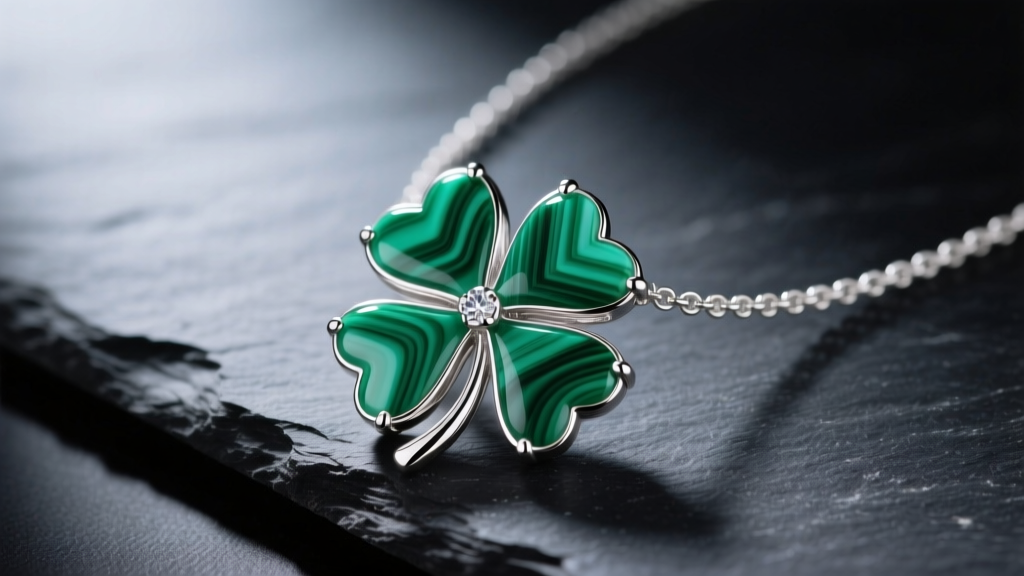
The four-leaf clover is a universal symbol of luck, serendipity, and protection. In the jewelry market, it is also one of the most popular motifs for everyday pendants. However, because of its widespread appeal, the market is flooded with misleading metal claims, fragile settings, and poorly constructed chains. When shopping for a high-quality sterling silver 4 leaf clover necklace, the difference between a lifelong wardrobe staple and a tarnished disappointment lies in the metallurgical and structural details.
This comprehensive buying guide breaks down exactly what to look for regarding metal purity, chain mechanics, stone inlays, and pricing frameworks to ensure your next purchase is built to last.
Decoding the 925 Stamp and Metal Integrity
Pure silver (999 fine silver) is far too soft to hold the shape of a detailed clover pendant or secure gemstone inlays. Therefore, jewelers use sterling silver, an alloy consisting of 92.5% pure silver and 7.5% copper or zinc. This addition provides the necessary tensile strength for daily wear.
Hallmarks and Legal Standards
Always inspect the back of the clover pendant or the small ring (bail) that connects it to the chain. You should see a clear '925', 'Ster', or 'Sterling' stamp. According to the Federal Trade Commission Jewelry Guides, it is illegal to misrepresent the silver content of jewelry in the United States. However, counterfeit stamps do exist on unregulated overseas marketplaces.
Rhodium Plating and E-Coatings
Sterling silver naturally tarnishes when exposed to sulfur in the air and moisture on the skin. To combat this, premium necklaces feature a flash plating of rhodium—a rare, platinum-group metal that provides a brilliant, white-gold-like finish and acts as a barrier against oxidation. Some modern artisan pieces also utilize anti-tarnish e-coatings (like Tarnish Shield), which are microscopic polymer layers that block sulfur exposure without altering the metal's luster.
Choosing the Right Chain for a Clover Pendant
The chain is just as critical as the pendant. A clover motif features rounded, organic lobes that can easily snag on poorly designed links. Furthermore, the weight of the chain must be proportional to the bail (the loop on the pendant). Here is how the most common chain styles pair with a clover pendant:
| Chain Type | Durability | Best For | Kink / Snag Risk |
|---|---|---|---|
| Box Chain | High | Everyday wear; sleek, modern look | Low (but can pull chest hair) |
| Cable Chain | Medium | Dainty pendants; classic, traditional styling | Medium (can snag on knits) |
| Snake Chain | Low | Heavy pendants; seamless, liquid-metal aesthetic | High (kinks permanently if bent) |
| Rope Chain | Very High | Layering; textured, vintage-inspired looks | Low (highly resilient) |
Expert Tip: Avoid spring-ring clasps if possible. They are notoriously difficult to operate with one hand and feature a weak internal spring. Always opt for a lobster clasp, which offers a secure, spring-loaded locking mechanism that will keep your lucky charm safely around your neck.
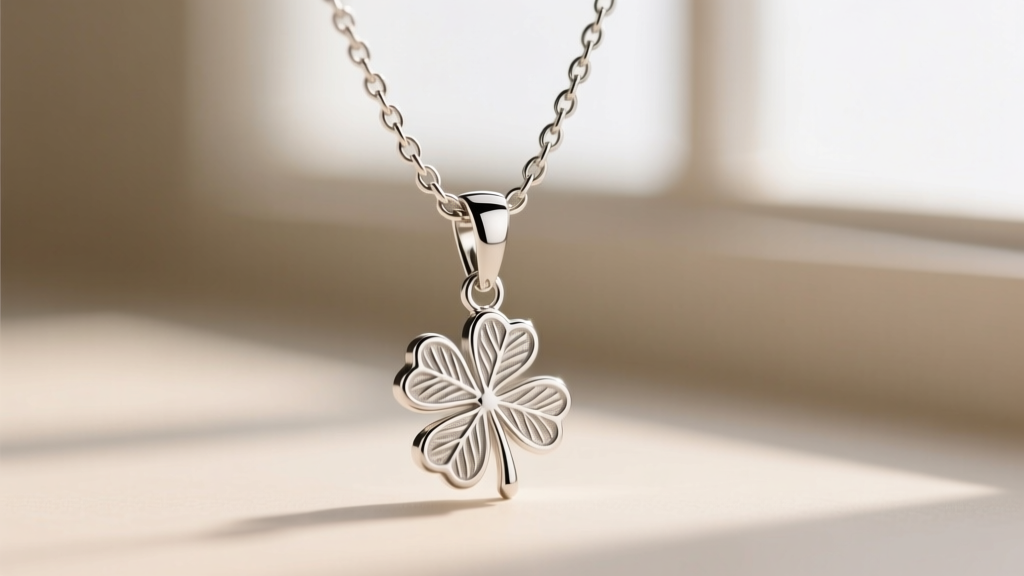
Evaluating Inlays: Enamel, Malachite, and Mother of Pearl
Many sterling silver 4 leaf clover necklaces feature colorful inlays to mimic high-end luxury designs. The material used for these inlays drastically affects the necklace's price, durability, and care requirements.
Cold Enamel vs. Vitreous Enamel
In the $30 to $80 price range, you will frequently encounter 'cold enamel.' This is actually a colored epoxy resin. While it offers vibrant colors (like deep reds or onyx blacks), it is essentially hardened plastic. It can chip if dropped on a tile floor and will inevitably yellow after 5 to 10 years of UV exposure. Vitreous enamel, on the other hand, is powdered glass fired in a kiln at over 1400°F, fusing it permanently to the silver. It is highly scratch-resistant but rare in mass-market silver jewelry.
Natural Stone Inlays
Malachite (green) and Mother of Pearl (white/iridescent) are the most popular natural inlays for clover motifs. The Gemological Institute of America (GIA) notes that malachite is relatively soft, ranking at 3.5 to 4 on the Mohs hardness scale, and is highly porous. When buying a malachite clover pendant, ensure the silver features a full bezel setting—where a continuous rim of silver wraps entirely around the edge of the stone. Prong settings leave the soft edges of the malachite exposed to chipping and moisture damage.
Pendant Proportions and Chain Lengths
The visual impact of your necklace depends heavily on the millimeter (mm) size of the clover and the length of the chain. Choosing the wrong proportion can make a beautiful piece look like a cheap toy or an overwhelming statement.
- Dainty (10mm - 14mm): Best paired with a 16-inch choker chain or a delicate 18-inch cable chain. Ideal for subtle, everyday layering and minimalist aesthetics.
- Standard (15mm - 20mm): The sweet spot for most buyers. A 20mm clover on an 18-inch princess chain rests perfectly at the collarbone, making it visible above most crew-neck and V-neck tops.
- Statement (25mm and above): Requires a thicker chain (like a 2.5mm rope or box chain) to support the weight. Best worn on a 20-inch to 24-inch chain over sweaters or deep necklines.

Pricing Framework: What Should You Pay?
Understanding the market tiers will help you avoid overpaying for mass-produced items or falling for 'too good to be true' scams.
Mass Market ($25 - $60)
At this tier, expect 925 sterling silver with cold enamel (resin) inlays or plain, unembellished metal. Chains will likely be lightweight (under 1.5mm) with spring-ring clasps. These are fine for occasional wear but will require frequent polishing.
Mid-Tier & Boutique ($80 - $250)
Here you will find rhodium-plated sterling silver, genuine malachite or Mother of Pearl inlays, and secure lobster clasps. The silver weight will be substantial, and the bezels will be smoothly polished to prevent snagging on clothing.
Artisan & Designer ($300+)
Designer pieces in this range may feature vitreous enamel, hand-engraved silver details, or accent diamonds/gemstones set into the clover's lobes. You are paying for superior craftsmanship, brand heritage, and premium packaging.
Authenticity Checks and Red Flags
If you are buying a sterling silver 4 leaf clover necklace from a vintage shop, an estate sale, or an unverified online vendor, perform these quick field tests:
- The Magnet Test: Silver is diamagnetic, meaning it is not attracted to magnets. If your pendant or chain snaps to a neodymium magnet, it is likely brass or steel with a thin silver plating.
- The Smell Test: Rub the metal vigorously between your fingers. Sterling silver is odorless. If you detect a distinct metallic, coppery, or sulfurous smell, the piece is heavily alloyed with copper or is entirely brass.
- The Ice Test: Silver has the highest thermal conductivity of any common metal. If you place an ice cube on the pendant, it should begin to melt almost instantly, much faster than it would on glass or steel.
By prioritizing metal integrity, secure settings, and proportional sizing, you can find a beautiful, durable clover necklace that brings both style and a little bit of luck to your daily rotation.


