Self Portrait With Thorn Necklace And Hummingbird By Frida Kahlo Materials
Explore the metallurgy and material properties inspired by Self Portrait with Thorn Necklace and Hummingbird by Frida Kahlo for modern jewelry design.

Translating Surrealist Agony into Wearable Metallurgy
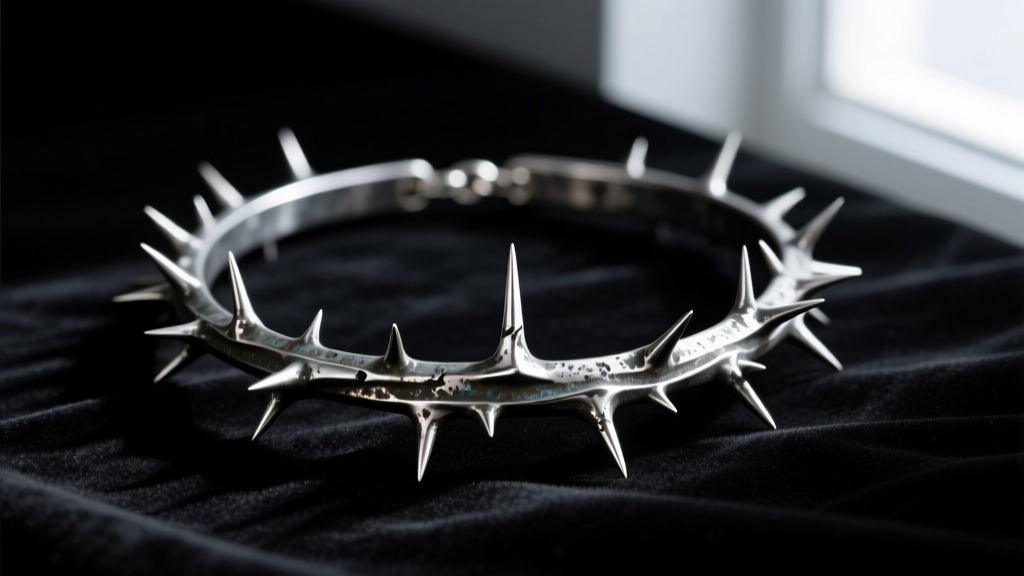
When art historians and master jewelers examine the Self Portrait with Thorn Necklace and Hummingbird by Frida Kahlo, they are often struck by the visceral tension between organic decay and enduring symbolism. Painted in 1940, the artwork features a literal bramble of thorns wrapped tightly around Kahlo’s neck, drawing blood and serving as a potent metaphor for emotional and physical martyrdom. From a contemporary jewelry design perspective, recreating this iconic, aggressive botanical aesthetic requires a profound understanding of material science, biocompatibility, and structural engineering.
Modern artisans tasked with designing 'thorn' or 'bramble' collar necklaces must balance the dangerous, surrealist silhouette with the practical realities of skin safety and metal fatigue. A necklace that mimics the piercing nature of Kahlo’s thorns cannot actually pierce the wearer; instead, it must rely on optical illusions, precise wire gauges, and advanced metallurgical finishing to convey danger while remaining entirely wearable. Below, we deconstruct the material properties, alloy compositions, and fabrication techniques required to bring this surrealist masterpiece into the realm of high-end, wearable neckwear.
Material Comparison: Capturing the Thorn Aesthetic
The visual weight of a thorn necklace demands materials that can hold sharp, intricate details while supporting a dark, moody patina. The choice of base metal dictates not only the final aesthetic but the necklace's longevity and interaction with human skin chemistry.
Oxidized Sterling Silver (925)
Sterling silver remains the premier choice for botanical jewelry due to its exceptional castability and ability to take a deep, black oxidation. Standard 925 silver consists of 92.5% pure silver and 7.5% copper alloy. It is the copper content that reacts with chemical oxidizers—most notably Liver of Sulfur (potassium sulfide)—to create the dark, gunmetal-black patina that mimics dead, dried brambles. With a Vickers hardness of approximately 60-70 HV in its annealed state, sterling silver is soft enough to be hand-carved or easily cast via the lost-wax method, yet hard enough to maintain the sharp tips of thorns when properly work-hardened during tumbling.
Blackened Grade 5 Titanium (Ti-6Al-4V)
For large, heavy collar necklaces that cover the entire clavicle, the density of silver (10.49 g/cm³) can cause severe neck fatigue. Enter Grade 5 Titanium, an aerospace-grade alloy comprising 90% titanium, 6% aluminum, and 4% vanadium. Titanium is exceptionally light (4.43 g/cm³) and entirely hypoallergenic. However, titanium cannot be chemically oxidized like copper-bearing silver. To achieve the 'Kahlo black' aesthetic, titanium thorn necklaces must undergo Physical Vapor Deposition (PVD) or Diamond-Like Carbon (DLC) coating. This results in a surface hardness exceeding 2000 HV, making the thorn tips virtually scratch-proof, though it significantly increases the manufacturing cost and limits post-casting adjustments.
Cast Silicon Bronze
Silicon bronze (typically 95% copper, 4% silicon, 1% manganese) offers a warmer, more organic undertone when oxidized. It is highly fluid in the casting process, allowing for incredibly detailed thorn textures pulled directly from organic molds. According to Rio Grande Jewelry Supply, silicon bronze is favored for heavy, sculptural statement pieces because it is significantly less expensive than silver while offering superior tensile strength, reducing the risk of the collar warping under its own weight.
| Material | Density (g/cm³) | Hardness (HV) | Patina Method | Skin Reactivity |
|---|---|---|---|---|
| 925 Sterling Silver | 10.49 | 65-75 | Liver of Sulfur | Mild (Copper sensitivity) |
| Grade 5 Titanium | 4.43 | 350 (Base) | PVD / DLC Coating | None (Highly Biocompatible) |
| Silicon Bronze | 8.80 | 90-110 | Ammonia / Salt Fuming | Moderate (High Copper) |
Biocompatibility and the Collarbone Interface
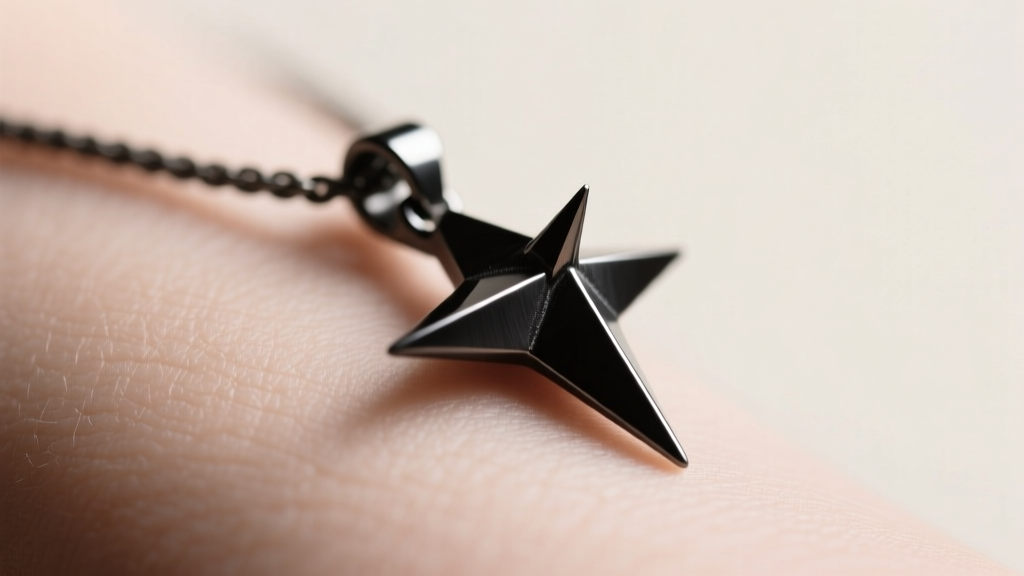
The primary challenge in designing a thorn necklace is the interface between the metal and the delicate skin of the neck and clavicle. In the Self Portrait with Thorn Necklace and Hummingbird by Frida Kahlo, the thorns point inward, embedding into the flesh. In wearable jewelry, inward-facing spikes are a catastrophic liability.
Master jewelers employ several engineering solutions to maintain the visual threat of the thorns without causing lacerations:
- Directional Casting: Thorns are designed with a sweeping, curved geometry that points outward and downward, away from the carotid artery and jugular vein, creating a silhouette of danger while the inner band remains smooth.
- Resin Capping: For designs that require inward-facing barbs, the microscopic tips are dipped in a UV-curable, skin-safe jeweler's epoxy resin. This creates a clear, rounded micro-bead at the apex of each thorn, preserving the sharp visual line while eliminating the puncture hazard.
- Inner Collar Lining: High-end botanical collars often feature an inner band of 18k yellow gold or pure platinum. As noted by The Silver Institute, while silver is generally safe, the acidic environment of the neck can cause copper alloys to leach and stain the skin green. A biocompatible inner liner prevents this reaction entirely.
Structural Gauges and Casting Methodologies
A thorn necklace is essentially a rigid or semi-rigid torque collar. If the base wire is too thin, the necklace will bend out of shape when the wearer puts it on. If it is too thick, it becomes unwearable armor.
The ideal base structure for a heavy bramble collar utilizes 12-gauge (2.05mm) or 10-gauge (2.58mm) round wire for the primary structural vine. The thorns themselves are typically sprued and cast using 16-gauge (1.29mm) to 18-gauge (1.02mm) wax patterns. Using the lost-wax casting method, jewelers can create a seamless, single-piece collar where the thorns are metallurgically fused to the base vine, eliminating the weak points associated with soldering individual spikes onto a chain.
'The illusion of fragility in botanical jewelry is entirely manufactured. A piece that looks like a brittle, dead branch must actually possess the tensile strength of a steel cable to survive daily wear.' — Master Bench Jeweler
The Hummingbird Drop: Vitreous Enameling Techniques
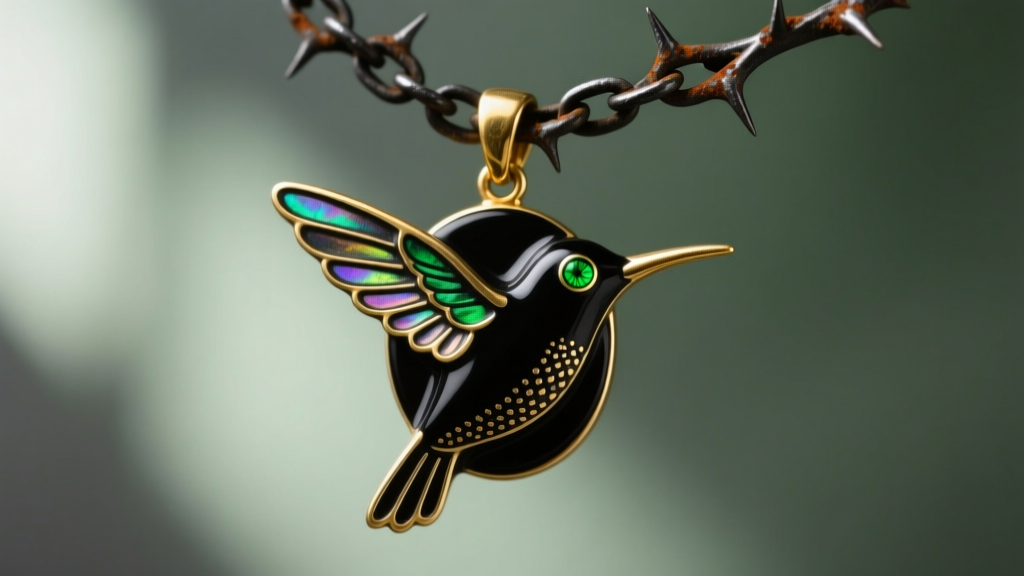
Hanging from the center of Kahlo’s thorn necklace is a dead hummingbird, a symbol deeply rooted in Mexican folklore and Aztec mythology, often associated with Huitzilopochtli, the god of sun and war. Translating this pendant into a physical object requires a mastery of color and light that bare metals cannot provide.
Plique-à-jour vs. Cloisonné
To capture the iridescent, jewel-toned feathers of a hummingbird, jewelers typically turn to vitreous enameling. This process involves fusing finely ground silica glass to a metal substrate at temperatures exceeding 1400°F (760°C).
- Cloisonné: Fine silver or gold wires (often 24-gauge) are bent into the shape of the bird's feathers and soldered to a solid backing. The cells are filled with opaque or translucent enamel powders. This provides a durable, highly detailed pendant that can withstand the swinging motion of a heavy collar.
- Plique-à-jour: Translated as 'letting in daylight,' this technique creates a stained-glass effect with no metal backing. While breathtakingly beautiful for a hummingbird's wings, plique-à-jour is incredibly fragile. A pendant utilizing this technique must be heavily bezel-set and suspended from a fixed bail to prevent the enamel from shattering against the metal thorns during movement.
For the eyes of the hummingbird, micro-pavé set tsavorite garnets or synthetic emeralds (0.8mm to 1.2mm) are preferred over traditional enamel due to their ability to catch ambient light and provide a lifelike, predatory gleam.
Patina Preservation and Long-Term Care
The dark, brooding aesthetic of a thorn necklace relies entirely on its patina. However, the friction of clothing and the natural oils of human skin will gradually wear away chemical oxidation, particularly on the high points of the thorns, leaving them bright and shiny while the crevices remain black.
To preserve the memento mori aesthetic of the piece, jewelers must seal the oxidation. After treating the sterling silver or bronze with Liver of Sulfur and selectively polishing the high points with a 3M Radial Bristle disc, the entire piece must be sealed. Renaissance Wax, a microcrystalline wax developed by the British Museum, is the industry standard. Applied thinly and buffed with a horsehair brush, it creates a moisture-resistant barrier that locks in the black patina and prevents the copper alloys from reacting with the wearer's sweat.
For collectors and enthusiasts of art-inspired jewelry, understanding these material properties transforms a simple accessory into a wearable piece of art history. By respecting the metallurgy and engineering required to safely replicate the Self Portrait with Thorn Necklace and Hummingbird by Frida Kahlo, modern jewelers ensure that the surreal beauty of the 1940 masterpiece continues to captivate, without drawing a single drop of blood.
For further research on the historical context of the painting, visit the Frida Kahlo Museum official archives.


