Galadriel Necklace Materials: Silver, Gold & Alloy Guide
Compare Galadriel necklace materials from sterling silver to pewter. Discover which elven replica alloy offers the best tarnish resistance and detail.

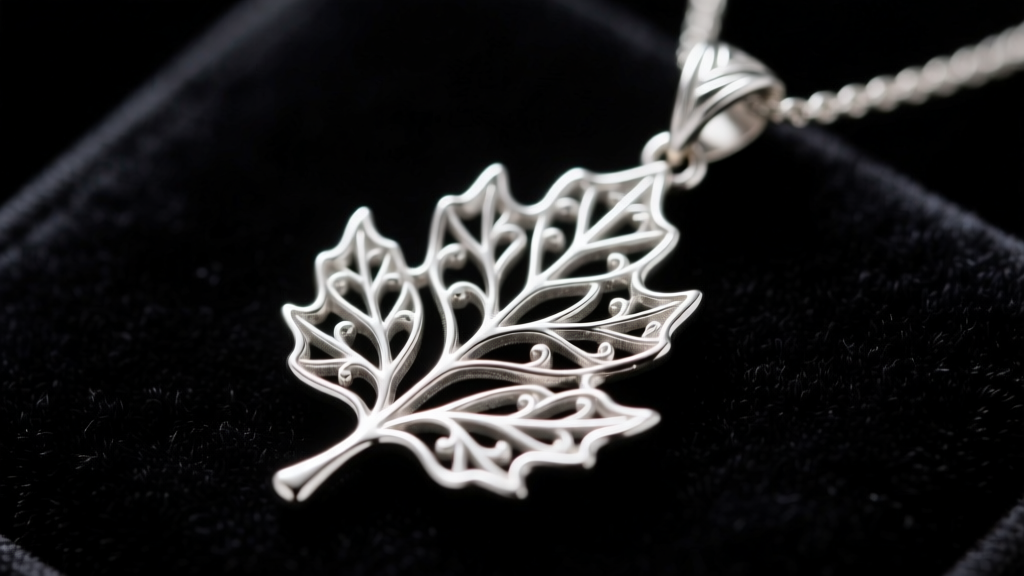
The Metallurgy of Middle-earth: Decoding the Galadriel Necklace
The Galadriel necklace, characterized by its sweeping, organic leaf motifs and ethereal elegance, remains one of the most sought-after fantasy jewelry replicas in the world. However, as collectors and fans navigate the market in 2026, the visual similarity between a $40 pendant and a $400 heirloom piece masks a vast chasm in metallurgical quality. Whether you are purchasing a replica inspired by the original cinematic trilogy or the more recent television adaptations, understanding the material properties of your elven jewelry is critical. The wrong alloy can lead to rapid tarnishing, skin discoloration, and a loss of the crisp, intricate filigree details that define elven craftsmanship.
In this comprehensive guide, we break down the exact metallurgical compositions, casting methods, and long-term durability of the most common materials used to craft the iconic Galadriel necklace. By examining Vickers hardness, tarnish rates, and casting resolutions, you can make an informed decision that aligns with your budget and expectations for wearable art.
Sterling Silver (925) vs. White Gold: The Premium Tier
For collectors seeking museum-quality replicas, Sterling Silver (925) and White Gold represent the pinnacle of accessible luxury. Sterling silver is an alloy consisting of 92.5% pure silver and 7.5% copper. The addition of copper is necessary to increase the metal's Vickers hardness (HV) from a soft 25 HV (pure silver) to a more durable 60-70 HV. According to the Gemological Institute of America (GIA), this copper content is also the primary culprit behind silver's tendency to tarnish when exposed to atmospheric sulfur and moisture.
White gold, typically 14k (58.5% pure gold) or 18k (75% pure gold), is alloyed with metals like nickel, palladium, or manganese to achieve its silvery hue. With a Vickers hardness ranging from 120 to 150 HV, white gold is significantly more scratch-resistant than sterling silver. Furthermore, high-end white gold Galadriel necklace replicas are almost always flashed with rhodium, a platinum-group metal that provides a brilliant, untarnishable mirror finish. While white gold offers superior longevity and a heavier, more luxurious drape, its price point is often three to five times that of sterling silver, making 925 silver the most popular choice for serious replica collectors who prioritize intricate detail resolution via lost-wax casting.
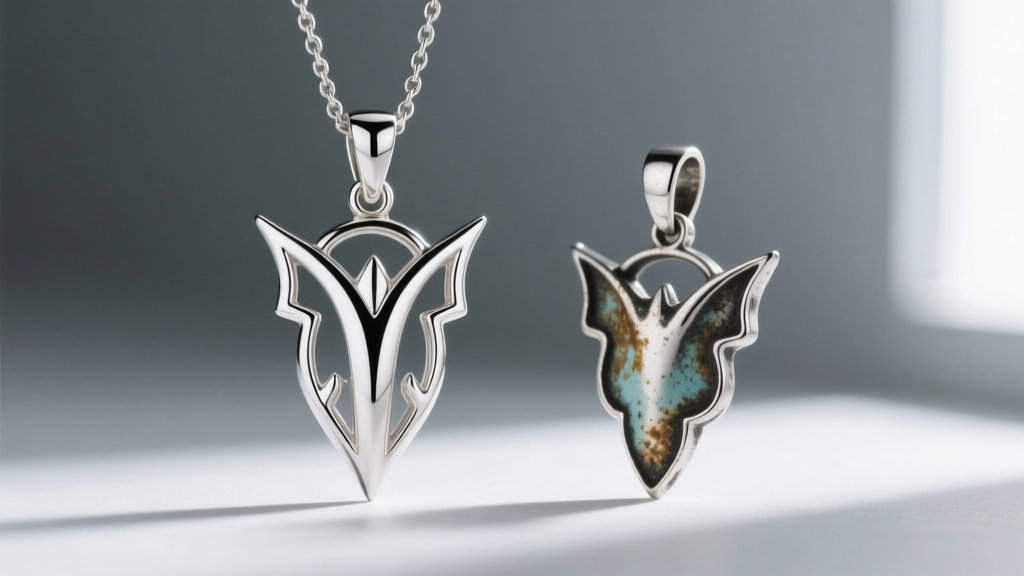
Base Metals and Alloys: Pewter, Brass, and Zamak
The budget-friendly segment of the replica market is dominated by base metals. While these materials make elven jewelry accessible, they come with distinct metallurgical compromises. Modern pewter, often referred to as Britannia metal, is a lead-free alloy composed primarily of tin (91%), antimony (7.5%), and copper (1.5%). Pewter has a very low melting point (around 230°C to 260°C), which allows for inexpensive rubber mold casting. However, this low melting point results in a soft metal that lacks the crisp edge definition required for the delicate leaf veins of a Galadriel pendant. Pewter is also prone to bending and scratching under daily wear.
Zamak, an alloy of zinc, aluminum, magnesium, and copper, is the standard for mass-produced, die-cast costume jewelry. Zamak melts at approximately 385°C and is injected into steel molds under high pressure. While this allows for rapid, cheap production, Zamak is notoriously brittle and heavy. If the alloy is impure, it can suffer from 'zinc pest'—a slow, intergranular corrosion that causes the metal to expand, crack, and eventually crumble into dust over a period of years. Brass (copper and zinc) offers a warmer, golden tone and better structural integrity than Zamak, but it requires heavy lacquering or plating to prevent the copper content from reacting with skin acids and leaving a green residue on the wearer's chest.
The Vermeil and Gold-Plated Trap
Many budget replicas market themselves as 'gold' when they are merely plated. True gold vermeil requires a base of sterling silver plated with a minimum of 2.5 microns of gold (usually 14k or 18k). Unfortunately, many cheap Galadriel necklace replicas utilize flash plating over brass or Zamak. Flash plating is often less than 0.1 microns thick and will wear through to the base metal within weeks of friction against clothing. When purchasing a gold-toned elven pendant, always verify the base metal and the exact micron thickness of the plating to avoid premature degradation.
Material Properties Comparison Chart
| Material | Tarnish Rate | Detail Resolution | Est. Price Range | Skin Reactivity |
|---|---|---|---|---|
| 14k White Gold | None (Rhodium) | Excellent | $800 - $2,500+ | Hypoallergenic |
| Sterling Silver (925) | Moderate | Excellent | $120 - $400 | Low (Copper allergy risk) |
| Gold Vermeil (925 Base) | Low (Until worn) | Excellent | $150 - $450 | Low |
| Brass (Lacquered) | Low (If sealed) | Good | $40 - $90 | Moderate (Zinc/Copper) |
| Pewter (Britannia) | Low (Oxidizes) | Poor/Soft | $30 - $75 | Hypoallergenic |
| Zamak / Zinc Alloy | N/A (Painted) | Moderate | $15 - $40 | High (Nickel risk) |
Chain Selection: Matching the Pendant's Metallurgy
A common mistake collectors make is pairing a high-quality cast pendant with an inappropriate chain. The bail (the loop connecting the pendant to the chain) on elven-style jewelry is often narrow and intricately shaped to mimic twisting vines or branches. A standard 2.0mm chain will simply not fit, or worse, will cause excessive friction that wears down the bail over time.
For most Galadriel necklace replicas, a 1.2mm to 1.5mm rope or cable chain is ideal. The rope chain offers a textured, twisted profile that mimics elven rope-work and catches the light beautifully, complementing the organic leaf motifs of the pendant. According to jewelry manufacturing experts at Rio Grande, ensuring that the chain's clasp and jump rings are made of the same metal as the pendant is crucial. Pairing a sterling silver pendant with a brass chain will result in galvanic corrosion where the two dissimilar metals meet in the presence of moisture, rapidly degrading the jump ring.
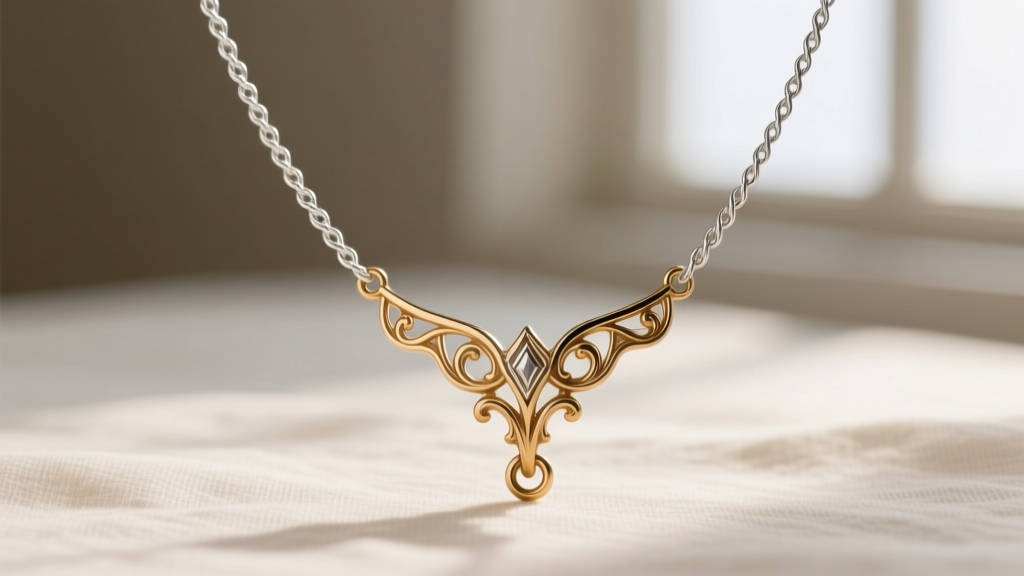
Gemstone Settings in Elven Replicas
Many iterations of the Galadriel necklace feature a central focal point, often a simulated diamond, cubic zirconia (CZ), or a cast resin element meant to resemble a glowing elven gem. The material of the pendant dictates how securely this stone is held. In premium sterling silver or white gold replicas, stones are typically set using precision cast bezels or micro-prongs. These mechanical settings ensure the stone remains secure even if the piece is bumped.
In budget Zamak or pewter replicas, the metal is often too soft or brittle to support delicate prongs. Instead, manufacturers rely on industrial adhesives to glue the stone into a shallow depression. Over time, exposure to skin oils, perfumes, and temperature fluctuations will degrade these adhesives, leading to lost stones. If you are purchasing a replica with a glued gemstone, avoid ultrasonic cleaners entirely, as the high-frequency vibrations will shatter the adhesive bond instantly.
Care and Preservation of Elven Replicas
Preserving the ethereal beauty of your necklace requires an understanding of its specific alloy. For sterling silver pieces, tarnish is an inevitability, not a flaw. Store your silver Galadriel necklace in an airtight ziplock bag alongside a 3M anti-tarnish strip, which absorbs atmospheric sulfur compounds before they can react with the copper in the alloy. When polishing, use a microfiber cloth treated with a mild jeweler's rouge. Avoid liquid silver dips, as these harsh chemical baths can strip the oxidized antiquing that jewelers intentionally apply to the recesses of the leaf filigree to create depth and contrast.
For gold-plated or vermeil pieces, the goal is to minimize friction and chemical exposure. Always put your necklace on after applying cosmetics, perfumes, and hairsprays. Remove it before showering or swimming, as chlorine and hard water minerals will accelerate the breakdown of the gold micron layer. For base metals like pewter, a simple wash with mild dish soap and a soft toothbrush is sufficient to remove skin oils; never use abrasive polishes, as pewter's soft surface will scratch and dull permanently.
Final Verdict: Choosing Your Elven Heirloom
The ideal material for your Galadriel necklace depends entirely on your intent. If you are seeking a durable, daily-wear piece that will last a lifetime and retain its crisp, cinematic detailing, 925 sterling silver is the undisputed champion of value and craftsmanship. It offers the necessary hardness for lost-wax casting while remaining accessible to most collectors. White gold is reserved for those seeking a true luxury heirloom, while base metals like Zamak and pewter should be strictly relegated to occasional cosplay use where budget and weight are the primary concerns. By prioritizing metallurgical integrity over superficial visual similarities, you ensure that your piece of Middle-earth remains as timeless as the elves themselves.


