Garnet Bead Necklace Guide: Properties, Grades & Quality Tiers
Discover the material properties of a garnet bead necklace. Compare almandine, pyrope, and tsavorite grades, stringing options, and pricing.

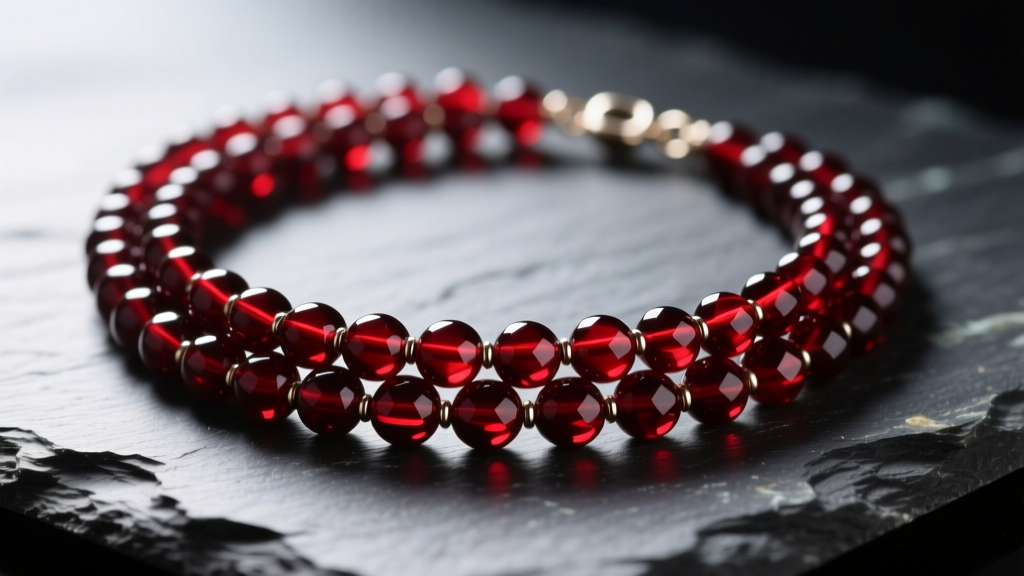
The Mineralogy of Garnet: Beyond the Classic Red
When consumers and collectors search for a garnet bead necklace, they are typically envisioning a strand of deep, burgundy-red stones. However, from a gemological perspective, garnet is not a single mineral but a complex group of silicate minerals that share a common crystal structure but vary wildly in chemical composition. According to the Gemological Institute of America (GIA), the garnet group includes several distinct species, each offering unique optical properties, specific gravities, and color profiles that directly impact how a bead necklace drapes, catches the light, and wears over time.
Understanding these material differences is critical for evaluating quality. A strand of beads is only as durable and visually appealing as the specific silicate species it comprises. The most common species used in bead cutting include Almandine, Pyrope, Spessartine, and the highly prized Grossular variety known as Tsavorite. As noted by Mindat.org, the solid solution series between Almandine and Pyrope means many commercial red beads are actually hybrid compositions, though they generally lean heavily toward one end of the spectrum.
Almandine vs. Pyrope: The Red Bead Showdown
Almandine is the most abundant garnet species and the primary material for affordable, dark red bead strands. It is iron-rich, which gives it a deeper, sometimes slightly brownish-red hue. Pyrope, conversely, is magnesium-rich, yielding a brighter, more vibrant crimson that rivals ruby in its finest grades. In the bead market, pure Pyrope strands command a significant premium over Almandine due to their superior light return and lack of dark extinction (the blacking out of color in low light).
Physical Properties That Dictate Necklace Durability
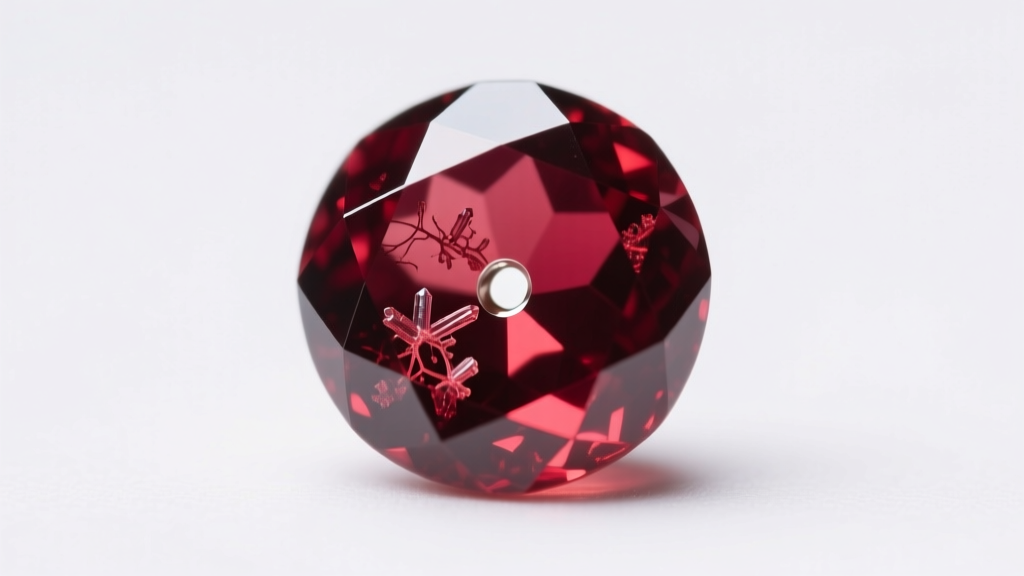
The physical properties of garnet dictate not just its durability, but the structural requirements of the necklace itself. Garnet lacks cleavage, meaning it does not split along defined crystallographic planes like diamond or topaz. However, it is still brittle and can chip upon sharp impact, particularly at the drill holes of beads.
Hardness, Specific Gravity, and Drape
Garnet ranks between 6.5 and 7.5 on the Mohs hardness scale, making it highly suitable for everyday necklaces. It will not be easily scratched by common environmental dust (which contains quartz at 7.0), provided the specific variety is on the higher end of the scale. Tsavorite and Spessartine generally hover around 7.0 to 7.5, while Almandine is closer to 7.0.
Specific gravity (SG) is a rarely discussed but vital metric for bead necklaces. SG determines the weight of the strand, which influences the drape and the strain placed on the stringing material and the wearer's neck.
| Garnet Variety | Chemical Composition | Mohs Hardness | Specific Gravity | Refractive Index |
|---|---|---|---|---|
| Almandine | Iron Aluminum Silicate | 7.0 - 7.5 | 3.90 - 4.30 | 1.76 - 1.82 |
| Pyrope | Magnesium Aluminum Silicate | 7.0 - 7.5 | 3.60 - 3.80 | 1.73 - 1.76 |
| Spessartine | Manganese Aluminum Silicate | 6.5 - 7.5 | 4.10 - 4.20 | 1.79 - 1.81 |
| Tsavorite (Grossular) | Calcium Aluminum Silicate | 7.0 - 7.5 | 3.60 - 3.68 | 1.74 - 1.75 |
A 16-inch strand of 8mm Almandine beads will weigh noticeably more than an identical strand of Pyrope. This higher density gives Almandine a luxurious, heavy drape but requires heavier-duty stringing materials to prevent premature stretching or snapping.
Stringing Materials: Matching the Thread to the Stone
Because garnet beads are relatively heavy and possess a high refractive index that demands precise faceting or polishing, the stringing material must complement the stone. The drill holes in garnet beads can sometimes have microscopic sharp edges if not polished internally, which can fray organic threads over time.
Comparing Silk, Nylon, and Steel Wire
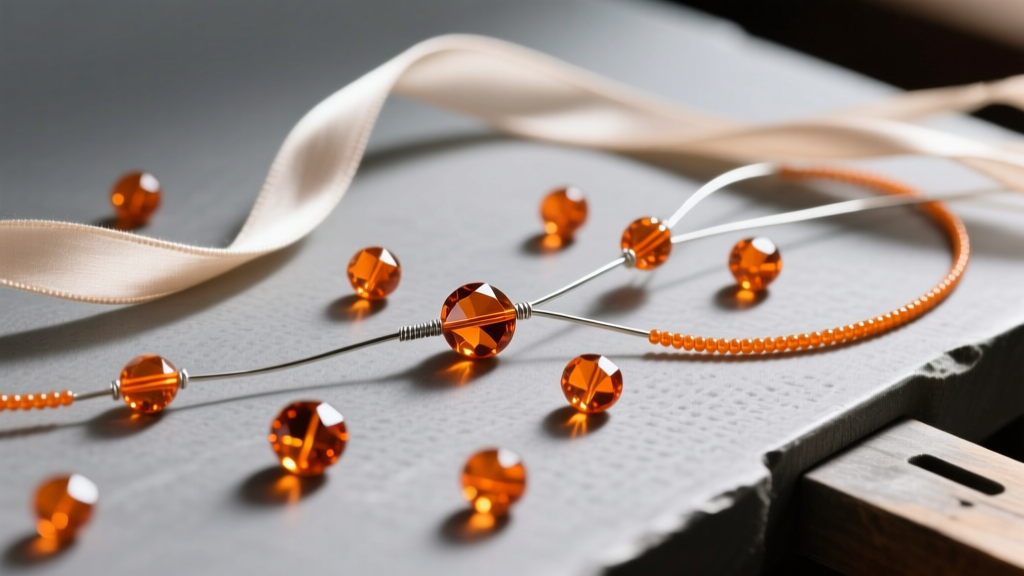
Choosing the right stringing medium is a balance between traditional aesthetics and modern durability. Here is a breakdown of the optimal stringing materials for a garnet bead necklace based on bead size and weight:
- Griffin 100% Natural Silk: The traditional choice for knotting. Ideal for 4mm to 6mm Pyrope or Tsavorite beads. Use Size No. 2 (0.30mm) for 4mm beads and Size No. 4 (0.35mm) for 6mm beads. Silk provides the best fluid drape but degrades with sweat and moisture, requiring restringing every 2-3 years.
- PowerPro Braided Polyethylene: A modern synthetic alternative to silk. It offers the knotting capability of silk but with vastly superior tensile strength and zero moisture absorption. Excellent for heavy 8mm Almandine strands.
- Beadalon 49-Strand Stainless Steel Wire: The industry standard for unknotted, flexible necklaces. For 6mm to 8mm garnet beads, a 0.015-inch diameter wire provides a supple drape. For beads 10mm and larger, step up to a 0.018-inch or 0.024-inch diameter to prevent kinking under the high specific gravity of the stones.
Evaluating Bead Quality: Sizing, Drilling, and Polish
Not all garnet bead strands are created equal. When sourcing a garnet bead necklace, inspect the drill holes and surface polish under a 10x jeweler's loupe. Lower-tier commercial beads are often drilled from both sides using a standard twist bit, resulting in a cone-shaped hole that meets in the center. This creates a sharp "lip" inside the bead that acts like a blade against silk thread, causing sudden breakage.
Premium garnet beads feature straight, cylindrical drill holes that are ultrasonically cleaned and sometimes internally polished. Additionally, check the calibration. In a high-quality strand, the tolerance between beads should be within 0.2mm. A strand labeled as "6mm" should not contain beads ranging from 5.5mm to 6.8mm, as this variance ruins the visual symmetry and causes uneven stress distribution on the stringing wire.
The 2026 Market Reality: Natural vs. Synthetic
An important E-E-A-T insight for modern buyers: as of 2026, there is virtually no market for lab-created garnet beads. While synthetic garnets (like YAG) exist for laser and industrial applications, the natural mining of Almandine and Pyrope in India, Madagascar, and Mozambique is so abundant and cost-effective that producing synthetic garnet for jewelry beads is economically unviable. If you are buying a red garnet bead strand, you are almost certainly buying natural earth-mined material, though it may be color-enhanced via low-heat treatment to reduce brownish undertones.
Market Pricing and Value Tiers for Garnet Strands
Pricing for garnet bead necklaces varies exponentially based on the species, color saturation, and clarity. The International Colored Gemstone Association (ICA) notes that while red garnets remain highly accessible, rare varieties like Tsavorite and color-change garnets occupy the luxury tier.
Real-World Price Ranges (Wholesale to Retail)
| Garnet Type | Bead Size | Quality Tier | Approx. Retail Price (16" Strand) |
|---|---|---|---|
| Almandine (Dark Red) | 6mm Round | Commercial (Opaque/Included) | $15 - $35 |
| Pyrope (Crimson) | 6mm Faceted | Fine (Eye-Clean, Vivid) | $80 - $150 |
| Spessartine (Orange) | 5mm Round | Medium (Slight Inclusions) | $120 - $250 |
| Tsavorite (Green) | 4mm Faceted | Extra Fine (Vivid Green) | $800 - $1,500+ |
When evaluating a high-ticket Tsavorite or Spessartine bead necklace, always request a macro-video of the strand in natural daylight. Artificial jewelry store lighting often masks the extinction (dark areas) in heavily included beads, making them appear more vibrant than they are in real-world wear.
Care and Maintenance for Silicate Beads
Garnet is a durable silicate, but it requires specific care to maintain its optical brilliance. Because garnet beads are often strung on organic or synthetic threads, never clean a garnet bead necklace in an ultrasonic cleaner. The high-frequency vibrations can shatter beads with internal tension fractures and will rapidly degrade silk or nylon thread.
Instead, use a soft, lint-free microfiber cloth dampened with warm water and a drop of mild, ammonia-free dish soap. Gently wipe each bead individually, avoiding the drill holes to prevent moisture from becoming trapped against the stringing wire, which can lead to oxidation and rust over time. Store the necklace flat in a fabric-lined box; while garnet resists scratching from dust, it can easily scratch softer gemstones like pearls, turquoise, or opals if stored loosely together in a jewelry pouch.


