Gayle King Starburst Necklace: Value & Budget Dupes
Discover the true value of the Gayle King starburst necklace. We break down diamond pricing, material grades, and the best budget-friendly dupes.

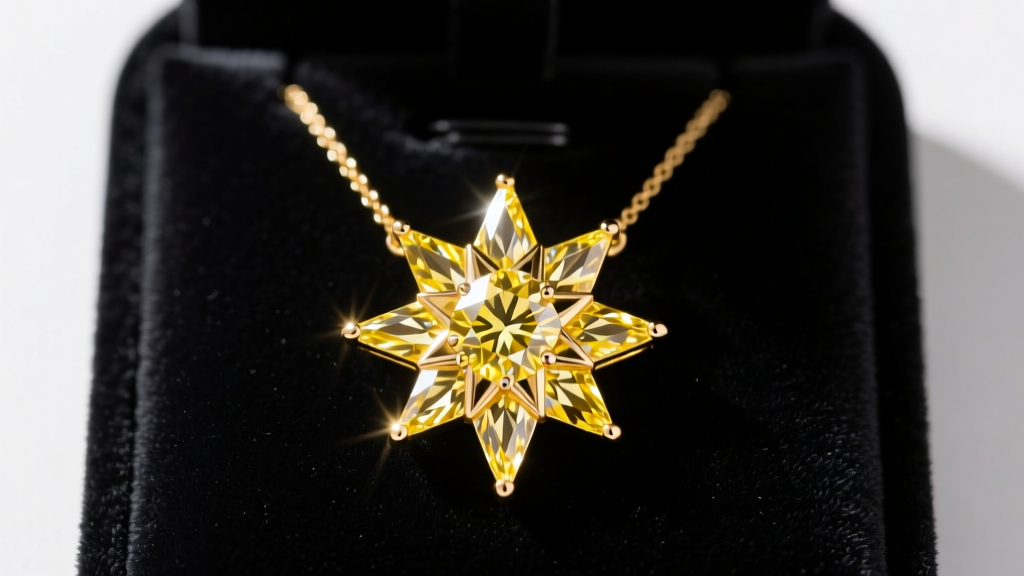
The Anatomy of the Iconic Starburst Pendant
When broadcast journalist Gayle King wears a piece of jewelry on CBS Mornings, it inevitably sparks a wave of consumer interest. Among her most frequently rotated and highly searched pieces is her diamond starburst necklace. Often referred to interchangeably as a sunburst pendant, this design is a masterclass in vintage-inspired geometry and light performance. But what exactly makes this specific silhouette so captivating, and more importantly, what is its actual market value in 2026?
A true starburst pendant is defined by its radiating structure. Unlike a standard halo necklace, where smaller stones encircle the center stone in a flat, continuous ring, a starburst features elongated stones—typically marquise or pear cuts—that extend outward from the center like rays of light. The center stone is usually a round brilliant cut, ranging from 0.50 to 1.50 carats, while the radiating rays add an additional 1.00 to 3.00 carats in Total Carat Weight (CTW). This creates a massive visual footprint on the chest without requiring the prohibitive cost of a single, massive solitaire diamond.
High-End Value Assessment: What Does a True Starburst Cost?
To assess the budget alternatives, we must first establish the baseline value of a high-end, natural diamond starburst necklace comparable to the ones seen on television. In the current fine jewelry market, a pendant featuring a 3.00 CTW natural diamond starburst (with a 1.00ct center and 2.00ct of marquise rays) set in 18k gold commands a premium. Assuming the diamonds are in the F-G color range and VS1-VS2 clarity, retail prices from established luxury jewelers typically range between $18,000 and $28,000.
From a strict investment perspective, natural diamond jewelry depreciates the moment it leaves the boutique. Unless the piece is signed by a heritage house like Cartier or Van Cleef & Arpels, the secondary market resale value will hover around 30% to 40% of the retail price. This steep depreciation curve is precisely why budget-conscious buyers and value-assessors are pivoting toward alternative materials that offer identical optical performance without the luxury markup.
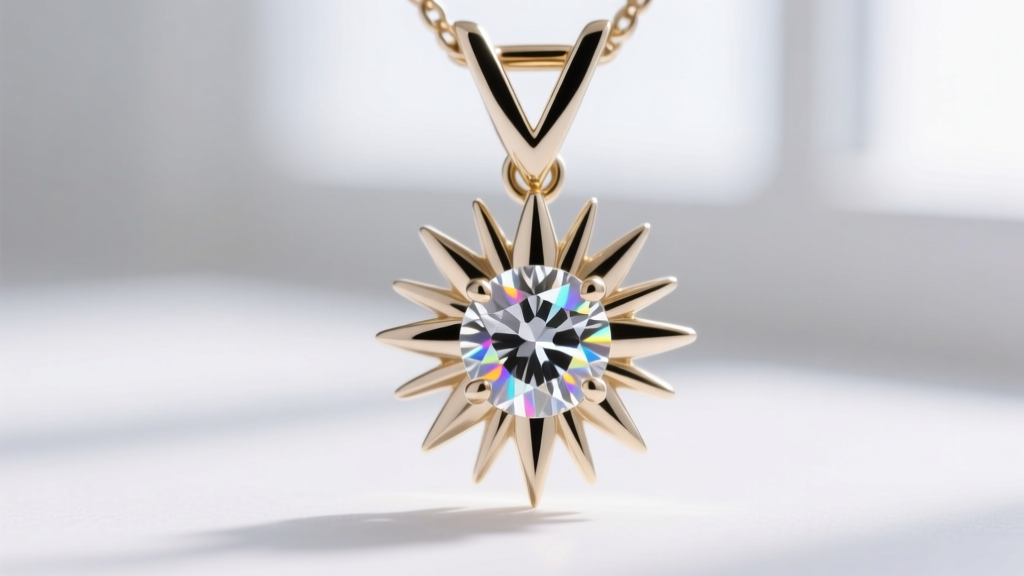
Budget & Mid-Tier Alternatives: Material Breakdown
The democratization of the starburst silhouette in 2026 is largely thanks to advancements in lab-grown diamond technology and precision-cut moissanite. According to the Gemological Institute of America (GIA), lab-grown diamonds possess the exact same physical, chemical, and optical properties as mined diamonds. The only difference is their origin, which drastically alters the pricing structure.
Below is a comprehensive value assessment comparing the most common materials used to recreate the Gayle King starburst look, assuming a standard 3.00 CTW pendant set in 14k gold.
| Material | Center Stone | Ray Stones | Metal Base | Est. 2026 Price Range | Mohs Hardness |
|---|---|---|---|---|---|
| Natural Diamond | Mined Round | Mined Marquise | 18k Gold | $18,000 - $28,000 | 10 |
| Lab-Grown Diamond | Lab Round | Lab Marquise | 14k/18k Gold | $2,200 - $4,500 | 10 |
| Moissanite | Moissanite Round | Moissanite Marquise | 14k Gold | $850 - $1,600 | 9.25 |
| Cubic Zirconia (CZ) | CZ Round | CZ Marquise | Gold Vermeil | $120 - $280 | 8.0 - 8.5 |
For the ultimate balance of luxury, longevity, and budget, the Lab-Grown Diamond tier is the undisputed winner. You retain the prestigious 10 on the Mohs scale of hardness, ensuring the piece will never scratch or cloud, while saving up to 85% compared to natural equivalents. If your budget is strictly under $1,000, a high-grade Moissanite pendant set in solid 14k gold offers incredible fire and brilliance, though its refractive index (2.65) gives it a slightly more colorful, rainbow-like sparkle compared to a diamond's crisp white light return.
How to Spot a Quality Starburst Dupe
Not all budget starburst necklaces are created equal. When shopping for an affordable dupe, the difference between a piece that looks like fine jewelry and one that looks like costume jewelry lies in the structural engineering of the setting. Here are the critical E-E-A-T checkpoints to evaluate before purchasing.
The "Dish" Angle and Light Performance
The most common failure mode in cheap starburst pendants is a completely flat setting. High-end, custom-made starbursts feature a slight concave "dish" or upward angle (roughly 10 to 15 degrees) in the marquise rays. This structural tilt ensures that when the pendant rests against the collarbone, the elongated stones are angled slightly upward toward overhead lighting, maximizing brilliance. Mass-produced budget dupes often cast the rays perfectly flat, causing them to lay flush against the chest and appear dark or glassy. Always check the profile view of the pendant before buying.
Prong Architecture and Metal Weight
Because starburst designs utilize fragile marquise and pear cuts, the prong work is vital. Look for V-prongs at the pointed tips of the marquise stones. Standard round prongs leave the sharp tips exposed, making them highly susceptible to chipping if bumped against a desk or microphone. Furthermore, evaluate the metal weight. A quality 3.00 CTW pendant should weigh between 3.5 and 5.5 grams in solid 14k gold. If the product description does not list the metal weight, or if it is under 2.5 grams, the casting is too thin and the prongs will easily bend over time.
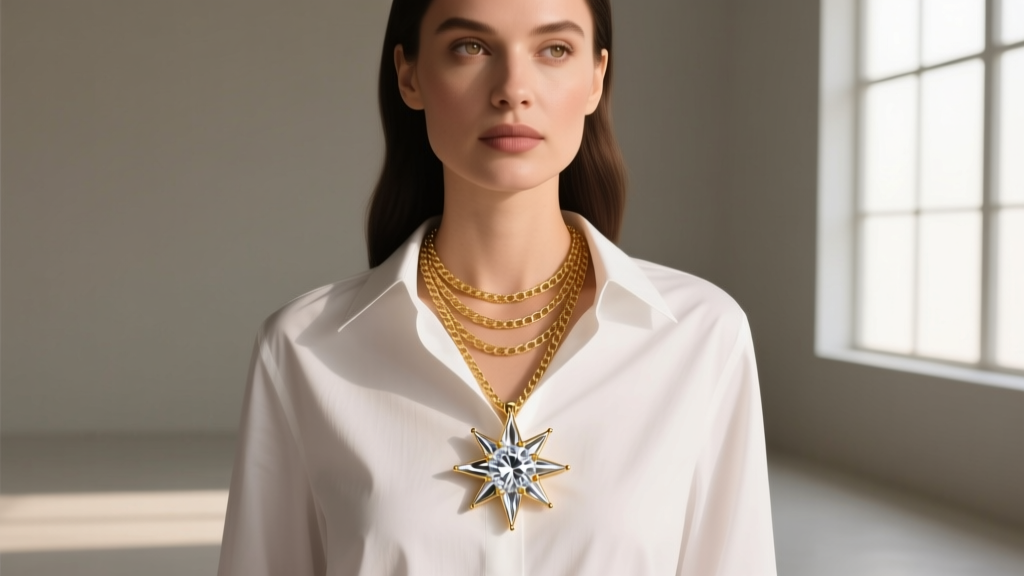
Chain Pairing: The Hidden Cost of Hardware
A frequent mistake buyers make when acquiring a starburst pendant is hanging it on an inadequate chain. The Blue Nile Diamond Education Center notes that the overall harmony of a necklace relies heavily on the proportion between the pendant and the chain. A 4-gram starburst pendant will instantly snap a delicate 0.9mm rope chain or a flimsy cable chain.
To properly support the visual weight and physical mass of a starburst pendant, you must upgrade your hardware. Here is the exact specification you should look for:
- Chain Style: Box chain or Wheat chain. These interlocking styles offer superior tensile strength and resist kinking.
- Chain Gauge: 1.5mm to 2.0mm thickness. Anything thinner risks breaking; anything thicker overpowers the delicate rays of the pendant.
- Clasp Mechanics: Demand a 12mm or 14mm Lobster clasp. Avoid spring-ring clasps entirely, as their internal springs fail quickly under the pendulum stress of a heavy pendant.
Pro-Tip: If you are buying a budget CZ or Moissanite dupe, ensure the chain is solid 10k or 14k gold, not gold-plated brass. The friction from the pendant's bail will rub the plating off a vermeil chain within weeks, leaving a green mark on your neck and exposing base metals that can cause contact dermatitis.
Final Verdict: Assessing the True Value
The Gayle King starburst necklace remains a timeless silhouette that bridges the gap between vintage Hollywood glamour and modern broadcast elegance. However, paying a $25,000 premium for natural diamonds in a pendant that sits three feet away from a camera lens is difficult to justify from a pure value-assessment perspective.
By pivoting to a lab-grown diamond or high-grade moissanite alternative, and pairing it with a structurally sound 1.5mm box chain, you can capture 100% of the visual impact and optical brilliance for less than 15% of the luxury retail cost. When evaluating your purchase, prioritize the "dish" angle of the setting, V-prong security, and solid metal weight over brand names. In 2026, smart jewelry acquisition is about mastering material science and structural design, ensuring your starburst shines just as brightly on a morning commute as it does under studio lights.


