Gayle King Sunburst Necklace: 2026 Trend & Style Guide
Explore the Gayle King sunburst necklace trend. Our expert guide covers pendant weight, chain gauges, vermeil grades, and broadcast styling tips.

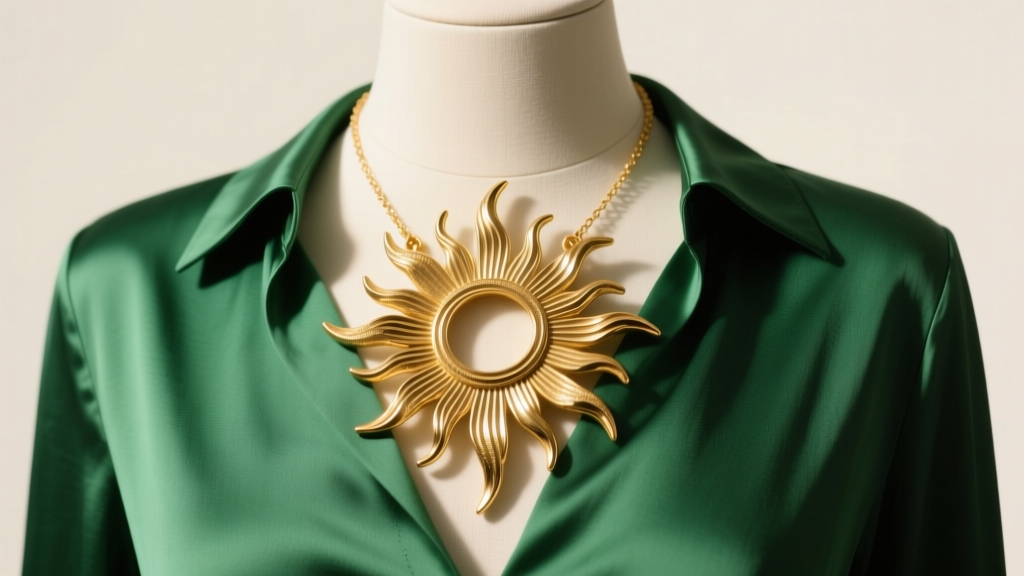
When it comes to commanding attention on morning television, few accessories anchor a wardrobe quite like a statement pendant. The Gayle King sunburst necklace has become a defining element of the CBS Mornings co-host’s broadcast style, sparking a massive resurgence in geometric, radiating jewelry designs for 2026. But beyond its striking visual appeal, a high-quality sunburst necklace is a marvel of jewelry engineering. Balancing a large, heavy pendant without compromising the chain or causing the dreaded "pendulum effect" requires precise metallurgy and structural planning. In this expert deep dive, we dissect the anatomy, material grades, and technical styling requirements of the sunburst necklace.
The Anatomy of the Gayle King Sunburst Necklace
The classic sunburst pendant is characterized by a central focal point—often a textured metal dome, a cabochon gemstone, or an enamel disc—from which metallic rays radiate outward. The pieces frequently seen on broadcast tend to range from 2.5 to 3.5 inches in diameter. The visual weight of the piece is dictated by the ray count and the tapering of the spikes.
From a design perspective, master jewelers typically utilize a 16-ray or 24-ray configuration to maintain symmetry. The rays are rarely flat; instead, they feature a diamond-cut or beveled edge to catch studio lighting. This faceting is crucial for television, as flat, highly polished surfaces can cause glare or "hot spots" under high-definition broadcast lights, whereas textured, beveled rays diffuse light evenly, creating a rich, golden glow without blinding the camera lens.
Metallurgy and Weight Distribution: The Engineering Behind Statement Pendants
The most common failure mode for oversized pendants is the pendulum effect. A solid brass or silver sunburst pendant measuring 3 inches across can easily weigh between 25 and 45 grams. If paired with a lightweight chain, the pendant's center of gravity will pull the chain downward, causing the clasp to slide from the nape of the neck to the front of the collarbone within minutes of movement.
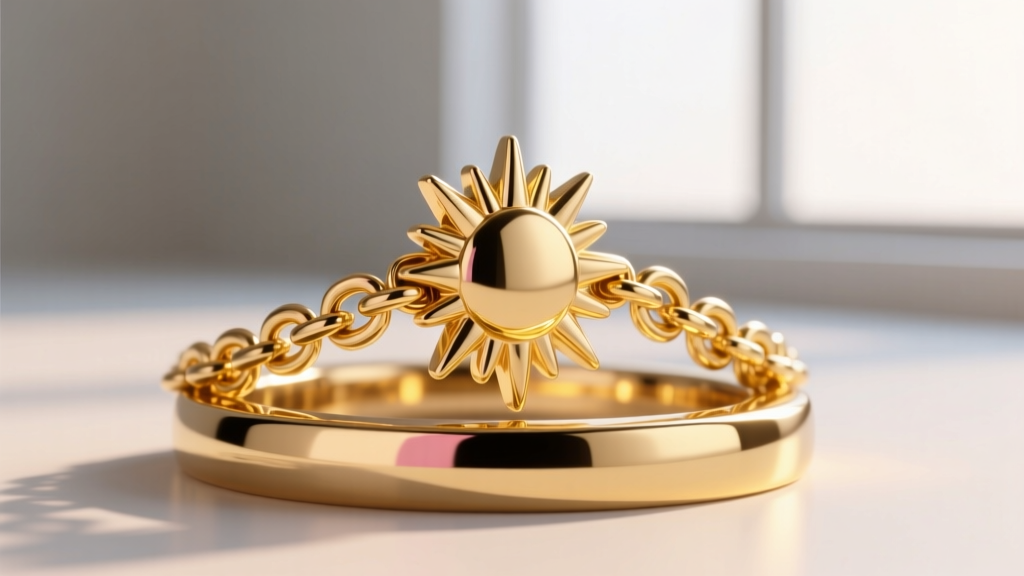
To counteract this, jewelry engineers employ two primary solutions: increasing the chain's linear mass and utilizing a counter-weighted clasp. A chain must possess enough structural rigidity and weight to anchor the pendant. Below is a technical matrix for pairing chains with heavy sunburst pendants.
| Pendant Weight | Minimum Chain Gauge | Recommended Chain Style | Clasp Requirement |
|---|---|---|---|
| 15 - 25 grams | 14-gauge (1.6mm) | Box Chain or Curb | Standard Lobster (12mm) |
| 25 - 40 grams | 12-gauge (2.0mm) | Rope Chain or Figaro | Heavy Lobster or Toggle |
| 40+ grams | 10-gauge (2.5mm+) | Mariner or Cuban Link | Counter-weighted Toggle |
Furthermore, the bail (the loop connecting the pendant to the chain) on a heavy sunburst piece must be cast solid, not stamped from sheet metal. A stamped bail will warp and thin out over time due to the friction of a heavy chain, eventually leading to catastrophic failure and loss of the pendant. According to manufacturing standards outlined by the Jewelers of America, cast bails on statement pieces should have a minimum interior diameter of 4mm to accommodate thicker, weight-bearing chains without causing abrasive wear.
Material Grades: Vermeil vs. Solid Gold vs. Plated Brass
When sourcing a Gayle King-inspired sunburst necklace, understanding the metallurgical differences between plating types is essential for longevity and skin safety. The market is flooded with cheap alternatives, but true luxury and durability fall into three distinct categories:
1. Flash-Plated Brass (The Fast Fashion Tier)
These pieces feature a brass or zinc alloy base with a microscopic layer of gold (usually less than 0.5 microns) applied via electroplating. They are prone to rapid oxidation, and the acidity of human sweat will strip the plating within weeks, exposing the base metal which can cause contact dermatitis. Price Range: $20 - $60.
2. Gold Vermeil (The Broadcast Standard)
Vermeil (pronounced ver-may) is the industry standard for high-end fashion jewelry. By definition, vermeil must consist of a 925 sterling silver base coated with at least 2.5 microns of 14k or 18k gold. The Gemological Institute of America (GIA) notes that the silver base provides hypoallergenic properties, while the thick gold layer ensures the piece can withstand daily wear and professional cleaning. Many of the designer pieces seen on television utilize 18k gold vermeil for its warmer, richer yellow hue, which translates beautifully on camera. Price Range: $150 - $450.
3. Solid 14k or 18k Gold (The Heirloom Tier)
For those seeking an investment piece, solid gold sunburst pendants are cast using the lost-wax method. Because gold is incredibly dense, a solid 3-inch sunburst pendant can weigh upwards of 60 grams, requiring a custom-engineered, heavy-duty chain. Price Range: $1,800 - $4,500+.
Broadcast Styling and Neckline Pairing
Styling a large sunburst necklace for professional or broadcast environments requires an understanding of visual geometry and camera optics. The goal is to frame the face without creating visual clutter or triggering the moiré effect—a visual distortion that occurs on HD sensors when tight, repetitive patterns overlap.

- The V-Neck and Wrap Blouse: This is the optimal canvas for a sunburst pendant. The diagonal lines of a V-neck draw the eye downward, perfectly mirroring the radiating rays of the pendant. The necklace should sit precisely at the clavicle notch, acting as a visual anchor.
- The Crew Neck and Turtleneck: Wearing a 3-inch sunburst over a tight crew neck can visually truncate the neck, making it appear shorter. If wearing a high neckline, opt for a longer chain (22 to 24 inches) so the pendant rests on the sternum, elongating the torso.
- Pattern Avoidance: Never pair a highly detailed, multi-ray sunburst necklace with houndstooth, tight herringbone, or micro-check shirts. The competing geometric frequencies will cause a moiré shimmer on 4K cameras, distracting the viewer. Solid, jewel-toned fabrics (emerald, sapphire, deep plum) provide the highest contrast for gold vermeil pieces.
Sourcing, Authenticity, and Maintenance
To maintain the brilliance of a vermeil or solid gold sunburst necklace, proper maintenance is non-negotiable. The intricate crevices between the sunburst rays are notorious for trapping cosmetic powders, lotions, and environmental pollutants.
Expert Cleaning Protocol: Avoid ultrasonic cleaners for vermeil pieces, as the high-frequency vibrations can degrade the gold layer over time or loosen any tension-set stones in the center cabochon. Instead, use a mild, phosphate-free dish soap diluted in lukewarm water. Utilize a baby-soft toothbrush to gently agitate the crevices between the rays, rinse with distilled water to prevent hard water spotting, and dry immediately with a microfiber cloth.
Storage: Because the rays can easily scratch other jewelry (or become bent if crushed), a sunburst pendant must be stored flat in a dedicated anti-tarnish pouch. For sterling silver vermeil bases, including a 3M anti-tarnish strip in the storage box will absorb ambient sulfur compounds, preventing the silver base from oxidizing and bleeding through the gold plating.
The Gayle King sunburst necklace is more than a fleeting celebrity trend; it is a masterclass in proportion, lighting, and structural jewelry design. By prioritizing proper chain gauges, demanding true vermeil or solid metal construction, and styling with camera optics in mind, you can invest in a statement piece that commands the room—whether you are broadcasting to millions or simply commanding a boardroom.


