The Engineering of Chunky Necklaces: Weight, Clasps, and Alloys
An expert technical guide to chunky necklaces, covering alloy grades, weight distribution, clasp mechanics, and structural failure points.

The Physics and Metallurgy of Heavy Chains
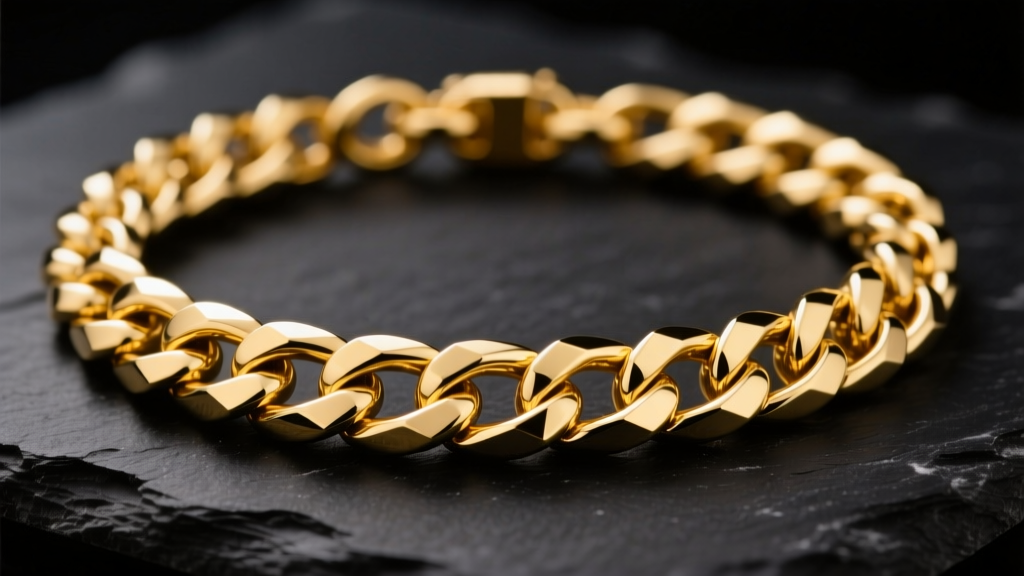
When evaluating chunky necklaces, most consumers focus solely on aesthetics—link profile, polish, and width. However, from a jewelry engineering perspective, a heavy chain is a dynamic load-bearing structure. A true chunky necklace typically exceeds 8mm in width and 50 grams in total weight. At these dimensions, the laws of physics dictate that material hardness, tensile strength, and clasp mechanics become far more critical than visual appeal alone.
The foundation of any heavy chain is its alloy composition. According to the Gemological Institute of America (GIA), pure 24k gold has a Vickers Hardness (HV) of roughly 60, making it entirely unsuitable for heavy, interlocking links. The sheer weight of a 22k or 24k chunky chain will cause the links to stretch, deform, and eventually pull apart under their own mass. For heavy chains, 14k gold (58.5% purity, ~140 HV) is the engineering sweet spot. It offers optimal tensile strength to resist link distortion while maintaining the rich color and hypoallergenic properties expected of fine jewelry. While 18k gold (~125 HV) is acceptable for chains under 80 grams, anything heavier requires the structural rigidity of 14k or even 10k gold to prevent permanent elongation.
Solid Cast vs. Hollow Electroforming: The Failure Modes
The market is flooded with chunky necklaces that look massive but weigh surprisingly little. These are hollow chains, manufactured via electroforming—a process where gold is electrodeposited over a base metal or wax core, which is later removed. While this technique allows manufacturers to produce 12mm-wide chains that weigh a mere 15 grams (compared to 90+ grams for a solid equivalent), it introduces catastrophic failure modes.
The 'Crush' and 'Dent' Vulnerability
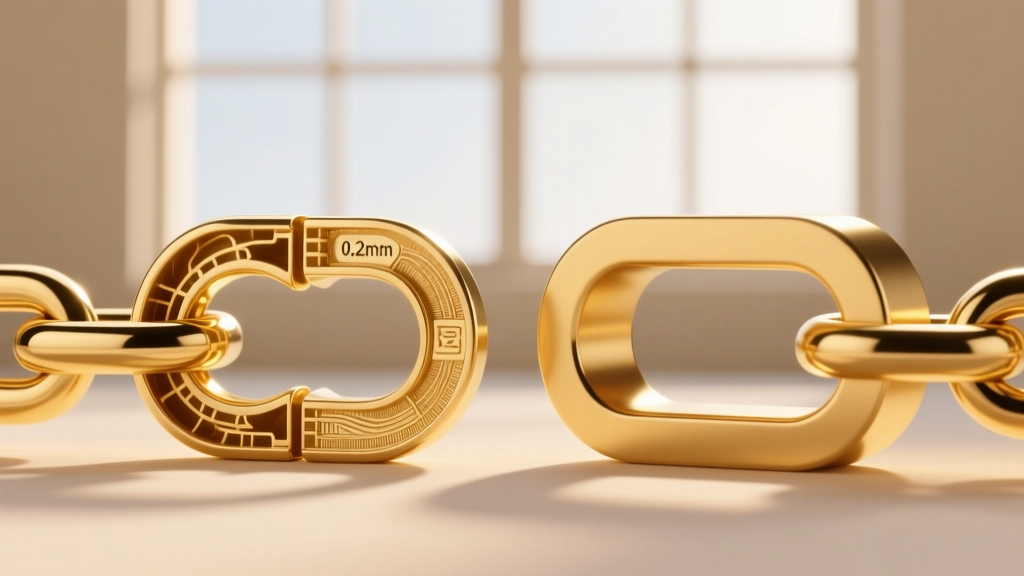
Hollow links possess an outer wall thickness of often less than 0.4mm. If a hollow chunky necklace is subjected to compressive force—such as being slept on, dropped, or even squeezed too hard during cleaning—the links will dent inward. Unlike solid gold, which can be hammered and reshaped by a bench jeweler, electroformed hollow links cannot be repaired. Once the structural integrity of the hollow chamber is compromised, the link must be entirely replaced. For buyers seeking a multi-generational piece, solid cast or solid die-struck links are the only viable option.
Clasp Mechanics and Load-Bearing Limits
The most common point of catastrophic failure in heavy necklaces is not the chain itself, but the clasp assembly. A clasp must be rated for the dynamic load of the chain, which includes the static weight plus the kinetic force generated by the wearer's movement.
- Spring Ring Clasps: Rated for a maximum static load of 20-25 grams. Using a spring ring on a 50g chunky chain guarantees eventual failure, as the internal coil spring will fatigue, or the jump ring will pull through the hollow catch mechanism.
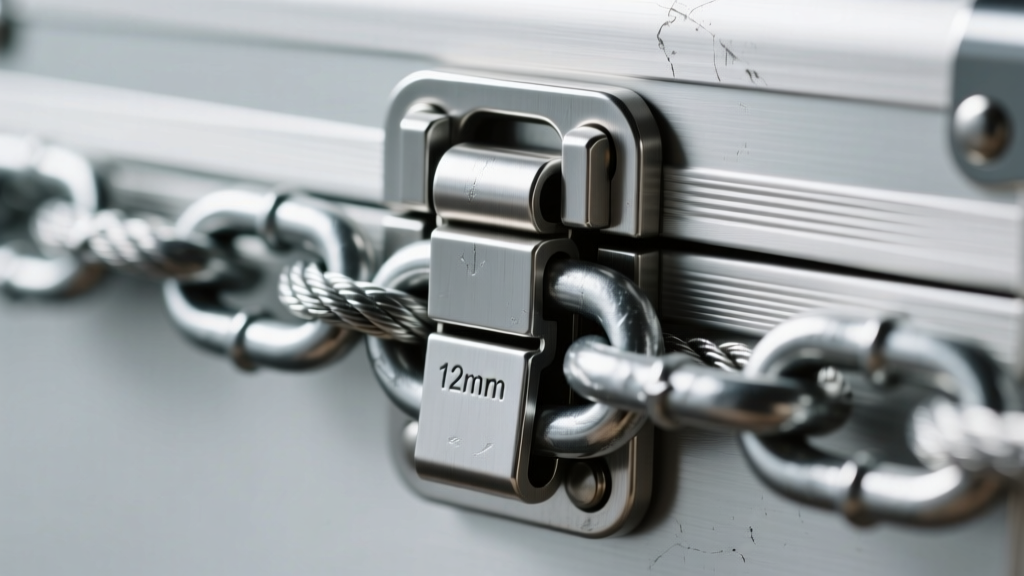
- Lobster Claw Clasps: The industry standard for medium-to-heavy chains. A high-quality, solid-cast 12mm lobster clasp can safely support up to 80 grams. However, the internal trigger spring remains a single point of failure. If the trigger snags on clothing and is pulled, the clasp can snap open.
- Box Clasps with Figure-8 Safeties: Mandatory for any chunky necklace exceeding 100 grams. A box clasp utilizes a wedge-and-groove mechanical lock, completely independent of spring tension. When paired with dual figure-8 safety catches (small wire loops that snap over a side peg), the chain remains secured even if the primary box mechanism is accidentally depressed.
Expert Benchmark: Always inspect the jump ring connecting the clasp to the chain. On heavy necklaces, this jump ring must be soldered shut. An unsoldered jump ring will slowly twist open under the torsional stress of a heavy chain, leading to a silent drop and total loss of the piece.
Weight Distribution, Ergonomics, and Chain Profiles
Not all chunky necklaces distribute weight equally. The profile of the link dictates how the chain sits on the sternum and the nape of the neck. Flat-profile chains (like the Cuban or Curb) distribute their mass across a wider surface area of the skin, reducing localized pressure. Conversely, high-profile chains (like the Rope or Mariner) concentrate their mass into a narrower footprint, which can cause discomfort or skin indentation if the weight exceeds 120 grams.
Below is a technical comparison of standard chunky chain profiles, based on an 18-inch length in solid 14k gold:
| Chain Profile | Width (mm) | Avg Solid Weight | Recommended Clasp | Torsion Resistance |
|---|---|---|---|---|
| Cuban / Curb | 10mm | 75g - 90g | Heavy Lobster (14mm) | High (Flat lay) |
| Rope | 8mm | 60g - 75g | Box w/ Dual Safety | Medium (Helical twist) |
| Figaro | 12mm | 85g - 105g | Box w/ Dual Safety | High (Variable links) |
| Mariner | 10mm | 70g - 85g | Heavy Lobster (12mm) | Medium (Bar stress) |
As noted by the World Gold Council, the density of gold alloys means that even minor increases in width result in exponential weight gains. Moving from a 10mm to a 14mm Cuban link does not increase the weight by 40%; due to the three-dimensional volume of the links, the weight often increases by over 120%, pushing a 90g chain well past 200g.
Structural Failure Points and Maintenance Protocols
Understanding where chunky necklaces break is essential for preventative maintenance. The highest stress point on any necklace is not the clasp, but the exact center of the nape of the neck. This area experiences continuous torsional twisting and bending as the wearer turns their head. Over years of wear, the links in this specific zone undergo work hardening and eventual metal fatigue.
Preventative Maintenance Checklist
- Annual Ultrasonic Inspection: Have a jeweler inspect the nape links under magnification for micro-fractures, especially on rope and Figaro chains where the interlocking geometry hides internal wear.
- Jump Ring Verification: Ensure the jump rings at both the clasp and the end-tag are fully soldered. Laser welding is preferred over traditional torch soldering for chunky chains, as it prevents heat damage to the surrounding polished links.
- Chemical Exposure: While 14k gold is highly resistant to tarnish, the copper and zinc alloys used to harden the metal can react with chlorine. Repeated exposure to heavily chlorinated pools will degrade the alloy matrix at the microscopic level, leading to stress corrosion cracking in heavy links.
Ultimately, investing in a high-caliber chunky necklace requires looking past the display case and examining the engineering. By prioritizing optimal alloy hardness, solid link construction, and load-rated mechanical clasps, you ensure that the piece functions flawlessly as both a striking aesthetic statement and a durable, lifelong asset.


