The Ultimate Gemstones Necklace Durability & Material Guide
Discover how to choose a durable gemstones necklace. Compare Mohs hardness, metal pairings, and treatment risks for everyday wear in our expert guide.

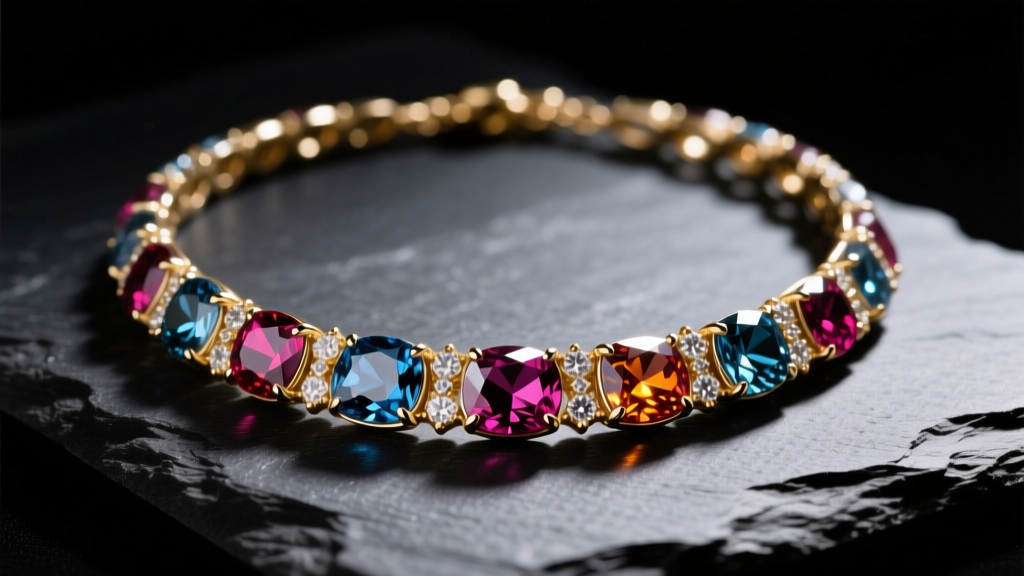
When investing in fine jewelry, aesthetics often overshadow structural integrity. However, selecting a gemstones necklace requires a deep understanding of mineral physics, metal alloys, and chemical treatments. A pendant that swings freely against your chest is subjected to microscopic impacts, temperature fluctuations, and exposure to cosmetics. In this comprehensive material comparison guide, we break down the exact properties that dictate whether your necklace will become a lifelong staple or a fragile liability.
The Physics of Gemstone Durability: Beyond the Mohs Scale
Most consumers rely on the Mohs scale of mineral hardness to judge durability, but this is a fundamental misunderstanding of gemology. The Mohs scale is ordinal, not linear. A diamond (Mohs 10) is not just one point harder than a sapphire (Mohs 9); it is roughly four times harder in absolute terms. Furthermore, hardness only measures resistance to scratching, not resistance to breaking.
To truly evaluate a stone for a necklace pendant, you must consider three distinct properties:
- Hardness: Resistance to surface scratching from environmental dust (which contains quartz, Mohs 7).
- Toughness: Resistance to chipping, cracking, or breaking upon impact.
- Stability: Resistance to chemical degradation, heat, and sudden temperature changes.
"A stone can be incredibly hard but possess poor toughness. Diamond is the hardest natural material, yet its perfect cleavage planes make it susceptible to splitting if struck at the exact wrong angle." — GIA Gem Encyclopedia
Tier 1: The Indestructibles (Everyday Wear Champions)
If you plan to wear your gemstones necklace daily—through workouts, showers, and manual labor—you must restrict your choices to stones with exceptional toughness and stability.
Corundum (Ruby and Sapphire)
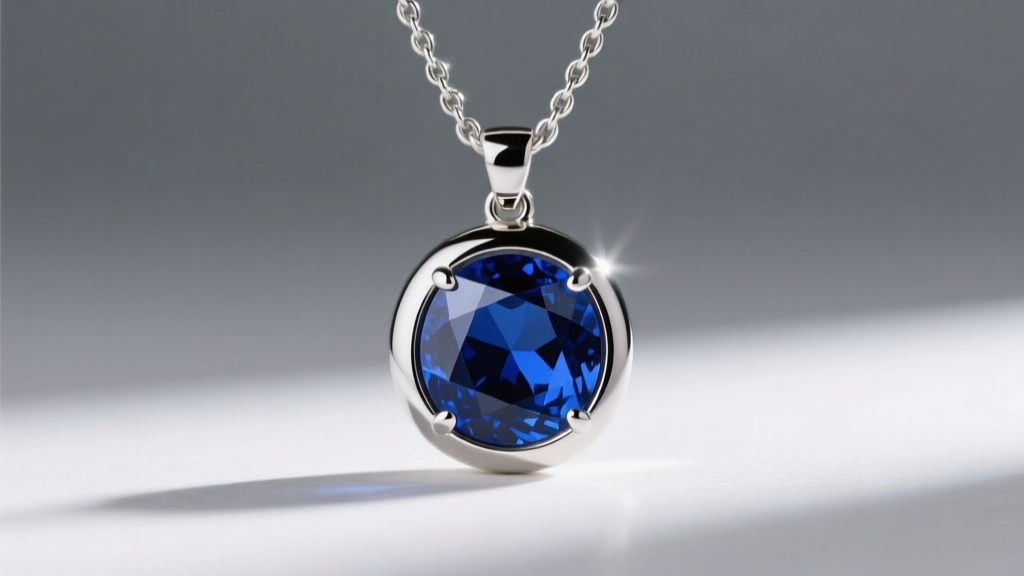
Ranking at a Mohs 9, corundum is the ultimate everyday gemstone. Unlike diamond, corundum has no cleavage planes, meaning it does not have structural weak points where it can easily split. Its high toughness makes it ideal for prong-set pendants that are prone to bumping against desks and doorframes. Sapphires and rubies are also highly stable, meaning they will not react to standard ultrasonic cleaners or mild acids.
Diamond
While diamonds (Mohs 10) are impervious to scratching, their perfect octahedral cleavage requires strategic setting. If you choose a diamond pendant, opt for a bezel or semi-bezel setting that protects the girdle and culet from direct, angular impacts.
Tier 2: The Occasional Wears (Proceed with Caution)
Many of the most popular gemstones are fundamentally unsuited for rigorous daily wear. They require specific care and should be reserved for controlled environments.
Emerald (Beryl)
Emeralds rank between 7.5 and 8 on the Mohs scale, but they are notoriously brittle. Almost all natural emeralds contain visible inclusions (often called the "jardin") and surface-reaching fractures. To mask these, the industry standard practice is to fill fractures with oils or resins. A sudden temperature change or a harsh ultrasonic cleaning can boil the oil out, leaving the stone looking cloudy and fractured.
Opal
Opals are not crystalline; they are amorphous silica containing anywhere from 3% to 21% water. This makes them incredibly sensitive to their environment. Prolonged exposure to dry heat can cause "crazing" (a network of fine cracks), while sudden impacts can shatter them due to their low toughness. Ethiopian Welo opals are also highly porous and will temporarily lose their play-of-color if they absorb water or oils from your skin.
Metal Pairings: Matching Chain Alloys to Stone Hardness
The chain and setting metal must complement the gemstone's physical properties. Pairing a soft stone with a rigid, heavy chain can lead to bail wear and stone abrasion. Below is a technical comparison of common necklace metals.
| Metal Alloy | Vickers Hardness (Approx.) | Best Gemstone Pairings | Wear Characteristics |
|---|---|---|---|
| Platinum (950) | 125 - 135 HV | Diamond, Sapphire, Ruby | Dense, develops a patina over time. Prongs bend rather than break, securing hard stones safely. |
| 14k Yellow Gold | 135 - 150 HV | All Tier 1 & Tier 2 stones | Excellent balance of tensile strength and malleability. Ideal for intricate prong work on emeralds. |
| 18k Rose Gold | 120 - 130 HV | Morganite, Sapphire, Quartz | Copper content adds warmth but slightly reduces scratch resistance compared to 14k alloys. |
| Sterling Silver (925) | 60 - 70 HV | Turquoise, Lapis, Pearl | Soft and prone to tarnish. Best paired with softer, opaque cabochon stones that require bezel settings. |
Treatment Disclosures: What Retailers Won't Tell You
The longevity of a gemstones necklace is heavily dictated by post-mining treatments. Retailers are legally required to disclose certain treatments, but the practical implications for the wearer are rarely explained.
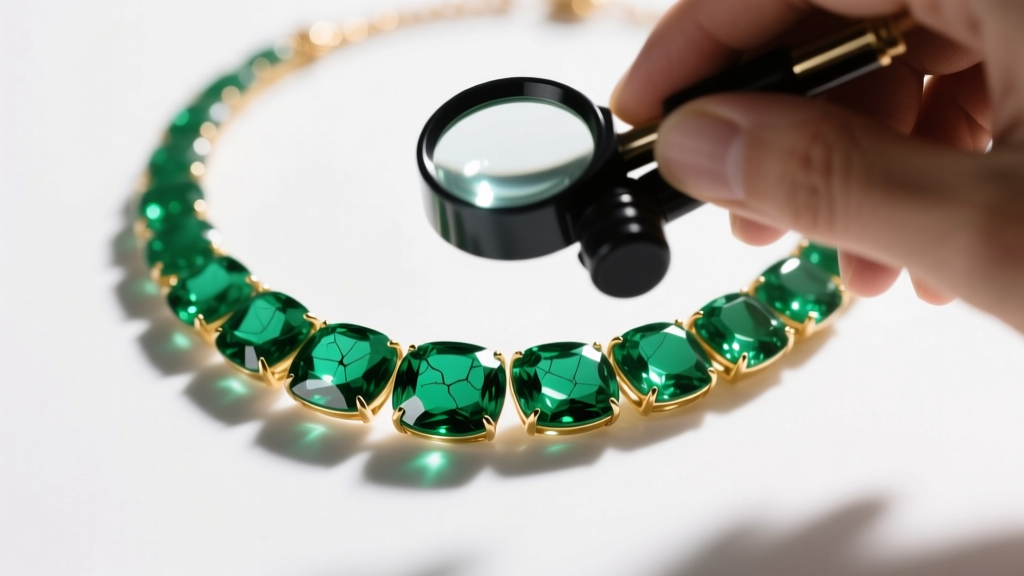
- Cedar Oil vs. Opticon (Emeralds): Traditional cedar oil requires re-oiling every few years as it dries out. Modern synthetic resins like Opticon are more stable but can yellow over time if exposed to prolonged UV light.
- Lattice Diffusion (Sapphires): Some sapphires are treated with beryllium or titanium at extreme heat to alter their color. This color change only penetrates the surface layer. If the stone is ever chipped and requires repolishing, the true, un-treated color will be revealed, ruining the stone's value.
- Fracture Filling (Rubies): Low-grade rubies are often filled with lead-glass to improve transparency. Lead-glass is highly unstable and will dissolve if exposed to mild acids, including lemon juice or basic household cleaners.
Expert Maintenance Framework
Proper maintenance extends the life of your jewelry exponentially. According to the GIA Care and Cleaning Guide, the most common cause of gemstone damage occurs during at-home cleaning.
The Safe Cleaning Protocol
- Fill a small bowl with lukewarm (never hot) water and a few drops of degreasing dish soap (e.g., Dawn).
- Submerge the necklace for 5 to 10 minutes to loosen sebum and cosmetic buildup.
- Gently agitate the stone using a brand-new, ultra-soft baby toothbrush. Focus on the pavilion (the back of the stone) where light-blocking grime accumulates.
- Rinse under a gentle stream of lukewarm water, ensuring the drain is securely plugged.
- Pat dry with a lint-free microfiber cloth. Never use paper towels, as the wood fibers can cause micro-scratches on softer stones like opals or pearls.
What to Avoid
Never use ultrasonic cleaners on emeralds, opals, pearls, turquoise, or any fracture-filled stone. The high-frequency vibrations can shatter included stones and strip away essential fracture-filling oils. Similarly, avoid steam cleaners, as the sudden thermal shock can cause internal stress fractures in otherwise durable stones like garnets and tourmalines.
Final Thoughts on Material Selection
A beautifully crafted gemstones necklace is a marriage of geology and metallurgy. By prioritizing stones with high toughness, pairing them with appropriate metal alloys, and adhering to strict, chemistry-aware maintenance protocols, you ensure that your pendant remains as brilliant in a decade as it is today. Always request a comprehensive lab report from reputable institutions like the GIA or AGS to verify both the identity and the treatment history of your center stone before making a purchase.