White Gold Star of David Necklace: An Expert Buyer Guide
Discover the technical details of a white gold Star of David necklace. Learn about 14k vs 18k alloys, rhodium plating, chain pairings, and pricing.

The Metallurgy of White Gold: 14k vs. 18k Alloys
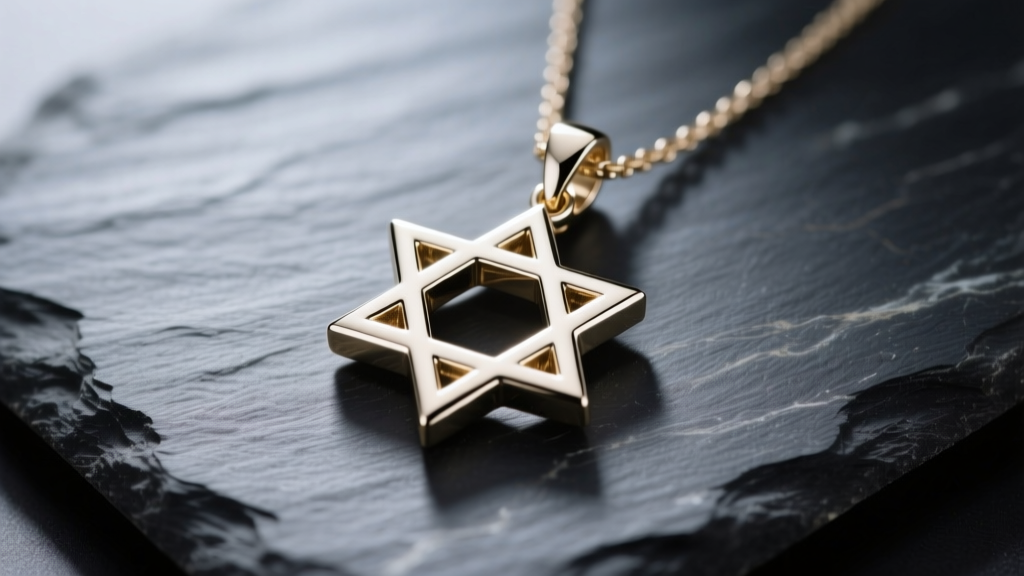
Selecting the optimal alloy for a white gold Star of David necklace requires understanding the metallurgical trade-offs between durability, color, and skin sensitivity. Pure gold (24k) is inherently yellow and too soft for daily wear jewelry. To achieve a white hue and structural rigidity, gold is alloyed with whitening metals. The two primary standards in the market are 14k (58.5% pure gold) and 18k (75% pure gold).
According to the Gemological Institute of America (GIA), 14k white gold is typically alloyed with nickel, copper, and zinc. Nickel provides excellent hardness (approximately 130-150 on the Vickers scale) and a naturally whiter base color, but it is a known contact allergen affecting roughly 10-15% of the population. Conversely, 18k white gold is often alloyed with palladium. Palladium is hypoallergenic and yields a premium, dense metal, though it results in a slightly warmer, grayish undertone that necessitates rhodium plating to achieve a brilliant white finish. For a pendant that rests against the sternum, nickel allergies are less frequently triggered than with rings or earrings, but palladium-alloyed 18k remains the superior choice for sensitive skin.
| Property | 14k White Gold (Nickel) | 18k White Gold (Palladium) |
|---|---|---|
| Gold Content | 58.5% | 75.0% |
| Vickers Hardness (HV) | 130 - 150 HV | 110 - 120 HV |
| Base Color | Pale Gray/White | Warm Gray |
| Hypoallergenic | No | Yes |
| Rhodium Dependency | Moderate | High |
Geometric Precision: Crafting the Magen David
The Star of David (Magen David) is formed by two overlapping equilateral triangles. This geometry creates six sharp outer points and a central hexagon. From a manufacturing perspective, these sharp vertices are structural vulnerabilities. When produced via traditional lost-wax casting, the thin points of the star are prone to microscopic porosity—tiny air pockets trapped in the metal as it cools. Over time, stress concentration at these points can lead to snapping.
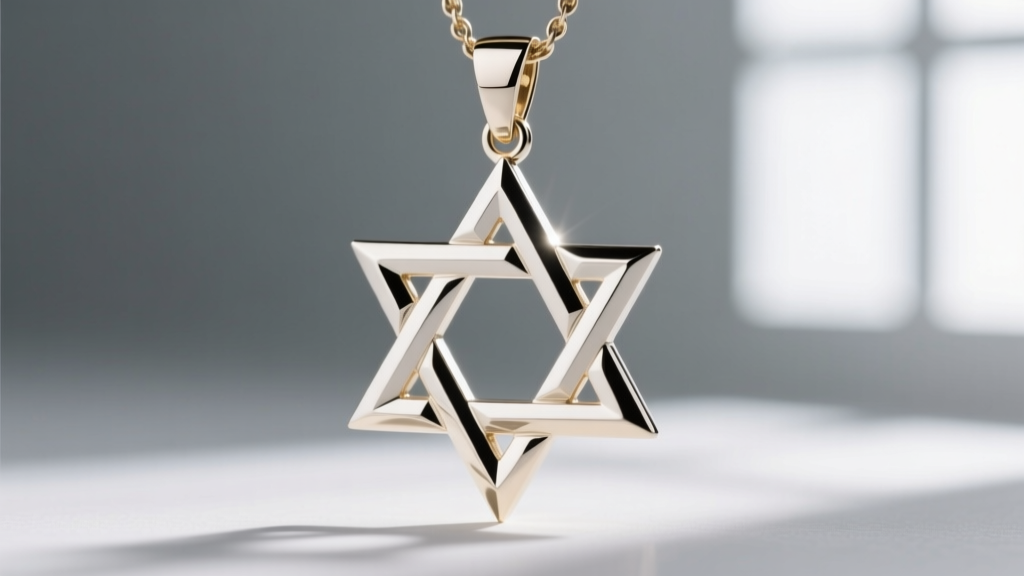
For maximum durability, experts recommend seeking out die-struck white gold Star of David pendants. Die-striking involves subjecting a sheet of white gold to extreme pressure between hardened steel dies. This process compresses the metal's grain structure, work-hardening the alloy and increasing its tensile strength by up to 30% compared to cast equivalents. The result is a denser, more resilient pendant with crisp, razor-sharp geometric intersections that resist bending and snapping when snagged on clothing.
Chain Selection and Bail Engineering
The longevity of your necklace is heavily dictated by the interaction between the pendant's bail (the loop that connects it to the chain) and the chain itself. Friction is the primary enemy of precious metal chains. If the interior diameter of the bail is too tight relative to the chain's thickness, the continuous micro-abrasion will eventually wear through the chain links or the bail itself.
Optimal Chain Weaves and Gauges
For a standard solid white gold Star of David pendant weighing between 2.5 and 5 grams, avoid delicate chains under 1.0mm. The optimal configurations include:
- 1.5mm Box Chain: Offers excellent tensile strength and a smooth surface that minimizes bail friction. The square links distribute weight evenly.
- 1.5mm - 2.0mm Rope Chain: Provides a high-shimmer aesthetic due to its twisted facets, but the spiraled surface can act like a file against the interior of a soft 18k palladium bail over several years.
- 1.2mm Wheat Chain: Highly flexible and resistant to kinking, making it an excellent choice for active wearers, provided the pendant is under 4 grams.
Bail Mechanics
Inspect the bail construction. A soldered, fixed bail is structurally superior to a hinged or clip-on bail. Furthermore, ensure the interior of the bail is polished to a mirror finish; a rough, unpolished bail interior will rapidly degrade your chain through abrasive wear.
Rhodium Plating: Maintenance and Failure Modes
Because white gold alloys are rarely perfectly white, they are electroplated with rhodium, a platinum-group metal that provides a brilliant, reflective white surface. The industry standard for high-quality jewelry is a rhodium thickness of 0.75 to 1.0 microns. "Flash plating," which applies a mere 0.1 microns, will wear off within months.
The most common failure mode for rhodium plating on a white gold Star of David necklace is "brassing" or yellowing at the bail and the top loop of the pendant. This occurs due to concentrated friction against the chain and natural skin oils. To mitigate this, remove the necklace before showering, as hot water and harsh soaps accelerate rhodium degradation.
When the rhodium wears thin, the underlying alloy becomes visible. For 14k nickel white gold, this appears as a slightly yellowish-gray. Re-rhodiuming is a standard maintenance procedure performed by jewelers, typically costing between $40 and $75, and should be expected every 12 to 24 months depending on wear habits.
Diamond Accents: Pavé vs. Bezel Settings
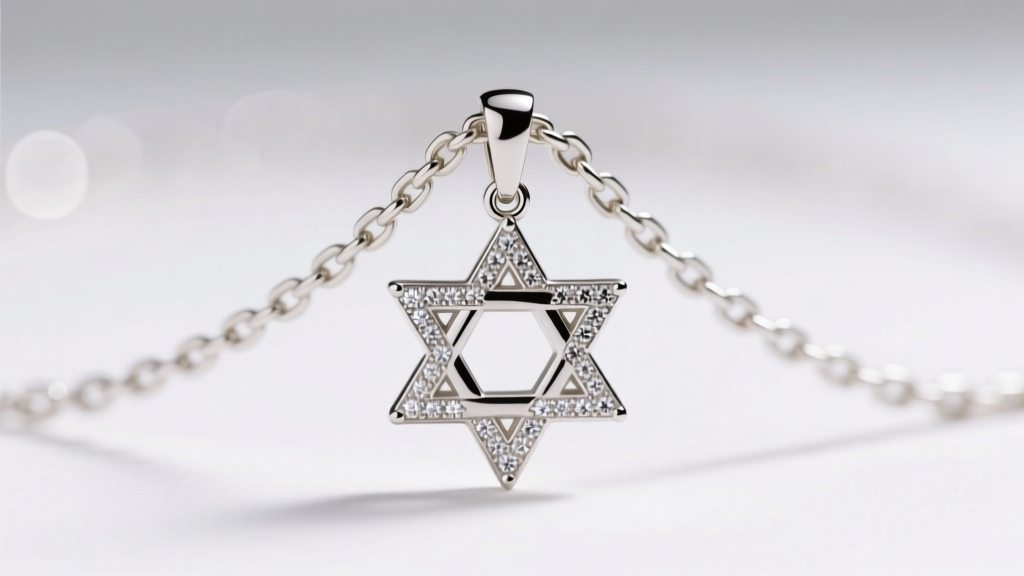
Many white gold Star of David pendants incorporate diamond accents, typically outlining one of the overlapping triangles or tracing the inner hexagon. The setting technique drastically impacts both the security of the stones and the overall maintenance of the piece.
Micro-Pavé Settings: Utilize tiny metal beads to hold melee diamonds (usually 0.01 to 0.02 carats each). While this maximizes light return and creates a continuous sparkle, the small prongs are susceptible to wear. If the rhodium plating wears away, the underlying softer white gold prongs can bend, leading to stone loss. Annual prong checks are mandatory for pavé designs.
Bezel Settings: Encircle the diamond with a continuous rim of white gold. Bezel settings are vastly superior for everyday wear, especially for pendants that may swing and strike surfaces. They eliminate prong snagging and offer maximum protection to the diamond's girdle, though they slightly reduce the stone's visible surface area.
Pricing Tiers and Market Value
Understanding the pricing architecture prevents overpaying for substandard craftsmanship. Prices fluctuate based on the spot price of gold, but the following tiers represent standard market valuations for high-quality, non-designer pieces:
- Entry-Level (Hollow/Cast 14k): $120 - $250. These pieces are often lightweight (under 2 grams), cast with potential porosity, and feature flash plating. Suitable for occasional wear.
- Mid-Tier (Solid 14k/18k): $350 - $700. Expect solid die-struck or high-quality cast pieces weighing 3 to 6 grams, featuring standard 0.75-micron rhodium plating and robust, soldered bails.
- Premium (18k Palladium with Diamonds): $900 - $2,500+. Includes heavy die-struck 18k palladium white gold, precision-set VS-clarity melee diamonds, and premium finishing.
Sourcing and Authenticity Verification
When purchasing, always verify the hallmark. The Federal Trade Commission (FTC) Jewelry Guides mandate that gold jewelry sold in the United States must be accurately marked with its karatage (e.g., 14K, 18K, 585, or 750). Additionally, look for a manufacturer's trademark stamp alongside the karat mark, which holds the maker legally accountable for the metal's purity. Avoid unmarked pieces or those stamped merely with "white gold," as these often indicate silver-plated base metals or gold-filled alternatives masquerading as solid precious metal.


