How to Choose a Genuine Jade Necklace: Beginner's Guide
Learn how to choose a genuine jade necklace with our beginner's guide. Discover jadeite vs. nephrite, A-B-C treatments, and pricing tips.

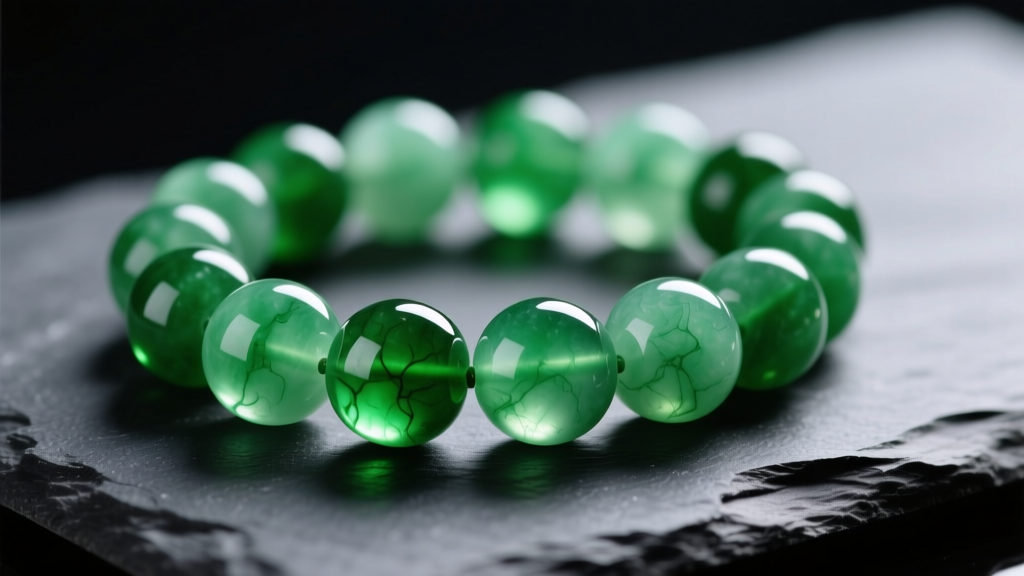
Entering the world of jade jewelry is thrilling, but for a beginner, it can quickly become overwhelming. The market is saturated with misleading terminology, synthetic imitations, and heavily treated stones disguised as natural gems. If you are looking to invest in your first jade necklace, understanding the gemological realities of this ancient stone is non-negotiable. In 2026, treatment technologies are more sophisticated than ever, making a foundational education your best defense against overpaying for a degraded or fake product.
This beginner-friendly explainer will demystify the mineralogy, decode the industry's treatment grading system, and provide actionable frameworks for evaluating color, clarity, and craftsmanship. By the end of this guide, you will know exactly what to look for—and what to avoid—when purchasing a genuine jade necklace.
The Great Divide: Jadeite vs. Nephrite
The most common misconception among beginners is that "jade" is a single mineral. In reality, the term is a commercial umbrella that covers two entirely distinct metamorphic rocks: Jadeite and Nephrite. While both are tough and beautiful, their chemical compositions, origins, and market values differ drastically.
The Gemological Institute of America (GIA) notes that Jadeite is a pyroxene mineral, prized for its intense colors and high translucency. Nephrite, an amphibole mineral, is far more common, generally more opaque, and features a softer, more muted color palette. When you see a high-end, translucent emerald-green jade necklace fetching six figures at auction, you are looking at Jadeite. Nephrite, while historically significant and deeply revered in Chinese antiquity, is much more affordable and commonly used for larger carvings or matte-finish bead necklaces.
| Feature | Jadeite | Nephrite |
|---|---|---|
| Mineral Family | Pyroxene | Amphibole |
| Mohs Hardness | 6.5 - 7.0 | 6.0 - 6.5 |
| Visual Profile | Vivid colors, high luster, can be semi-transparent | Muted greens/whites, waxy luster, mostly opaque |
| Primary Sources | Myanmar (Burma), Guatemala, Japan | China, Canada, New Zealand, Russia |
| Necklace Price Range | $500 to $100,000+ (Type A) | $50 to $1,500 |
Decoding Jade Treatments: Type A, B, and C
This is the most critical section for any beginner. Because high-quality, untreated Jadeite is exceedingly rare, the industry has developed chemical treatments to make low-quality, heavily included stone look flawless. Reputable dealers like Mason-Kay Fine Jade Jewelry categorize these treatments into an A-B-C grading system. Note: This A-B-C system has nothing to do with diamond color grading; it refers strictly to chemical alteration.
- Type A (Natural): This jade is completely natural and untreated, save for a traditional final polish using plum wax. Type A jade is structurally stable, retains its value, and is the only type you should buy for an investment-grade necklace.
- Type B (Bleached & Polymer-Impregnated): Low-quality, stained jade is soaked in strong acids to dissolve brown and yellow impurities. This process destroys the stone's internal crystalline structure, leaving it porous and brittle. It is then vacuum-impregnated with a polymer resin to hold it together and improve clarity. Warning: Over 5 to 10 years, the polymer degrades, turning yellow and cloudy, effectively ruining the necklace.
- Type C (Dyed): The stone is artificially dyed to mimic the highly coveted "Imperial Green" or lavender hues. The dye sits in the fractures and will fade rapidly when exposed to sunlight and body oils.
- Type B+C (Bleached, Impregnated, and Dyed): The most common scam in tourist markets. The stone is acid-washed, dyed, and filled with resin. It looks spectacular to the untrained eye but is essentially worthless and structurally compromised.
Evaluating Color, Clarity, and Cut
When shopping for a Type A jadeite necklace, your evaluation should focus on three pillars: color, transparency (often called "water" in the Asian trade), and texture.
The Hierarchy of Color
While jade comes in lavender, red, yellow, and black, green remains the most valuable. The pinnacle of the market is Imperial Jade—a vivid, semi-transparent emerald green with no gray or brown modifiers. "Apple Green" is the next tier, offering a bright, slightly yellowish-green hue that is highly prized by younger collectors. For beginners on a budget, "Spinach Green" (a darker, more opaque green) or "Moss-in-Snow" (white jade with vivid green veins) offer excellent aesthetic value without the Imperial price tag.
Transparency and Texture
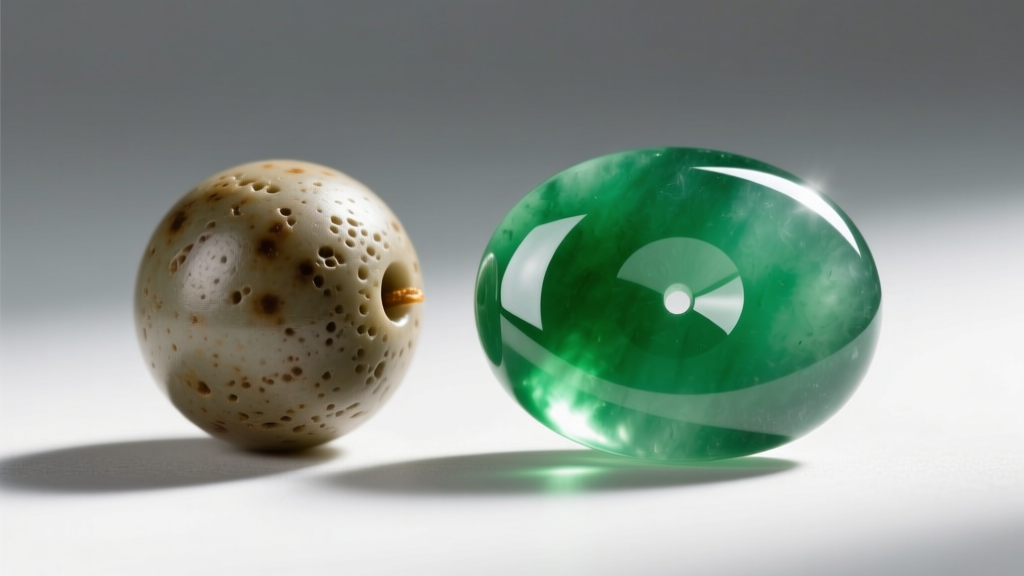
In jadeite, transparency is often more valuable than pure color. A pale, highly translucent bead (resembling glass or ice) can command a higher price than a deeply colored but completely opaque bead. Look for a fine, interlocking crystalline texture. If the stone looks "pitted" or has a sugary, granular surface under a 10x jeweler's loupe, it has likely been acid-etched (Type B).
Sizing, Styling, and the Importance of Silk Knotting
The physical construction of your jade necklace is just as important as the stones themselves. Jade beads typically range from 6mm to 14mm in diameter. For everyday wear, an 8mm to 10mm bead on an 18-inch princess-length chain offers the most versatile silhouette, resting perfectly on the collarbone and complementing both crew necks and V-necks.
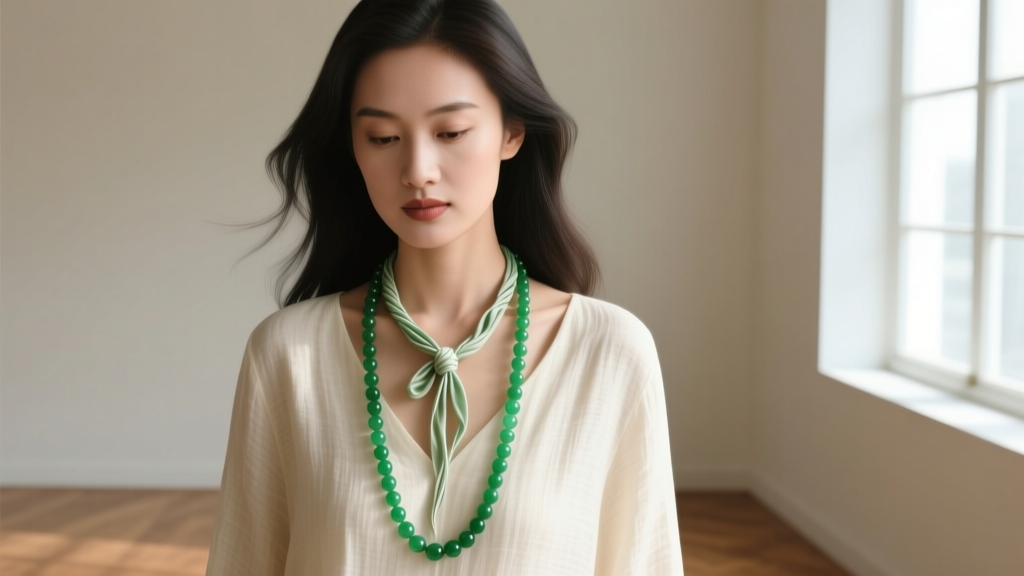
The Silk Knotting Mandate: If you are purchasing a high-end Type A jade bead necklace, it must be strung on silk cord with individual hand-tied knots between every single bead. This serves two vital purposes:
- Abrasion Prevention: Jade is hard, but continuous bead-on-bead friction will eventually dull the polish and drill holes over decades of wear.
- Security: If the silk cord snaps, the knots ensure you lose only one bead rather than watching a $10,000 necklace scatter across a hard floor.
Never buy an expensive jade bead necklace strung on unknotted nylon or wire. It is a hallmark of mass-produced, low-tier manufacturing.
Red Flags and Scam Prevention for Beginners
As you navigate estate sales, antique shops, or online auctions, keep your guard up. Here are the practical troubleshooting steps to verify authenticity before you hand over your money.
The "Ping" Test: Gently tap two Type A jadeite beads together (or suspend a bangle and tap it with a coin). Natural, untreated jade has a dense, interlocking structure that produces a clear, resonant, bell-like chime that sustains for a second or two. Type B polymer-impregnated jade will produce a dull, flat, plastic "clack." While not foolproof for necklaces strung on tight silk, it is an excellent quick-check for loose beads or bangles.
Demand a Lab Certificate: In 2026, relying on a "store certificate of authenticity" is not enough. For any jade necklace priced over $1,000, require a recent report from a globally recognized, independent gemological laboratory such as the GIA, SSEF, or China's NGTC (National Gemstone Testing Center). The report must explicitly state "Natural Jadeite" and confirm no indications of polymer impregnation or dyeing.
Beware the "Too Good to Be True" Pricing: A perfectly round, 10mm bead necklace of vivid, translucent Imperial Green Jadeite is a museum-level rarity. If you see it listed online for $800, it is unequivocally Type B+C treated jade, dyed quartz, or dyed chalcedony. True Type A jade of that caliber easily exceeds $50,000.
Final Verdict: Where to Start Your Collection
For a beginner, the smartest entry point into the market is a Type A Nephrite bead necklace or a Type A Jadeite pendant on a gold chain. Nephrite offers incredible durability, rich historical resonance, and beautiful waxy lusters at a highly accessible price point (typically $150 to $500). If your heart is set on Jadeite, start with a single, high-quality cabochon pendant set in 18k gold, allowing you to study the stone's translucency and color shifts in natural light without the compounding cost of a full bead strand.
By prioritizing Type A authenticity, demanding independent lab reports, and understanding the structural nuances of silk knotting, you will confidently navigate the market and secure a genuine jade necklace that will last for generations.


