Expert Guide to Buying a Genuine Sodalite Bead Necklace
Discover how to choose a genuine sodalite bead necklace. Learn about bead grading, stringing materials, pricing, and how to spot fakes in our expert guide.

The Mineralogy of Sodalite: What You Are Actually Buying
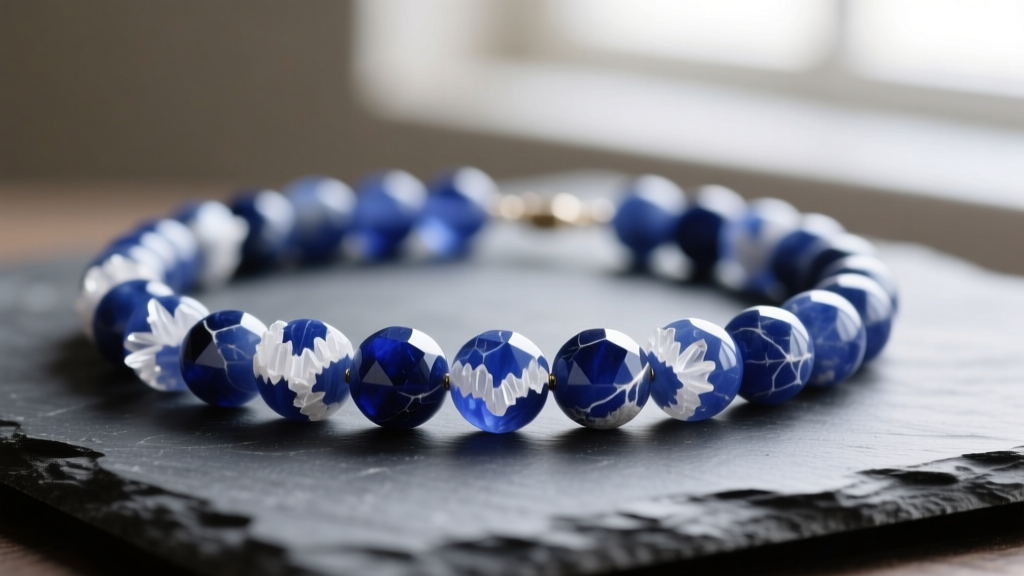
When shopping for a sodalite bead necklace, it is crucial to understand the mineral you are wearing. Sodalite is a feldspathoid mineral with the chemical formula Na8(Al6Si6O24)Cl2. According to the mineralogical database Mindat.org, it forms in silica-undersaturated igneous rocks and is prized for its rich, royal blue color, which is frequently interspersed with white calcite veining.
Many buyers confuse sodalite with lapis lazuli. While both are celebrated for their deep blue hues, lapis lazuli is a rock composed of multiple minerals (primarily lazurite, calcite, and pyrite), whereas sodalite is a single mineral species. The most reliable visual differentiator is the presence of metallic pyrite flecks, which are common in lapis but entirely absent in genuine sodalite. Understanding this distinction is the first step in avoiding overpriced misidentifications in the jewelry market.
Authenticity Checks: Spotting Dyed Howlite and Glass
The market is currently saturated with imitation sodalite, most commonly dyed howlite, dyed quartzite, and cobalt-colored glass. Because high-grade, deeply saturated sodalite is relatively rare, manufacturers often take cheap, porous white howlite and pressure-dye it to mimic the real thing. Here is how to perform a thorough authenticity check before purchasing:
- The Magnification Test: Use a 10x jeweler's loupe to inspect the bead surface. Dyed howlite will show concentrated pools of dark blue dye inside the natural micro-cracks and crevices of the stone. Genuine sodalite will display natural color zoning and distinct, sharp boundaries between the blue sodalite and white calcite matrix.
- The Acetone Test: If you already own the necklace or have the seller's permission, apply a tiny drop of pure acetone (nail polish remover) to a cotton swab and rub it on an inconspicuous area of a bead. If the cotton turns blue, the stone is dyed. Note: Do not use this test on beads that have been heavily waxed or resin-coated, as the coating may block the dye from transferring.
- Thermal Conductivity: Glass imitations will warm up quickly in your hand. Genuine sodalite, like most natural silicates, will remain noticeably cool to the touch for a longer period.
Sodalite Bead Grading Scale: Assessing Quality
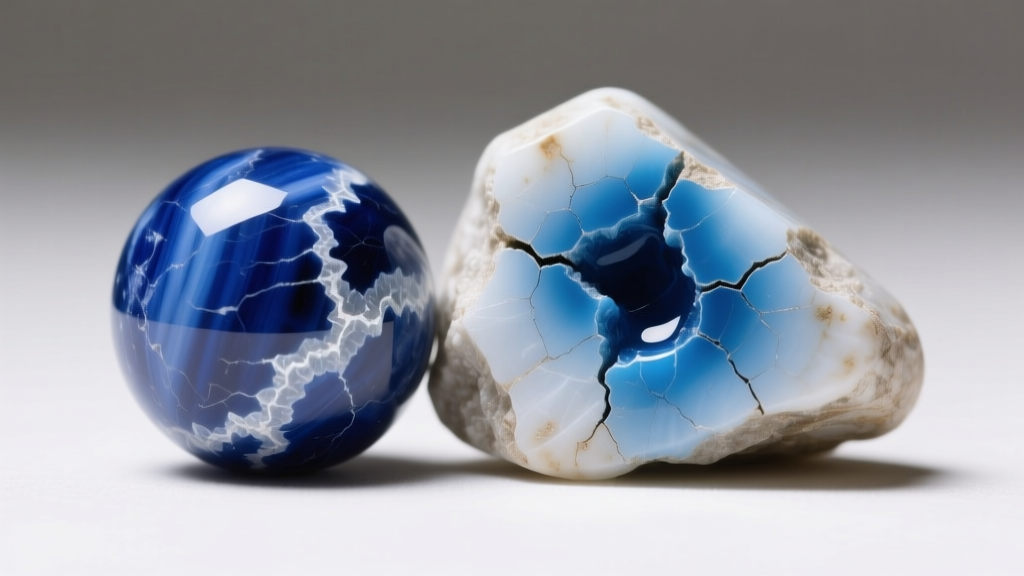
Not all sodalite bead necklaces are created equal. The value and aesthetic appeal of the necklace depend heavily on the gemological grade of the beads. While there is no universally standardized global grading system, reputable gemstone dealers generally adhere to the following three-tier classification:
Grade A (Commercial Quality)
These beads feature a pale or grayish-blue base color with heavy, dominant white calcite veining and frequent gray inclusions. The drilling is often mass-produced, leading to uneven bead sizes and visible 'blowouts' (chipping) around the drill holes. These are commonly found in fast-fashion jewelry and low-tier souvenir shops.
Grade AA (Good Quality)
Grade AA beads exhibit a medium, pleasant blue tone. The white calcite is present but balanced, creating an attractive marbled effect without overwhelming the blue. The beads are well-calibrated (uniform in size), and the drill holes are clean. This is the most common grade for reputable artisan jewelers and mid-range crystal shops.
Grade AAA (Fine/Collector Quality)
The pinnacle of sodalite. These beads boast a deeply saturated, intense royal blue color with minimal to no white calcite and absolutely no gray mottling. The surface polish is mirror-like, and the beads are perfectly round and precisely calibrated. A 16-inch strand of 10mm AAA sodalite beads is exceptionally rare and commands a premium price.
Structural Integrity: Stringing and Hardware
A critical, often overlooked aspect of buying a sodalite bead necklace is the stringing material. Sodalite has a specific gravity of 2.27 to 2.33, meaning a standard 18-inch necklace with 10mm beads can weigh over 60 grams. This significant weight demands professional-grade stringing to prevent catastrophic snapping.
| Stringing Material | Recommended Gauge | Best For | Durability Rating |
|---|---|---|---|
| Coated Stainless Steel (e.g., SoftFlex) | 0.024 inch | Heavy beads (8mm - 14mm) | Excellent |
| Coated Stainless Steel | 0.019 inch | Medium beads (6mm - 8mm) | Very Good |
| Griffin Silk Cord | Size #6 or #8 | Knotted, lightweight beads (4mm - 6mm) | Fair (Requires knotting) |
| Elastic Cord (Stretch) | 0.8mm - 1.0mm | Bracelets only (Not recommended for necklaces) | Poor (Degrades over time) |
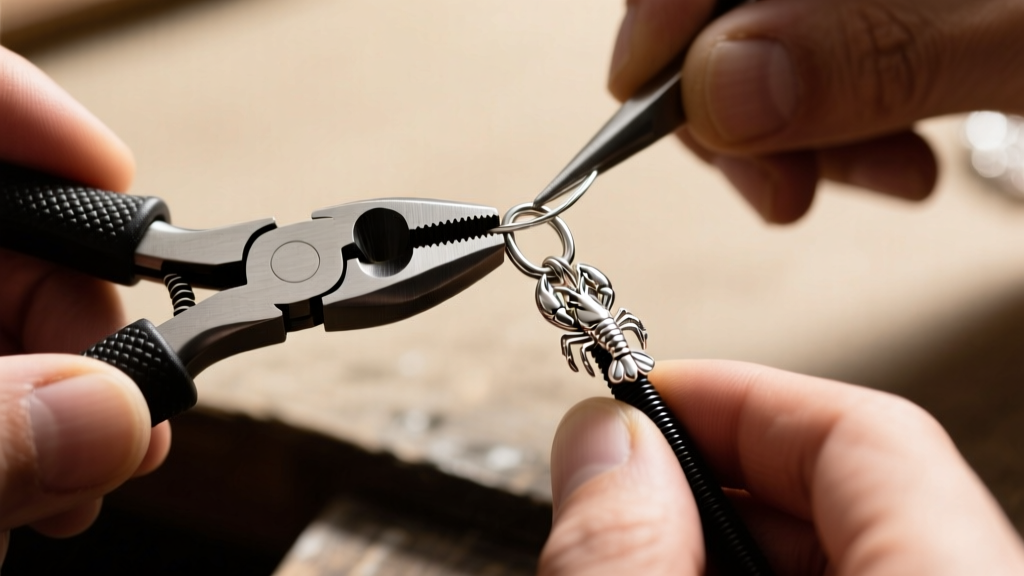
When inspecting a necklace, look for crimp beads that have been properly folded using micro-crimping pliers, rather than simply crushed flat. Furthermore, heavy sodalite necklaces should feature a sturdy lobster clasp or a heavy-duty magnetic clasp rated for at least 10 lbs of pull force. Flimsy spring-ring clasps will inevitably fail under the dynamic weight of swinging stone beads.
Sizing, Weight, and Ergonomics
Because of its density, the bead diameter you choose drastically impacts the comfort of the necklace.
- 4mm to 6mm Beads: Lightweight and highly versatile. Ideal for layering with longer gold or silver chains. Comfortable for all-day, everyday wear.
- 8mm to 10mm Beads: The classic statement size. Provides excellent color saturation and a substantial feel, but may cause neck fatigue if worn for more than 8 hours straight.
- 12mm to 14mm+ Beads: Bold, high-impact collector pieces. These are incredibly heavy and should be reserved for special occasions or short-duration wear. Ensure the necklace features a leather or fabric backing if the beads have flat, unpolished backs to prevent skin irritation.
2026 Market Pricing: What You Should Actually Pay
Pricing for a genuine sodalite bead necklace varies wildly based on the grading, bead size, and hardware quality. Below is a realistic pricing framework for the current market, assuming a standard 18-inch princess length necklace with sterling silver hardware:
- Commercial Grade (6mm - 8mm): $25 – $45
- Good Grade (AA, 8mm): $50 – $85
- Fine Grade (AAA, 8mm - 10mm): $110 – $180
- Premium Collector (AAA, 12mm+): $250 – $400+
Buyer Beware: If you encounter a 10mm, deeply saturated royal blue sodalite necklace selling for under $30, it is almost certainly dyed howlite or synthetic glass. Genuine AAA sodalite of that size is scarce and priced accordingly.
Care, Maintenance, and Tenebrescence
Sodalite ranks at 5.5 to 6 on the Mohs hardness scale, making it relatively soft compared to quartz or beryl. It can be easily scratched by harder materials, so always store your sodalite bead necklace in a soft microfiber pouch, separate from diamonds, sapphires, or even sterling silver chains that could abrade the polish.
Cleaning should only be done with warm water, a mild dish soap, and a soft microfiber cloth. Never use ultrasonic cleaners or steamers. The high-frequency vibrations can fracture the stone along the natural boundaries between the sodalite and the calcite matrix, while harsh chemicals can dull the polish.
The Hackmanite Phenomenon
According to the Gemological Institute of America (GIA), some sodalite deposits (notably from Canada, Greenland, and Afghanistan) contain a sulfur-rich variety known as hackmanite. This variety exhibits tenebrescence—a reversible color-change phenomenon. When exposed to shortwave UV light or direct, intense sunlight, the beads may temporarily shift to a deep violet or pinkish-purple hue. When kept in the dark, they slowly revert to their original white or pale blue state. If you notice your pale sodalite necklace changing color after a day at the beach, do not panic; you likely own a rare hackmanite-rich specimen, not a defective stone.
Final Verdict: Making the Right Choice
Investing in a high-quality sodalite bead necklace requires looking past the initial color appeal. By verifying the stone's authenticity through magnification, demanding professional-grade coated steel stringing, and understanding the nuances of the AAA grading scale, you can secure a piece that is not only visually striking but structurally built to last a lifetime. Always prioritize precision drilling and heavy-duty clasps to ensure your deep blue treasure remains safely around your neck for years to come.