Is a Giant Ball Chain Necklace Worth the Price? Value Guide
Discover if a giant ball chain necklace is worth your budget. We break down metal grades, clasp durability, and pricing tiers for maximum value.

The Market Shift: Why Oversized Bead Chains Dominate
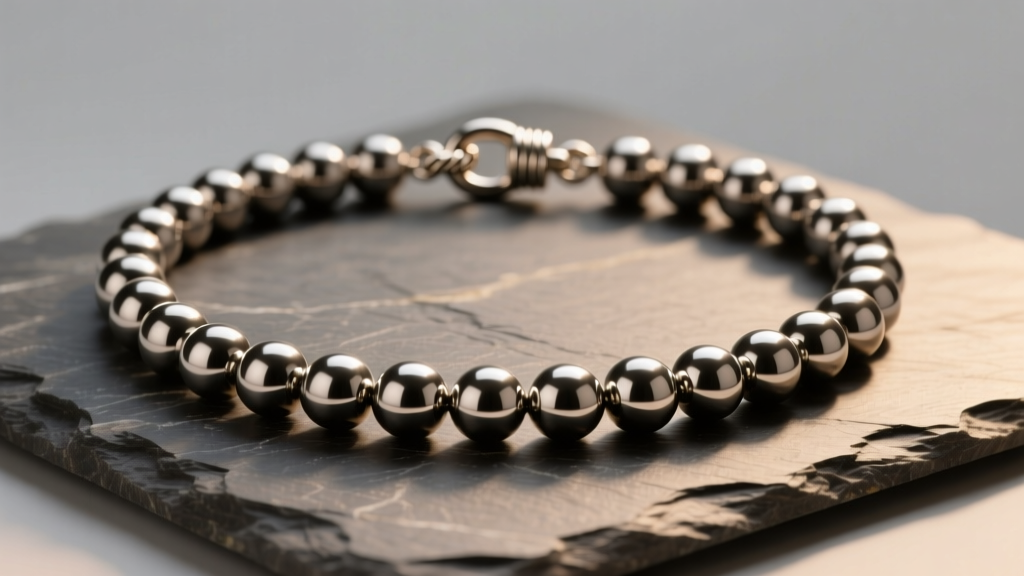
The giant ball chain necklace—often referred to in manufacturing circles as an oversized bead chain or spherical link chain—has evolved far beyond its utilitarian military dog-tag origins. In the contemporary 2026 jewelry market, these heavy, industrial-inspired pieces are staples in both streetwear and high-fashion editorial styling. However, as consumers become more analytical about their purchases, the question of value assessment becomes critical. When a stainless steel chain costs $40 and a visually identical sterling silver version commands $350, understanding the metallurgy, manufacturing techniques, and hardware mechanics is essential to determining if a giant ball chain necklace is truly worth your budget.
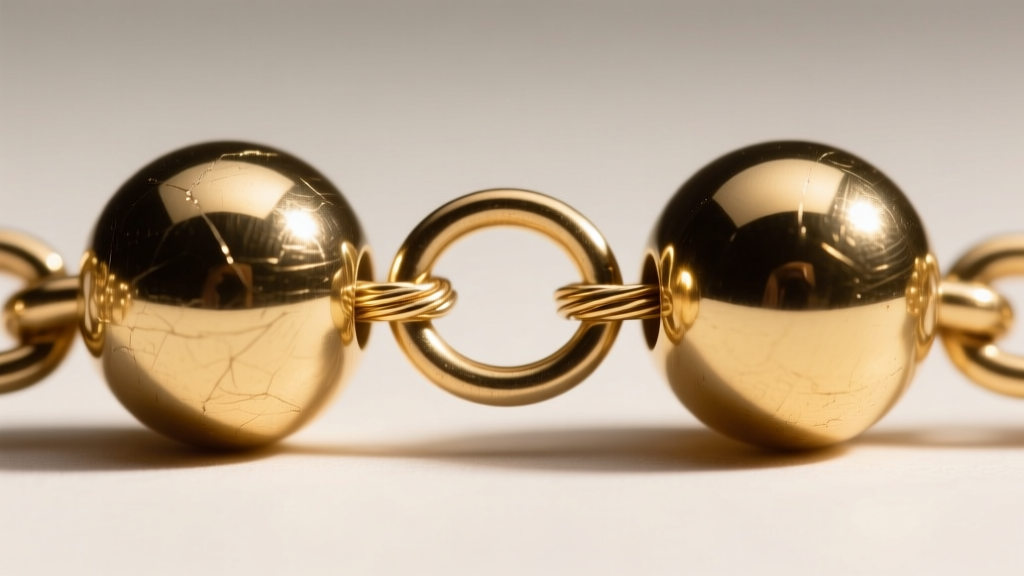
Unlike delicate cable or curb chains, the structural integrity of a ball chain relies entirely on the friction and tensile strength of the tiny wire loops connecting each sphere. This unique architecture creates specific failure points and value disparities that buyers must navigate. Below, we conduct a comprehensive budget and value assessment to help you invest wisely.
Material Breakdown: What You Are Actually Paying For
The base material dictates not only the price but the longevity, weight, and skin-safety of your necklace. Here is how the most common materials stack up in terms of true value.
316L Surgical Stainless Steel: The Value Champion
For 80% of buyers, 316L stainless steel offers the highest return on investment. Alloyed with molybdenum, 316L resists corrosion, chlorides, and tarnish far better than standard 304 steel. A high-quality 10mm to 12mm solid steel ball chain will typically weigh between 180 and 240 grams, providing a luxurious, heavy drape without the anxiety of scratching or tarnishing. Because steel is relatively inexpensive per ounce, you are primarily paying for the CNC machining and polishing labor. Expect to pay between $35 and $85 for premium steel iterations.
PVD-Coated Brass: The Budget Compromise
Brass chains coated via Physical Vapor Deposition (PVD) in 14k or 18k gold tones dominate the $15 to $40 price bracket. While PVD is significantly more durable than traditional electroplating, the spherical geometry of a ball chain creates high-friction zones where the beads rub against the connector wires. Over 12 to 18 months of daily wear, these micro-abrasions will inevitably wear through the 0.3-micron PVD layer, exposing the yellow brass beneath. If you are on a strict budget, PVD brass offers excellent short-term visual impact, but it fails the long-term value assessment.
925 Sterling Silver: The Premium Investment
A solid 925 sterling silver giant ball chain necklace is a serious investment. According to Kitco silver market data, the sheer volume of metal required to cast 12mm solid silver beads makes these pieces inherently expensive. Furthermore, silver is softer than steel, meaning the connector wires are more prone to stretching under the chain's own weight. You are paying for the precious metal premium and the brand prestige. Prices generally range from $180 for hollow-bead designs to over $450 for solid, hand-polished versions.
The Weak Link: Evaluating Clasp and Connector Durability
The most common point of failure on any ball chain is the clasp. Traditional military-style chains use a "push-in" or "snap" barrel clasp, which relies on a tiny, bent piece of metal for tension. On a giant chain weighing over 150 grams, the kinetic force of the chain swinging will easily dislodge a push-in clasp, resulting in a lost necklace.
When assessing value, inspect the clasp hardware before purchasing. A high-value giant ball chain necklace will feature one of the following upgrades:
- Threaded Barrel Clasps: These screw together via internal threading, providing a mechanical lock that cannot be pulled apart by gravity or sudden movement.
- Heavy-Duty Lobster Clasps with Soldered Jump Rings: If a lobster clasp is used, the jump ring connecting it to the chain must be soldered shut. An open jump ring will easily be pried apart by the heavy spherical beads.
- Magnetic Locking Clasps: Increasingly popular in 2026 premium streetwear jewelry, neodymium magnetic clasps encased in steel offer a secure hold and effortless removal, though they add to the overall manufacturing cost.
2026 Pricing Tiers: Budget vs. Premium Value
To contextualize the market, we have mapped out the current pricing tiers based on material, bead diameter, and construction quality. This framework aligns with recent National Jeweler industry reports regarding shifting consumer preferences toward durable, gender-neutral statement pieces.
| Material Grade | Bead Size | Construction | Price Range (2026) | Value Verdict |
|---|---|---|---|---|
| Brass with PVD | 8mm - 10mm | Hollow Beads | $15 - $35 | Low (High wear risk) |
| 316L Stainless Steel | 10mm - 12mm | Solid Beads | $45 - $95 | Exceptional (Lifetime wear) |
| 925 Sterling Silver | 8mm - 10mm | Hollow Beads | $120 - $180 | Moderate (Dent prone) |
| 925 Sterling Silver | 12mm - 14mm | Solid Beads | $280 - $500+ | High (Heirloom quality) |
Sizing, Weight, and the Hollow vs. Solid Debate
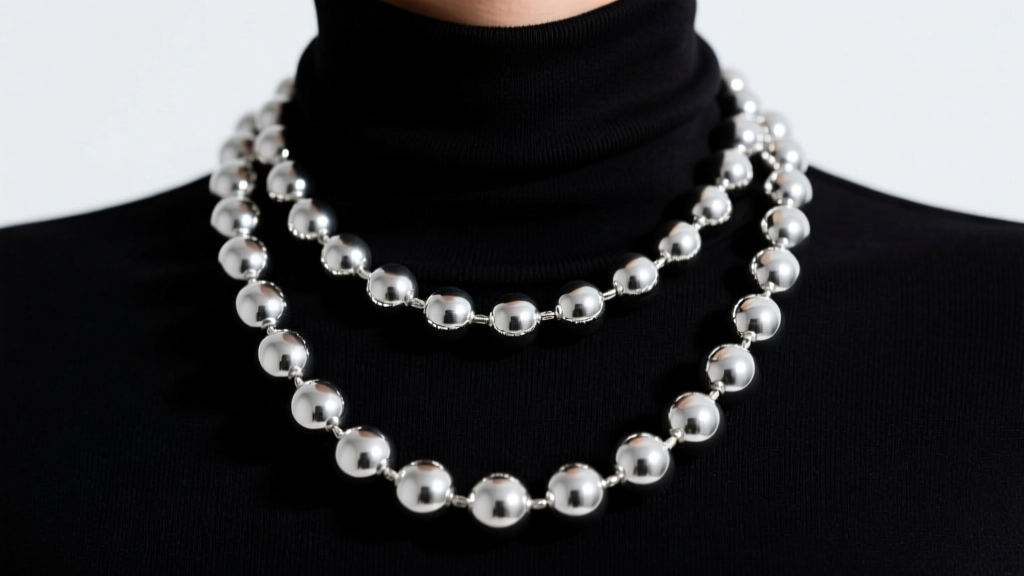
When evaluating the price of a giant ball chain necklace, you must account for the manufacturing technique used to create the spheres. Beads are either cast solid or stamped and soldered into hollow spheres.
Hollow Beads: Manufacturers use hollow beads to keep material costs down and reduce neck fatigue. A 14mm hollow steel chain might weigh only 90 grams, making it comfortable for all-day wear. However, hollow beads are highly susceptible to denting if dropped on a hard surface, and they produce a hollow, "tinny" sound when the beads collide, which diminishes the perceived luxury of the piece.
Solid Beads: Solid beads offer a superior, fluid drape and a satisfying, dense acoustic clink. They are virtually indestructible under normal wear conditions. The trade-off is weight. A 14mm solid steel chain can exceed 300 grams. While this provides an undeniably premium feel, it can cause posterior neck fatigue over extended periods. For the best balance of comfort and value, a 10mm solid stainless steel chain (weighing roughly 140 grams) is the ultimate sweet spot for daily wear.
Final Verdict: How to Maximize Your Investment
Is a giant ball chain necklace worth the investment? Absolutely, provided you select the right material and hardware configuration for your budget. If you are seeking a bold, everyday statement piece that requires zero maintenance, a solid 316L stainless steel chain in the 10mm to 12mm range, equipped with a threaded barrel clasp, offers unmatched value between $50 and $80. It will outlast trends, resist tarnish, and maintain its structural integrity for decades. Conversely, if you are allocating a higher budget for precious metals, ensure you are purchasing solid 925 silver rather than hollow alternatives to protect your investment against dents and deformation. By prioritizing connector wire gauge and clasp mechanics over mere brand names, you can secure a high-impact piece that delivers genuine, long-term value.


