How to Clean a Lapis Lazuli Pendant Necklace Safely
Discover expert tips to clean and protect your lapis lazuli pendant necklace. Learn safe washing methods, storage rules, and how to avoid damaging pyrite.

Understanding the Vulnerabilities of Lapis Lazuli
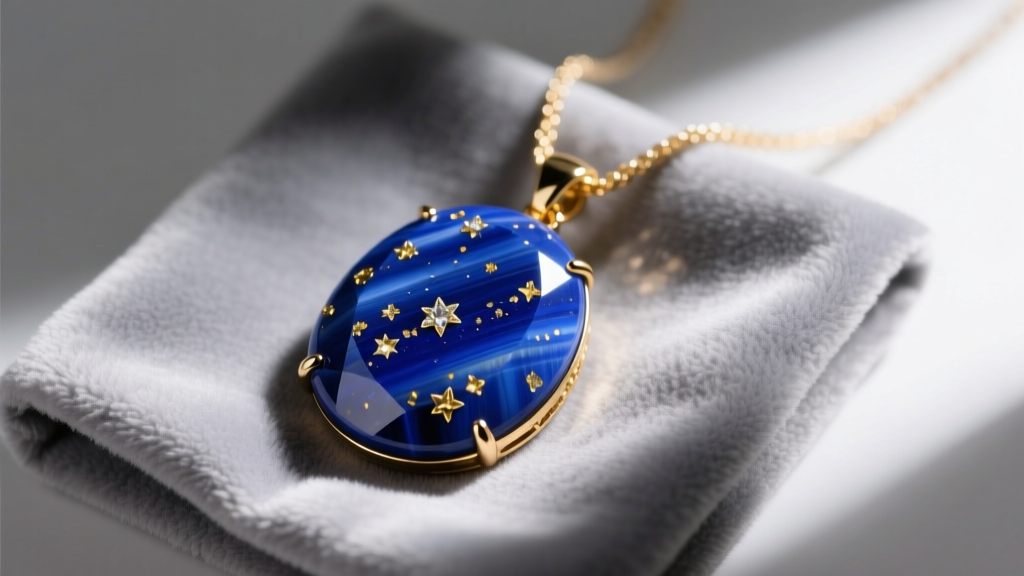
To properly care for a lapis lazuli pendant necklace, you must first understand the complex geology of the stone itself. Lapis lazuli is not a single mineral, but rather a metamorphic rock composed primarily of lazurite (which provides the signature royal blue color), calcite (the white streaks), and pyrite (the metallic gold flecks). According to the Gemological Institute of America (GIA), this unique composition creates specific vulnerabilities that dictate how the stone must be cleaned and maintained.
On the Mohs scale of mineral hardness, lapis lazuli ranks between 5 and 6. This makes it significantly softer than diamonds, sapphires, and even quartz, meaning it is highly susceptible to surface scratching from everyday dust and abrasive cleaning materials. Furthermore, the calcite inclusions rank at a mere 3 on the Mohs scale and are highly reactive to acids. The pyrite inclusions, composed of iron sulfide, introduce a severe risk of oxidation and rust if exposed to prolonged moisture. Finally, most commercial lapis lazuli is treated with wax or oil to enhance its color and fill microscopic pores. Harsh chemicals will strip these treatments, leaving the stone dull, dry, and prone to staining.
The Step-by-Step Safe Cleaning Method
Because you cannot submerge this porous gemstone, cleaning your lapis lazuli pendant necklace requires a careful, hands-on approach. Follow this exact protocol to remove oils, cosmetics, and environmental dirt without damaging the rock's matrix.
1. Dry Dusting
Before introducing any moisture, remove loose particulate matter. Dust contains microscopic quartz particles (Mohs 7) that will scratch the lapis lazuli (Mohs 5-6) if rubbed against the surface. Use a clean, ultra-soft makeup brush or a dedicated, dry jewelry polishing cloth to gently sweep away surface dust. Pay special attention to the bail and the crevices where the chain meets the pendant.
2. The Damp Wipe Technique
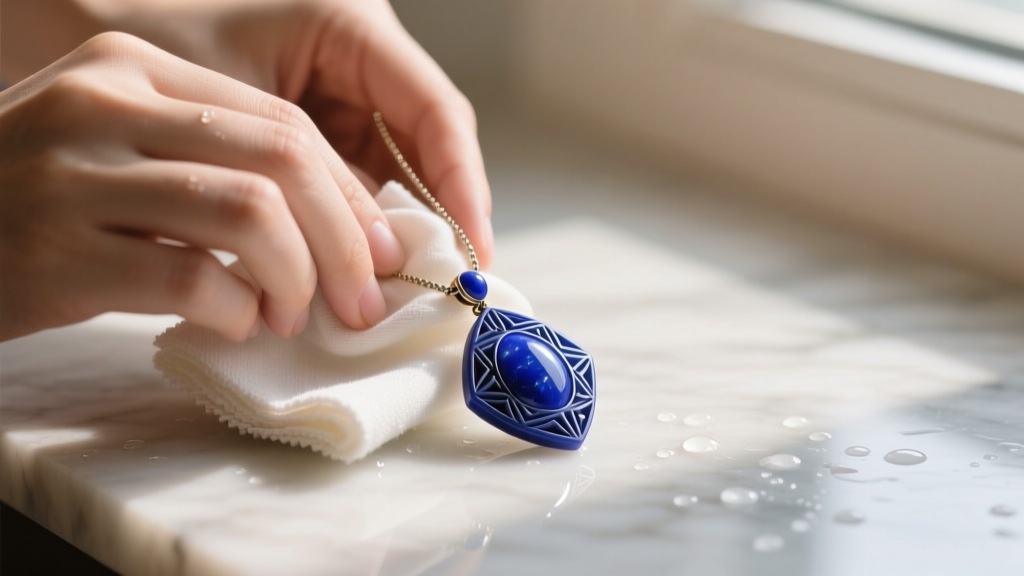
Never run the pendant under a faucet. Instead, prepare a cleaning solution using one cup of distilled water and a single drop of pH-neutral, dye-free dish soap. Distilled water is preferred over tap water to avoid chlorine and hard water mineral deposits. Dip a soft, lint-free microfiber cloth into the solution and wring it out until it is only slightly damp. Gently wipe the surface of the lapis lazuli, avoiding aggressive circular motions.
3. Immediate Drying
Moisture is the enemy of pyrite. Immediately after wiping the stone with the damp cloth, use a second, completely dry microfiber cloth to buff the pendant. Ensure no moisture is trapped in the setting prongs, the bail, or the natural fissures of the stone.
What NEVER to Do: The Lapis Lazuli Hazard List
Many standard jewelry cleaning methods are catastrophic for lapis lazuli. The American Gem Trade Association (AGTA) consistently warns against using automated or chemical-heavy cleaning systems on porous, multi-mineral rocks. Review the hazard table below to ensure you are not accidentally destroying your pendant.
| Cleaning Method | Safety Status | Scientific Reason for Avoidance |
|---|---|---|
| Ultrasonic Cleaners | DANGER | High-frequency vibrations can fracture the stone along natural calcite veins and shatter the wax sealant. |
| Steam Cleaners | DANGER | Extreme heat causes thermal shock, leading to micro-fractures, and melts protective wax treatments. |
| Commercial Silver Dips | DANGER | Contains thiourea and strong acids that will instantly dissolve calcite inclusions and etch the lazurite. |
| Prolonged Soaking | DANGER | Water penetrates the porous rock, causing pyrite inclusions to oxidize (rust) from the inside out. |
| Baking Soda Paste | DANGER | Baking soda is an abrasive (Mohs 2.5-3) that will leave permanent micro-scratches on the polished surface. |
| Mild Damp Wipe | SAFE | Gently removes surface oils without saturating the stone or exposing it to harsh chemical reactions. |
Protecting the Pyrite and Calcite Inclusions
The beauty of a lapis lazuli pendant necklace lies in its contrasting inclusions, but these are also its weakest points. Calcite is calcium carbonate. If you wear your necklace while applying skincare products containing alpha-hydroxy acids (AHAs), salicylic acid, or even natural citrus extracts, the acid will chemically react with the calcite. This reaction produces carbon dioxide gas and dissolves the white streaks, leaving dull, pitted divots on the surface of your pendant.
Similarly, the golden pyrite flecks require strict moisture control. Pyrite (iron sulfide) is relatively stable in dry air, but when exposed to water and oxygen over time, it undergoes a chemical weathering process that produces iron sulfate and sulfuric acid. This not only causes ugly brown rust spots to bloom on the gold flecks but the resulting sulfuric acid will further degrade the surrounding lazurite matrix. Always remove your pendant before swimming, showering, or engaging in heavy cardiovascular exercise that produces excessive sweat.
Chain and Bail Maintenance Without Harming the Stone
While the lapis lazuli requires gentle wiping, the metal chain and bail (often sterling silver or gold) may require deeper cleaning to remove tarnish. If your sterling silver chain has oxidized and turned black, you can use the popular aluminum foil and baking soda electrochemical reduction method—but you must detach the pendant first.
If the pendant cannot be detached, you must isolate the stone. Wrap the lapis lazuli pendant tightly in a dry plastic wrap or a small ziplock bag, ensuring a watertight seal around the bail. Only then should you submerge the silver chain in the hot baking soda and aluminum foil bath. Once the chain is clean and thoroughly dried, remove the plastic protection from the pendant. Never allow the baking soda solution to splash onto the lapis lazuli, as the high alkalinity and abrasiveness will ruin the polish.
Proper Storage and Long-Term Preservation
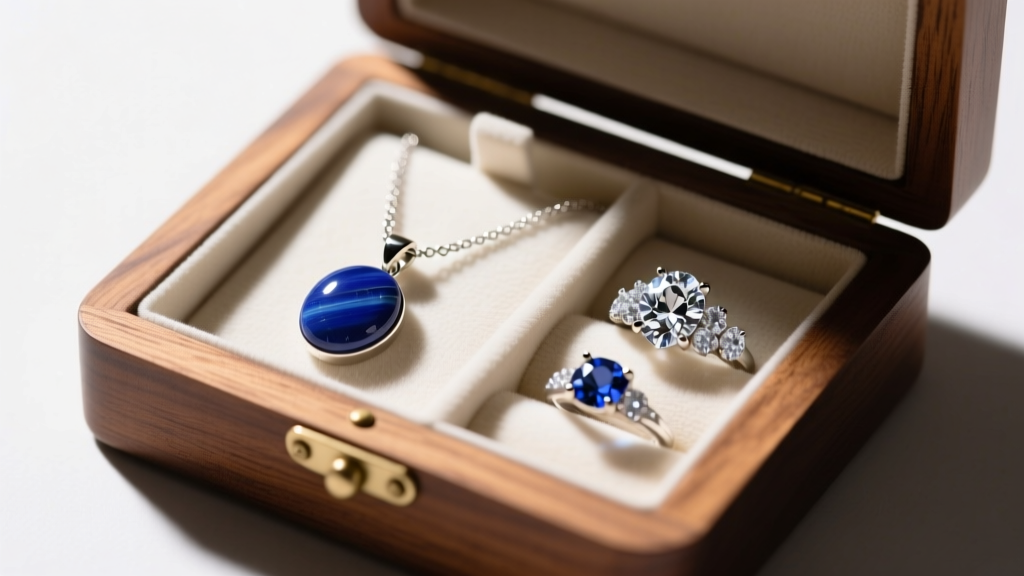
How you store your lapis lazuli pendant necklace is just as critical as how you clean it. Because of its 5-6 Mohs hardness, storing it loosely in a communal jewelry box guarantees it will be scratched by harder gemstones like diamonds (Mohs 10), sapphires (Mohs 9), or even quartz (Mohs 7). Always store the pendant in a dedicated, soft flannel pouch or a separate compartment in a fabric-lined jewelry box.
Additionally, lapis lazuli is sensitive to prolonged exposure to direct, intense sunlight. While normal daily wear is perfectly fine, leaving the necklace on a sunny windowsill for weeks can cause the lazurite to fade, shifting the vibrant royal blue to a washed-out, grayish hue. Keep the necklace in a dark, dry, and temperature-controlled environment. Finally, if your pendant is set in a bezel, check the metal rim every six months. Because lapis is relatively soft, a loose bezel can allow the stone to shift and chip against the metal setting, causing irreversible damage to the edges of the cabochon.


