Gifting a Necklace Hand of Fatima: Meaning, Styles & Guide
Discover the ultimate gift guide for a necklace hand of fatima. Learn cultural meanings, material grades, occasion matching, and chain pairing tips.

The Cultural & Spiritual Weight of the Hamsa
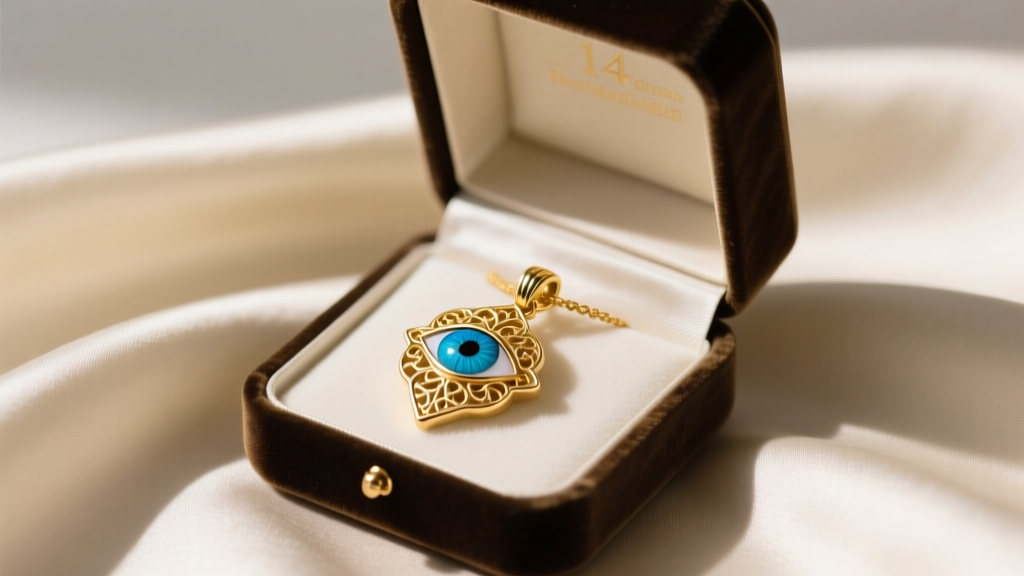
Gifting a necklace hand of fatima—widely recognized as the Hamsa, Khamsa, or Hand of Miriam—is one of the most profound gestures you can make in the realm of symbolic jewelry. As we navigate 2026's jewelry landscape, there is a distinct shift away from mass-produced, generic trinkets toward culturally rooted, hyper-personalized talismans. But to gift this symbol responsibly and meaningfully, one must understand its deep historical roots.
The hand-shaped amulet spans multiple cultures and faiths. In Islamic tradition, it is known as the Hand of Fatima, representing the Five Pillars of Islam. In Sephardic Jewish culture, it is often called the Hand of Miriam, symbolizing the Five Books of Moses. Across North African and Middle Eastern Berber traditions, it serves as a universal shield against the 'evil eye' (nazar). According to BBC Culture, the motif's enduring power lies in its ability to transcend specific dogmas, acting as a shared human language of protection, health, and good fortune.
Orientation Matters: When selecting the pendant, pay close attention to the direction the fingers point. A hand facing upward is traditionally meant to ward off evil and negative energy. A hand facing downward is an invitation for abundance, fertility, and answered prayers. Matching the orientation to the recipient's current life stage is a hallmark of an expert-level gift.
Occasion Matching: When to Gift the Hamsa Pendant
Because the necklace hand of fatima carries heavy spiritual and emotional weight, it is not typically a casual Valentine's Day purchase. It is a milestone and transitional gift. Below is a decision matrix to help you match the occasion with the appropriate metal, gemstone, and design style.
| Occasion | Recipient Profile | Recommended Style & Material | Symbolic Intent |
|---|---|---|---|
| New Baby / Christening / Bris | Infant or New Mother | 14k Solid Gold, downward orientation, Mother of Pearl inlay | Inviting health, purity, and lifelong protection |
| Housewarming / Relocation | Friend or Family Member | Sterling Silver 925, upward orientation, Black Onyx center eye | Warding off envy and protecting the new sanctuary |
| Graduation / New Career | Young Adult | 18k Gold Vermeil, minimalist outline, Turquoise accent | Guidance, luck, and clarity in new endeavors |
| Long-Distance Travel / Study Abroad | Student or Wanderer | Mixed metals, rugged rope chain, Lapis Lazuli cabochon | Safe passage and shielding from the unknown |
Metallurgy & Material Grades: Choosing the Right Base
The longevity and skin-compatibility of your gift depend entirely on the metallurgy. Avoid cheap brass or copper bases plated in gold, as these will oxidize, turn the skin green, and degrade the spiritual sentiment of the gift. Stick to these industry-standard grades:
1. 14k Solid Gold (58.5% Purity)
According to the GIA Gold Guide, 14k gold is the optimal balance for daily-wear pendants. It is alloyed with copper, silver, and zinc, giving it a warm hue and the structural integrity to resist scratching. A 14k gold Hamsa pendant typically ranges from $180 to $450, depending on weight (look for 2.5g to 4g for a substantial, premium feel).
2. Sterling Silver 925 with Rhodium Flash
Sterling silver (92.5% pure silver, 7.5% copper) is a brilliant, affordable choice ($40 to $120). However, raw silver tarnishes when exposed to sulfur in the air. Ensure the piece you purchase has a 'rhodium flash'—a microscopic plating of platinum-group metal that keeps the silver brilliantly white and tarnish-resistant for years.
3. 18k Gold Vermeil (The 2026 Standard)
If solid gold is out of budget, demand vermeil, not standard gold plating. Vermeil legally requires a base of solid 925 sterling silver plated with at least 2.5 microns of 18k gold. Standard 'gold-filled' or 'plated' jewelry uses brass bases that will eventually pit and corrode. Vermeil pieces range from $75 to $150 and offer a luxurious, heavy drape.
Gemstone Inlays and Their Synergies
The 'eye' in the center of the palm is the focal point of the necklace hand of fatima. The material used for this eye alters both the aesthetic and the metaphysical properties of the piece.
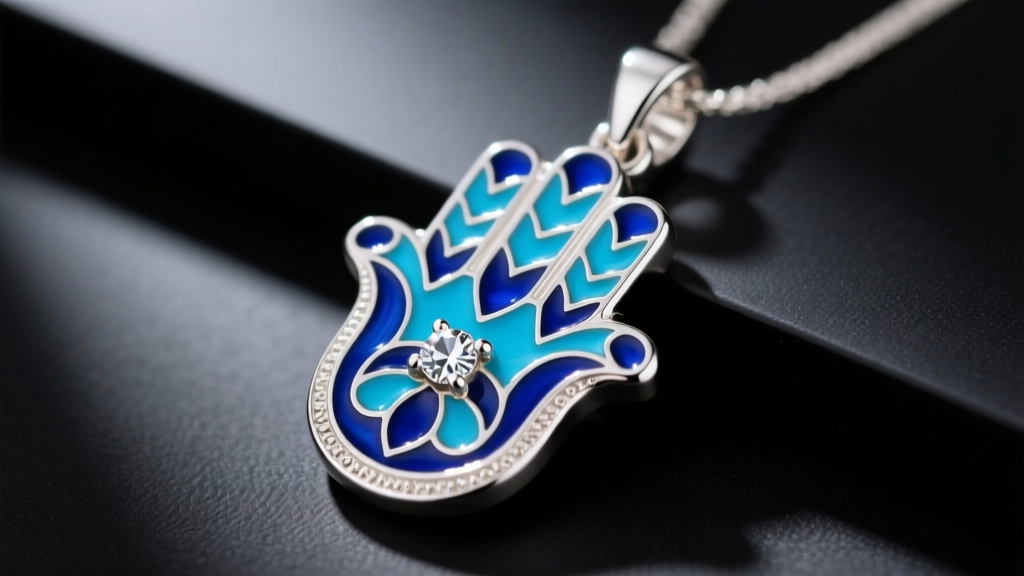
- Turquoise: The most traditional pairing. The Gemological Institute of America (GIA) notes that Persian turquoise (matrix-free, robin's egg blue) commands a premium, while American Sleeping Beauty offers a uniform, vibrant sky blue. Turquoise amplifies the Hamsa's protective qualities and promotes healing.
- Lapis Lazuli: A deep, royal blue stone often flecked with golden pyrite. Historically favored in Middle Eastern royalty, Lapis Lazuli represents wisdom and truth. It pairs exceptionally well with 18k yellow gold settings.
- Mother of Pearl: An organic gem that offers an iridescent, milky glow. It is deeply connected to lunar energy, maternal protection, and emotional soothing. This is the premier choice for gifting to new mothers.
- Pavé Diamonds: For a modern, high-end luxury gift, a micro-pavé diamond center eye (typically 0.05 to 0.15 total carat weight) elevates the Hamsa from a casual talisman to a fine jewelry heirloom.
Chain Selection: Gauge, Length, and Clasp Hardware
A pendant is only as good as the chain that carries it. When gifting a necklace hand of fatima, the chain must complement the pendant's weight and visual density.
The 18-Inch Princess Length
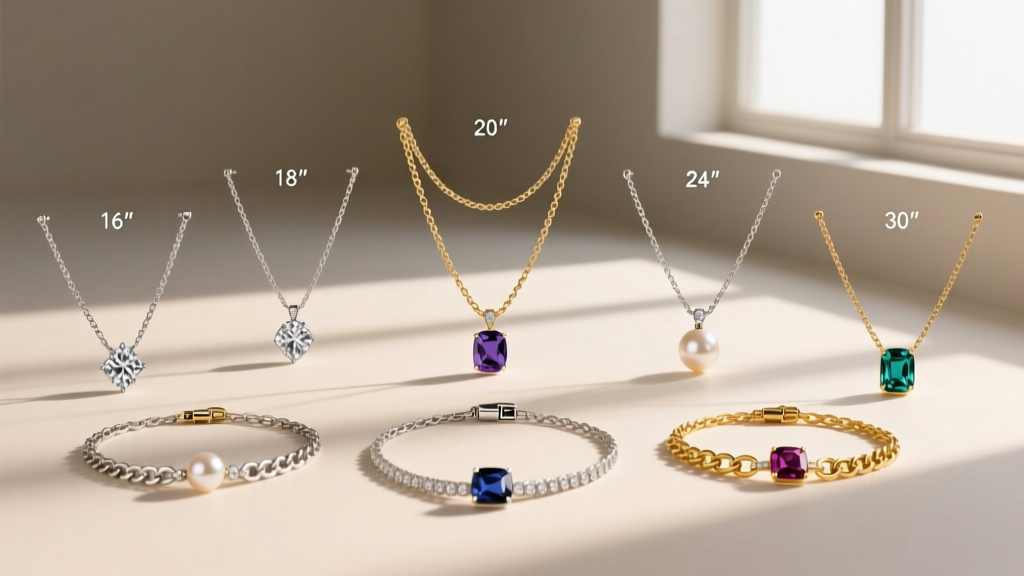
The 18-inch chain is the universal standard for women's pendants, allowing the Hamsa to rest perfectly on the sternum, just above the neckline of most blouses and dresses. If the recipient prefers modern layering (a massive trend in 2026), opt for a 16-inch choker length so the Hamsa sits at the collarbone, allowing them to layer it with longer 20-inch or 22-inch chains.
Chain Styles and Gauges
- Box Chain (1.2mm - 1.5mm): Composed of square links, this chain offers a geometric, modern look that beautifully contrasts the organic curves of the hand. It is also highly resistant to kinking.
- Cable Chain (1.0mm - 1.2mm): The classic oval link. It is delicate and traditional, best suited for smaller, minimalist Hamsa pendants (under 15mm in height).
- Rope Chain (1.5mm - 2.0mm): Twisted links that catch the light brilliantly. Ideal for heavier, solid gold pendants as the rope's tensile strength prevents snapping.
Clasp Hardware: Never gift a pendant on a chain with a flimsy spring-ring clasp. Insist on a lobster claw clasp. It is mechanically superior, spring-loaded, and far less likely to accidentally unhook and lose the precious amulet.
Gifting Etiquette: Presentation and Cultural Sensitivity
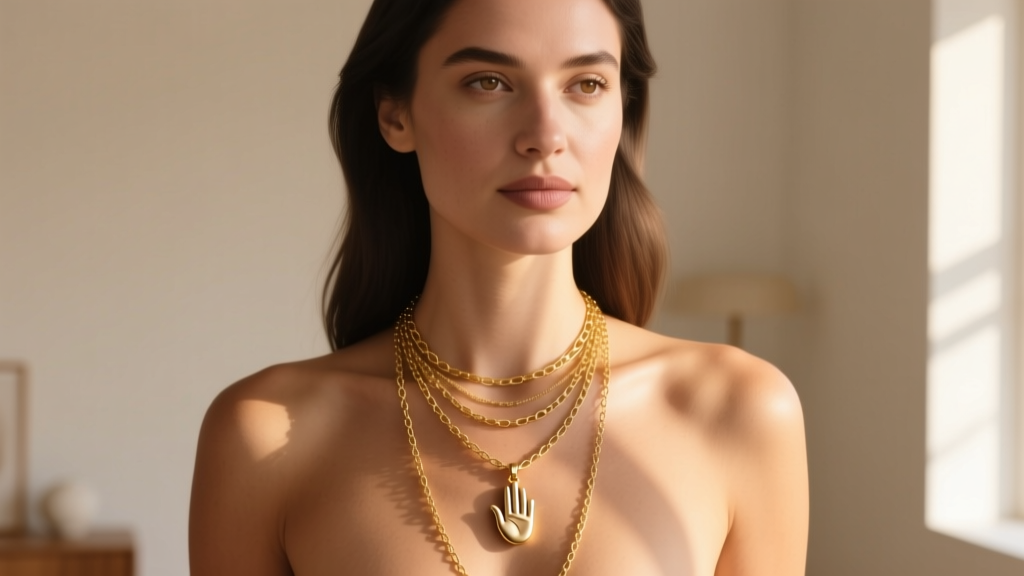
When presenting a necklace hand of fatima, the unboxing experience should reflect the gravity of the symbol. Avoid generic, flimsy cardboard pouches. Present the necklace in a hinged, velvet-lined wooden box or a sustainable, textured linen case.
When gifting a Hand of Miriam or Hamsa, you are not merely giving jewelry; you are offering a shield. It is a profound gesture of care, particularly during life transitions.
Include a handwritten card explaining the specific intention behind your choice. If you chose a downward-facing hand, write about your wishes for their abundance. If you chose an upward-facing hand with black onyx, express your desire for their protection and peace of mind. Acknowledging the cultural heritage of the symbol—without appropriating it, but rather honoring its universal message of goodwill—transforms a beautiful piece of jewelry into a lifelong emotional anchor.
Conclusion
Selecting the perfect necklace hand of fatima requires balancing metallurgical quality, gemstone synergy, and deep cultural respect. By prioritizing solid metals like 14k gold or rhodium-plated 925 silver, choosing an intentional gemstone inlay, and matching the orientation to the recipient's life journey, you ensure your gift will be cherished not just as an accessory, but as a powerful, protective heirloom for decades to come.