Why your girlfriend wears a necklace 24/7: A technical metal guide
Discover what happens when your girlfriend wears a necklace 24/7. Expert guide on skin-safe metals, clasp mechanics, and preventing contact dermatitis.

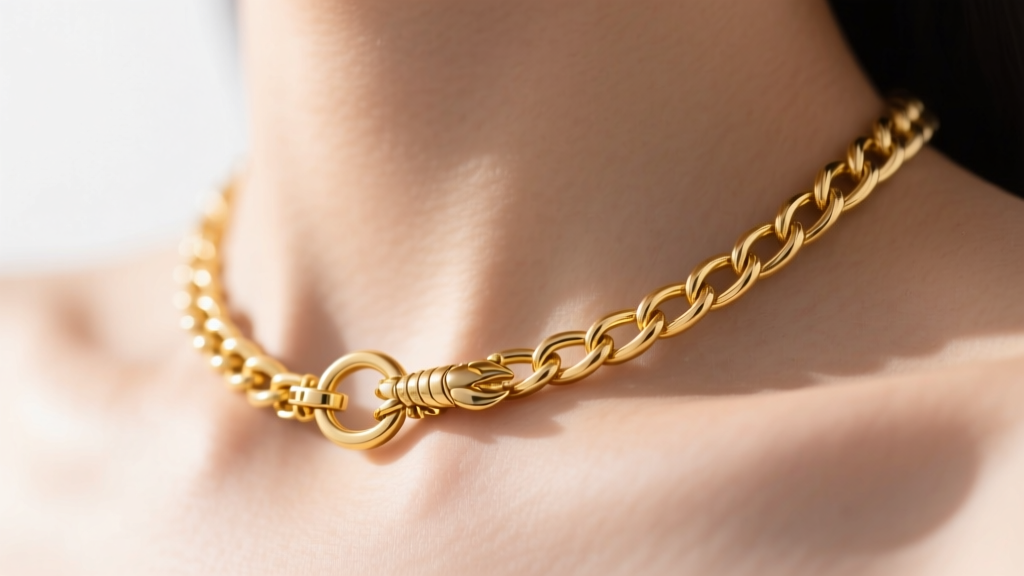
The Reality of Continuous 24/7 Wear
It is a common scenario in modern jewelry habits: your partner finds a piece she loves, and it simply never comes off. When your girlfriend wears a necklace continuously—sleeping, showering, exercising, and applying skincare—the jewelry is subjected to a relentless gauntlet of mechanical stress, chemical exposure, and biological friction. While sentimental value often drives the "never-off" philosophy, the metallurgical and mechanical realities of 24/7 wear dictate whether a chain will last a lifetime or snap within six months. This deep dive explores the exact material science, clasp engineering, and dermatological factors that determine the survival of a continuously worn necklace.
Metallurgy and Alloy Composition: Why Karat Matters
Not all gold is created equal, especially when subjected to the micro-abrasions of cotton pillows and the chemical assault of chlorinated tap water. Pure 24k gold is far too soft (Vickers hardness of ~25 HV) for daily chain wear; it would stretch and snap under the weight of a mere pendant. Therefore, alloying is mandatory, but the specific alloy recipe drastically alters durability.
The 14k vs. 18k Gold Debate
According to the Gemological Institute of America (GIA), 14k gold contains 58.5% pure gold, with the remaining 41.5% composed of copper, silver, and zinc. This higher alloy content increases the Vickers hardness to approximately 130-150 HV, making it highly resistant to mechanical stretching and link deformation. Conversely, 18k gold (75% pure gold) sits at a softer 110-120 HV. While 18k offers a richer color and higher intrinsic value, a delicate 18k cable chain (under 1.2mm thick) worn 24/7 is highly susceptible to work-hardening and eventual brittle fracture at the solder points.
Alternative Metals: Titanium and Stainless Steel
For the ultimate 24/7 survivor, aerospace-grade metals offer unmatched tensile strength. Grade 23 Titanium (Ti-6Al-4V ELI, meeting ASTM F136 standards) is entirely impervious to sweat and water corrosion, boasting a tensile strength of roughly 895 MPa. Similarly, 316L surgical stainless steel (the "L" denoting low carbon) prevents carbide precipitation during welding, ensuring the jump rings and links do not become brittle at their connection points.
Clasp Mechanics and Fatigue Failure
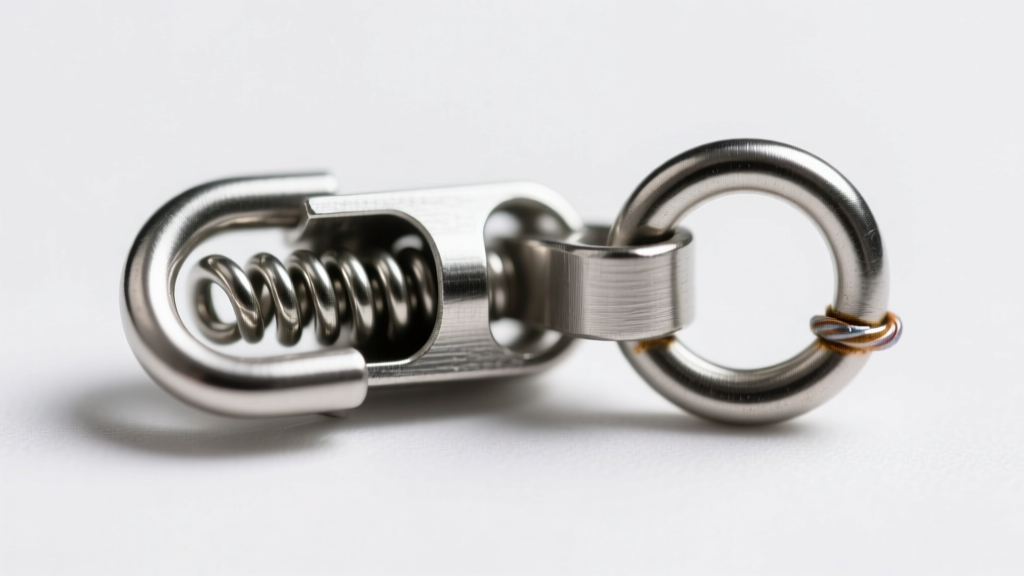
The clasp is universally the weakest link in any necklace. When a necklace is never removed, the clasp endures thousands of articulation cycles and lateral stress loads. Understanding the engineering of common clasps reveals why certain failures are inevitable.
- Spring Ring Clasps: These rely on a tiny internal steel spring. Under continuous wear, the spring undergoes metal fatigue. After roughly 10,000 to 15,000 compression cycles (easily reached in a year of daily wear and sleep movement), the spring loses its temper and tension, resulting in a clasp that fails to close flush.
- Lobster Clasps: Mechanically superior to spring rings, lobster clasps distribute stress across a wider surface area and feature a thicker internal spring. However, the external lever is prone to bending if snagged on heavy knitwear or hair.
- Jump Ring Integrity: The jump ring connecting the clasp to the chain is a critical failure point. An 18-gauge or 20-gauge wire jump ring must be soldered shut or feature a flush-cut saw closure. If a cheap, split-ring style jump ring is used, the lateral torque of sleeping will inevitably pry it open, dropping the pendant.
Dermatological Reactions: Sweat, pH, and Ion Leaching
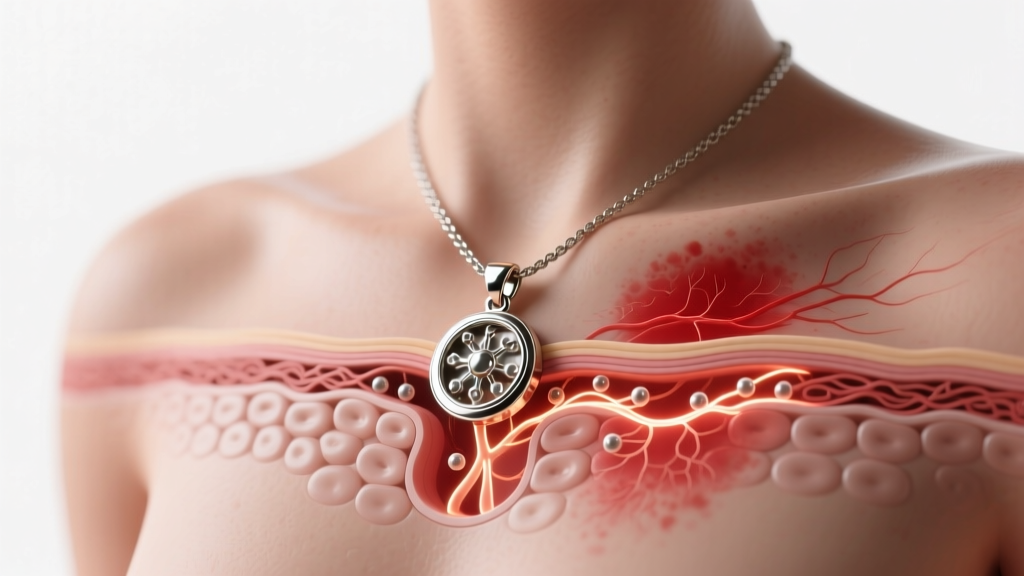
Human sweat is not merely water; it is a complex electrolyte solution with a pH ranging from 4.0 to 6.5, containing chlorides, urea, and lactic acid. When a necklace rests against the sternum and collarbone 24/7, it creates an occlusive microenvironment where sweat and dead skin cells accumulate.
The Nickel Sensitization Pathway
The American Academy of Dermatology notes that nickel allergy is one of the most common causes of allergic contact dermatitis. In lower-grade alloys or poorly plated jewelry, the acidic environment of sweat causes nickel ions to leach from the metal matrix. These ions penetrate the stratum corneum and bind to skin proteins in a process called haptenization. The immune system's T-cells recognize these new protein-ion complexes as foreign invaders, triggering localized erythema, pruritus, and blistering. As detailed in research published by the NCBI, once sensitization occurs, even trace amounts of nickel in "hypoallergenic" plated jewelry will trigger a severe reaction.
Metal Durability & Skin Reaction Matrix
To make an informed decision about a piece meant for continuous wear, consult the technical matrix below. This data synthesizes tensile strength, tarnish resistance, and biological compatibility.
| Material Grade | Hardness (HV) | Tarnish/Corrosion Resistance | Dermatological Safety | Best Chain Style for 24/7 |
|---|---|---|---|---|
| 14k Yellow Gold | 130 - 150 | Moderate (Copper oxidizes over time) | High (If nickel-free alloy) | Cable or Box Chain |
| Platinum 950 | 135 (Work-hardens) | Exceptional (Develops patina, no loss) | Exceptional (Inert) | Wheat or Franco Chain |
| 316L Stainless Steel | 150 - 190 | High (Passive chromium oxide layer) | Moderate (Contains trace nickel) | Curb or Rope Chain |
| Grade 23 Titanium (ELI) | 320 - 360 | Absolute (Impervious to chlorides) | Exceptional (100% Biocompatible) | Snake or Herringbone |
Maintenance Protocols for the "Never-Off" Wearer
If the necklace is never removed, proactive maintenance is non-negotiable to prevent the buildup of sebum, dead keratinocytes, and environmental pollutants within the chain links. Neglect leads to accelerated galvanic corrosion and link seizing.
Ultrasonic Cleaning Parameters
For solid 14k gold, platinum, or titanium chains, an ultrasonic cleaner is the most effective method for dislodging debris from microscopic crevices. Use a 40kHz frequency machine filled with distilled water and three drops of mild, non-detergent liquid soap. Run the cycle for exactly 180 seconds. Warning: Never use ultrasonic cleaners on PVD-coated jewelry, porous gemstones (like opals or turquoise), or hollowed-out links, as the cavitation bubbles will strip the coating or shatter the stone matrix.
Chemical Avoidance Strategy
Because the necklace remains on during daily routines, it is exposed to aerosolized cosmetics. Hairsprays, perfumes, and chemical sunscreens contain alcohols and volatile organic compounds (VOCs) that degrade the passive oxide layers on alternative metals and dull the polish on precious metals. The golden rule of continuous wear is to apply all chemical topicals at least 15 minutes before the jewelry makes contact with the skin, allowing the solvents to fully evaporate and preventing chemical trapping beneath the pendant bail.


