How to Style a Diamond Castle Necklace: Step-by-Step Guide
Learn how to style, layer, and care for a diamond castle necklace. Our step-by-step guide covers chain gauges, necklines, and pavé maintenance.

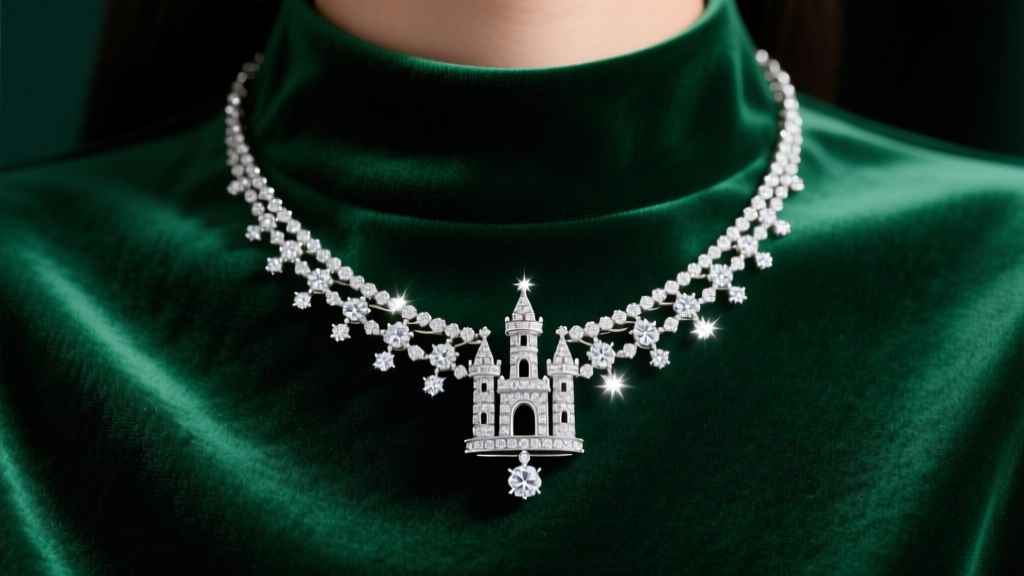
The Anatomy of an Architectural Masterpiece
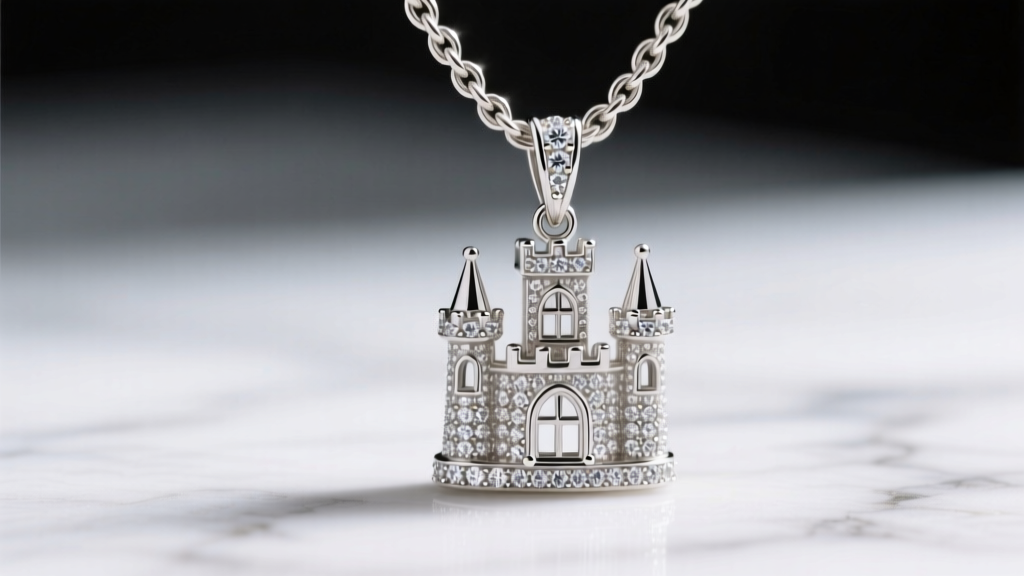
As we move through 2026, architectural and fairy-tale motifs have firmly cemented their place in fine jewelry, moving beyond costume pieces into the realm of high-end bespoke design. A diamond castle necklace is not merely a pendant; it is a structural marvel. Typically crafted using advanced CAD/CAM modeling, these pendants feature intricate turrets, arched windows, and micro-pavé diamond walls. To achieve the necessary brilliance without compromising structural integrity, jewelers rely on 18k white gold or platinum, setting 2.5 to 4.5 carats of melee diamonds (typically VS1-VS2 clarity and G-H color) using micro-prongs. Because of the dense metalwork and high diamond volume, these pendants are unusually heavy, often weighing between 15 and 30 grams. This substantial weight dictates a highly specific approach to styling, chain selection, and daily maintenance.
Step 1: Selecting the Correct Chain and Bail
The most common point of failure for heavy statement pendants is the chain. A standard 1.0mm or 1.2mm cable chain will eventually succumb to shear stress at the bail, leading to a catastrophic break. When styling a diamond castle necklace, you must match the chain’s tensile strength to the pendant’s weight.
Chain Gauge and Weight Matrix
| Chain Style | Recommended Gauge | Max Pendant Weight | Best For |
|---|---|---|---|
| Wheat Chain | 1.8mm - 2.2mm | Up to 35g | Heavy, ornate castle pendants |
| Box Chain | 2.0mm - 2.5mm | Up to 40g | Geometric, structured motifs |
| Rope Chain | 2.5mm - 3.0mm | Up to 50g | Vintage-inspired castle designs |
Always ensure the bail (the loop connecting the pendant to the chain) is lined with platinum or reinforced with a hidden stainless steel core. Friction from a heavy diamond castle pendant will quickly wear through standard 14k gold bails. For optimal drape, select an 18-inch chain, which allows the architectural pendant to rest precisely on the sternum, maximizing light return to the pavé diamonds.
Step 2: Layering Without Overpowering the Motif
Layering a highly detailed piece like a castle necklace requires a strict adherence to the "Rule of Thirds" for visual weight. You want to frame the pendant, not compete with it. In 2026, the trend has shifted away from cluttered, bohemian layering toward curated, spaced-out minimalism.
"When styling an architectural pendant, treat it as the anchor. Your supporting chains should act as negative space, providing a visual runway that leads the eye directly back to the centerpiece." — Elara Vance, Senior Gemologist and Stylist
The 3-Chain Layering Framework
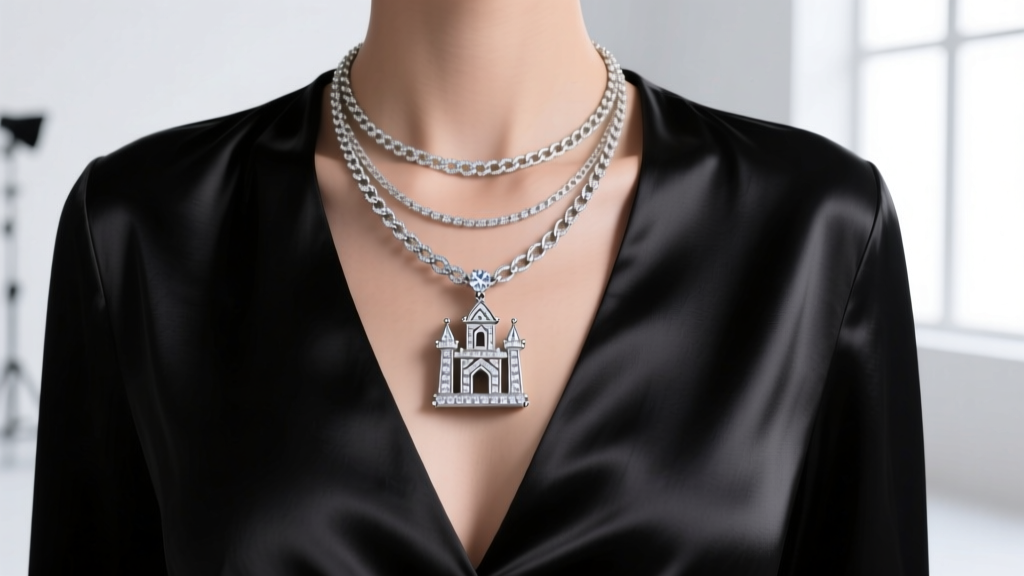
- Layer 1 (14 inches): A delicate, 1.5mm diamond tennis chain or a plain platinum snake chain. This sits high on the collarbone and draws the eye upward.
- Layer 2 (18 inches): Your diamond castle necklace. This is the focal point resting on the upper chest.
- Layer 3 (22 to 24 inches): A thick, unadorned 3.0mm white gold curb chain. This grounds the look and provides a modern, industrial contrast to the fairy-tale motif of the castle.
Avoid layering with other gemstone pendants or charm necklaces. The intricate micro-pavé of the castle will clash with the faceting of larger, solitary gemstones, creating visual noise rather than elegance.
Step 3: Matching Necklines to Architectural Pendants
The silhouette of your clothing can either elevate a diamond castle necklace or render it invisible. Because these pendants feature rigid, geometric lines and a high degree of light refraction, they require specific fabric backdrops to truly shine.
Neckline Compatibility Guide
1. The Deep V-Neck (Optimal)
A deep V-neck creates a natural arrow pointing directly to the pendant. This neckline exposes enough skin to provide a high-contrast backdrop for the white gold and diamonds, ensuring the turrets and arches of the castle are clearly defined.
2. The Off-the-Shoulder / Sweetheart (Excellent)
These necklines expose the collarbone and upper chest, providing a wide, blank canvas. An 18-inch castle necklace will sit perfectly in the center of the exposed skin, making it ideal for evening gowns and formal wear.
3. The High Crew Neck (Avoid)
High collars and crew necks create a harsh horizontal line that cuts off the pendant's bail and chain. Furthermore, the friction from cotton or wool collars will constantly abrade the micro-prongs holding your melee diamonds, increasing the risk of stone loss.
Step 4: Professional Care and Pavé Maintenance
The intricate nature of a diamond castle necklace makes it a magnet for dust, skin oils, and cosmetic residue, all of which will rapidly dull the brilliance of melee diamonds. Furthermore, the hundreds of micro-prongs require vigilant maintenance.
Warning: Never use an ultrasonic cleaner on a micro-pavé architectural necklace. The high-frequency vibrations can easily loosen the tiny prongs holding 1mm to 2mm melee diamonds, causing them to fall out into the machine's tank. According to the Gemological Institute of America (GIA), pavé settings require gentle, manual cleaning to preserve their structural integrity.
Safe At-Home Cleaning Protocol
- Mix a solution of lukewarm water and a few drops of ammonia-free dish soap in a ceramic bowl (avoid metal bowls that can scratch the gold).
- Submerge the necklace for exactly 15 minutes to loosen oils trapped in the castle's arched windows and turrets.
- Using a baby-soft toothbrush, gently brush the pendant from the back first, pushing debris out through the front galleries.
- Rinse under a gentle stream of lukewarm water, ensuring the drain is securely plugged.
- Pat dry with a lint-free microfiber cloth. Do not rub the pavé aggressively.
Finally, schedule a professional prong-tightening and rhodium-plating session with a certified jeweler every 12 to 18 months. The Jewelers of America recommends bi-annual inspections for heavy statement pieces, as the sheer weight of the pendant puts continuous stress on the bail and the primary suspension prongs. By following these precise structural and stylistic guidelines, your diamond castle necklace will remain a breathtaking, secure heirloom for decades to come.


