Choosing the Right Metal for a Cross Necklace With Verse
Discover the best metals for a cross necklace with verse. Compare engraving durability, material grades, and legibility for timeless scripture jewelry.

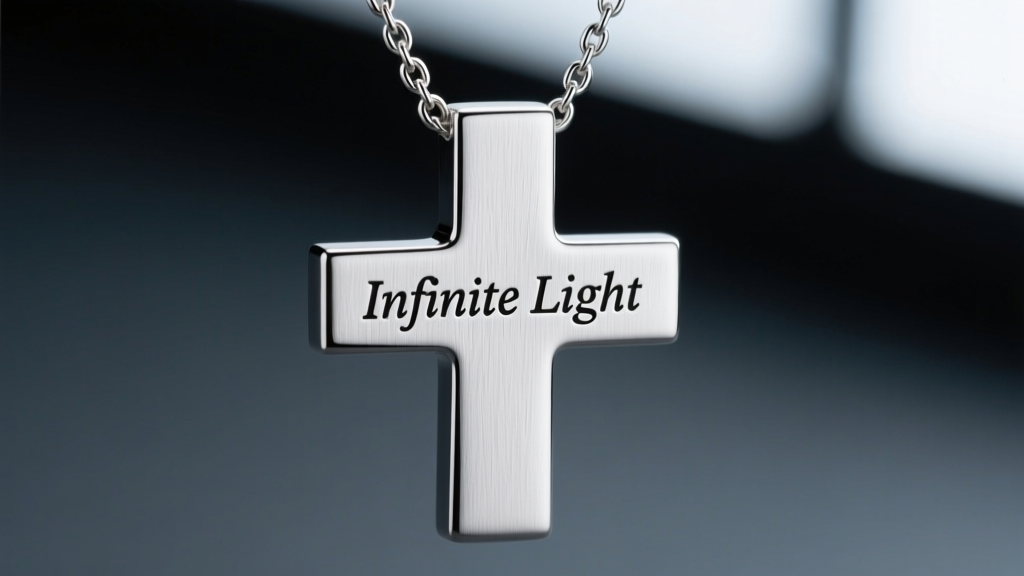
Selecting the perfect cross necklace with verse requires looking beyond the aesthetic design to the fundamental metallurgy of the piece. When you introduce scripture, poetry, or personal mantras into the jewelry design, the metal itself becomes a canvas. Not all precious metals accept engraving equally, and the longevity of a 5-point font etched into a pendant depends entirely on the alloy's hardness, tarnish resistance, and structural integrity. As of 2026, advancements in fiber laser technology have expanded what is possible on hard metals, but traditional rotary engraving still holds distinct advantages for softer alloys.
This comprehensive material guide breaks down the exact properties you need to consider when commissioning or purchasing an engraved scripture cross, ensuring your chosen verse remains legible for generations.
The Science of Scripture: Why Metal Hardness Dictates Legibility
The legibility of an engraved verse relies on the contrast and depth of the cut. Jewelers measure metal hardness using the Vickers Hardness Scale (HV). A metal that is too soft (like pure 24k gold or fine silver) will suffer from 'burring'—where the displaced metal creates microscopic ridges that catch on clothing and eventually wear down, erasing shallow text. Conversely, extremely hard metals require specialized equipment to etch without fracturing the surface.
According to the Gemological Institute of America (GIA), alloying pure gold with metals like copper and zinc not only changes the color but drastically alters the Vickers hardness, making 14k gold significantly more durable for detailed text than 18k or 22k variations. When fitting a 20-word Bible verse onto a 1.5-inch cross, you are often working with font sizes between 3pt and 5pt. At this micro-scale, a metal with a hardness rating below 90 HV will struggle to maintain crisp serif edges over a decade of daily wear.
Material Breakdown: Pros, Cons, and Engraving Realities
316L Surgical Stainless Steel (The Durability Champion)
With a Vickers hardness of roughly 150-200 HV, 316L stainless steel is the undisputed king of durability for everyday scripture jewelry. Modern fiber lasers can anneal the surface of 316L steel, turning the engraved text a permanent, high-contrast dark grey or black without actually cutting into the metal. This means the structural integrity of the cross is never compromised. Steel is also completely impervious to the sulfur compounds in the air that cause tarnish, making it ideal for verses that require high-contrast readability without frequent polishing.
925 Sterling Silver (The Classic Choice with Tarnish Risks)
Sterling silver (92.5% pure silver, 7.5% copper) sits at a much softer 60-70 HV. The Silver Institute notes that while the copper adds necessary strength, it also introduces oxidation risks. For a cross necklace with verse, sterling silver allows for incredibly deep, beautiful rotary engraving. However, as the silver naturally tarnishes over time, the dark oxidation will fill the engraved letters. While some prefer this antique look for vintage-style scripture pieces, it requires regular maintenance with a treated polishing cloth to keep the background bright and the text legible.
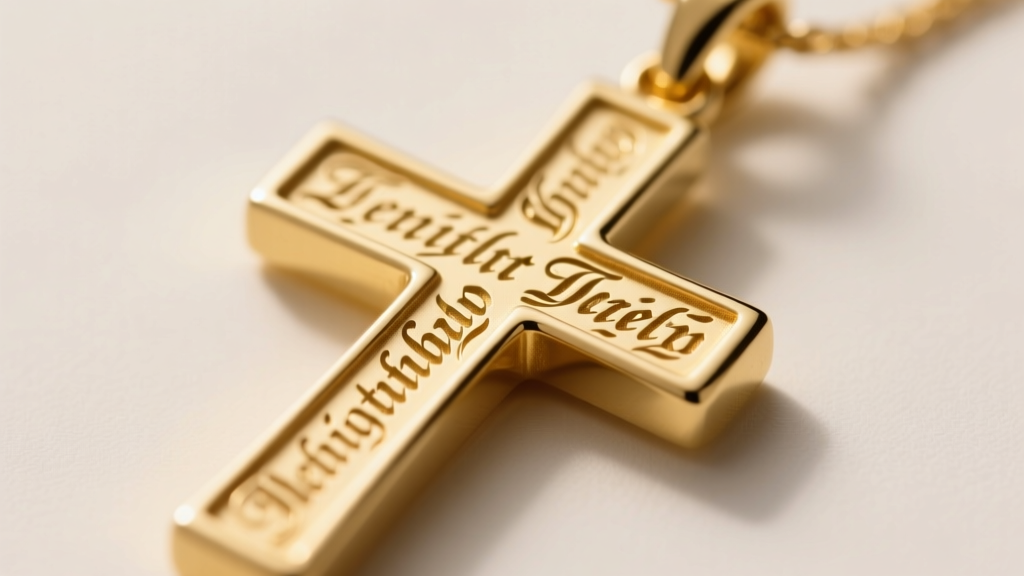
Solid 14k and 18k Gold (Premium Heirlooms)
Gold is the traditional choice for heirloom baptismal and confirmation crosses. 14k gold (approx. 130-150 HV) offers the perfect 'Goldilocks' zone for engravers: it is hard enough to hold a crisp 4pt serif font without burring, but soft enough to be cut with traditional diamond-drag or rotary tools. 18k gold (approx. 110-120 HV) is softer, richer in color, and more expensive, but requires a slightly larger surface area to ensure the verse doesn't wear away over decades of friction against the skin.
Grade 5 Titanium (The Hypoallergenic Modernist)
Titanium (Ti-6Al-4V) is exceptionally hard, lightweight, and 100% hypoallergenic. Because it cannot be easily cut with standard rotary jewelry tools, titanium crosses rely entirely on laser engraving. The result is a highly precise, modern-looking verse, usually rendered in clean, sans-serif fonts. Titanium will never tarnish, rust, or react with skin acids, making it the ultimate choice for those who want a permanent, zero-maintenance record of their faith.
Engraving Techniques: Matching the Tool to the Metal
Understanding how your verse is applied to the metal is just as critical as the metal itself. Here is a comparison of the primary engraving methods used by master jewelers today:
| Engraving Method | Best Suited Metals | Minimum Legible Font | Visual Characteristics |
|---|---|---|---|
| Rotary / CNC | 14k Gold, Sterling Silver, Brass | 4.5pt (Serif) | Deep, tactile grooves; traditional, heirloom appearance. |
| Fiber Laser (Annealing) | 316L Steel, Titanium, Tungsten | 2.5pt (Sans-Serif) | Flush with surface; high-contrast dark marks; ultra-modern. |
| Diamond Drag | 14k/18k Gold, Platinum, Silver | 3.5pt (Script/Serif) | Shallow, delicate scratches; elegant but prone to wearing down. |
Sizing, Proportions, and Chain Pairing
A common mistake when ordering a custom cross necklace with verse is underestimating the physical real estate required for scripture. A standard, frequently chosen verse like John 3:16 contains roughly 25 words (about 135 characters including spaces). To fit this legibly using a 4pt font, the flat surface area of the cross must be at least 1.25 inches tall by 0.85 inches wide. If you prefer longer passages, such as the entirety of Psalm 23, you will need a substantial pendant measuring at least 2.0 x 1.5 inches, or you must opt for a double-sided engraving.
Supporting the Weight: Chain Gauges
Solid metal crosses large enough to hold a full verse carry significant weight. A 1.5-inch solid 14k gold cross can easily weigh between 8 and 14 grams. To support this without risking chain failure, you must abandon delicate 1.0mm cable chains. According to manufacturing guidelines from Rio Grande Jewelry Supply, pendants exceeding 10 grams require a minimum chain thickness of 2.0mm to 2.5mm. Opt for structurally interlocking weaves like a Wheat chain, a Curb chain, or a Box chain. Furthermore, always ensure the chain terminates in a sturdy lobster clasp rather than a small spring-ring clasp, which is a frequent point of failure for heavier scripture pendants.
Care and Maintenance for Engraved Scripture
"Never use a motorized polishing wheel or abrasive liquid dips on an engraved verse. You will inadvertently shave off the top layer of the metal, softening the sharp edges of the letters and rendering the scripture illegible over time."
— Master Engraver Best Practices
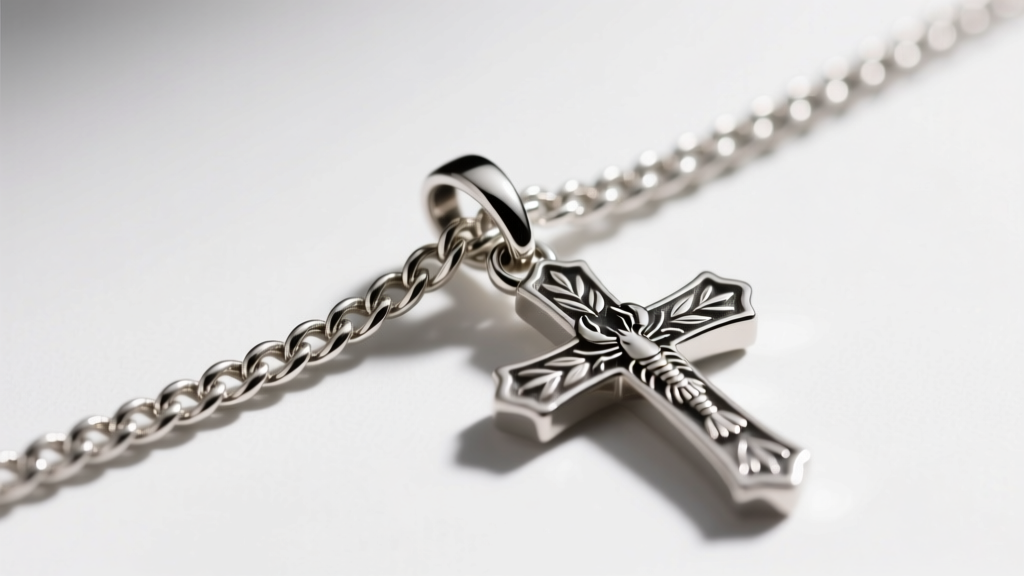
Maintaining a cross necklace with verse requires a gentle touch. For sterling silver and gold, use only a soft, untreated microfiber cloth to wipe away skin oils and environmental dust. If the silver tarnishes, use a chemically treated silver-polishing cloth, but rub gently in one direction to avoid packing polishing compound into the engraved letters. If your verse is laser-annealed onto stainless steel or titanium, you can safely clean the piece with warm water, mild dish soap, and a soft-bristled toothbrush, as the dark text is a result of molecular oxidation, not a surface pigment that can be scrubbed away.
Ultimately, choosing the right metal for your engraved cross is about aligning your lifestyle with the material's properties. Whether you choose the warm, heirloom-quality cut of 14k gold or the indestructible, modern precision of laser-etched titanium, understanding these metallurgical realities ensures your cherished verse remains a clear, enduring testament to your faith.


