Troubleshooting Your Givenchy Crystal Collar Necklace: Repair Guide
Learn how to troubleshoot, clean, and repair your Givenchy crystal collar necklace. Expert tips on fixing missing stones, tarnish, and broken clasps.

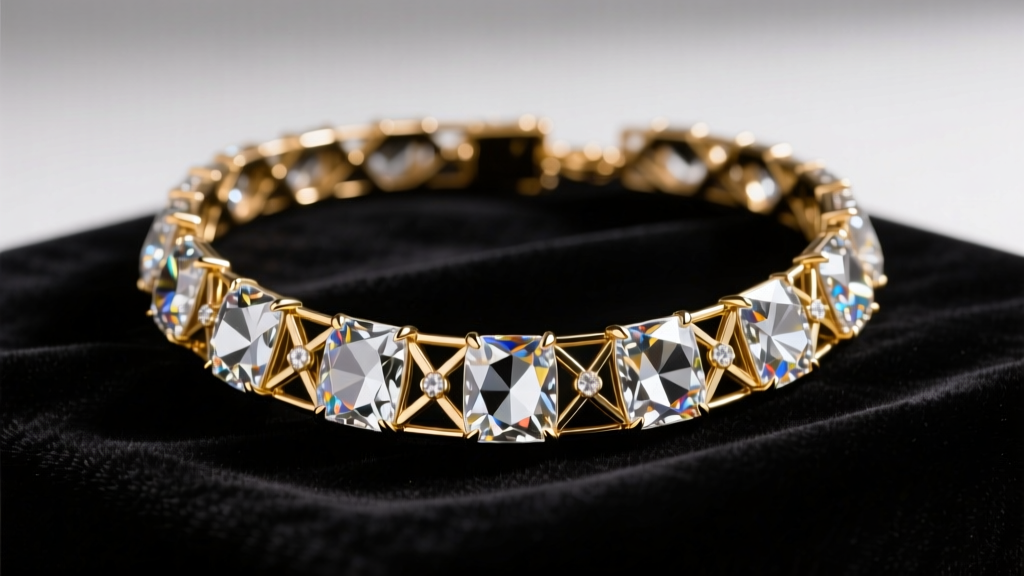
The Anatomy of a Givenchy Collar Necklace
The Givenchy crystal collar necklace is a masterclass in structural jewelry design. Whether you possess a vintage 1980s hammered gold-tone piece featuring aurora borealis (AB) stones or a modern rhodium-plated runway collar, these statement pieces are engineered to sit rigidly against the collarbone. However, their complex construction often involves rigid brass cores, multi-strand wiring, and dozens of glued settings. This architectural complexity makes them prone to specific failure modes that standard chain necklaces simply do not experience.
Troubleshooting a high-end costume jewelry piece requires an understanding of its metallurgy and gemology. Unlike fine jewelry crafted from solid 18k gold or platinum, vintage and contemporary Givenchy collars typically utilize a base metal alloy heavily electroplated with gold, rhodium, or palladium. The crystals are often high-grade lead glass or precision-cut acrylic, secured with specialized jeweler's epoxies. When things go wrong, using standard jewelry repair tactics can permanently ruin the piece. This guide provides a deep-dive diagnostic and repair framework for your collar necklace.
Troubleshooting Missing or Cloudy Crystals
The most common issue reported with vintage Givenchy collars is the loss of stones or a sudden cloudiness in the remaining crystals. Before attempting a repair, you must identify the setting type.
The Foil-Back Dilemma
Many vintage Givenchy pieces utilize foil-backed crystals. A microscopic layer of metallic foil is applied to the flat back of the glass to enhance light refraction. If water, sweat, or harsh cleaning chemicals seep under the prongs or bezel, the foil oxidizes and turns black. This kills the stone's sparkle entirely. According to conservation guidelines from the Victoria and Albert Museum, foil-backed stones must never be submerged in liquid. If your crystals look dark or cloudy from the inside, the foil has degraded, and the stone must be carefully pried out and replaced.
Sourcing Replacement Stones
Givenchy historically sourced high-quality crystals, often from Swarovski or specialized European glassmakers. When replacing a missing stone, measure the diameter of the setting in millimeters (common sizes are 3mm, 4mm, and 5mm). For vintage gold-tone pieces, you will likely need a 'chaton' or flat-back stone with an AB (Aurora Borealis) coating. Avoid cheap acrylic replacements, as their refractive index will look dull next to the original glass stones.
Addressing Base Metal Tarnish and Plating Loss
Tarnish on a Givenchy collar is rarely just surface dirt; it is often a sign of plating wear exposing the reactive base metal beneath. Vintage pieces are usually brass or pewter alloys. When the microscopic layer of gold or rhodium plating wears away due to friction or acidic skin pH, the copper in the brass reacts with sulfur in the air, creating a dark, greenish-black patina.
Why You Must Avoid Silver Dip and Ultrasonic Cleaners
A critical mistake collectors make is treating costume jewelry like solid sterling silver. Chemical silver dips contain thiourea, which will instantly strip the remaining gold or rhodium plating from your Givenchy collar. Similarly, ultrasonic cleaners use high-frequency vibrations that can shatter glued settings and shake loose older, brittle adhesives. The Gemological Institute of America (GIA) recommends using only the gentlest mechanical cleaning for plated and crystal-set jewelry.
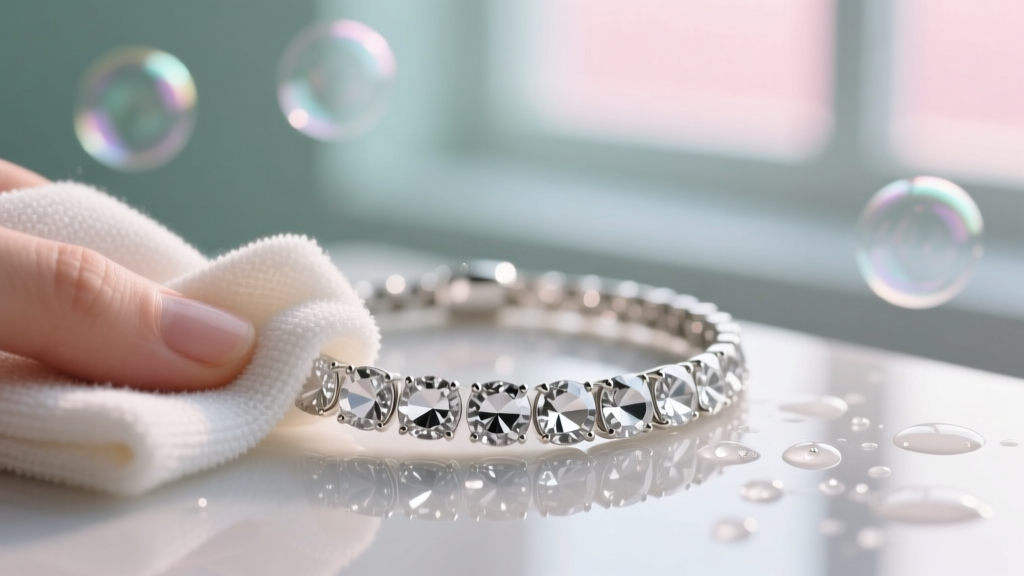
The Safe Cleaning Protocol
- Mix one drop of pH-neutral dish soap (like Dawn) into a cup of distilled water.
- Dip a soft, lint-free microfiber cloth into the solution and wring it out until it is barely damp.
- Gently wipe the metal settings, avoiding direct contact with the crystal edges to prevent moisture seepage.
- Immediately dry the collar with a separate, bone-dry microfiber cloth.
Fixing Clasp Tension and Wire Fatigue
Collar necklaces endure significant mechanical stress. The rigid nature of the collar means the clasp bears the brunt of the tension when the wearer moves their neck or puts the piece on.
Fold-Over Box Clasps
Heavy Givenchy collars frequently use fold-over box clasps. Over time, the small metal tension tab inside the box gets compressed, causing the clasp to pop open unexpectedly. To troubleshoot this, use a pair of nylon-jaw pliers to gently lift the tension tab by exactly one millimeter. Do not use steel pliers, as they will scratch the plating. If the hinge pin is loose, a professional jeweler can re-tighten it using a micro-hammer and anvil.
Memory Wire and Core Bending
Some modern Givenchy collars are constructed around a rigid steel or brass memory wire core. If the collar is stored flat or crushed in a drawer, the core can kink. You cannot simply bend a kinked memory wire back into a perfect circle; the metal has undergone plastic deformation and will snap if forced. If the internal wire is compromised, the piece must be sent to a specialist to have the outer metal casing carefully opened, the core replaced, and the casing soldered shut.
Adhesive Selection for Crystal Resetting
If you are resetting a loose stone or replacing a lost one, choosing the correct adhesive is paramount. Standard super glue (cyanoacrylate) is strictly forbidden; it cures brittle, leaves a white frosty residue on glass, and degrades quickly when exposed to skin oils.
| Adhesive Type | Best Use Case | Cure Time | Pros & Cons |
|---|---|---|---|
| GS Hypo Cement | Small crystals (2mm-4mm) | 10-15 minutes | Precision needle tip; dries clear. Low shear strength. |
| E6000 Jewelry Formula | Large stones & heavy settings | 24-72 hours | Extremely strong and flexible. Strong fumes; requires ventilation. |
| UV Jewelry Resin | Quick fixes on non-porous metal | 30-60 seconds (with UV lamp) | Instant cure; no mixing. Can yellow over time with UV exposure. |
When applying adhesive, use a toothpick to place a microscopic dot into the setting. Press the crystal in and use a piece of painter's tape to hold it flat against the metal while it cures. For detailed care standards, refer to the Jewelers of America guidelines on costume jewelry maintenance.
Preventative Storage and Care
The way you store your Givenchy crystal collar necklace directly impacts its lifespan. Never hang a rigid collar on a standard jewelry hook; gravity will pull the heavy front section down, stressing the clasp and warping the metal over time.
Pro Tip: Store your collar necklace flat in its original box, or lay it in a wide, shallow drawer lined with acid-free tissue paper. Always include a 3M anti-tarnish strip in the storage area, and replace the strip every six months to absorb atmospheric sulfur.
Furthermore, avoid storing the necklace in PVC plastic bags. PVC off-gasses chemicals that accelerate the tarnishing of base metals and can cause a cloudy film to permanently adhere to the surface of acrylic and glass crystals.
When to Call a Professional Restorer
While missing stones and minor clasp adjustments can be handled at home, certain issues require a master jeweler who specializes in vintage costume jewelry. If your Givenchy collar has大面积 (large areas) of gold plating loss, it will need to be professionally stripped and re-plated. This involves hazardous chemical baths and precise electrical currents that cannot be replicated with over-the-counter gold pens. Similarly, if the necklace features a multi-strand wire design that has frayed or snapped internally, a professional restringing is required to maintain the structural integrity of the collar. By understanding the specific mechanics of your Givenchy crystal collar necklace, you can preserve its architectural beauty and wear it with confidence for decades to come.


