Gold Beaded Necklaces: A Beginner's Guide to Styling & Care
Discover everything about gold beaded necklaces. Learn how to choose the right karat, bead size, stringing material, and master layering techniques.

Introduction to Gold Beaded Necklaces
Gold beaded necklaces are a cornerstone of versatile jewelry styling. Unlike traditional link chains, beaded strands offer a unique tactile experience, a distinct visual weight, and a subtle vintage charm that bridges the gap between casual daywear and elegant evening attire. For beginners, navigating the market can be overwhelming. The terminology surrounding gold purity, bead sizing, and stringing materials is often obscured by marketing jargon. This comprehensive guide cuts through the noise, providing you with the technical knowledge needed to invest in high-quality gold beaded necklaces that will last a lifetime.
Decoding Gold: Solid, Filled, or Vermeil?
Before purchasing any gold jewelry, it is critical to understand the material composition. The Federal Trade Commission (FTC) Jewelry Guides strictly regulate how gold content is marketed. Here is a breakdown of the three most common types of gold used in beaded necklaces:
| Material Type | Composition & Standards | Durability & Lifespan | Average Price Range |
|---|---|---|---|
| Solid 14k Gold | 58.5% pure gold alloyed with metals like copper or zinc for strength. | Lifetime. Will not tarnish or wear off. Can be polished indefinitely. | $150 - $600+ |
| Gold-Filled (1/20 14k) | A thick layer of 14k gold mechanically bonded to a brass core (must be 1/20th of total weight). | 10 to 30 years. Highly tarnish-resistant. Will not flake like plating. | $45 - $120 |
| Gold Vermeil | Sterling silver base plated with at least 2.5 microns of 10k+ gold. | 1 to 5 years. Plating will eventually wear off, requiring re-dipping. | $60 - $180 |
For a daily-wear beaded necklace, 14k gold-filled is the ultimate sweet spot for beginners. It offers the rich, warm hue of solid gold at a fraction of the cost, while avoiding the premature fading associated with standard gold-plated brass.
Bead Sizing and Proportions
The diameter of the beads dictates the necklace's overall drape, weight, and formality. Beads are measured in millimeters (mm), and even a 2mm difference drastically alters the visual impact.
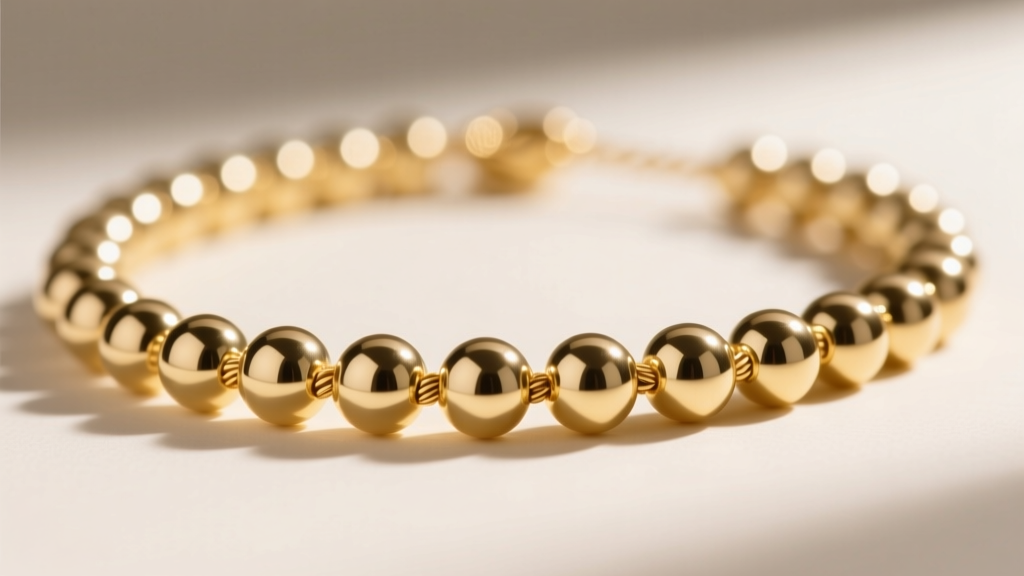
- 2mm - 3mm (Delicate): Ideal for layering or wearing as a subtle choker. These beads sit flat against the collarbone and catch the light with a fine, glittering effect. Perfect for minimal, everyday aesthetics.
- 4mm - 5mm (Standard): The most versatile size. A 4mm gold beaded necklace provides noticeable texture without overwhelming the neckline. It works beautifully as a standalone piece over a crew-neck t-shirt or layered under a blazer.
- 6mm - 8mm (Statement): These heavier beads create a bold, luxurious drape. The weight of the gold pulls the necklace into a deep U-shape. Best reserved for evening wear or paired with deep V-necks and open silk blouses.
- 10mm+ (Chunky): Often referred to as 'rosary' or 'prayer bead' sizing. These are heavy, highly visible, and serve as the focal point of an outfit. They require heavy-duty stringing hardware.
The Hidden Hero: Stringing Materials and Clasps
According to the Gemological Institute of America (GIA), the structural integrity of a beaded necklace relies entirely on its stringing material and findings. A necklace made of solid 14k gold beads is only as strong as the wire holding it together.
Stringing Materials
Avoid basic nylon threads or cotton cords for heavy gold beads; they stretch and degrade over time. Instead, look for necklaces strung on 49-strand micro-wire. This material consists of 49 tiny strands of stainless steel coated in nylon, offering extreme flexibility and a tensile strength that can support heavy gemstones and solid gold beads without snapping. For lighter, hollow gold beads, high-grade Griffin silk cord (size 2 or 3) knotted between each bead is acceptable and provides a beautiful, fluid drape.
Clasp Hardware
The clasp is the most common failure point on any necklace. When shopping for gold beaded necklaces, pay attention to the clasp type:
- Lobster Claw: The industry standard. Secure and easy to operate with one hand. Ensure the lobster clasp is solid gold or gold-filled, not plated base metal, to prevent skin irritation.
- Toggle Clasps: A T-bar that slips through a circular ring. Excellent for heavier 6mm+ beaded necklaces, as the weight of the beads keeps the T-bar securely locked in place.
- Magnetic Clasps: Highly convenient for those with limited dexterity, but ensure the magnets are encased in solid metal and feature a secondary safety chain to prevent accidental drops.
How to Style and Layer Gold Beaded Necklaces
Styling beaded necklaces requires an understanding of visual weight and negative space. Because beads have a continuous, unbroken texture, they can easily look cluttered if not layered correctly.

The 2-4-6 Layering Framework
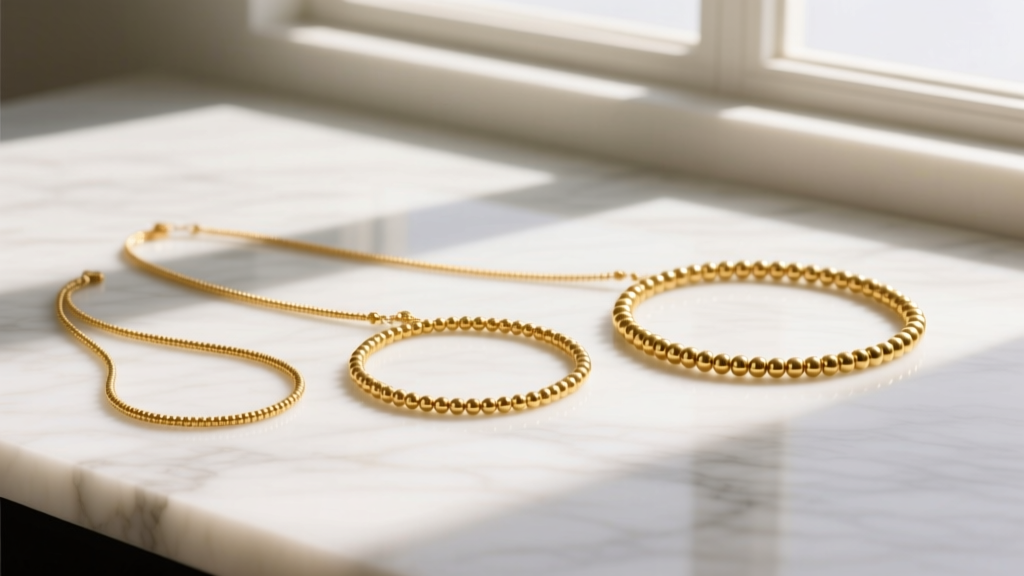
For a foolproof layered look, combine three necklaces of varying bead sizes and lengths. Start with a 2mm beaded choker (14-15 inches) sitting snugly on the collarbone. Next, add a 4mm standard strand (18 inches) that rests just below the hollow of the throat. Finally, anchor the stack with a 6mm beaded lariat or long strand (24-30 inches) that draws the eye downward. This graduated approach prevents the beads from tangling and ensures each strand is distinctly visible.
Mixing Metals and Textures
Gold beaded necklaces do not have to exist in a vacuum. They pair exceptionally well with matte finishes or contrasting metals. Try mixing a high-polish 14k yellow gold beaded strand with a brushed satin-finish silver link chain. The contrast between the reflective, spherical gold beads and the matte, linear silver links creates a sophisticated, modern aesthetic that elevates both pieces.
Care and Maintenance
Maintaining the luster of your gold beaded necklaces requires specific care routines, particularly concerning the stringing material.
- Cleaning the Beads: For solid gold or gold-filled beads, a simple bath in warm water with a few drops of mild dish soap is sufficient. Gently agitate the beads with a soft-bristled baby toothbrush to remove body oils and lotion buildup from the drill holes.
- Avoid Ultrasonic Cleaners: Never place a strung beaded necklace in an ultrasonic cleaner. The high-frequency vibrations can shatter the internal structure of certain beads and severely weaken the nylon coating on micro-wire stringing materials.
- Storage: Store beaded necklaces flat or hanging. If stored in a pile, the friction between the beads can cause micro-scratches on high-polish finishes, and the wire can become permanently kinked. Use a soft flannel pouch or a dedicated jewelry box with individual compartments.
Conclusion
Investing in gold beaded necklaces is an exercise in understanding material science and proportion. By prioritizing 14k gold-filled or solid gold materials, selecting bead sizes that complement your wardrobe, and ensuring the necklace is constructed with 49-strand micro-wire and secure hardware, you guarantee a piece that will endure both trends and time. Use the layering frameworks and care guidelines outlined above to maximize the versatility and lifespan of your collection.


