Diamond Cross Necklace Women: Metal & Stone Guide
Compare metals and diamond grades for the perfect diamond cross necklace women cherish. Expert insights on karats, melee clarity, and chain gauges.

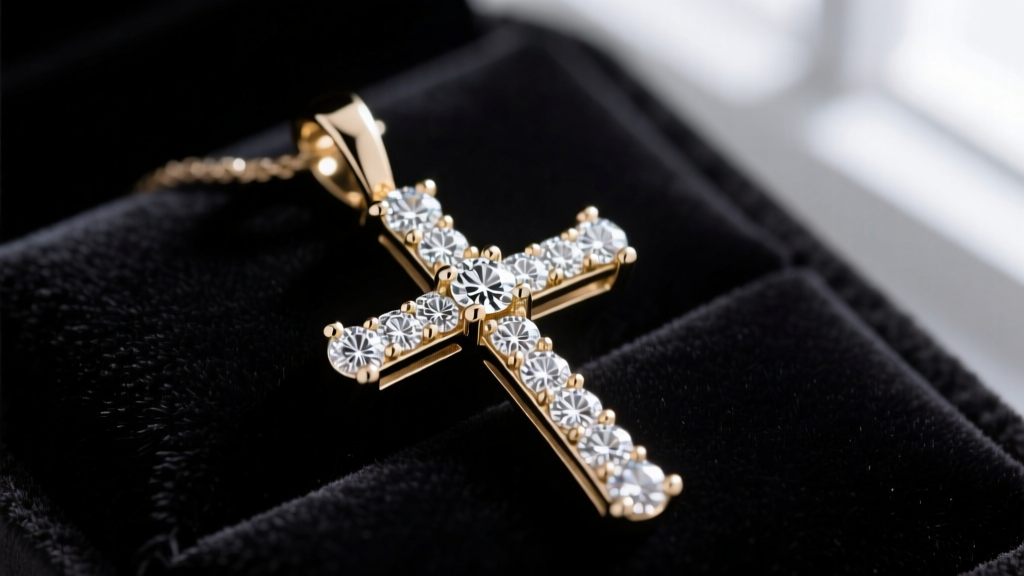
The Anatomy of a Timeless Pendant
The search for the perfect diamond cross necklace women can wear daily requires navigating a complex intersection of faith, fashion, and material science. In 2026, the jewelry market offers more variations than ever before, particularly with the mainstream dominance of lab-grown diamonds and advanced metallurgy. A cross pendant is not merely a decorative item; it is a high-friction piece of jewelry that rests against the skin, catches on clothing, and endures constant micro-impacts.
To make an informed purchase, you must look beyond the carat total weight (CTW) and understand the structural integrity of the precious metals, the cut quality of melee diamonds, and the mechanical limits of the chain and bail. This guide breaks down the exact material properties that dictate the longevity, brilliance, and value of your necklace.
Precious Metal Showdown: 14K vs. 18K vs. Platinum
The metal foundation of your cross pendant dictates its scratch resistance, color retention, and hypoallergenic properties. While yellow and rose gold remain popular, white metals (white gold and platinum) are overwhelmingly preferred for diamond crosses because they do not cast a warm reflection into the colorless stones.
Alloy Composition and Hardness
Pure 24K gold is too soft for prong settings. Therefore, gold is alloyed with other metals to increase its Vickers hardness (HV). 14K gold contains 58.5% pure gold and is alloyed with copper, zinc, and silver, yielding a hardness of roughly 140 HV. This makes it highly resistant to deformation, which is critical for securing small melee diamonds. 18K gold (75% pure gold) is softer (around 125 HV) but offers a richer color and higher intrinsic value. Platinum, typically alloyed with 5% ruthenium or cobalt, sits around 110-135 HV but possesses a unique property: it displaces rather than flakes when scratched, creating a patina that can be easily polished without losing metal mass.
| Metal Type | Purity | Vickers Hardness | Maintenance Level | Best For |
|---|---|---|---|---|
| 14K White Gold | 58.5% | ~140 HV | High (Rhodium plating every 1-2 years) | Active lifestyles, budget-conscious buyers |
| 18K White Gold | 75.0% | ~125 HV | High (Rhodium plating required) | Premium feel, richer undertones |
| Platinum 950 | 95.0% | ~135 HV | Low (Polishing only, naturally white) | Heirloom pieces, metal allergy sufferers |
According to the Jewelers of America, consumers should always look for the hallmark stamp inside the bail (e.g., '14K', '750', or 'PLAT') to verify the metal's authenticity and composition.
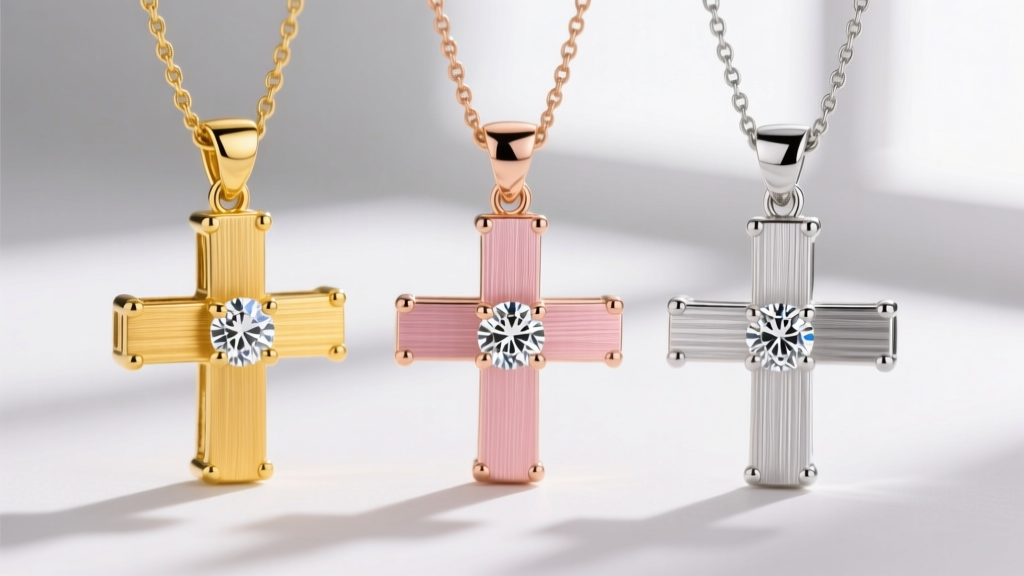
Decoding the Diamonds: Natural vs. Lab-Grown Melee
The diamonds used in cross pendants are classified as 'melee'—small diamonds typically weighing between 0.01 and 0.18 carats each. Because of their size, the Gemological Institute of America (GIA) does not issue individual grading reports for melee stones. Instead, reputable jewelers use calibrated sieves to sort them by millimeter size and rely on parcel grading for color and clarity.
The 2026 Lab-Grown Melee Revolution
Historically, natural melee diamonds were sorted into broad commercial grades (typically SI1-SI2 clarity and G-H color). Today, lab-grown diamonds produced via Chemical Vapor Deposition (CVD) and High Pressure High Temperature (HPHT) methods have completely disrupted this space. CVD lab-grown melee is now widely available in VVS clarity and D-F color grades at a fraction of the cost of natural equivalents. When buying a 1.00 CTW diamond cross, opting for premium lab-grown melee ensures that the stones face up icy white, without the milky or cloudy appearances sometimes found in lower-tier natural parcels.
Single Cut vs. Full Cut
Pay close attention to the faceting. 'Single cut' melee features only 17 or 18 facets and is generally used in micro-pavé or ultra-cheap fashion jewelry. For a quality diamond cross necklace, insist on 'full cut' melee, which features the standard 57 or 58 facets of a round brilliant diamond. Full cut stones interact with light far more effectively, creating the scintillation and fire necessary to make the cross sparkle from across the room.
Expert Tip: Avoid 'crushed ice' cuts in small melee diamonds. While popular in larger cushion or oval stones, crushed ice faceting in sub-10-point stones traps light and makes the cross look dull and opaque.
Chain Mechanics: Gauge, Length, and Clasp Durability
The most common point of failure in any pendant necklace is not the setting, but the chain and the bail. A heavy diamond cross requires a chain with adequate tensile strength to prevent snapping.
Choosing the Right Gauge and Style
- Box Chains (1.0mm - 1.5mm): The undisputed champion for pendants. The interlocking square links distribute weight evenly and resist kinking. A 1.2mm 14K gold box chain can comfortably support up to 15 grams of pendant weight.
- Cable Chains (0.8mm - 1.2mm): Classic and delicate, but the oval links are prone to stretching and snapping if caught on clothing. Best reserved for lightweight crosses under 3 grams.
- Rope Chains (1.5mm+): Highly durable and brilliant, but the twisted links can catch on the bail of the cross, causing friction wear over time.
The Bail and Clasp Hardware
The bail (the loop connecting the cross to the chain) should be a solid, soldered component. Avoid unsoldered jump rings for heavy diamond crosses, as the friction from the chain will eventually wear through the metal seam. Furthermore, discard the standard spring-ring clasp that comes with most chains. The internal spring mechanism degrades rapidly with daily use. Upgrade to a lobster clasp, which utilizes a heavier, more reliable tension spring and provides a secure lock.
Real-World Pricing & Value Retention
Understanding current market pricing prevents overpaying for brand markups. For a standard 1.00 CTW diamond cross pendant (approximately 15-20mm in height), here is what you should expect to pay in the current market:
- 14K Gold + Natural Diamonds (I-J, SI2): $1,800 - $2,500
- 14K Gold + Lab-Grown Diamonds (D-F, VS): $800 - $1,200
- Platinum 950 + Natural Diamonds (G-H, SI1): $3,200 - $4,500
While natural diamonds retain a slight edge in secondary market liquidity, the sheer visual superiority of high-grade lab-grown melee makes them the pragmatic choice for everyday wear, allowing buyers to allocate more of their budget toward a heavier platinum setting.
Expert Verdict: Matching Metal to Lifestyle
When selecting the ultimate diamond cross necklace women will wear for decades, align the materials with the wearer's daily routine. For nurses, athletes, or those who work with their hands, a 14K white gold setting on a 1.2mm box chain offers the highest structural resilience and lowest replacement cost if damaged. For those seeking a generational heirloom piece that will never require rhodium replating, a platinum 950 cross with full-cut, bezel-set lab-grown diamonds provides unparalleled durability, ethical sourcing, and blinding brilliance.


