The Ultimate Leather Bead Necklace Buying Guide & Fit Tips
Discover how to choose the perfect leather bead necklace. Learn about leather grades, cord thickness, clasp types, and bead pairings in our expert guide.

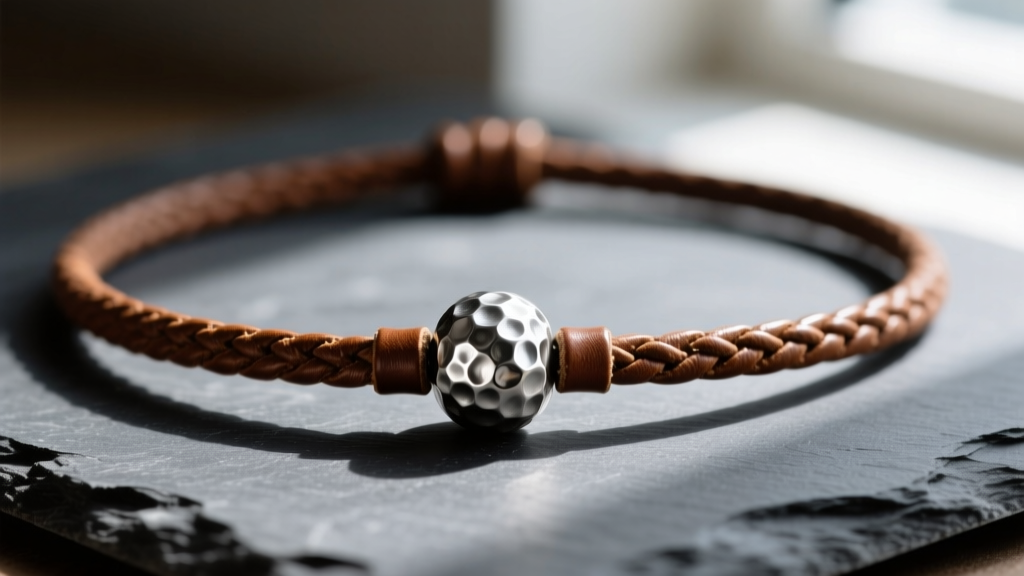
The leather bead necklace has evolved far beyond its surf-shop origins. In 2026, it stands as a sophisticated staple in both minimalist and eclectic jewelry wardrobes, bridging the gap between organic textures and refined metalwork. Whether you are layering delicate 1mm cords with gemstone accents or anchoring a outfit with a chunky 5mm braided leather and silver bead statement piece, understanding the material science and structural dynamics of these necklaces is crucial. This comprehensive buying guide cuts through marketing jargon to help you evaluate leather grades, cord gauges, bead friction, and hardware quality before you invest.
Decoding Leather Grades: What You Are Actually Buying
Not all leather is created equal, and the terminology used by jewelry brands can be deliberately misleading. The lifespan, skin-compatibility, and aging process of your necklace depend entirely on the hide's grade and tanning method.
Full-Grain and Vegetable-Tanned Leather
Full-grain leather includes the entire thickness of the hide, retaining the natural grain and imperfections. When paired with vegetable tanning—a traditional process using natural tannins from tree bark—it becomes the gold standard for jewelry. Vegetable-tanned full-grain leather is hypoallergenic, highly durable, and develops a rich, personalized patina over time as it absorbs oils from your skin. According to the Leather Working Group, sustainably sourced, traceable hides are increasingly becoming the benchmark for luxury artisan jewelers.
Top-Grain and Chrome-Tanned Leather
Top-grain leather has been sanded to remove imperfections, resulting in a uniform, supple cord that is highly resistant to staining. However, it will not develop a patina. Most commercial leather bead necklaces use chrome-tanned top-grain leather because it is cheaper and faster to produce. While flexible and vibrant, chrome tanning uses heavy metals that can cause contact dermatitis in sensitive individuals, especially when the cord rests directly against the pulse points of the neck.
The "Genuine Leather" Myth and Vegan Alternatives
If a product is simply labeled "Genuine Leather," avoid it. In the leather industry, this is a catch-all term for the lowest-grade split hides that have been painted or coated to mimic higher grades. They crack and peel within months. Conversely, the 2026 market has seen a surge in high-performance vegan leathers. Materials like Desserto (cactus leather) and Piñatex (pineapple leaf fiber) offer incredible tensile strength and water resistance, providing ethical alternatives that easily support the weight of glass and stone beads.
Cord Thickness and Bead Weight Dynamics
The structural integrity of a leather bead necklace relies on the relationship between the cord's diameter and the weight of the beads it carries. A mismatched pairing will lead to stretched leather, broken cords, or a necklace that hangs awkwardly.
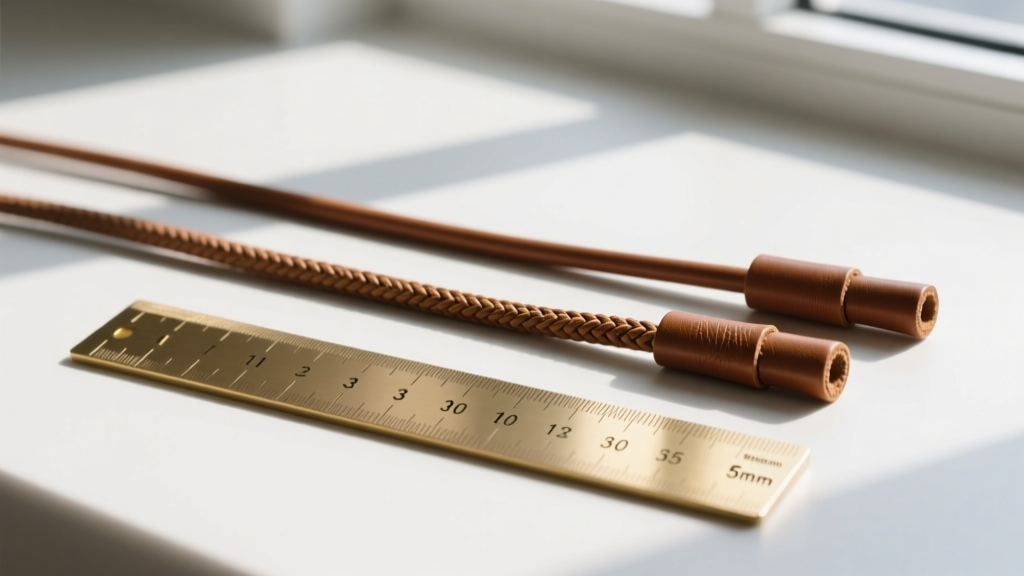
| Cord Diameter | Style Profile | Ideal Bead Materials | Weight Tolerance |
|---|---|---|---|
| 1.0mm - 1.5mm | Delicate, Layering, Minimalist | Seed beads, small freshwater pearls, lightweight wood | Under 15 grams total |
| 2.0mm - 3.0mm | Standard, Everyday Wear, Versatile | Sterling silver focal beads, medium gemstones, glass | 15 to 45 grams total |
| 4.0mm - 5.0mm | Chunky, Statement, Masculine/Androgynous | Large brass/bronze beads, heavy carved stone, bone | 45 to 100+ grams total |
The Friction Factor: Bead Hole Sizing
One of the most overlooked aspects of buying or designing a leather bead necklace is the internal diameter of the bead holes. Leather is a compressible, fibrous material. If you force a 2.0mm leather cord through a bead with a 2.0mm hole, the friction will strip the leather's finish, causing it to fray and eventually snap.
Expert jewelers follow the 1.5x Rule: the bead hole should be at least 1.5 times the diameter of the leather cord to allow for smooth threading and natural movement. For example, a standard 2mm leather cord requires beads with a minimum 3mm hole. When shopping, always check the millimeter specifications of the bead holes. As noted by jewelry manufacturing experts at Fire Mountain Gems, large-hole metal beads and specialized European-style lampwork glass beads are specifically engineered to accommodate thick leather and braided cords without causing abrasive damage.
Clasp Mechanisms and Hardware Security
The clasp is the primary failure point on any necklace. Because leather cords are thicker than traditional metal chains, they require specialized hardware transitions.
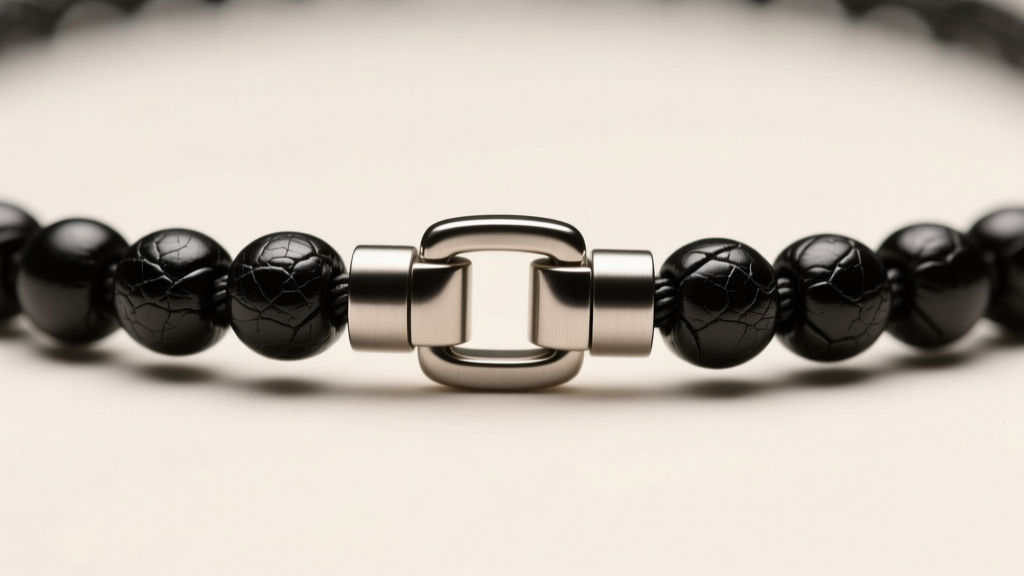
- Magnetic Slide Clasps: The superior choice for cords 3mm and thicker. High-grade neodymium magnets encased in 316L surgical steel or brushed titanium provide a secure hold that easily supports heavy stone beads. Ensure the leather is glued and crimped inside the metal end-caps with industrial jeweler's epoxy, not standard superglue, which becomes brittle and shatters under tension.
- Lobster Clasps with Ribbon Crimps: Common on thinner 1.5mm cords. The leather is folded inside a wide, flat metal crimp and secured with pliers. Look for crimps that feature an internal micro-ridge pattern; smooth crimps tend to slip off smooth leather finishes over time.
- Macramé Slide Knots: A hardware-free closure where the leather cord is knotted onto itself using waxed cotton or micro-cord. This allows for infinite adjustability (perfect for choker-to-matinee versatility) and eliminates metal allergies entirely. However, it requires occasional re-waxing to maintain friction.
Sizing Guide: Matching Length to Neckline
Leather lacks the fluid drape of a fine metal chain, meaning it holds its shape more rigidly. Choosing the correct length is vital for how the beads will sit against your clothing.
The Choker (14 to 16 Inches)
Sits tightly against the base of the neck. Best suited for thin 1mm cords with a single, small focal bead. Avoid chokers with heavy bead clusters, as the rigidity of the leather will cause the beads to dig into your collarbone.
The Princess (18 Inches)
The universal standard that rests just below the collarbone. This length is ideal for 2mm to 3mm cords featuring a centered pendant bead or a symmetrical cluster of gemstones. It pairs flawlessly with V-necks, scoop necks, and open button-down shirts.
The Matinee (20 to 24 Inches)
Falls at or just above the bust line. This length is necessary for chunky 4mm+ braided leather necklaces. The extra length allows the heavy beads to hang in a natural parabolic curve rather than jutting out awkwardly. It is the premier choice for layering over turtlenecks, heavy knits, and casual streetwear.
Price Tiers and Authenticity Checks
Understanding market pricing helps you avoid overpaying for synthetic materials disguised as premium leather.
- Budget ($15 - $35): Typically features chrome-tanned split leather or PU (polyurethane) synthetics. Beads are usually base metals with thin electroplating or dyed howlite. Expect a lifespan of 6 to 12 months with daily wear.
- Mid-Tier Artisan ($45 - $120): The sweet spot for quality. Features vegetable-tanned full-grain leather, solid sterling silver or brass beads, and secure epoxy-set magnetic clasps. These pieces are built to last decades and will develop a beautiful patina.
- Luxury & Designer ($150 - $400+): Incorporates exotic, ethically sourced leathers (like sustainably harvested stingray or alligator), paired with 14k/18k solid gold beads and precision-cut gemstones. Hardware is often custom-machined.
Care and Maintenance Protocols
Leather is porous and highly reactive to its environment. To preserve the structural integrity of your leather bead necklace, never wear it in the shower or pool; water causes the fibers to swell, and chlorine will rapidly degrade the tanning agents. Once a month, apply a micro-thin layer of pure beeswax or a specialized leather conditioner using a microfiber cloth. This replenishes the lipids in the hide, preventing dry rot and micro-cracking around the bead holes. When storing, always lay the necklace flat in a breathable cotton pouch. Hanging heavy beaded leather necklaces for long periods will permanently stretch the hide, altering the fit and causing the beads to migrate to the lowest point of the cord.


