The Beginner’s Guide to Choosing a Glass Flower Pendant Necklace
Discover how to choose, style, and care for a glass flower pendant necklace. Learn about lampwork, dichroic glass, and chain pairings.

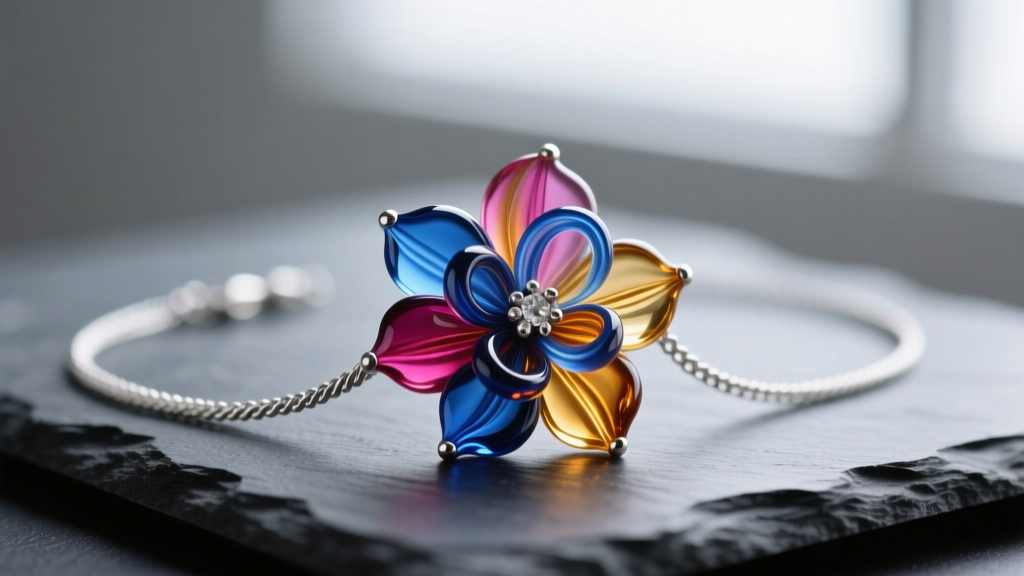
The Allure of Artisan Glass Floral Jewelry
When it comes to expressive, nature-inspired jewelry, few pieces capture the imagination quite like a glass flower pendant necklace. Unlike mass-produced metal stampings or carved gemstones, glass offers a unique interplay of light, color, and translucency that mimics the delicate, organic beauty of real botanicals. For beginners stepping into the world of artisan jewelry, navigating the differences between handmade lampwork, kiln-fused dichroic, and factory-molded glass can be overwhelming. This comprehensive guide will demystify the craft, helping you select a high-quality piece that will last a lifetime.
The appeal of glass floral pendants lies in their individuality. Because glass is manipulated at extreme temperatures—often exceeding 1,200°F—no two handmade petals or leaves are ever perfectly identical. According to the Glass Art Society, the studio glass movement has pushed the boundaries of wearable art, transforming ancient beadmaking techniques into intricate, sculptural pendants that serve as miniature botanical gardens resting against the collarbone.
Decoding Glass Types: What Are You Actually Buying?
Not all glass is created equal. The durability, price point, and visual depth of your glass flower pendant necklace depend entirely on the manufacturing technique used by the artist or factory. Understanding these categories is the first step to making an informed purchase.
Lampwork (Torch-Fired) Glass
Lampwork involves melting glass rods using a high-temperature torch. Artists use tools and gravity to sculpt individual flower petals, often layering different colors of glass to create depth. High-quality lampwork pendants are made from compatible glass types (like 104 COE or 33 COE) and are properly annealed—a process of slow cooling in a kiln to relieve internal stress and prevent shattering.
Dichroic Glass
Originally developed for the aerospace industry, dichroic glass features micro-layers of metallic oxides that reflect certain light wavelengths while transmitting others. When kiln-fused into floral shapes, dichroic glass creates a brilliant, shifting iridescence that changes depending on the angle of the light.
Kiln-Fused and Slumped Glass
Artisans cut sheets of colored glass and arrange them into floral patterns, melting them together in a kiln. This technique often results in flatter, more geometric floral pendants with crisp lines and bold color blocking.
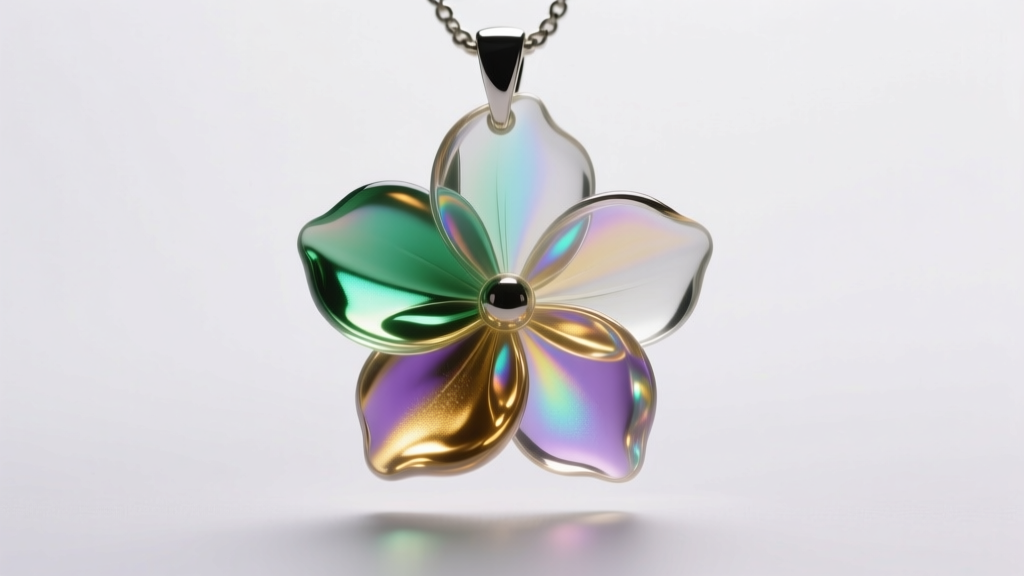
Material Comparison Chart
| Glass Type | Aesthetic Profile | Durability | Average Price Range |
|---|---|---|---|
| Lampwork | 3D, sculptural, organic | High (if annealed) | $45 - $180 |
| Dichroic | Metallic, iridescent, shifting | Medium-High | $35 - $120 |
| Kiln-Fused | Flat, graphic, bold | Medium | $25 - $90 |
| Factory-Molded | Uniform, repetitive, flat | Low-Medium | $10 - $25 |
Selecting the Perfect Chain and Hardware
A common mistake beginners make is pairing a heavy, intricate glass pendant with a flimsy chain. Glass is inherently heavier than hollow metal or resin, requiring hardware that offers both structural support and aesthetic balance.
Chain Gauge and Styles
For most medium-to-large glass flower pendants (weighing between 10 to 25 grams), you need a chain with a wire thickness of at least 1.0mm to 1.5mm. Thinner chains (0.5mm to 0.8mm) are prone to kinking and snapping under the pendulum motion of a heavy glass focal piece.
- Cable Chains: The classic choice. Uniform oval links provide a clean backdrop that lets the glass shine.
- Box Chains: Excellent for heavier pendants due to their interlocking square links, which distribute weight evenly and resist tangling.
- Rope Chains: Offer a vintage, textured look that pairs beautifully with opaque, vintage-style lampwork flowers.
Clasps and Bails
Ensure the clasp is proportional to the chain and pendant. A standard 5mm lobster clasp is sufficient for lighter pieces, but heavier glass florals require a 7mm or 9mm trigger clasp. Additionally, check the bail (the loop connecting the glass to the chain). Sterling silver or gold-filled bails glued with jeweler's epoxy are standard, but wire-wrapped bails offer superior security for heavy glass components.
Sizing and Proportion: Matching the Pendant to Your Neckline
The visual impact of a glass flower pendant necklace changes drastically depending on the chain length and the neckline of your clothing. Glass catches the light, drawing the eye directly to the center of the chest.
Length Guidelines
- Choker (14-16 inches): Best for small, delicate glass buds (under 15mm). Pairs well with V-necks and scoop necks.
- Princess (18 inches): The most versatile length. Rests on the collarbone, making it ideal for medium-sized floral pendants (20mm-35mm). Perfect for crew necks and button-down shirts.
- Matinee (20-24 inches): Ideal for large, statement-making glass blossoms. This length works beautifully over turtlenecks, dresses, and high-neck blouses.
Color Theory and Skin Undertones
When choosing the glass color, consider the metal hardware and your skin's undertone. Cool undertones are complemented by silver hardware paired with sapphire blue, amethyst purple, or seafoam green glass. Warm undertones glow when gold-filled hardware is paired with amber, ruby red, or sunflower yellow dichroic glass.
Essential Care, Cleaning, and Storage
While glass is highly resistant to chemical corrosion and will not tarnish like silver or copper, it is susceptible to thermal shock and surface scratching. Proper maintenance ensures your glass flower pendant necklace remains pristine.
Safe Cleaning Methods
Never use ultrasonic jewelry cleaners on glass pendants, especially those with glued bails or wire-wrapping, as the high-frequency vibrations can shatter the glass or loosen the adhesive. The Gemological Institute of America (GIA) notes that while glass is chemically stable, its surface hardness (around 5.5 on the Mohs scale) makes it vulnerable to scratching from harder materials.
- Mix a few drops of mild, phosphate-free dish soap in lukewarm water.
- Gently swish the pendant in the solution for 30 seconds.
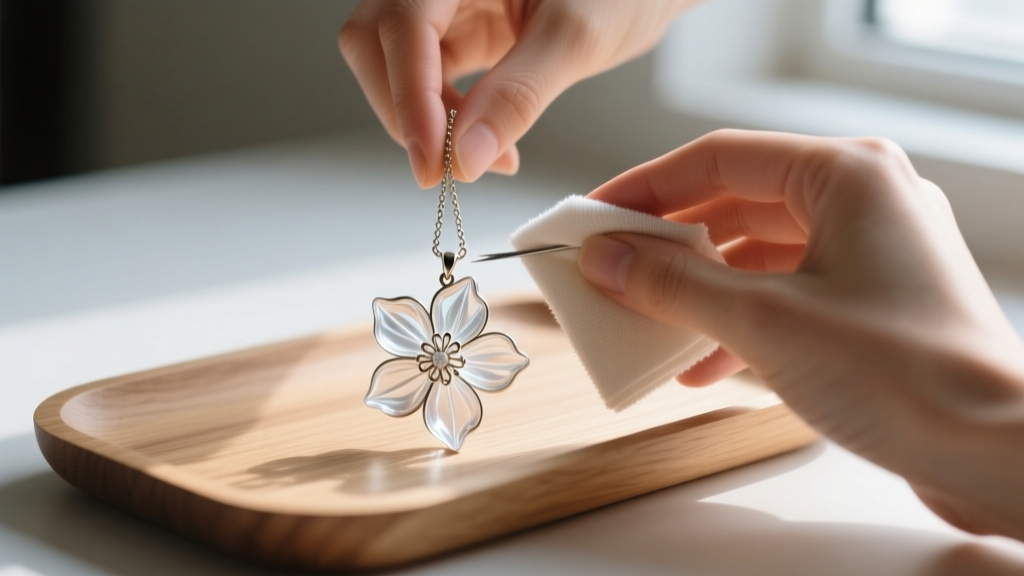
- Use a soft, lint-free microfiber cloth to dry and buff the glass to a high shine.
- Avoid abrasive brushes or toothpaste, which will leave micro-scratches on the glass surface.
Storage and Thermal Shock
Store your necklace in a padded jewelry box or a soft velvet pouch. Never leave glass jewelry on a car dashboard or near a heat source. Rapid temperature changes (thermal shock) can cause internal stress fractures, leading the pendant to crack spontaneously hours or even days later.
Sourcing Authentic Artisan Glass vs. Mass-Produced Imitations
As the demand for botanical jewelry grows, the market has been flooded with resin and molded acrylic pieces masquerading as artisan glass. Here is how to ensure you are buying authentic glass:
"True artisan glass has a distinct thermal conductivity. When you touch a genuine glass pendant to your cheek or inner wrist, it will feel noticeably cool and take a few seconds to warm up to your body temperature. Resin and acrylic will feel room-temperature or warm almost instantly."
When shopping online, look for artists who explicitly state their glass type (e.g., "Effetre 104 COE lampwork" or "Bullseye dichroic") and show photos of their torch or kiln setup. Platforms like Etsy are excellent resources, provided you filter for handmade shops and read reviews that mention the weight and cool-to-the-touch nature of the pendant. Avoid listings that use terms like "glass-like," "crystal resin," or "epoxy floral," as these indicate synthetic polymers rather than true silica-based glass.
Investing in a genuine glass flower pendant necklace is an investment in wearable art. By understanding the craftsmanship, selecting the right hardware, and practicing mindful care, you can enjoy the luminous, botanical beauty of artisan glass for decades to come.


