The Gold Bird Necklace: 2026 Avian Jewelry Trends
Discover why the gold bird necklace is the defining jewelry trend of 2026. Explore styling tips, metal grades, and the best avian motifs to wear now.

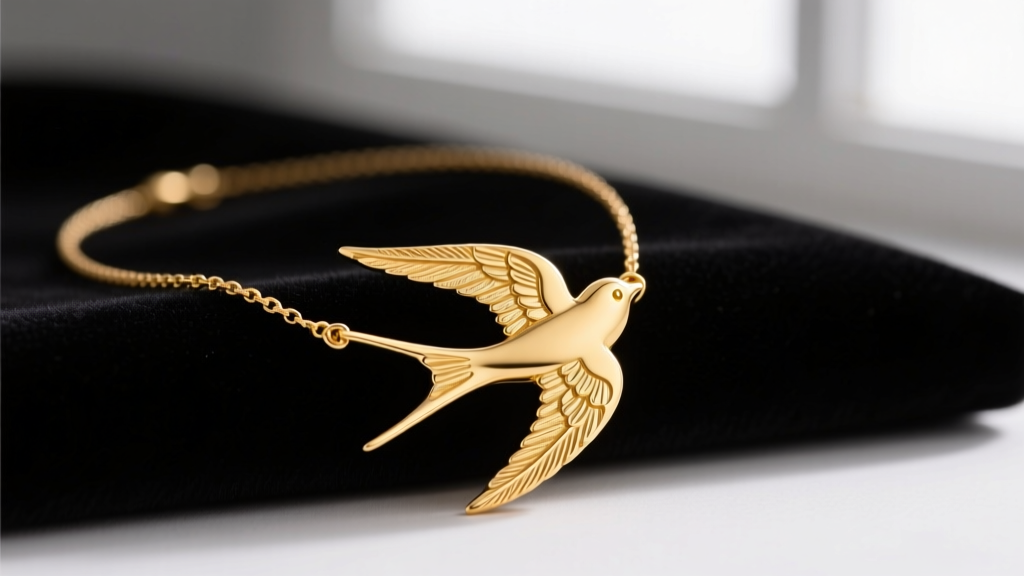
The Resurgence of Avian Motifs in 2026
The jewelry landscape of 2026 has decisively pivoted from the stark minimalism of 'quiet luxury' into an era of 'narrative luxury.' At the forefront of this shift is the gold bird necklace. No longer relegated to vintage estate sales or whimsical charm bracelets, avian motifs have been reimagined by contemporary fine jewelers as sculptural, deeply personal totems. This year's trend analysis reveals a consumer demand for pieces that carry historical weight and symbolic resonance, moving away from flat, two-dimensional stamped charms toward fully three-dimensional, anatomically precise casts.
Why birds? In a post-digital era, the symbolism of flight, unbound communication, and natural instinct resonates profoundly. From the sleek, aerodynamic lines of a diving swallow to the intricate, textured plumage of a resting owl, the gold bird necklace serves as both a sartorial anchor and a conversational artifact. But navigating this trend requires a keen eye for metallurgy, casting techniques, and proportional styling. As with any surge in trend-driven jewelry, the market is currently flooded with both heirloom-quality solid gold pieces and fast-fashion plated imitations. Understanding the technical nuances of avian jewelry is essential for making an informed investment.
Decoding the Details: Karats, Casts, and Anatomy
When evaluating a fine gold bird pendant, the karat weight dictates not just the color and value, but the structural integrity of the piece. Birds inherently feature fragile anatomical extremes—needle-like beaks, slender talons, and sweeping wingtips. According to the Gemological Institute of America (GIA), the alloy composition of gold drastically affects its hardness and durability.
The 14k vs. 18k Dilemma
While 18k gold (75% pure gold) offers a richer, more saturated yellow hue, it possesses a lower Vickers hardness score, making it relatively soft. For a delicate hummingbird pendant with a 12mm protruding beak, 18k gold is highly susceptible to bending or snapping if caught on a garment. Conversely, 14k gold (58.5% pure gold) is alloyed with higher percentages of copper and silver, increasing its tensile strength. For intricate avian silhouettes, master jewelers overwhelmingly prefer 14k yellow or rose gold to ensure the structural longevity of fine details.
Casting Techniques: CAD vs. Lost-Wax
The texture of the feathers is where true craftsmanship is revealed. Modern Computer-Aided Design (CAD) casting yields sharp, symmetrical, and almost geometric plumage. While precise, it can sometimes feel sterile. The 2026 artisan trend favors traditional hand-carved wax models for lost-wax casting. This method produces softer, organic, and slightly asymmetric feather lines that mimic the natural irregularities of real birds, catching the light in a more dynamic, lifelike manner.
Chain Pairing Matrix: Balancing Weight and Silhouette
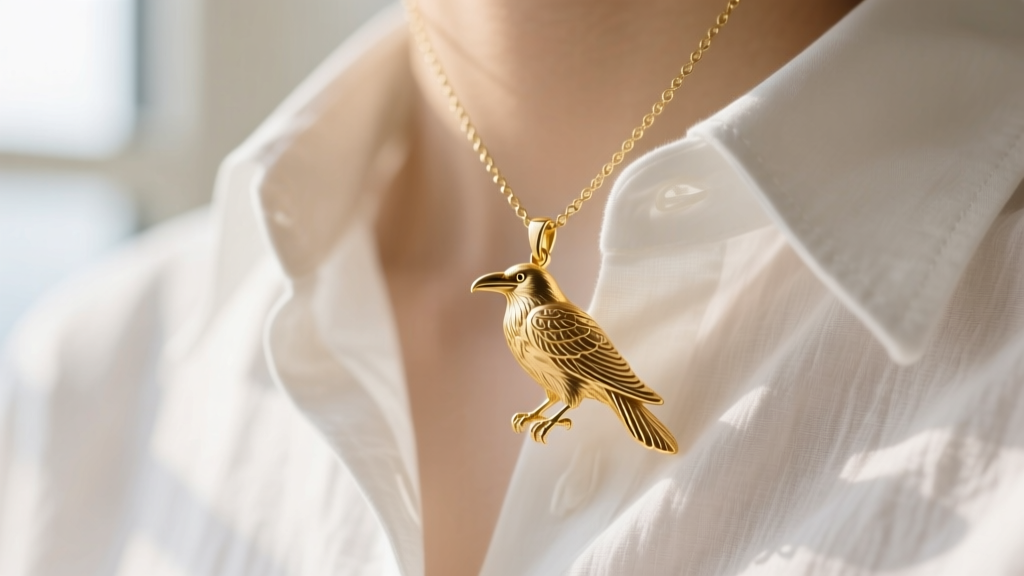
A common failure point in styling a gold bird necklace is pairing a heavy, sculptural pendant with a chain too fragile to support it, or conversely, drowning a micro-cast sparrow on a thick rope chain. The bail (the loop connecting the bird to the chain) must also be considered; a hidden bail soldered to the back preserves the unbroken silhouette of the bird, while a standard loop bail can distract from the head design.
Below is the definitive 2026 pairing matrix for balancing avian pendants with appropriate gold chains:
| Pendant Scale & Species | Average Weight | Ideal Chain Type | Chain Thickness | Clasp Requirement |
|---|---|---|---|---|
| Micro (Hummingbird, Sparrow) | 0.8g - 1.5g | Cable or Box Chain | 0.9mm - 1.0mm | Spring Ring |
| Standard (Swallow, Dove) | 2.0g - 3.5g | Rolo or Paperclip | 1.2mm - 1.5mm | Lobster Claw |
| Statement (Raven, Owl, Heron) | 4.5g - 8.0g+ | Wheat or Figaro | 2.0mm - 2.5mm | Heavy Lobster |
Symbolism & Species: Which Bird Should You Wear?
The Victorians utilized a complex 'language of birds' in their acrostic and mourning jewelry. In 2026, this symbolism has been modernized, aligning with contemporary aesthetics and personal archetypes. When selecting a gold bird necklace, consider the narrative you wish to project:
- The Swallow: Historically inked on sailors and worn as a talisman for safe return, the swallow represents loyalty, navigation, and the concept of 'home.' Its swept-back wings create a flattering, horizontal line that broadens the appearance of the collarbone.
- The Raven or Crow: Driven by the enduring 'dark academia' and ethereal gothic aesthetics, corvids symbolize intellect, mystery, and adaptability. Jewelers are currently favoring matte-finished or oxidized 14k gold for ravens to accentuate the texture of their dark plumage.
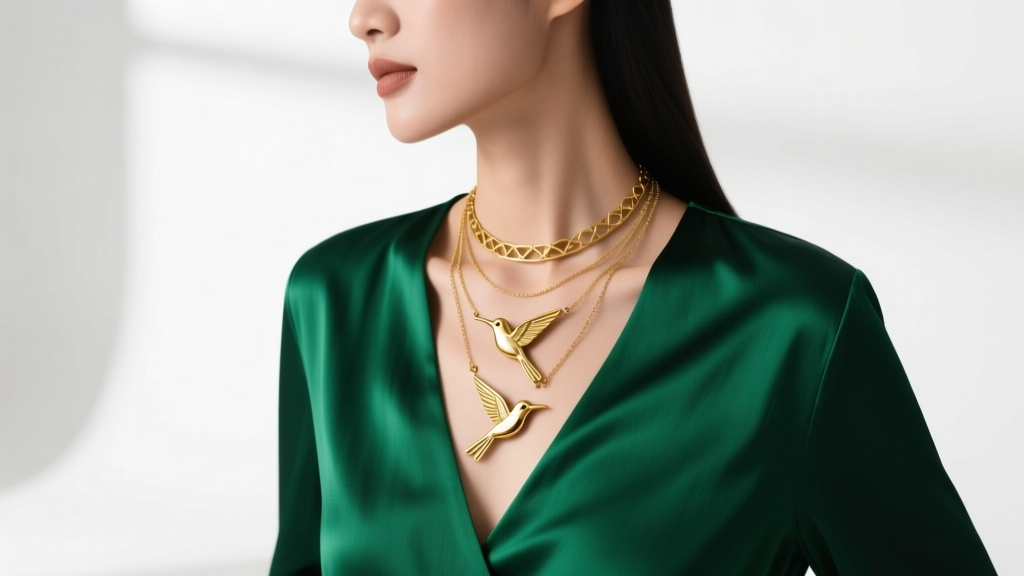
- The Hummingbird: Representing resilience, joy, and the ability to hover in the present moment. Hummingbird pendants are often cast in a dynamic, mid-flight posture, requiring precise counter-weighting at the bail so the pendant hangs perfectly parallel to the chest.
- The Owl: A symbol of wisdom and intuition. Owl pendants are typically heavier and more spherical, making them ideal for winter styling over heavier fabrics like cashmere and wool.
Price Tiers & Authenticity Markers
As the gold bird necklace trend peaks, distinguishing between solid fine jewelry and deceptive plating is critical. The Jewelers of America strictly regulates hallmarking, and consumers should always look for stamped authenticity markers.
The Pricing Breakdown
- Vermeil & Gold-Filled ($45 - $120): Often made using a brass or sterling silver base. While vermeil (a thick layer of gold over sterling silver) is acceptable for trend-testing, the high copper content in brass bases can oxidize and turn the skin green when reacting to acidic sweat. Avoid brass for daily-wear talismans.
- 14k Solid Gold ($180 - $450): The sweet spot for fine jewelry. A standard 2.5-gram 14k gold swallow pendant has a raw melt value of roughly $110, but the retail price reflects the CAD design, lost-wax casting labor, and hand-polishing of microscopic feather barbs. Look for the '14K' or '585' stamp, alongside a maker's mark.
- 18k Artisan & Bespoke ($600 - $1,500+): Reserved for master jewelers who incorporate micro-pavé diamond eyes or hand-engraved enamel accents. These pieces are often one-of-a-kind or part of highly limited capsule collections.
Neckline Pairing Framework
Styling a gold bird necklace requires an understanding of geometric contrast. The organic, sweeping lines of avian wings interact differently with various fashion silhouettes.
The Square Neck: A square neckline creates a rigid, horizontal boundary. A gold bird necklace with a wingspan (like a dove or eagle) mirrors this geometry beautifully. Opt for a 16-inch chain so the bird rests exactly one inch above the fabric line, preventing the metal from scratching delicate silk or satin.
The Deep V-Neck: Verticality is key here. Birds in a diving or hovering posture (such as a hummingbird or a kingfisher) draw the eye downward, elongating the neck and complementing the V-shape. Layering a 16-inch micro-sparrow on a cable chain with an 18-inch diving bird on a rolo chain creates a sophisticated, multi-tiered narrative.
The Turtleneck & Crew Neck: For high, closed necklines, scale is paramount. A micro-cast bird will vanish against the texture of a ribbed knit sweater. Instead, opt for a statement raven or owl pendant weighing at least 5 grams, suspended on a 20-inch or 22-inch wheat chain that rests over the bust. The contrast of highly polished yellow gold against dark, matte winter fabrics is a cornerstone of 2026 cold-weather styling.
'A bird pendant should never hang upside down or tilt awkwardly. The bail placement must be precisely calibrated to the pendant's center of gravity by the jeweler. If your swallow is diving sideways, the structural engineering of the piece is flawed, regardless of the gold purity.'
Final Verdict
The gold bird necklace in 2026 is far more than a fleeting aesthetic choice; it is a masterclass in wearable sculpture. By prioritizing 14k gold for structural integrity, demanding lost-wax casting for organic texture, and thoughtfully pairing your avian totem with the correct chain and neckline, you elevate a simple accessory into a permanent, meaningful fixture of your personal style archive. Whether you choose the loyal swallow or the enigmatic raven, ensure the craftsmanship honors the flight of the subject.


