The Bonecrusher Necklace Buying Guide: What to Look For
Expert bonecrusher necklace buying guide: learn about link soldering, metal grades, clasp strength, and chain weight for durable, heavy-duty streetwear style.

Defining the Bonecrusher Chain Profile
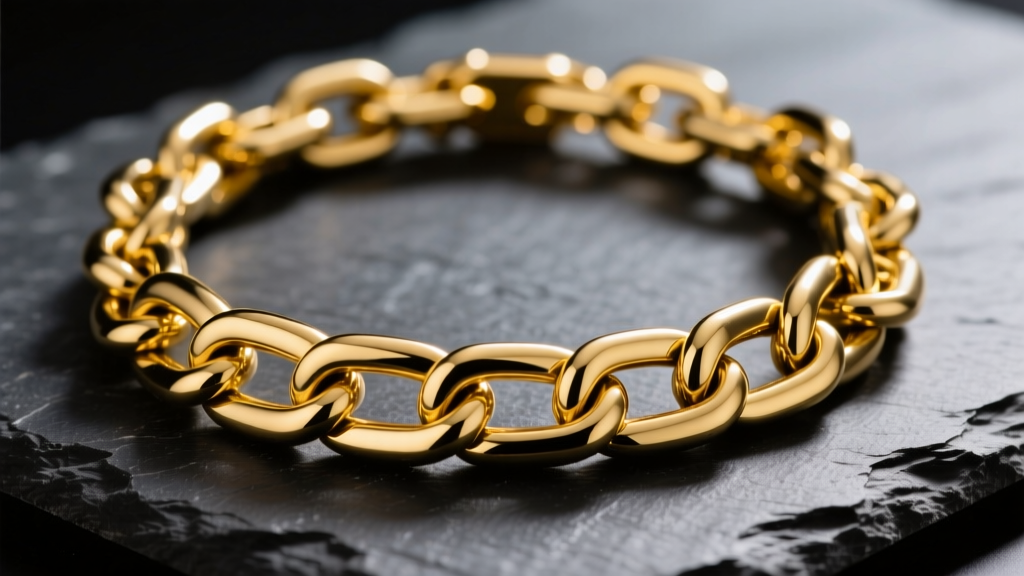
The bonecrusher necklace is a cornerstone of heavy-duty streetwear, biker, and alternative jewelry. Unlike the rounded, tubular links of a traditional Cuban chain, the bonecrusher is defined by its wide, flat, and aggressively beveled interlocking links. This distinct geometry allows the chain to lay exceptionally flush against the skin while projecting a bold, industrial aesthetic. As of 2026, the bonecrusher profile has evolved from a niche subculture staple into a mainstream luxury streetwear essential, with high-end jewelers and independent custom makers pushing the boundaries of link precision and metallurgical integrity.
However, the aggressive nature of the bonecrusher design means that structural weaknesses are magnified. The flat surfaces create high-friction contact points, and the sheer weight of the chain places immense tensile stress on the clasps and solder joints. Buying a bonecrusher necklace requires looking far beyond the surface polish. In this comprehensive guide, we break down the exact metallurgical standards, construction techniques, and hardware mechanics you need to evaluate before investing in a heavy-duty chain.
Metallurgy and Material Grades
The longevity of a bonecrusher necklace is entirely dependent on the base metal and any surface treatments. Because these chains are heavy and experience significant friction against the skin and clothing, soft metals or thin platings will degrade rapidly.
316L Surgical Stainless Steel
For buyers prioritizing weight and durability on a budget, 316L stainless steel is the undisputed champion. With a Vickers hardness rating of approximately 220 HV, 316L resists the scratching and denting that plagues softer precious metals. It will not tarnish, requires minimal maintenance, and can support the massive gram-weights of a 14mm bonecrusher chain without risking catastrophic deformation. The trade-off is the lack of intrinsic resale value compared to precious metals.
925 Sterling Silver and Vermeil
Solid 925 sterling silver is notoriously soft (around 65 HV). When crafted into a heavy bonecrusher chain, the flat links will scratch, scuff, and eventually warp under their own weight if subjected to daily stress. If you prefer the look of gold but want a silver base, you must demand heavy vermeil. According to industry standards outlined by the Gemological Institute of America (GIA), standard gold plating is often less than 0.5 microns thick and will rub off a bonecrusher chain within weeks. You must look for a minimum of 2.5 microns of 14k or 18k gold plating over a brass or nickel-free silver base to ensure the finish survives the high-friction link joints.
14k and 18k Solid Gold
For investment-grade streetwear jewelry, solid gold is mandatory. 14k gold (58.5% pure gold) offers the ideal balance of rich color and structural rigidity, alloyed with metals like copper and zinc to increase tensile strength. 18k gold is softer and more prone to surface marring on flat beveled edges, making 14k the superior choice for daily-wear bonecrusher chains. Always verify the hallmark and request a nickel-free certification if you have metal sensitivities, as the alloy mix in heavy chains can sometimes trigger contact dermatitis.
Material Comparison Framework
| Metal Grade | Hardness (HV) | Friction Resistance | Price Tier | Best Use Case |
|---|---|---|---|---|
| 316L Steel | ~220 HV | Exceptional | Budget | Daily heavy wear, maximum weight |
| 925 Silver (Solid) | ~65 HV | Poor | Mid-Range | Occasional wear, lightweight profiles |
| Brass w/ 2.5µ Vermeil | ~110 HV | Good | Mid-Range | Fashion-forward streetwear, 1-2 years lifespan |
| 14k Solid Gold | ~135 HV | Very Good | Luxury | Lifetime investment, heirloom quality |
Evaluating Link Soldering and Integrity
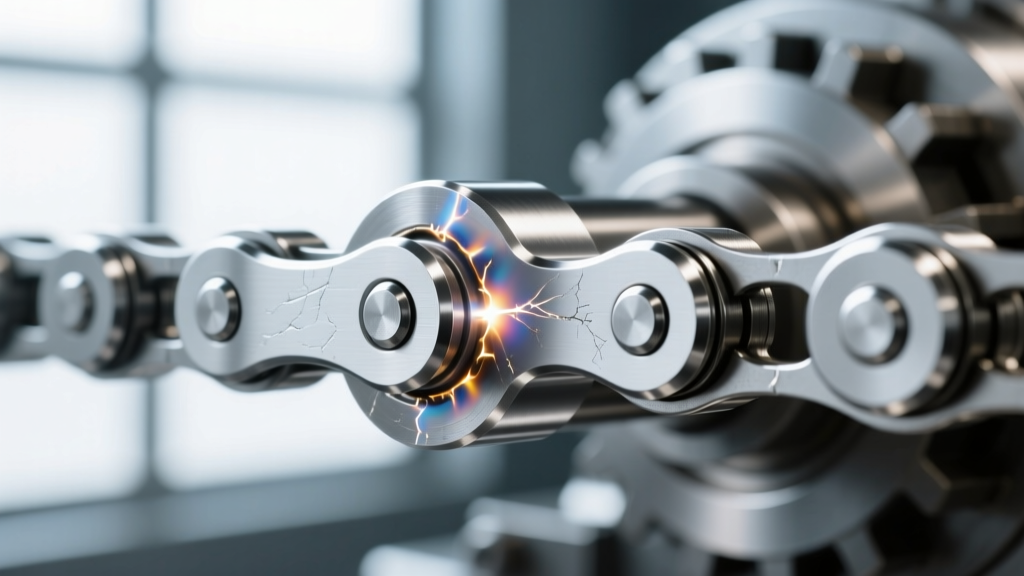
The most critical failure point on any heavy chain is the link joint. The bonecrusher design features wide, flat links that catch on clothing and skin, generating lateral pulling forces. If the links are unsoldered (meaning the joint is simply bent closed), the chain will inevitably stretch and pull apart under the weight of a heavy pendant or a sudden snag.
When inspecting a bonecrusher necklace, you must verify that every single link is fully soldered. In 2026, the industry standard for high-end chains is laser soldering. Unlike traditional torch soldering, which can leave bulky, visible seams and weaken the surrounding metal through excessive heat, laser welding uses a highly focused beam to fuse the joint. This results in a seamless, flush finish that maintains the aggressive, sharp bevels of the bonecrusher profile without creating weak heat-affected zones. Run your fingernail along the seam of the links; it should feel completely smooth and continuous.
A quick stress test: hold the chain horizontally by one end and let it dangle. Give it a very gentle, controlled swing. Unsoldered heavy chains will exhibit a 'stretching' sound or visible gaps opening at the joints. A properly soldered bonecrusher chain will move as a single, cohesive, fluid unit.
Clasp Mechanics for Heavy-Duty Chains
A bonecrusher necklace is only as secure as its clasp. Standard lobster claws, which rely on a tiny internal tension spring, are entirely inadequate for chains weighing over 80 grams. The spring will eventually suffer from metal fatigue, causing the clasp to pop open unexpectedly.
The Box Clasp Standard
For any bonecrusher chain 10mm or wider, a box clasp (also known as a tongue-and-groove clasp) is non-negotiable. The box clasp distributes the tensile load across a wide metal wedge rather than a tiny spring. However, not all box clasps are created equal. You must look for a box clasp equipped with double safety latches—two small, hinged wire loops on the sides that click over the receiving end of the clasp. According to manufacturing guidelines from Jewelers of America, safety catches are essential for heavy jewelry to prevent total loss if the primary tongue mechanism becomes worn or bent over time.
Weight, Length, and the Gram-Weight Rule
One of the most common deceptive practices in the streetwear jewelry market is the use of hollow or semi-hollow links to reduce manufacturing costs while maintaining a massive visual footprint. A hollow bonecrusher chain will feel suspiciously light, dent easily if dropped, and cannot be repaired if a link crushes.
The Gram-Weight Framework
To ensure you are buying a solid, durable chain, use the gram-weight rule. While exact weights vary slightly by manufacturer, a genuine solid 14k gold or 316L steel bonecrusher chain should fall within these approximate ranges for a standard 20-inch length:
- 8mm Width: 65 to 85 grams
- 10mm Width: 100 to 130 grams
- 12mm Width: 140 to 180 grams
- 14mm+ Width: 200+ grams
If a seller is offering a 12mm, 20-inch bonecrusher chain that weighs only 50 grams, it is undoubtedly hollow or heavily resin-filled. Always ask the vendor for the exact gram weight before purchasing. Furthermore, consider the length carefully. Because the bonecrusher links are exceptionally wide, they sit further out on the neck than a round chain. A 20-inch bonecrusher chain will often fit tighter than a 20-inch Cuban; many buyers find they need to size up by half an inch to a full inch to achieve the same visual drop.
Real-World Failure Modes and Maintenance
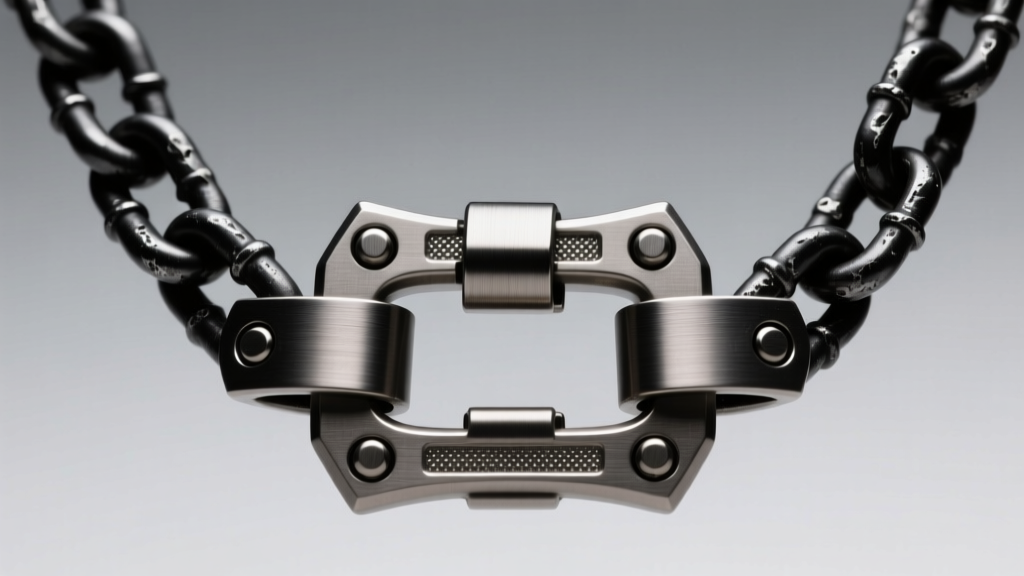
Even the highest quality bonecrusher necklace requires specific maintenance due to its geometry. The flat, overlapping links create microscopic crevices that trap dead skin cells, lotions, and environmental dust. Over time, this buildup acts as an abrasive paste, accelerating wear at the friction points.
Never use harsh chemical dips or ultrasonic cleaners on vermeil or rhodium-plated bonecrusher chains, as the high-frequency vibrations can fracture thin plating at the solder joints. Instead, use a mild dish soap, warm water, and a soft-bristled baby toothbrush to gently agitate the crevices. For solid gold and steel, an occasional pass with a professional jeweler's polishing cloth will restore the mirror finish to the beveled edges. By prioritizing solid construction, laser-soldered joints, and robust box clasps, your bonecrusher necklace will remain a dominant, flawless staple in your collection for decades.


