Gold Cable Necklace Buying Guide: What to Look For & How to Choose
Discover what to look for when buying a gold cable necklace. Learn about wire gauges, 14K vs 18K durability, clasp types, and pricing.

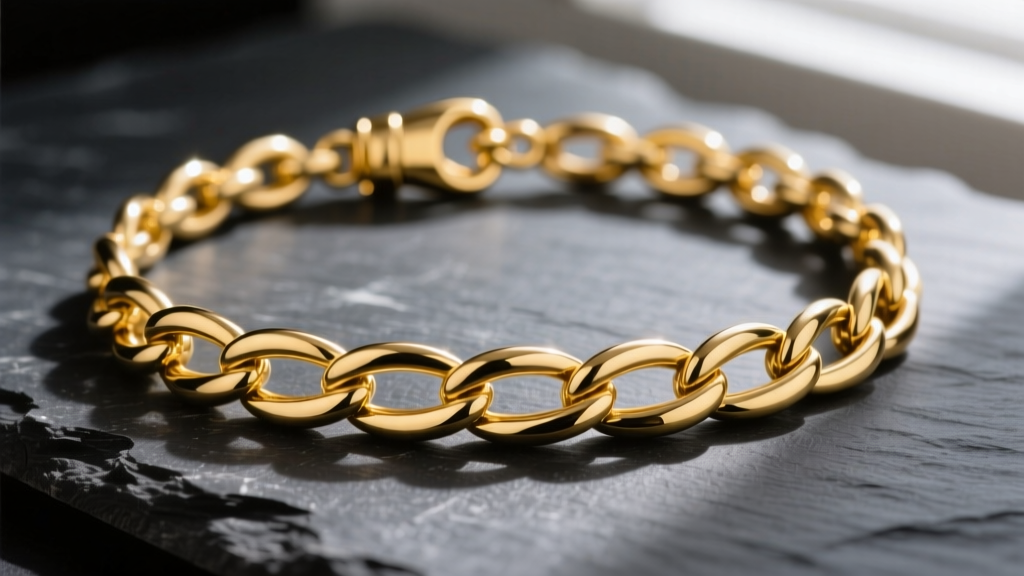
The Anatomy of a Classic Gold Cable Necklace
The gold cable necklace is the undisputed workhorse of fine jewelry. Characterized by a series of uniform oval or round links connected to one another in a simple, continuous pattern, the cable chain is prized for its timeless versatility. Whether worn solo as a minimalist statement piece, layered with varying lengths, or tasked with holding a heavy diamond pendant, the cable chain’s structural integrity is paramount. However, not all cable chains are created equal. Because the design relies entirely on the tensile strength of individual link joints, understanding the metallurgical and mechanical nuances of this specific chain style is critical before making a purchase. This comprehensive buying guide breaks down the exact specifications you need to evaluate to ensure your investment lasts a lifetime.
Gold Purity and Alloy Hardness: 14K vs. 18K
When selecting a gold cable necklace, the karat weight dictates not just the color, but the chain’s structural resilience. According to the Gemological Institute of America (GIA), pure 24K gold is far too malleable for daily-wear chains; it will stretch and snap under minimal tension. Therefore, alloy metals like copper, silver, and zinc are added to create durable jewelry.
For cable chains, 14K gold (58.5% pure gold) is generally the superior choice for chains under 2.5mm in width. The higher concentration of alloy metals increases the Vickers hardness of the wire, meaning the links are highly resistant to elongation and deformation when snagged. 18K gold (75% pure gold) offers a richer, deeper yellow hue and is ideal for those with metal sensitivities, but it is inherently softer. If you opt for an 18K gold cable necklace, you must compensate for the softer alloy by increasing the wire gauge thickness to prevent the links from pulling apart over time.
The Crucial Role of Soldered Links
One of the most frequently overlooked details when buying a cable chain is whether the links are soldered or unsoldered. In a soldered cable chain, every single oval link is closed with a microscopic weld of gold solder. This prevents the chain from unraveling if a link is pried open by a snag on clothing or hair. Unsoldered chains rely purely on the tension of the bent wire to stay closed. While unsoldered chains are cheaper to manufacture, they pose a massive risk of catastrophic failure. Always inspect the links under a jeweler's loupe or ask the retailer explicitly: "Are the links flash-soldered?" If the answer is no, walk away.
Link Width vs. Wire Gauge: The Durability Matrix
Consumers often confuse the overall width of the chain with the thickness of the wire used to make it. A cable chain can be 4mm wide but constructed from ultra-thin 0.5mm wire, making it incredibly fragile. Wire gauge (the thickness of the metal strand) is the true metric of durability.
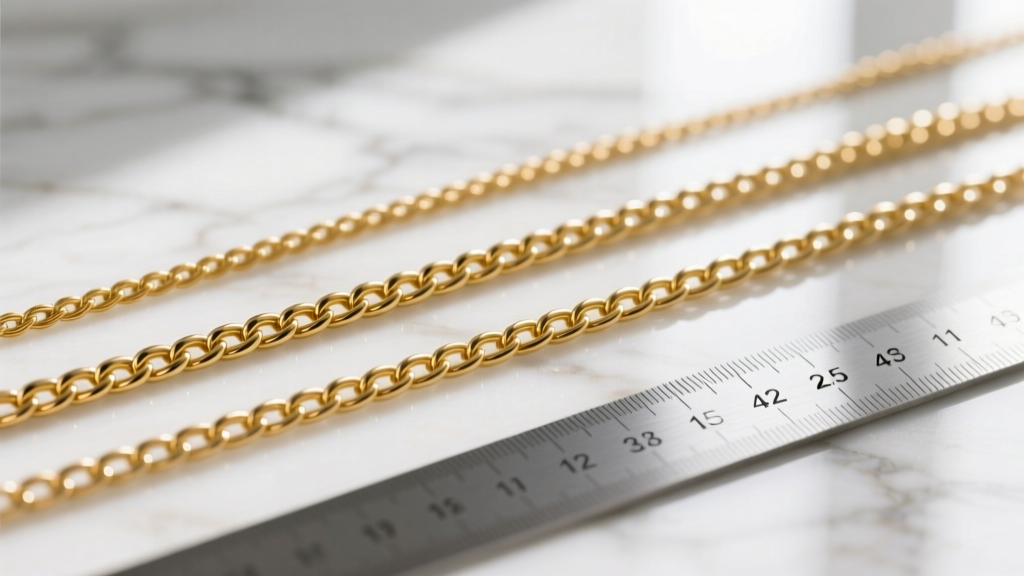
Use the following matrix to determine the appropriate dimensions for your specific needs:
| Chain Width | Minimum Wire Gauge | Max Pendant Weight | Best Use Case |
|---|---|---|---|
| 1.0mm - 1.5mm | 22-Gauge (0.64mm) | 2 - 3 Grams | Delicate layering, lightweight solitaire pendants |
| 2.0mm - 2.5mm | 18-Gauge (1.02mm) | 5 - 8 Grams | Everyday wear, standard diamond or gemstone pendants |
| 3.0mm - 4.0mm | 16-Gauge (1.29mm) | 10 - 15 Grams | Standalone statement pieces, heavy lockets or crosses |
| 5.0mm+ | 14-Gauge (1.62mm) | 20+ Grams | Bold menswear styles, heavy medallions |
If you plan to wear a pendant, ensure the bail (the loop on the pendant) can physically slide over the chain width. A standard 1.5mm cable chain will fit through almost any commercial pendant bail, whereas a 4.0mm chain may require a custom, oversized bail.
Clasp Mechanics and Failure Points
The clasp is the most common point of failure on any gold cable necklace. The type of clasp should scale proportionally with the chain’s weight and thickness.
- Spring Ring Clasps: Standard on delicate chains (under 1.5mm). They are lightweight but notoriously fragile. The internal steel spring can easily corrode if exposed to lotions or chlorine, and the tiny lever is difficult to operate for those with limited dexterity.
- Lobster Clasps: The gold standard for chains 2.0mm and above. Lobster clasps feature a wider, more robust internal mechanism and a heavier casting that matches the tensile strength of the cable chain itself. Always ensure the lobster clasp is solid cast, not hollow-stamped.
- Box Clasps with Safety: Rarely used on standard cable chains, but sometimes found on heavy, vintage 5mm+ iterations. They offer supreme security but can alter the drape of the chain at the nape of the neck.
Solid, Semi-Solid, and Hollow Construction
Manufacturers often use electroforming to create "hollow" gold cable chains. These chains look massive (e.g., 6mm wide) but weigh only a fraction of their solid counterparts, making them appear to be a bargain. Never buy a hollow cable chain.
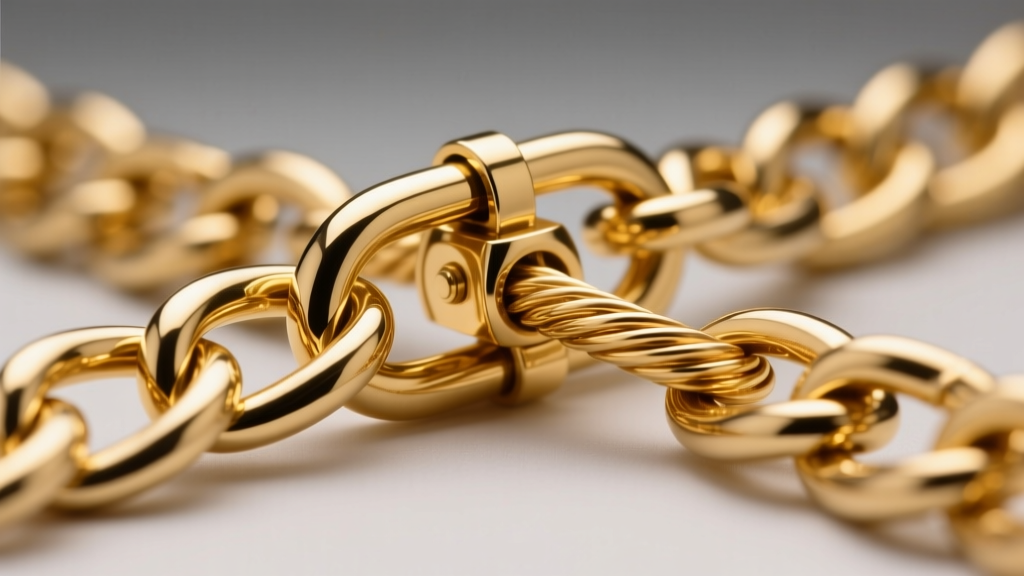
Hollow cable chains are highly susceptible to crushing. Once a hollow link is dented, it cannot be hammered back into shape or soldered by a jeweler. Furthermore, moisture and soap easily become trapped inside the hollow cavities, leading to irreversible blackening and skin irritation.
To verify a chain is solid, perform the "weight-to-volume" test. A solid 14K gold cable necklace will feel distinctly heavy and cold to the touch. When tapped lightly against a hard surface, solid gold produces a dense, dull thud, whereas hollow chains produce a tinny, high-pitched ping. Always look for the "Solid" designation on the product specifications.
Pricing Framework and Red Flags
Because the cable chain is machine-made and requires less hand-assembly than intricate weaves like the Byzantine or Wheat chain, the retail premium over the gold spot price should be relatively low. To ensure you are getting a fair deal, calculate the melt value using daily spot prices tracked by authorities like Kitco.
Multiply the chain's total gram weight by the purity percentage (0.585 for 14K, 0.75 for 18K), then multiply by the current spot price of gold per gram. A reputable jeweler will typically add a 30% to 60% retail markup to cover manufacturing, labor, and overhead. If a retailer is charging a 200% markup on a simple machine-made cable chain, you are overpaying for the brand name rather than the craftsmanship. Conversely, if the price is dangerously close to or below the raw scrap melt value, the chain is almost certainly hollow, heavily plated, or structurally compromised.
The Final Pre-Purchase Checklist
Before finalizing your gold cable necklace purchase, run through this rapid verification list:
- Hallmark Verification: Check for a clear "14K", "18K", or "585"/"750" stamp near the clasp, alongside a maker's mark.
- Solder Check: Confirm under magnification that the link seams are soldered shut.
- Drape Test: Hold the chain by the clasp and let it hang. A high-quality cable chain should fall in a fluid, liquid-like ribbon without kinking or twisting upon itself.
- Clasp Proportion: Ensure the clasp is not disproportionately large or heavy, which will cause the necklace to constantly flip backward, resting the clasp on your collarbone.
- Ultrasonic Safety: Confirm with the jeweler that the chain has no porous inclusions or hollow segments that could shatter in an ultrasonic cleaner during routine maintenance.
By prioritizing wire gauge over visual width, demanding soldered links, and understanding the structural limits of your chosen karat weight, you will secure a gold cable necklace that serves as a flawless, unbreakable foundation for your jewelry wardrobe for decades to come.


