Pearl Necklace Porn GIF Trends: Decoding Nacre Luster & Light
Explore the material properties of pearl necklaces, nacre thickness, and why moving digital formats best capture their unique optical luster.

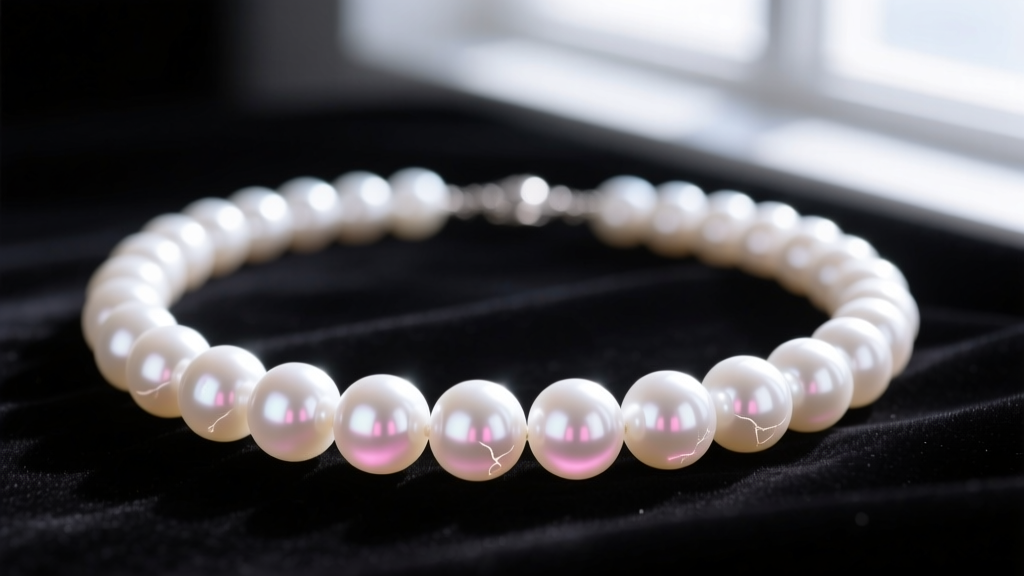
In the complex landscape of digital jewelry marketing and search engine analytics, SEO specialists occasionally flag bizarre, high-volume search anomalies like the "pearl necklace porn gif" query. While the explicit nature of this specific search term is undeniably rooted in adult internet culture, the underlying behavioral driver reveals a fascinating truth about gemology and digital media: consumers are inherently driven to seek moving, looping visual formats because static photography fundamentally fails to capture the true optical physics of a pearl.
As we navigate the 2026 jewelry market, understanding the material properties of nacre—and how it interacts with light across different digital mediums—is crucial for both collectors and gemologists. This article decodes the science of pearl luster, the structural integrity of aragonite platelets, and why dynamic media remains the ultimate test of a pearl's quality.
The Optical Physics of Nacre: Why Static Images Fail
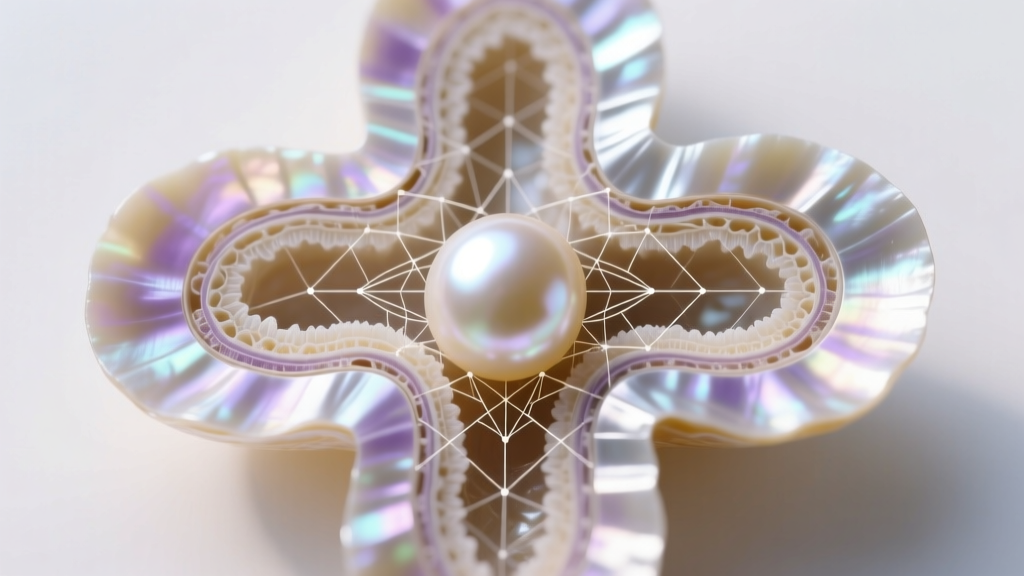
To understand why moving images (whether high-definition video or heavily compressed GIFs) are so heavily sought after when evaluating pearls, we must look at the microscopic structure of nacre. Nacre, or mother-of-pearl, is a biomineral composite produced by mollusks. It consists of roughly 90% to 95% aragonite (a crystalline form of calcium carbonate) and 5% to 10% conchiolin (an organic, elastic protein).
Unlike faceted gemstones such as diamonds, which rely on refractive index and total internal reflection to create brilliance, pearls rely on a phenomenon known as subsurface scattering and thin-film interference. The aragonite crystals form in microscopic, hexagonal platelets that stack in a "brick-and-mortar" pattern, with conchiolin acting as the mortar. When light strikes a pearl, it does not merely bounce off the surface; it penetrates the translucent aragonite layers, diffracts, and reflects back through the organic protein layers.
"Luster is the sharpness of surface reflection, while orient is the iridescent play of colors just below the surface. Static, flat-lit photography captures luster but entirely obliterates orient, which requires a shift in the observer's angle to become visible." — Gemological Institute of America (GIA)
Because orient requires a change in the angle of incidence to reveal its peacock, pink, or green overtones, a static JPEG renders a pearl as a flat, milky sphere. A moving image, even one with a limited color palette, captures the dynamic flash of light across the curved surface, allowing the human eye to process the depth of the nacre.
Material Breakdown: Nacre Thickness and Luster Profiles
Not all pearls possess the same optical depth. The material properties vary wildly depending on the mollusk species, the water temperature, and the cultivation time. Below is a comparative analysis of the primary saltwater pearl types dominating the 2026 market.
| Pearl Type | Mollusk Species | Avg. Nacre Thickness | Luster Profile | 2026 Price Range (16" Strand) |
|---|---|---|---|---|
| Japanese Akoya | Pinctada fucata martensii | 0.3mm - 0.8mm | Mirror-like, high-contrast flash | $1,200 - $3,500 (AAA to Hanadama) |
| Tahitian | Pinctada margaritifera | 0.8mm - 2.0mm+ | Satin to metallic, deep orient | $2,500 - $8,000+ |
| South Sea (White) | Pinctada maxima | 2.0mm - 4.0mm+ | Soft, satiny, glowing | $5,000 - $15,000+ |
| Beaded Freshwater | Hyriopsis cumingii | 1.0mm - 3.0mm | Variable, improving in recent years | $400 - $1,500 |
Recent ocean warming events in the Mie and Ehime prefectures of Japan have stressed Akoya oysters, resulting in thinner nacre secretions for lower-tier crops. Consequently, top-tier Hanadama-certified Akoya strands with verified nacre thicknesses above 0.6mm have seen a 22% price increase since 2024, making material verification more critical than ever.
Digital Compression and the Illusion of Luster
How GIFs and Codecs Alter Gemological Perception
From a digital imaging perspective, the GIF format is notoriously poor for jewelry. It is limited to a 256-color palette and utilizes dithering to simulate gradients. However, this technical limitation accidentally benefits the visual representation of high-luster Akoya pearls. The high-contrast banding inherent in GIF compression often mimics the sharp, mirror-like "flash" of an Akoya pearl's surface reflection, making the luster appear more intense than it might in a heavily compressed, artifact-ridden MP4 video.
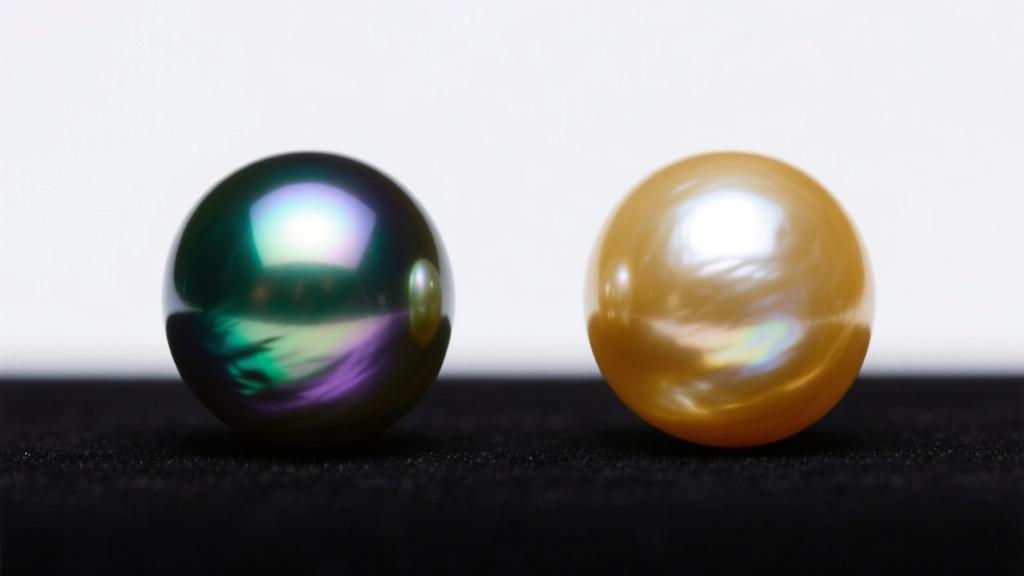
Conversely, Tahitian pearls, which rely on subtle, multi-colored subsurface orient (the "peacock" effect), are ruined by GIF compression. The dithering process turns the delicate iridescent greens and purples into muddy, pixelated noise. To properly evaluate the material properties of a Tahitian pearl, one requires uncompressed 4K video shot under diffused, polarized lighting to eliminate surface glare and allow the camera sensor to capture the subsurface light diffraction.
The 2026 Buyer’s Framework: Evaluating Beyond the Screen
Because digital media—whether high-res video or low-res looping animations—can be manipulated via lighting and color grading, buyers must rely on strict material science frameworks when purchasing pearl necklaces.
- Demand Optical Fiber Nacre Testing: For Akoya pearls, visual inspection is insufficient. Require a Pearl Science Laboratory (PSL) certificate that utilizes optical fiber interference to measure exact nacre thickness. Avoid any strand where the nacre is below 0.4mm, as the bead nucleus will eventually show through (a defect known as "blinking").
- Evaluate the Blemish-to-Luster Ratio: A flawless pearl with poor luster is essentially a plastic bead. A pearl with microscopic surface blemishes but razor-sharp luster indicates a healthy, thick aragonite structure. Prioritize luster over surface perfection.
- Check the Drill Holes: Request macro-photography of the drill holes. Clean, sharp edges indicate solid nacre. Chipping or peeling around the drill hole is a catastrophic material failure, indicating that the pearl was harvested prematurely before the conchiolin matrix fully cured.
- Understand Nucleus Bead Quality: In saltwater cultivation, a round shell bead is inserted. If the bead is poorly shaped, the mollusk will deposit uneven layers of aragonite to compensate, leading to structural weaknesses and uneven light scattering.
Conclusion: The Future of Pearl Evaluation
The bizarre intersection of internet search trends and gemological science highlights a core truth: pearls are dynamic, living materials that refuse to be captured in a single frame. As the 2026 market continues to see a rise in synthetic and heavily treated pearls, understanding the microscopic brick-and-mortar structure of nacre is your best defense. Whether you are analyzing a strand under a gemological microscope or scrutinizing a moving digital file, always look for the depth of the light, the sharpness of the reflection, and the undeniable physics of natural aragonite.


