Styling The Gold Choker Necklace With Pendant: 2026 Trend Analysis
Discover 2026 trend insights for the gold choker necklace with pendant. Explore chain gauges, pendant proportions, and expert neckline pairing techniques.

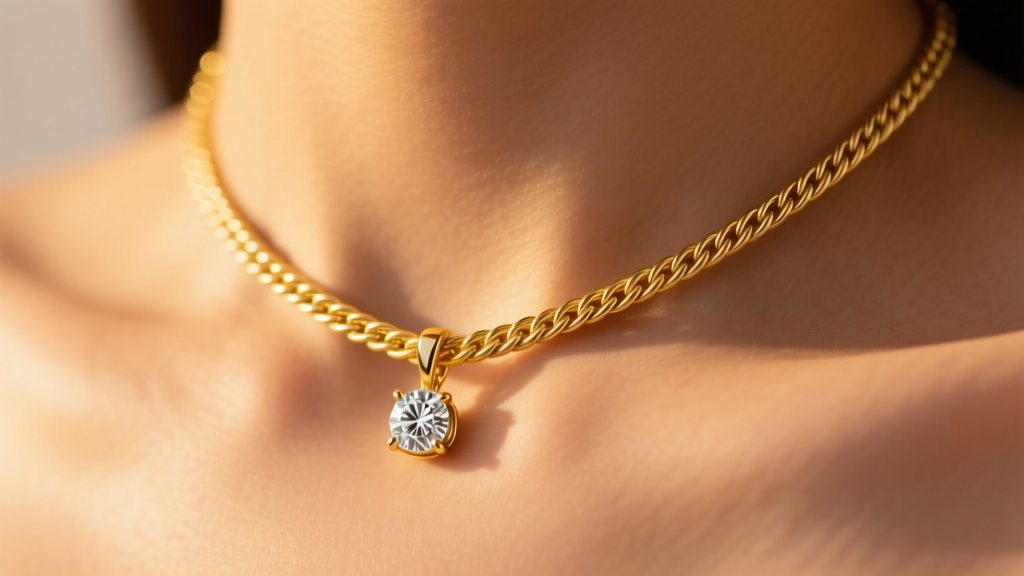
The jewelry landscape of 2026 has decisively moved past the chaotic, multi-layered maximalism of the early 2020s. Today, the focus is on intentional singularity and architectural precision. At the forefront of this shift is the gold choker necklace with pendant—a piece that bridges the gap between vintage nostalgia and modern quiet luxury. No longer just a thin, fragile chain reminiscent of 1990s mall fashion, the contemporary choker is a masterclass in proportion, metallurgy, and deliberate styling. This comprehensive trend analysis breaks down the exact specifications, material grades, and styling frameworks you need to master this definitive 2026 silhouette.
The 2026 Evolution: From Y2K Nostalgia to Quiet Luxury
Over the past decade, the choker experienced a massive resurgence driven by Y2K nostalgia, often characterized by layering three or four ultra-thin (sub-1mm) chains. However, as noted by Vogue Business in their recent luxury accessories report, the 2026 consumer prioritizes 'intentional minimalism.' The modern gold choker necklace with pendant stands alone as a focal point. It demands a heavier chain gauge, a more substantial clasp, and a pendant that interacts deliberately with the wearer's anatomy rather than simply dangling aimlessly. The trend has shifted from 'accessorizing' an outfit to 'anchoring' it with a single, high-quality statement piece that sits precisely on the clavicle.
Anatomy of the Perfect Piece: Gauges, Alloys, and Drops
To understand why certain gold chokers look luxurious while others appear cheap, we must examine the structural engineering of the piece. A choker sits at the base of the neck, an area of high friction and movement. Therefore, the chain gauge and pendant weight must be perfectly balanced to prevent stretching, snapping, or awkward flipping.
Chain Gauge and Pendant Weight Matrix
The relationship between chain thickness (gauge) and pendant weight is critical. A pendant that is too heavy for a delicate choker chain will cause the links to pull and permanently deform. Below is the industry-standard matrix for 2026 luxury chokers:
| Chain Style | Ideal Gauge (mm) | Max Pendant Weight | Best Pendant Style |
|---|---|---|---|
| Cable Chain | 1.2mm - 1.5mm | 2.5 grams | Bezel-set solitaire, small charm |
| Curb Chain | 2.0mm - 2.5mm | 5.0 grams | Geometric drops, signet motifs |
| Box Chain | 1.5mm - 2.0mm | 4.0 grams | Sleek bar pendants, architectural shapes |
| Rope Chain | 2.5mm - 3.0mm | 8.0 grams | Heavy medallions, gemstone clusters |
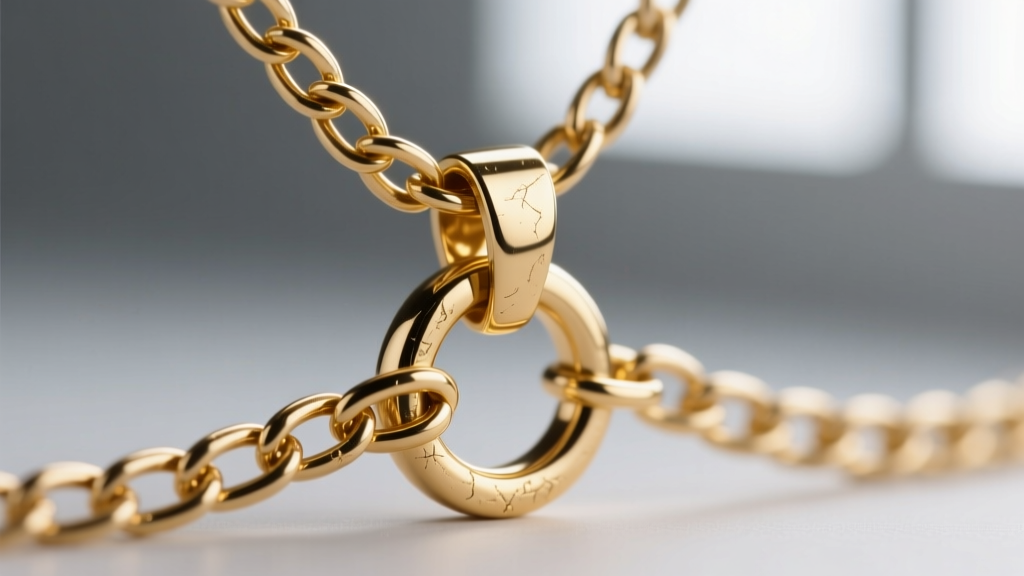
Furthermore, the pendant bail (the loop connecting the pendant to the chain) must be sized correctly. A 2.5mm curb chain requires a bail with an inner diameter of at least 3.5mm to allow the chain to lay flat without creating friction wear against the gold links.
Proportional Styling: Matching Pendants to Necklines
The defining characteristic of a choker is its length, typically ranging from 14 to 16 inches. A 14-inch chain sits snugly at the base of the throat, while a 16-inch chain rests gracefully on the collarbone. The pendant drop (the vertical length of the pendant itself) must be calibrated to the neckline of your garment to avoid visual clutter.
The Square Neck and Sweetheart Advantage
Square and sweetheart necklines provide a natural 'frame' for a gold choker necklace with pendant. Because these necklines expose the upper chest and create a horizontal boundary, a pendant with a 12mm to 18mm drop fits perfectly in the negative space without competing with the fabric. Opt for teardrop or geometric pendents that echo the angularity of the neckline.
Navigating the V-Neck and Button-Down
V-necks and unbuttoned collared shirts create a vertical line that draws the eye downward. If you pair this with a choker featuring a long, dangling pendant, the visual lines clash. For these necklines, restrict your pendant drop to under 10mm. A simple, flush-set diamond or a horizontal bar pendant works best, allowing the garment's structure to dictate the vertical flow while the choker provides a horizontal anchor.
Material Deep Dive: 14k vs. 18k Gold in Choker Applications
When investing in a gold choker necklace with pendant, understanding metallurgy is non-negotiable. The Gemological Institute of America (GIA) outlines that pure 24k gold is far too soft for jewelry, requiring alloy metals for durability. This is especially true for chokers, which endure more tension than longer necklaces.
14k Gold (58.5% Pure Gold): Alloyed with higher percentages of copper, silver, and zinc, 14k gold offers superior tensile strength. For a choker chain that will be worn daily and subjected to the friction of turning your head, 14k is the pragmatic choice. It resists stretching and maintains the structural integrity of delicate cable or box links over years of wear.
18k Gold (75% Pure Gold): Prized for its rich, buttery yellow hue and hypoallergenic properties, 18k gold is the hallmark of high luxury. However, it is inherently softer. If you choose an 18k gold choker, you must adhere strictly to the lower end of the pendant weight matrix. A heavy pendant on an 18k choker chain will eventually cause the links near the clasp to elongate and fail.

Clasp Mechanics: The Unsung Hero of the Choker
A luxury gold choker necklace with pendant is only as secure as its clasp. Because chokers sit tightly against the neck, they are frequently tugged when removing clothing or styling hair.
- Lobster Claw: The industry standard for chains over 1.5mm. It features a robust internal spring and a wide opening, making it secure and easy to operate. Ensure the swivel ring at the base of the lobster clasp is soldered closed; open jump rings are a primary failure point.
- Spring Ring: Common on delicate 1.0mm - 1.2mm chains. While aesthetically unobtrusive, the internal spring mechanism is prone to failure if subjected to heavy lateral pulling. Reserve spring rings exclusively for lightweight, sub-2-gram pendants.
- Magnetic Clasps: Gaining popularity in 2026 for accessibility, high-end magnetic clasps (often featuring neodymium cores encased in 14k gold) offer excellent holding power. However, they add significant weight to the back of the neck, which can cause a lightweight choker to slide backward, pulling the pendant off-center.
Market Pricing & Investment Value in 2026
The pricing landscape for solid gold chokers has stratified clearly in 2026, driven by fluctuating raw gold markets and brand positioning. Entry-level solid 14k gold chokers with small gemstone pendants from direct-to-consumer brands typically range from $450 to $750. These pieces offer excellent value but often utilize lighter, hollow-cast pendants to keep costs down.
In the mid-tier luxury segment ($1,200 to $2,500), brands prioritize solid-cast pendants, precision-set stones, and upgraded hardware, such as custom-designed lobster clasps and integrated, seamless bails. At the high jewelry echelon ($4,000+), the premium is paid for exceptional gemstone provenance, 18k or 22k gold alloys, and artisanal hand-finishing techniques like florentine engraving or granulation on the pendant surface.
Conclusion: The Intentional Silhouette
The gold choker necklace with pendant has cemented its status as a cornerstone of the 2026 fine jewelry wardrobe. By moving away from fragile, trend-chasing layers and embracing structural integrity, precise proportions, and high-quality metallurgy, you invest in a piece that transcends seasonal fads. Whether you opt for the high-tensile reliability of a 14k cable chain or the opulent warmth of an 18k curb link, the key lies in respecting the physical limits of the gold and styling the pendant drop to complement, rather than compete with, your personal aesthetic.


