Choosing Gold and Diamond Necklaces for Women: Material Guide
Discover how to choose gold and diamond necklaces for women based on metal karats, diamond clarity, and chain durability in our expert material guide.

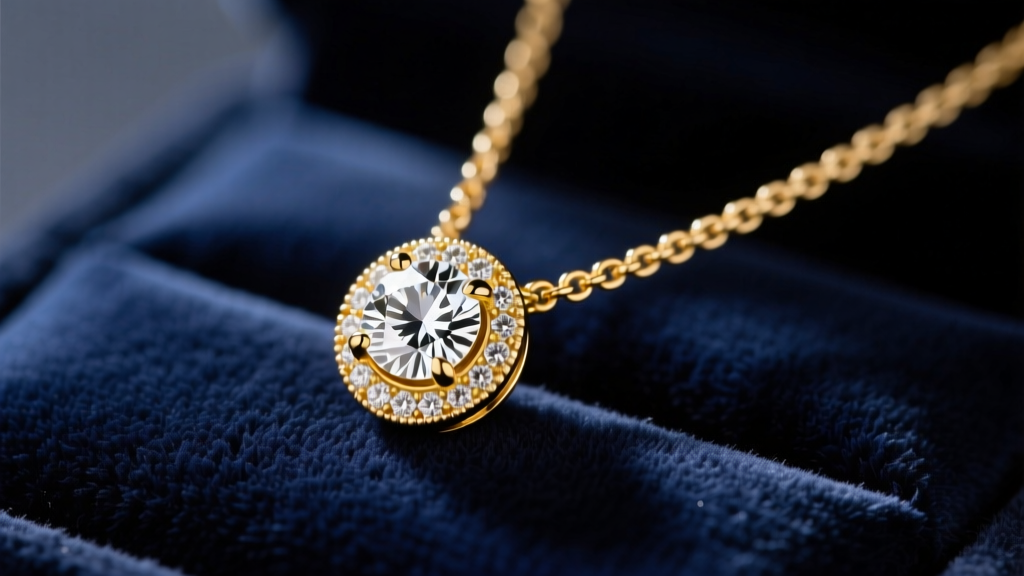
When investing in fine jewelry, specifically gold and diamond necklaces for women, understanding the underlying material science is just as critical as the aesthetic design. Many buyers focus entirely on the visual sparkle or the brand name, only to experience broken chains, dull stones, or severe metal scratching within the first year of daily wear. The longevity and brilliance of a necklace are dictated by the metallurgical properties of the gold alloy and the specific gemological characteristics of the diamonds used in the setting.
This comprehensive guide breaks down the exact material properties, hardness scales, and structural vulnerabilities you need to evaluate before purchasing your next piece. By shifting your focus from purely aesthetic choices to material-based decision-making, you can ensure your jewelry withstands the rigors of daily life while maintaining its intrinsic value.
The Foundation: Decoding Gold Karats for Everyday Wear
Pure gold (24k) is exceptionally soft, possessing a Vickers hardness of roughly 60 HV. This makes it entirely unsuitable for securing diamonds or resisting the friction of daily wear. To create durable jewelry, gold is alloyed with metals like copper, silver, zinc, and nickel. The karat system dictates the ratio of pure gold to these strengthening alloys, fundamentally altering the metal's tensile strength, color, and scratch resistance.
| Karat | Gold Purity | Vickers Hardness (Approx) | Durability & Wear | Best Application |
|---|---|---|---|---|
| 10k | 41.7% | 160 - 180 HV | Highly scratch-resistant, stiff, prone to tarnish | Heavy chains, budget-friendly melee settings |
| 14k | 58.5% | 140 - 160 HV | Excellent balance of strength and color retention | Everyday pendants, intricate prong settings |
| 18k | 75.0% | 125 - 140 HV | Rich color, softer, develops a patina over time | Solitaire pendants, luxury bezel settings |
| 22k | 91.6% | 80 - 100 HV | Very soft, bends easily, poor prong retention | Heavy cast pendants, occasional wear only |
According to the World Gold Council, 14k and 18k gold remain the global standards for fine jewelry. For diamond necklaces intended for daily wear, 14k gold is often the superior choice for the chain and the prongs, as its higher alloy content provides the necessary grip to prevent diamonds from slipping out of their settings.
Diamond Properties: Beyond the 4Cs in Pendant Settings
The way diamonds behave in a necklace differs vastly from how they perform in a ring. Pendants sit relatively flat against the chest and are subjected to less direct impact than rings, but they are often viewed from a greater distance. This changes the optimal grading parameters, particularly for melee diamonds versus solitaire stones.
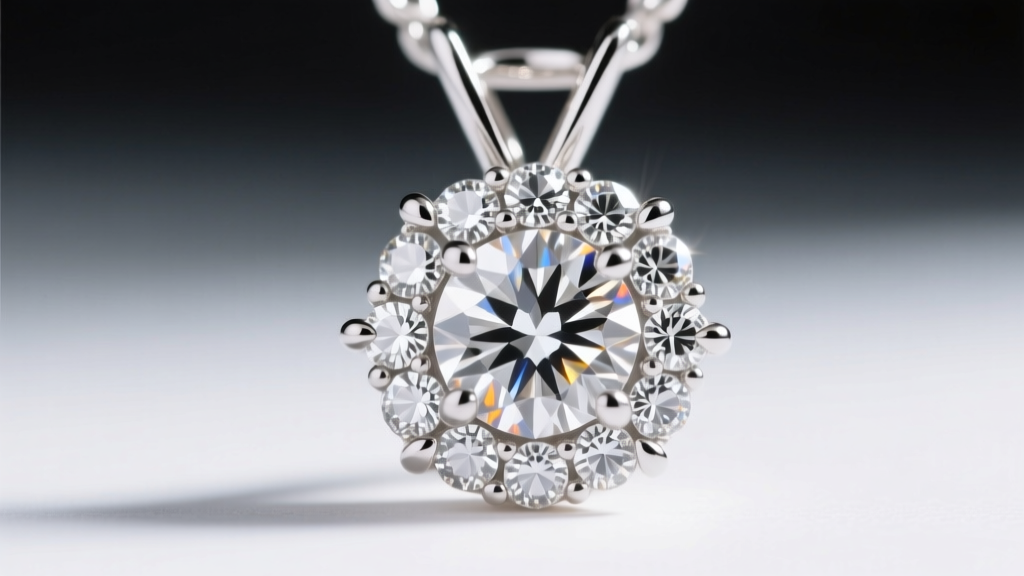
Solitaire Pendants (0.25ct to 2.00ct+)
For a single, prominent diamond, light return is paramount. The Gemological Institute of America (GIA) emphasizes that cut quality is the most critical factor in a diamond's brilliance. For solitaire gold and diamond necklaces for women, prioritize an "Excellent" or "Ideal" cut grade. Because the pendant moves with the wearer's body, a poorly cut stone will look dead and glassy in motion. Color should be kept at G or H to ensure the stone faces up white against both yellow and white gold settings, while clarity can safely drop to VS2 or SI1, as inclusions at this level are invisible to the naked eye when the stone is in motion.
Melee and Cluster Settings (Under 0.15ct per stone)
Melee diamonds are the tiny stones used in halo settings, tennis necklaces, and pave pendants. Because these stones are so small, paying a premium for VVS clarity or D color is a waste of capital. Inclusions and color tints are physically impossible to see in a 0.05ct stone without 10x magnification. Reputable jewelers typically use SI2 to I1 clarity melee diamonds, focusing instead on uniformity in cut and color across the entire cluster to ensure a consistent sparkle.
Setting Styles and Metal Fatigue: What Actually Breaks?
"The most common point of failure in diamond necklaces is not the chain snapping, but the gradual thinning of gold prongs due to friction against clothing, leading to catastrophic stone loss."
Understanding setting mechanics is vital for long-term maintenance. The interaction between the gold alloy and the diamond's girdle dictates the security of the piece.
- Four-Prong and Six-Prong Settings: Classic and allows maximum light entry. However, 18k gold prongs can wear down by up to 20% over five years of daily wear due to friction. They require professional re-tipping every 3 to 5 years.
- Bezel Settings: A continuous rim of gold surrounds the diamond's girdle. This is the most secure setting available. It protects the diamond's vulnerable edges from chipping and eliminates the risk of prongs catching on knitwear. The trade-off is a slight reduction in visible light return.
- Tension Settings: Rely on the tensile strength of the metal to hold the stone. While visually striking, they are highly discouraged for 14k or 18k gold necklaces, as the metal can slowly deform over time, releasing the diamond.
Chain Link Structures: Durability vs. Aesthetics
The chain is the structural backbone of any necklace. Selecting the wrong link style for your lifestyle is the fastest way to end up with a tangled, kinked, or broken piece of jewelry. Here is a breakdown of the most common chain structures used in gold and diamond necklaces for women.
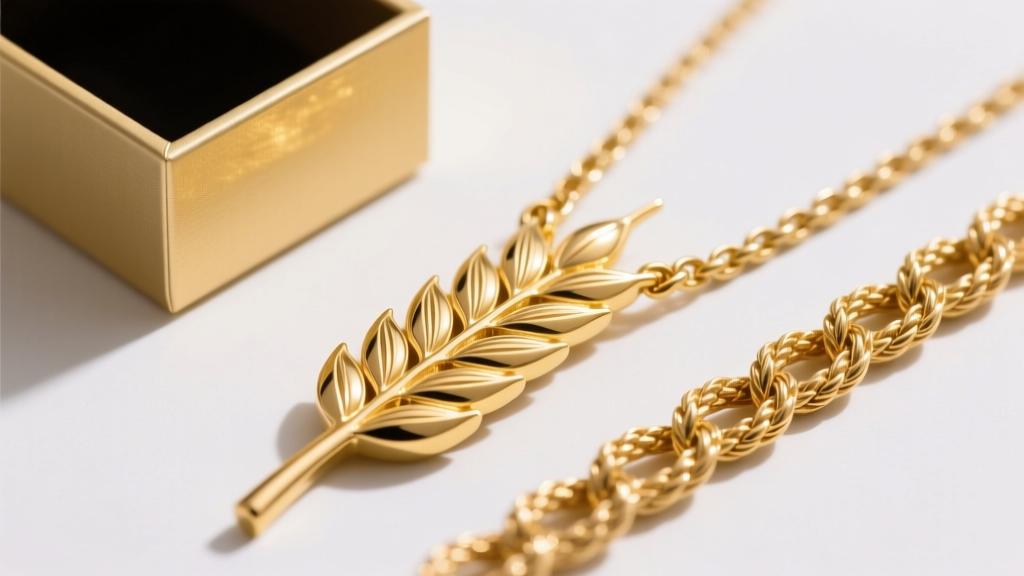
Wheat (Spiga) Chains
Constructed from interlocking oval links woven in the same direction, wheat chains are incredibly durable. The woven structure distributes tension evenly across multiple links, making them highly resistant to snapping. They are the ideal choice for supporting heavier diamond pendants (1.00ct and above).
Box Chains
Box chains feature square links connected to form a smooth, continuous tube. While they offer a beautiful, modern reflectivity, they have a critical structural flaw: they kink easily. Once a box chain bends at a sharp angle, the square links crush inward. This damage is nearly impossible to repair perfectly, and the weakened section will eventually snap.
Rope Chains
Rope chains mimic the twist of a natural fiber rope. They are highly brilliant due to the multi-faceted cuts on the links. However, their complex weaving pattern makes them notorious for catching and pulling fine hair. Furthermore, if a single link in a hollow rope chain breaks, the entire section can unravel rapidly.
Cable Chains
The simplest and most traditional design, consisting of uniform oval links. While they lack the flash of a rope chain, solid cable chains are easy to repair and highly reliable for lightweight melee diamond pendants.
The 2026 Pricing Matrix: What You Should Actually Pay
Navigating the pricing of fine jewelry can be opaque. To ensure you are paying a fair market rate for the materials and craftsmanship, use this baseline pricing framework. These estimates reflect the current market rates for retail jewelry, factoring in gold spot prices and wholesale diamond costs.
- 0.25ct Solitaire Pendant (14k Gold, SI1/G): Expect to pay between $600 and $900. The majority of this cost is driven by the diamond, with the gold chain and setting accounting for roughly $250.
- 0.50ct Solitaire Pendant (18k Gold, VS2/F): Prices typically range from $1,800 to $2,800. The jump in price reflects the exponential increase in diamond carat weight and the premium for 18k gold.
- 1.00ct Total Weight Melee Cluster (14k Gold): Cluster pendants use many small stones to create the illusion of a larger diamond. Because melee diamonds are significantly cheaper per carat, a 1.00ct cluster should cost between $1,200 and $1,800, vastly less than a single 1.00ct solitaire.
- Station Necklaces (Mixed Gold and Diamonds): These feature small diamonds spaced evenly along a delicate chain. Pricing scales linearly with the number of stones. A 5-station necklace (0.50ct total weight) generally retails between $1,000 and $1,500.
Final Verdict: Matching Material to Lifestyle
Choosing the perfect piece requires aligning material properties with the wearer's daily habits. For an active woman who wears her jewelry 24/7, a 14k gold wheat chain paired with a bezel-set, SI1 clarity diamond offers maximum security and minimal maintenance. Conversely, for a collector seeking a luxury piece for evening wear or office environments, an 18k gold box chain supporting an Excellent-cut, VVS2 solitaire in a classic four-prong setting provides unmatched brilliance and prestige.
By prioritizing the metallurgical hardness of the gold, the optical performance of the diamond cut, and the structural integrity of the chain links, you transform your purchase from a simple accessory into a resilient, lifelong asset.


