Gold Eye Necklace Trends 2026: Talismans, Gold Grades & Styling
Explore 2026 gold eye necklace trends. Discover expert layering techniques, gold purity grades, gemstone inlays, and pricing for this iconic talisman.

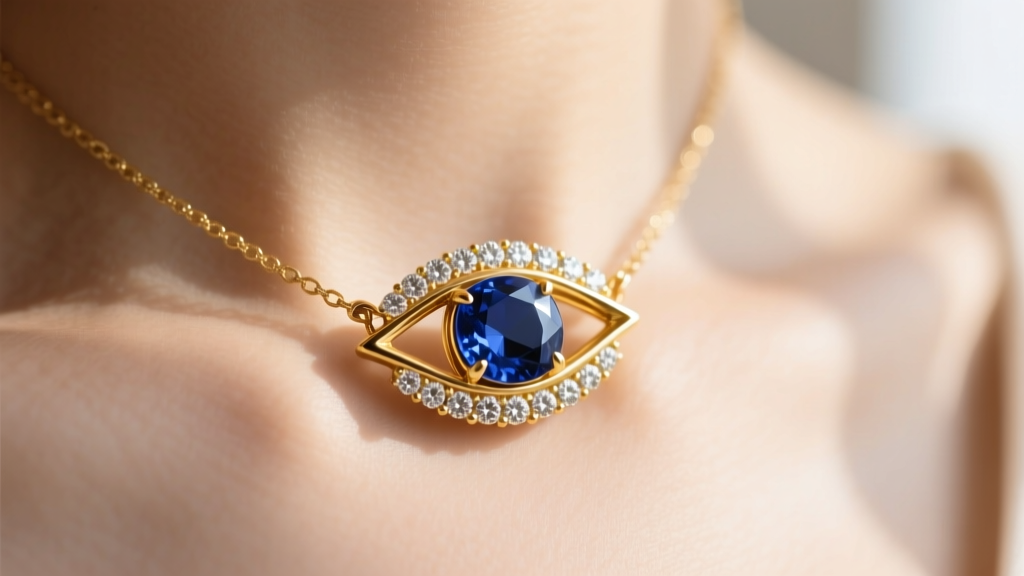
The 2026 Evolution: From Talisman to High Jewelry
The gold eye necklace has officially transcended its status as a fleeting Y2K revival trend to become a permanent fixture in fine jewelry wardrobes. Historically rooted in the Mediterranean and Middle Eastern "Nazar" amulet—a talisman designed to ward off the evil eye—the motif has been reimagined for 2026 with a distinct focus on abstraction, mixed metals, and high-karat gold. According to trend forecasters at Vogue, the modern consumer is moving away from mass-market, gold-plated brass versions and investing in solid gold pieces that serve as both spiritual protectors and heirloom-quality investments.
This year, the design language of the gold eye necklace has shifted. Designers are stripping away the traditional concentric blue-and-white circles in favor of minimalist geometric interpretations, diamond-pavé halos, and asymmetric settings. The result is a versatile pendant that bridges the gap between ancient superstition and contemporary luxury.
Decoding Gold Purity and Weight Metrics
When investing in a gold eye necklace, understanding the metallurgy of your piece is critical. The "eye" motif often requires intricate casting or hand-carving, meaning the structural integrity of the gold alloy is paramount. The Gemological Institute of America (GIA) notes that the ratio of alloyed metals (like copper, silver, and zinc) not only dictates the color but also the durability of the pendant.
| Gold Purity | Composition & Color Profile | Durability & Weight | 2026 Market Price Range (Pendant Only) |
|---|---|---|---|
| 10k Gold | 41.7% gold. Pale yellow hue, higher copper/zinc content. | Highly durable, scratch-resistant. Ideal for heavy, chunky eye charms. | $120 - $250 |
| 14k Gold | 58.3% gold. Warm, balanced yellow. The industry standard. | Excellent balance of hardness and richness. Best for daily-wear talismans. | $280 - $650 |
| 18k Gold | 75% gold. Deep, saturated yellow. Hypoallergenic. | Softer, prone to micro-scratches. Requires a bezel setting if holding gems. | $750 - $1,800 |
| 22k Gold | 91.6% gold. Intense, buttery yellow. Traditional for Indian/Middle Eastern markets. | Very soft. Usually reserved for hammered, organic-texture eye designs. | $1,200 - $3,000+ |
Pro Tip: For a standard 12mm to 15mm eye pendant, look for a gold weight between 2.5 grams and 4.0 grams. Anything lighter risks denting if pressed against the sternum; anything heavier will cause lightweight chains to pull and snap.
The Centerpiece: Enamel vs. Hardstone Inlays
The "pupil" of the gold eye necklace is where designers are taking the most creative risks in 2026. While cobalt blue vitreous enamel remains a classic choice, it is prone to chipping upon impact. The current trend heavily favors hardstone inlays, which offer superior scratch resistance (measuring 5 to 7 on the Mohs scale) and deeper optical depth.
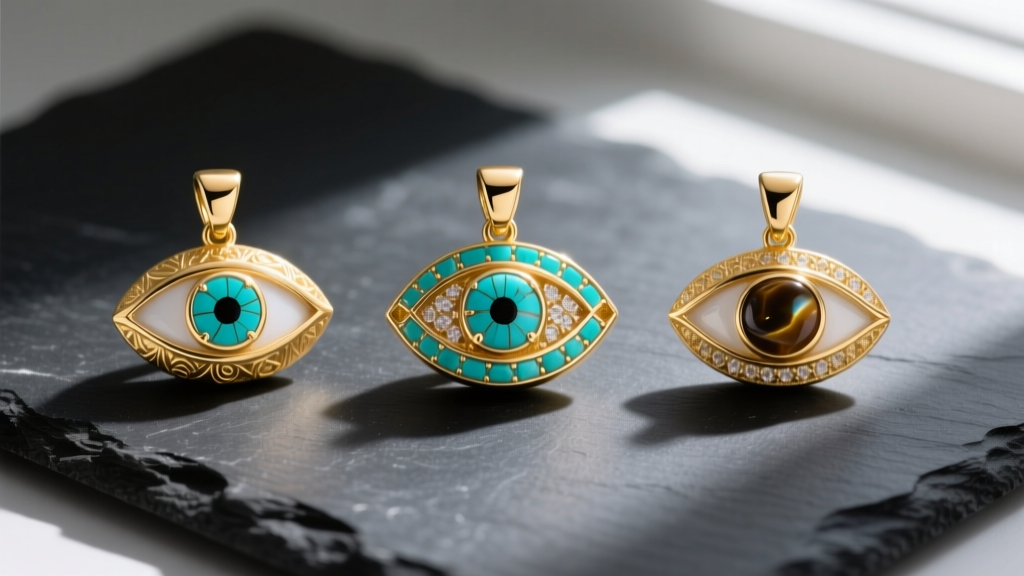
- Lapis Lazuli: Offers a deep, celestial blue with natural pyrite (gold) flecks that complement the gold casing. Best paired with 18k yellow gold.
- Black Onyx: Creates a striking, high-contrast "dark academia" aesthetic. Often used in gender-neutral or masculine-leaning eye talismans.
- Malachite: The vivid green banding of malachite provides an earthy, bohemian alternative to traditional blue, symbolizing transformation and protection.
- Turquoise: A nod to Southwestern and Native American jewelry traditions, stabilized turquoise is making a massive comeback in boho-chic layering stacks.
Chain Pairings and the Layering Framework
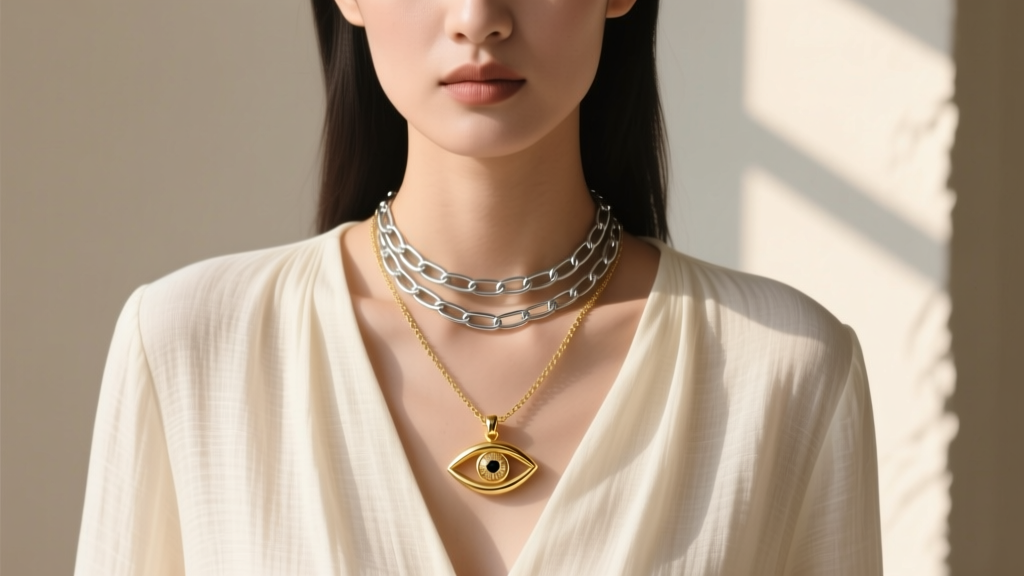
A gold eye necklace rarely sits alone in 2026. The art of the "neck stack" requires precise mathematical spacing to prevent the chains from tangling and the pendants from overlapping. The focal eye pendant should always be the anchor of the stack.
The 3-Piece Layering Blueprint
- The Choker (14" - 15"): Start with a 1.0mm solid gold cable chain or a delicate 1.2mm herringbone snake chain. This sits flush against the collarbone and provides a subtle metallic base without competing for attention.
- The Anchor (16" - 17"): This is where your gold eye necklace lives. Opt for a 1.5mm to 2.0mm paperclip chain or a textured rolo chain. The open links of a paperclip chain add visual weight and prevent the pendant from sliding off-center. Ensure the clasp is a sturdy lobster claw, not a fragile spring ring.
- The Elongator (20" - 24"): Finish with a longer, heavier chain (like a 3.0mm Cuban link or a rope chain) featuring a different, non-competing motif—such as a simple gold sphere, a coin, or a minimalist bar pendant. This draws the eye downward, elongating the neck and framing the central eye motif.
Styling for Necklines and Occasions
The versatility of the gold eye necklace lies in its ability to adapt to varying necklines, provided you adjust the chain length accordingly.
- V-Neck & Plunging Necklines: Use an 18-inch chain. The V-shape of the neckline naturally mirrors the geometry of the eye pendant, creating a cohesive, elongating visual line.
- Crew Necks & T-Shirts: Opt for a 16-inch chain so the pendant rests just above the fabric line, or go bold with a 22-inch chain that rests entirely over the fabric for a streetwear-inspired look.
- Off-the-Shoulder & Strapless: This is the ideal canvas for a maximalist 4-layer stack, utilizing chokers and collar-length chains to fill the exposed décolletage with gold textures.
Market Pricing and Investment Value
As the demand for ethically sourced gold and conflict-free gemstones rises, the pricing structure for fine jewelry talismans has shifted. In 2026, a high-quality, solid 14k gold eye necklace with a genuine lapis lazuli inlay and a 16-inch paperclip chain will typically retail between $450 and $850 from independent, direct-to-consumer jewelers. Legacy luxury houses offering 18k gold with diamond pavé halos push the price bracket from $2,500 to well over $6,000. When purchasing, always verify the hallmark stamp (e.g., "585" for 14k or "750" for 18k) and request documentation on the origin of the gold to ensure your protective talisman aligns with modern ethical standards.


