Gold Frog Necklace Guide: Solid, Vermeil, and Plated Compared
Discover how to choose the best gold frog necklace by comparing solid, vermeil, and plated metals for durability, detail retention, and price.

The Allure of the Amphibian: Why Material Matters for Frog Pendants
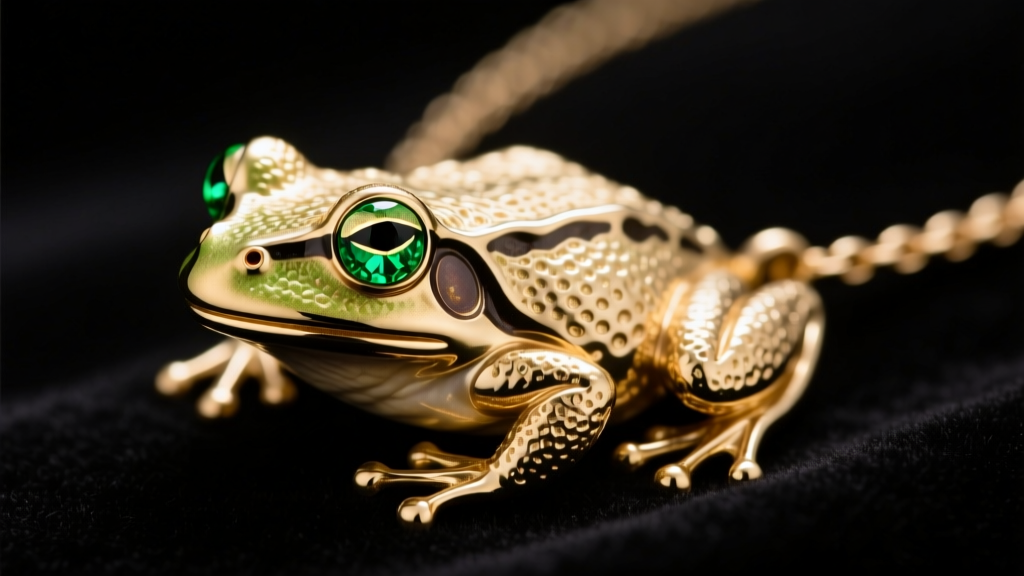
The gold frog necklace has transcended its niche origins to become a staple in nature-inspired and cottagecore jewelry collections. However, the anatomy of a frog pendant presents unique metallurgical challenges. Unlike a simple geometric disc or a smooth gemstone solitaire, a frog motif relies on high-relief casting, deep undercuts, and intricate surface textures—such as warty skin, webbed toes, and bulging eyes. These pronounced features create high-friction contact points against the skin and clothing, making the choice of metal paramount for long-term detail retention.
As we navigate the jewelry market in 2026, consumers are faced with a spectrum of "gold" options. Understanding the structural integrity, hardness, and casting capabilities of solid gold, gold vermeil, and gold-plated brass is essential before investing in an amphibian heirloom. This guide breaks down the material properties that dictate how your gold frog necklace will age, wear, and retain its intricate charm over time.
Decoding the "Gold" in Your Frog Necklace
Solid Gold (14K & 18K): The Heirloom Standard
For a highly detailed frog pendant, solid gold is the undisputed champion. According to the Gemological Institute of America (GIA), pure 24K gold is far too soft (measuring around 25-30 on the Vickers Hardness scale) to hold the crisp edges of a frog's toes or the prongs securing its gemstone eyes. Therefore, alloyed gold is required.
- 14K Gold (58.5% Pure Gold): With a Vickers hardness of approximately 140-150 HV, 14K gold is exceptionally durable. It resists the micro-abrasions that occur when the frog's textured back rubs against the collarbone. It is the ideal choice for everyday wear, ensuring that the lost-wax cast details remain sharp for decades.
- 18K Gold (75% Pure Gold): Slightly softer (around 115-125 HV) and richer in its warm, yellow hue. While visually stunning, an 18K gold frog is more prone to scratching on its prominent features, such as the snout and the crown of the eyes. It is best reserved for occasional wear or pendants with smoother, stylized silhouettes rather than hyper-realistic textures.
Gold Vermeil: The Detailed Compromise
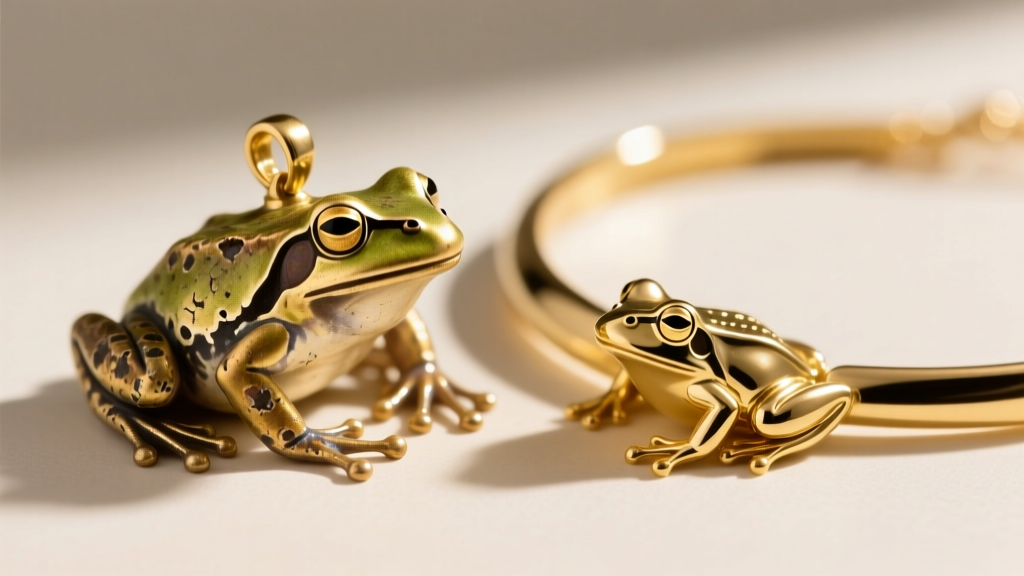
Gold vermeil (pronounced ver-may) offers a middle ground for buyers who want intricate casting without the solid gold price tag. By definition, vermeil must feature a sterling silver base coated with a minimum of 2.5 microns of gold. Because sterling silver is an excellent casting metal that captures fine mold details beautifully, vermeil frog pendants often boast incredible initial crispness. However, the high-relief areas—the tips of the frog's toes and the ridge of its spine—will experience accelerated wear, eventually exposing the silver beneath. Once exposed, the silver crevices can oxidize and tarnish, which some collectors appreciate as an "antique" patina that highlights the frog's warty texture.
Gold-Filled vs. Gold-Plated: Budget Options
Gold-filled jewelry consists of a brass core mechanically bonded with a thick layer of gold (at least 1/20th of the total weight). While highly durable, gold-filled sheet metal is rarely used for 3D cast frog pendants; it is usually reserved for flat, stamped silhouettes. Conversely, standard gold-plated brass pendants (often featuring less than 0.5 microns of gold) are widely available but ill-advised for detailed motifs. The thin plating wears off rapidly on the frog's high points, and the underlying brass can react with skin acidity, leaving a green residue on your neck.
Material Properties Comparison Chart
| Material Type | Base Metal | Gold Layer / Purity | Hardness (Vickers) | Detail Retention | 2026 Price Range |
|---|---|---|---|---|---|
| Solid 14K Gold | None (Alloy) | 58.5% Pure Gold | ~140-150 HV | Exceptional | $600 - $1,500+ |
| Solid 18K Gold | None (Alloy) | 75% Pure Gold | ~115-125 HV | Very Good | $800 - $2,200+ |
| Gold Vermeil | Sterling Silver | 2.5+ microns (14k/18k) | ~60-70 HV (Base) | Good (Wears to patina) | $120 - $350 |
| Gold-Filled | Jeweler's Brass | 1/20th 14K Gold | ~100 HV | Fair (Mostly flat stamps) | $60 - $150 |
| Gold-Plated | Brass / Copper | < 0.5 microns | Variable | Poor (Rapid detail loss) | $25 - $80 |
Intricate Detailing: How Metal Hardness Affects Textures
The manufacturing process of a gold frog necklace heavily influences its final appearance. High-end solid gold frogs are typically created using lost-wax casting. A master model is carved in wax, capturing every microscopic wart and toe pad, then encased in investment plaster and burned out, leaving a perfect cavity for molten gold. The resulting 14K gold piece is hard enough to be polished with a rouge cloth without eroding the textured skin.
In contrast, cheaper plated pendants are often cast from low-grade alloys or stamped from sheet metal. When these soft base metals are plated, the polishing process required before plating often rounds off the sharp edges of the frog's webbed feet. Furthermore, if the pendant features enamel accents—such as translucent green enamel over an engraved guilloché pattern on the frog's back—softer base metals can flex upon impact, causing the rigid enamel to crack and chip.
Gemstone Accents: Eyes and Bellies
A premium gold frog necklace frequently incorporates gemstones to bring the amphibian to life. The eyes are typically set with cabochon-cut tsavorite garnets, emeralds, or black onyx. Because cabochons lack sharp facets, they mimic the natural, bulging appearance of a frog's eyes perfectly.
Expert Insight: When purchasing a solid gold frog with emerald eyes, always check the setting style. Emeralds are notoriously brittle (rating 7.5-8 on the Mohs scale but highly included). A bezel setting, where a continuous rim of 14K gold wraps around the gemstone's girdle, offers vastly superior protection against knocks and drops compared to delicate prong settings, which can easily snag on knitwear and loosen the stone.
Some artisan jewelers also incorporate carved jade or chrysoprase for the frog's underbelly, utilizing the natural translucency of the stones to mimic the soft, light-colored skin of a tree frog. These multi-material assemblies require precise thermal expansion matching during the casting and soldering phases to prevent the stones from fracturing.
Chain Pairings: Matching the Frog to the Right Link
A common failure point in novelty pendants is the chain. A solid 14K gold frog pendant of substantial size can easily weigh between 6 and 12 grams. Suspending this weight from a delicate 0.9mm cable chain is a recipe for disaster; the constant friction of the frog's bail rubbing against the thin wire links will eventually saw through the chain, resulting in a lost pendant.
According to guidelines from Jewelers of America, the chain should be rated to hold at least five times the weight of the pendant for everyday security. For a gold frog necklace, opt for structural chains that distribute weight evenly and resist kinking:
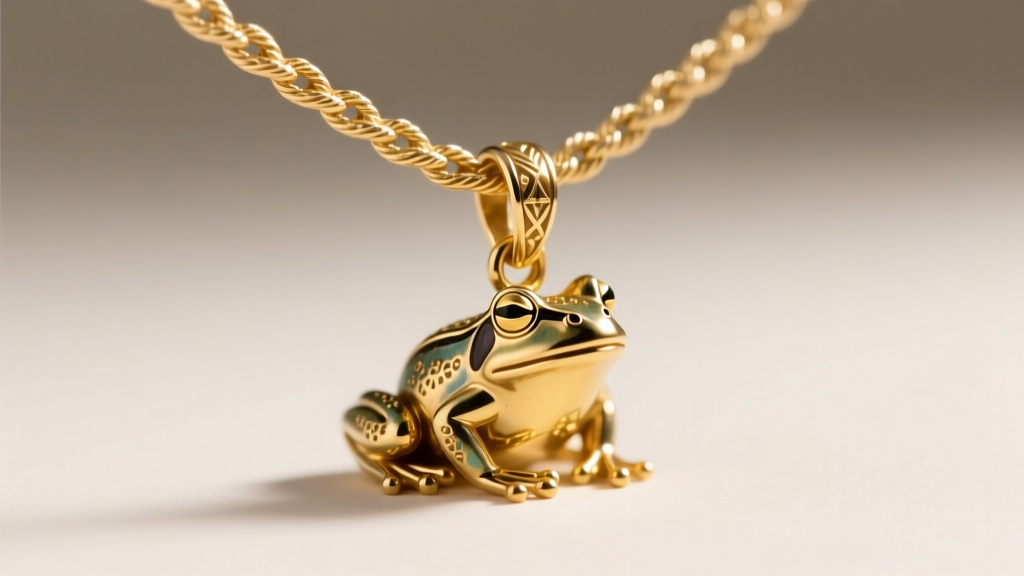
- Rope Chain (1.5mm - 2.5mm): The twisted links provide excellent tensile strength and a vintage aesthetic that pairs beautifully with nature motifs.
- Wheat (Spiga) Chain (1.5mm - 2.0mm): Woven in a continuous, braided pattern, wheat chains are incredibly resistant to pulling and snapping, making them ideal for heavier, high-relief frog pendants.
- Box Chain (1.2mm - 1.8mm): Offers a modern, geometric contrast to the organic shape of the frog, though the square links can occasionally catch on the bail if not sized correctly.
Always ensure the bail (the loop connecting the frog to the chain) features a soldered jump ring. An unsoldered, split-ring bail will inevitably pull open under the pendulum-like swinging motion of a heavy frog pendant.
Care and Maintenance for Longevity
Maintaining the luster and detail of your gold frog necklace requires specific care protocols, particularly if the piece features gemstone eyes or enamel work. Never place a frog pendant with emerald or opal eyes into an ultrasonic cleaner. The high-frequency vibrations can shatter included emeralds or cause the moisture in opals to boil, leading to internal fracturing.
Instead, clean your necklace using a solution of warm water and a few drops of mild, phosphate-free dish soap. Use a baby toothbrush with extra-soft bristles to gently agitate the soap into the deep crevices of the frog's toes and the textured ridges of its back. This removes accumulated sebum, lotions, and dead skin cells that can dull the gold and accelerate the tarnishing of any exposed silver in vermeil pieces. Rinse thoroughly under lukewarm water and dry completely with a microfiber cloth before storing it in an anti-tarnish pouch.
By understanding the metallurgical realities of gold alloys, casting techniques, and structural chain pairings, you can confidently select a gold frog necklace that will retain its intricate charm and serve as a lasting talisman of nature's artistry for years to come.


