Gold Hibiscus Necklace Trends & Styling for 2026
Explore 2026 gold hibiscus necklace trends. Expert analysis on karat weights, lost-wax casting, chain pairings, and botanical maximalism styling.

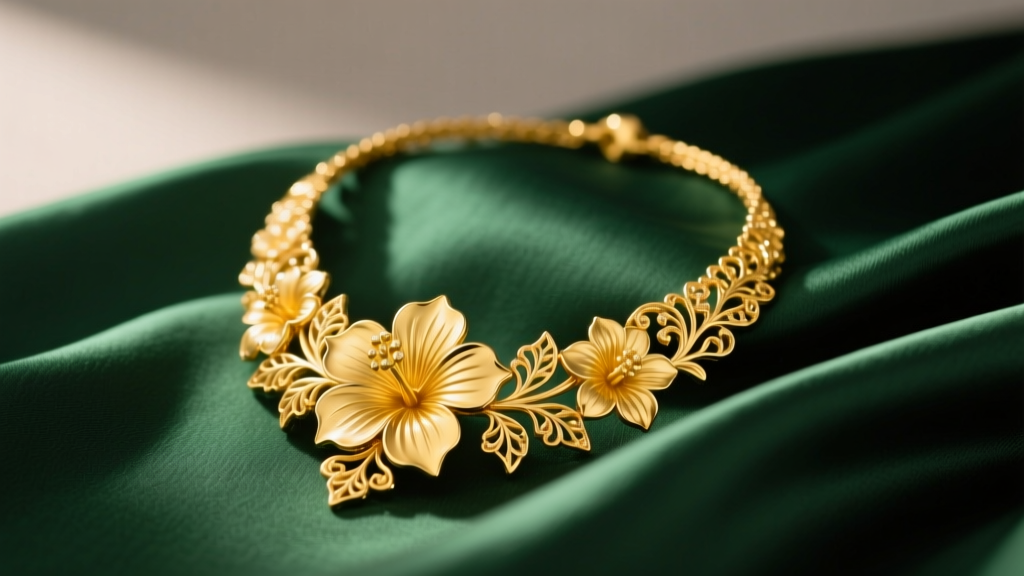
The Resurgence of Botanical Maximalism
In the ever-evolving landscape of fine jewelry, the pendulum has decisively swung from the ultra-minimalist aesthetics of the early 2020s toward a rich, sculptural era of botanical maximalism. At the forefront of this 2026 movement is the gold hibiscus necklace. No longer relegated to souvenir shops or fast-fashion beachwear, the hibiscus motif has been reclaimed by high-end jewelers and artisan goldsmiths. This tropical flower, deeply rooted in Polynesian and Hawaiian heritage, is now being rendered with breathtaking anatomical accuracy and luxurious material integrity.
According to Vogue's trend forecasting, the modern consumer is gravitating toward pieces that offer both emotional resonance and bold visual weight. The gold hibiscus pendant serves as a wearable sculpture, capturing the fleeting, delicate beauty of a flower that blooms for only a single day, but immortalized in enduring precious metal. However, navigating this trend requires a discerning eye. The market is currently saturated with varying qualities of floral pendants, making it essential to understand the metallurgy, manufacturing techniques, and structural requirements that separate a fine jewelry heirloom from a hollow, mass-produced trinket.
Material Breakdown: Karats, Alloys, and Pricing Tiers
The visual warmth and structural durability of a gold hibiscus necklace are dictated by its karat weight and alloy composition. Because the hibiscus features intricate petal folds and a protruding central stamen, the gold must be malleable enough for detailed casting, yet rigid enough to resist crushing. The Gemological Institute of America (GIA) notes that pure 24k gold is generally too soft for complex 3D floral structures, making alloyed gold the industry standard for high-end botanical jewelry.
When evaluating a gold hibiscus necklace, you must look beyond the karat stamp and consider the specific alloy mix. An 18k yellow gold alloy (75% pure gold, typically mixed with 15% copper and 10% silver) yields a rich, sunset-like hue that perfectly mimics the natural gradients of a living hibiscus. Conversely, higher copper content in 14k gold can sometimes push the color toward a rosier, reddish tint, which may clash with the intended tropical aesthetic.
| Material Grade | Alloy Composition | Average Weight (25mm Pendant) | 2026 Market Price Range | Best Use Case |
|---|---|---|---|---|
| 10k Gold Vermeil | 41.7% Gold over Brass Core | 3.0g - 5.0g | $80 - $180 | Seasonal resort wear, high-turnover trends |
| 14k Solid Yellow | 58.3% Gold, Copper/Silver Mix | 4.5g - 8.0g | $450 - $950 | Everyday layering, durable outdoor wear |
| 18k Artisan Cast | 75% Gold, 15% Copper, 10% Silver | 6.0g - 12.0g | $1,200 - $2,800 | Fine jewelry collections, heirloom gifting |
| 22k Heritage Hammered | 91.6% Gold, Copper/Silver Trace | 10.0g - 15.0g | $2,500 - $4,500+ | Cultural heritage pieces, investment jewelry |
A genuine 18k solid gold hibiscus pendant measuring 25mm in diameter should weigh a minimum of 6 grams. Anything lighter indicates that the piece has been aggressively hollowed out or die-struck from thin sheet metal, making the delicate petal edges highly susceptible to denting and irreversible deformation.
Manufacturing: Lost-Wax Casting vs. Die Striking
The manufacturing method profoundly impacts the tactile and visual quality of the necklace. Mass-market brands typically utilize die striking, a process where high pressure forces a sheet of gold into a two-part steel mold. While cost-effective, die striking produces flat, two-dimensional hibiscus shapes with sharp, unnatural edges and zero depth in the petal veining.
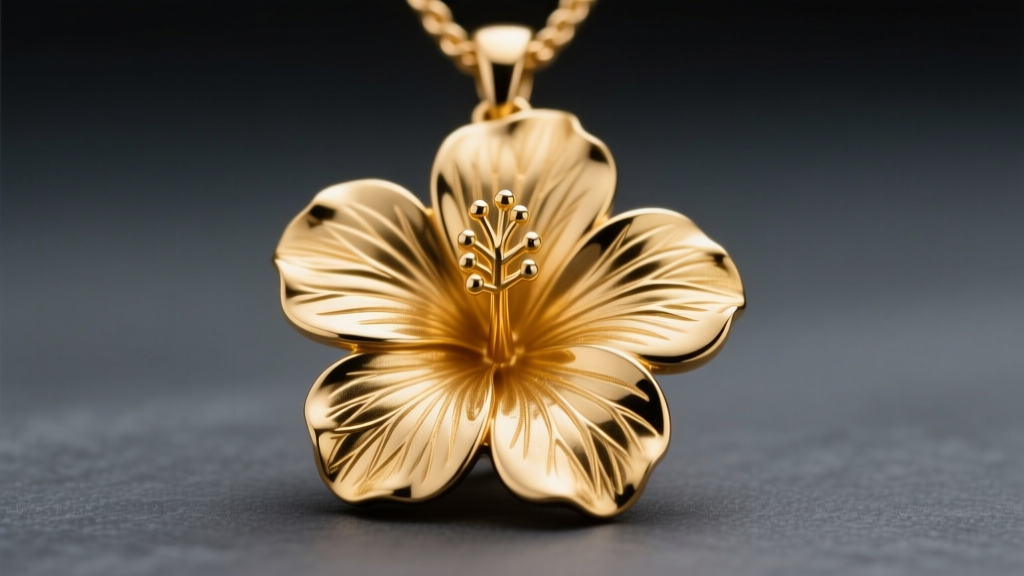
Conversely, luxury goldsmiths employ the ancient lost-wax casting technique. An artisan first carves a precise, three-dimensional wax model of the hibiscus, capturing the microscopic veins of the petals and the textured, pollen-dusted stamen. This wax model is encased in a plaster investment, heated to melt away the wax, and then injected with molten gold. This method allows for deep undercuts, organic curves, and a sculptural volume that catches light dynamically from every angle. When shopping for a premium gold hibiscus necklace, always inspect the reverse side of the pendant; a true lost-wax cast will feature a deeply contoured, domed back that mirrors the natural cupping of a real flower, whereas a stamped piece will be completely flat or feature a cheap, hollowed-out honeycomb backing.
Chain Pairings and Layering Frameworks
A common failure point in botanical jewelry is the mismatch between a heavy, three-dimensional pendant and an inadequate chain. An 8-gram 18k gold hibiscus pendant generates significant dynamic tension as it swings against the collarbone. Pairing it with a delicate 0.9mm cable chain is a structural error that will inevitably lead to chain stretching, kinking, or snapping.
For optimal support and aesthetic balance, adhere to these chain pairing frameworks:
- The 2.0mm Rope Chain: The twisted, braided links of a rope chain offer exceptional tensile strength and a highly reflective surface that complements the organic texture of the hibiscus without competing with it.
- The 1.5mm Box Chain: Ideal for a more modern, geometric contrast. The square, interlocking links provide a rigid, kink-resistant foundation that allows the floral pendant to lay perfectly flat against the sternum.
- Avoid Herringbone and Snake Chains: These fluid, continuous-surface chains lack structural memory. The concentrated weight of a 3D hibiscus pendant will cause them to bend and permanently kink within weeks of daily wear.
When layering, the gold hibiscus necklace should act as the anchor piece. Position it at the 18-inch princess length, and pair it with a 16-inch choker featuring a simple, bezel-set diamond solitaire or a single, lustrous South Sea pearl. This creates a sophisticated tension between raw botanical maximalism and refined, understated elegance.
Occasion Styling: Neckline Matching and Wearability
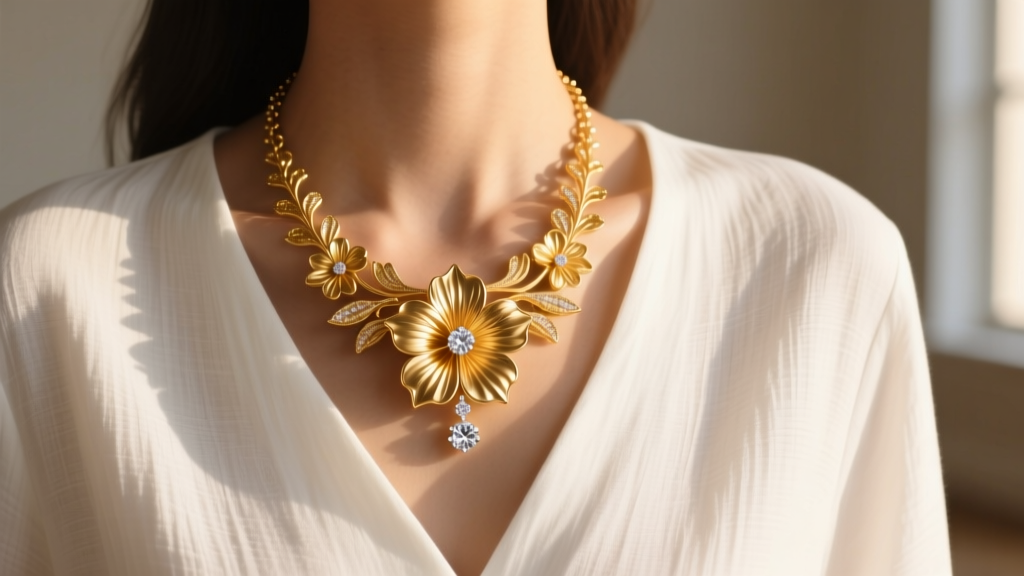
The sculptural volume of a gold hibiscus necklace demands strategic neckline pairing to ensure the piece remains the focal point rather than getting lost in fabric folds. For deep V-necklines and plunge-front resort dresses, an 18-inch to 20-inch chain allows the pendant to rest precisely in the negative space of the décolletage, framing the face and drawing the eye downward.
For off-the-shoulder or boat-neck silhouettes, shorten the chain to 16 inches. This creates a striking, choker-like effect where the gold hibiscus rests high on the collarbone, providing a bold contrast against bare skin. In professional or office environments, the botanical trend can be subtly integrated by wearing a smaller, 15mm 14k gold hibiscus pendant on a 20-inch matinee chain, allowing it to peek out modestly from beneath an unbuttoned silk blouse or a structured blazer.
"The true mastery of the 2026 botanical jewelry trend lies not in the sheer size of the floral motif, but in the anatomical precision of the casting and the rich, intentional warmth of the gold alloy. A well-crafted hibiscus is less of an accessory and more of a wearable artifact."
Ultimately, investing in a high-quality gold hibiscus necklace is an embrace of nature's fleeting beauty, preserved through masterful metallurgy. By prioritizing lost-wax casting, appropriate karat alloys, and structurally sound chain pairings, you ensure that your botanical statement piece remains a resilient, breathtaking staple in your fine jewelry collection for decades to come.


