How to Choose a Gold Jewellery Design Necklace: A Beginner Guide
Master the art of selecting a gold jewellery design necklace. Learn about karats, chain weaves, clasps, and styling tips in our beginner guide.

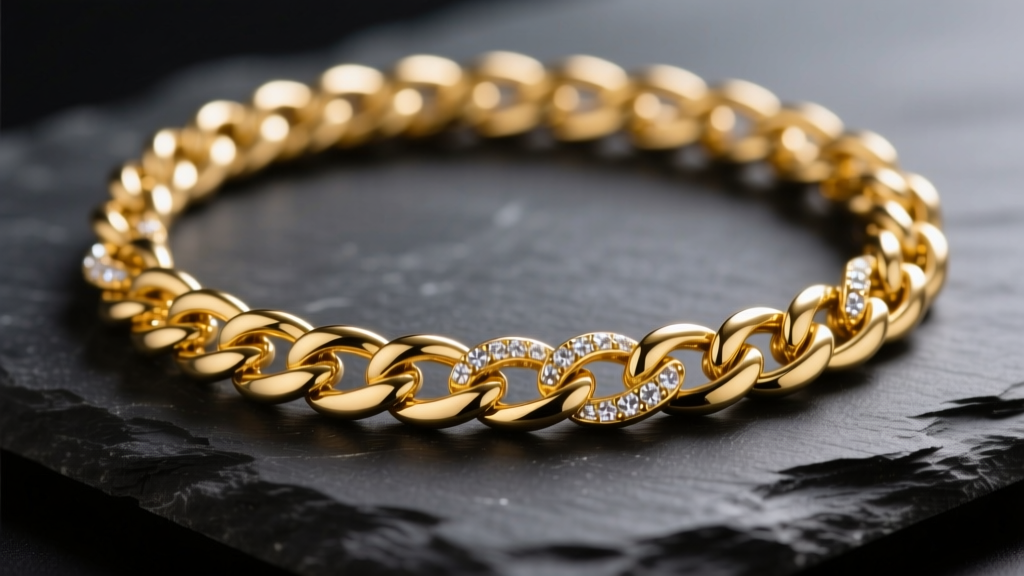
The Anatomy of a Gold Jewellery Design Necklace
Stepping into the world of fine jewelry can feel overwhelming, especially when navigating the vast array of metal purities, chain architectures, and clasp mechanisms. When evaluating a gold jewellery design necklace, beginners often focus solely on the pendant or the overall aesthetic, overlooking the structural engineering that dictates the piece's longevity. A beautiful necklace is only as good as its weakest link—literally. This comprehensive explainer will decode the technical specifications of gold necklaces, empowering you to make informed, investment-grade purchasing decisions based on material science and structural durability rather than just visual appeal.
Demystifying Gold Purity: Karats and Alloy Science
Gold in its purest form (24 karat) is a dense, malleable metal with a distinct orange-yellow hue. However, its tensile strength is far too low for daily wear; a pure gold chain would stretch and snap under the weight of a modest pendant. To create durable jewelry, gold is alloyed with metals like copper, silver, zinc, and nickel. According to the Gemological Institute of America (GIA), the karat (k) system measures the proportion of pure gold in the alloy, with 24k representing 100% purity.
| Karat | Gold Purity | Common Alloy Mix | Durability & Failure Modes | Best Use Case |
|---|---|---|---|---|
| 10k | 41.7% | High copper/zinc | Extremely hard; prone to brittleness and snapping under sudden impact. | Budget-friendly, heavy-wear chains. |
| 14k | 58.5% | Balanced silver/copper | Excellent tensile strength; resists stretching and daily abrasion. | Everyday chains, charm bracelets. |
| 18k | 75.0% | Higher silver/palladium | Rich color but softer; prongs and thin links can bend over time. | Premium pendants, luxury statement pieces. |
| 22k | 91.6% | Trace copper/silver | Very soft; links will warp and stretch under heavy pendant weight. | Investment jewelry, cultural designs. |
For most buyers, 14k gold offers the optimal balance of rich color and structural integrity. If you are purchasing a white gold necklace, be aware that it is typically alloyed with nickel or palladium and plated with rhodium to achieve a bright, silvery finish. This rhodium plating will wear off over time, requiring periodic re-plating to maintain the illusion of pure white metal.
The Architecture of Chain Weaves and Tensile Strength
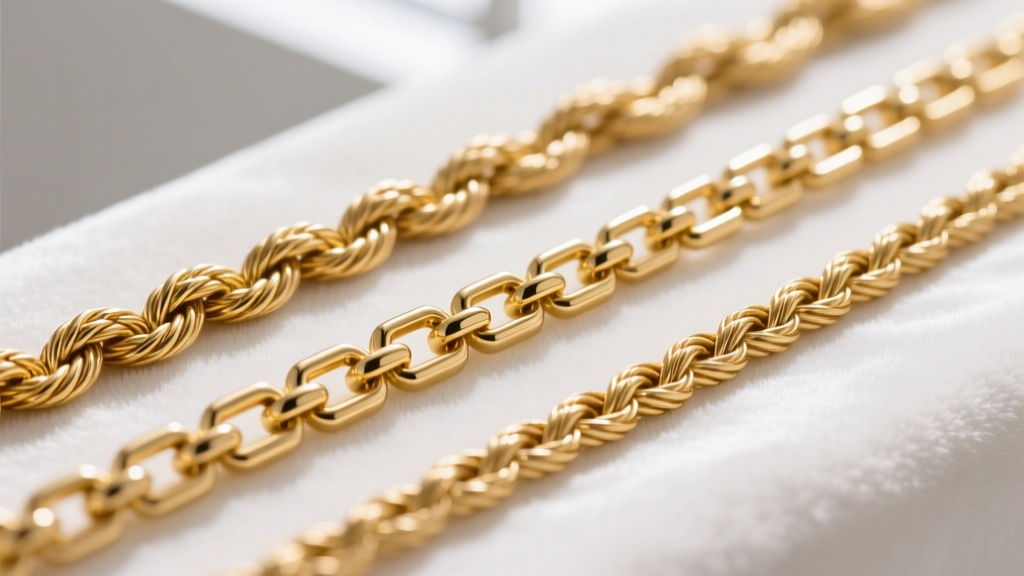
The weave of a chain dictates not only its visual texture but also its mechanical failure points. Understanding how different links interact is crucial for matching the chain to the weight of your pendant.
Cable and Curb Chains: The Workhorses
Cable chains feature uniform oval or round links connected in a simple, continuous pattern. They are highly durable because each link is individually soldered. If one link fails, the rest of the chain remains intact. Curb chains are similar but feature flattened links that lay flush against the skin. Both are excellent for holding heavy pendants due to their high tensile strength and low snag risk.
Rope Chains: Beauty with a Catch
Rope chains are created by twisting multiple links into a spiraling, rope-like pattern. While they offer exceptional light reflection and a luxurious drape, they are notorious for snagging on hair and textiles. More importantly, if a rope chain is pulled forcefully, the twisted links can compress and stretch, permanently altering the chain's length and structural integrity. Always remove rope chains before sleeping or exercising.
Box Chains: Geometric Elegance
Constructed from square, interlocking links, box chains provide a modern, geometric aesthetic. They are incredibly strong when pulled linearly. However, their primary failure mode is kinking. If a box chain is bent sharply past a 45-degree angle, the square links can crush inward. Once a box chain kinks, it is nearly impossible to repair without replacing the damaged section.
Pendant Bails and Clasp Mechanics
The clasp and bail (the connector between the chain and pendant) are the most frequent points of mechanical failure in any necklace. According to FTC Jewelry Guides, manufacturers must ensure findings meet specific durability standards, but cheap mass-produced jewelry often cuts corners here.
- Lobster Claw Clasps: The industry standard for secure fastening. They feature an internal spring mechanism and a solid cast or stamped body. Stamped lobster clasps are lighter and cheaper but can warp if subjected to lateral pressure. Cast lobster clasps are significantly more durable.
- Spring Ring Clasps: These small, circular clasps are commonly found on delicate, lightweight chains. They are prone to failure because the tiny internal spring frequently snaps, or the microscopic lever bends out of shape, rendering the clasp useless.
- Toggle Clasps: Consisting of a T-shaped bar that slips through a circular ring, toggles are highly secure for heavy, statement necklaces. The weight of the necklace itself keeps the bar pulled taut against the ring, preventing accidental unfastening.
When selecting a pendant, examine the bail. A standard loop bail is soldered to the pendant and allows the chain to slide through freely. For heavy stone pendants, look for a reinforced, thick-gauge bail to prevent the metal from wearing thin and snapping over years of friction against the chain.
Matching the Necklace to Your Neckline
Beyond the mechanics of the metal, a gold jewellery design necklace must complement your wardrobe. The interplay between the chain's length, the pendant's drop, and the garment's neckline creates visual harmony.
- V-Necklines: Pair with a Y-necklace or a pendant that mimics the V-shape, dropping exactly one inch above the fabric's vertex. A 16-to-18-inch chain works best here.
- Crew Necks: Opt for shorter, statement collars (14-16 inches) that sit entirely above the collarbone, or layer a long 24-inch opera-length chain over the fabric to elongate the torso.
- Scoop Necks: A curved, multi-strand necklace or a delicate choker that follows the natural curve of the collarbone fills the negative space beautifully without competing with the garment's hem.
- Off-the-Shoulder: Embrace longer, dramatic pendants (20-24 inches) that draw the eye vertically down the bare chest, avoiding chokers which can visually truncate the neck.
Red Flags When Buying Gold Online
The digital marketplace is flooded with misleading gold jewelry. Protect your investment by watching for these critical red flags:
- The Weight-to-Volume Discrepancy: Gold is exceptionally dense. A solid 18-inch, 3mm gold chain should weigh roughly 8 to 10 grams. If an online listing shows a visually thick chain weighing only 3 grams, it is either hollow (prone to crushing and impossible to repair) or gold-plated over a base metal like brass or tungsten.
- Missing Hallmarks: Authentic gold jewelry must be stamped with a purity mark (e.g., 14k, 585, 18k, 750) and ideally a maker's mark. If the listing photos do not show a clear, macro-level image of the clasp or end-tag hallmarks, proceed with extreme caution.
- Vague Terminology: Beware of terms like "gold tone," "gold vermeil," or "18k HGE" (Heavy Gold Electroplate). While vermeil (gold over sterling silver) is a legitimate and affordable option, it is not solid gold and will eventually wear through to the silver base.
By prioritizing material integrity, structural mechanics, and precise styling, you can confidently navigate the market and select a gold necklace that will endure as a timeless staple in your collection.


