Beginner's Guide to Displaying Necklaces Safely & Stylishly
Learn the best methods for displaying necklaces to prevent tangles and tarnish. Explore busts, trees, and shadow boxes in our beginner guide.

The Science of Tangles and Tarnish: Why Display Matters
For beginners, displaying necklaces often means tossing them into a drawer or hanging them on a random hook. However, improper storage and display can lead to two major issues: irreversible tangling and accelerated tarnishing. To properly curate your collection, you must understand the physical properties of your chains and the environmental factors that degrade metals.
Chain weaves dictate how a necklace behaves on a display. High-friction weaves like cable, rolo, and figaro chains feature open, interlocking links that easily catch on one another when piled or loosely draped. Conversely, flat weaves like herringbone and tubular weaves like snake chains possess a high 'memory' and will permanently kink if bent at sharp angles or hung on hooks with a narrow radius. Furthermore, sterling silver (925) reacts with hydrogen sulfide in the ambient air to form silver sulfide (tarnish). Open-air displays accelerate this process unless mitigated by specific environmental controls.
Top Display Methods Compared
Choosing the right display depends on your collection's size, the chain types you own, and your room's humidity. Below is a structured comparison of the most effective display methods for beginners.
| Display Type | Best For | Pros | Cons |
|---|---|---|---|
| Weighted Necklace Trees | Everyday wear, cable chains, pendants | High visibility, easy access, space-efficient | Exposes silver to airborne sulfur; can tip if top-heavy |
| Archival Velvet Busts | Heavy statement pieces, opera lengths, pearls | Supports weight evenly, prevents kinking, museum-grade | Expensive, takes up significant surface area |
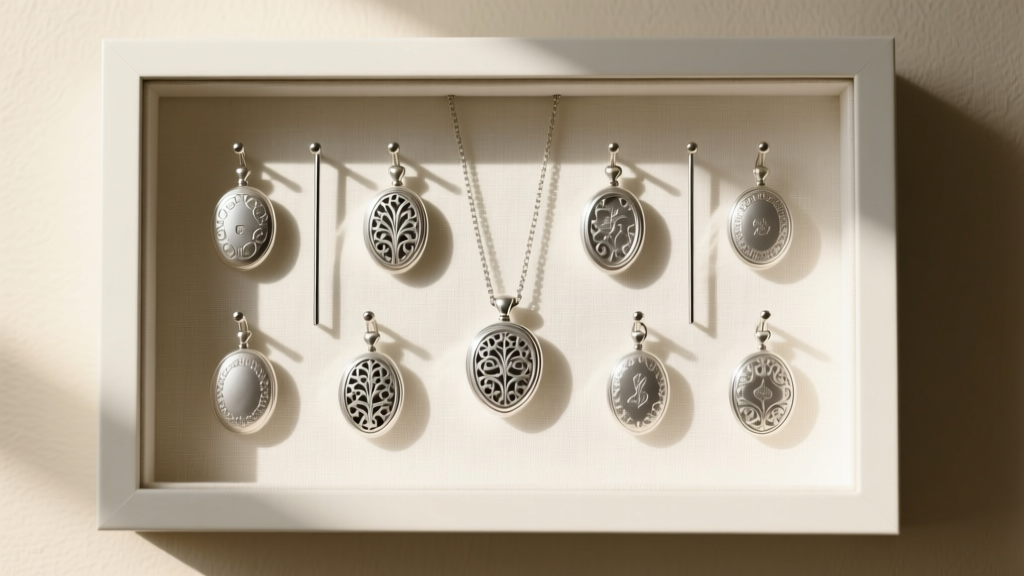
| Wall-Mounted Shadow Boxes | Delicate lockets, sentimental pieces, small collections | Saves surface space, protects from dust and pets | Requires drilling; limits access for daily swapping |
| Acrylic Drawer Inserts | Herringbone/snake chains, large collections | Keeps flat chains perfectly straight, hidden storage | Not a 'visual' display; requires dedicated drawer space |
Necklace Trees and Stands: The Open-Air Approach
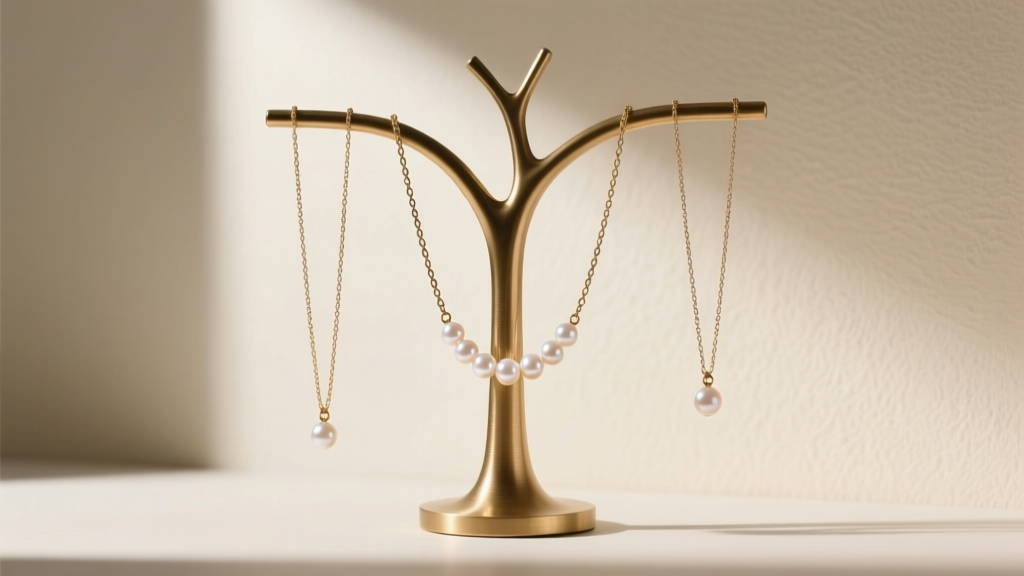
Necklace trees are the most popular entry-level display, but beginners often buy stands that are too short or too light. A standard princess-length necklace (18 inches) requires a minimum 10-inch drop from the hook to the base to prevent the clasp from resting on the stand and causing stress on the lower links. For matinee (20-24 inches) or opera lengths (28-36 inches), you need a stand with a 14-to-16-inch drop.
Expert Tip: Always check the base weight. A tree holding 15 heavy gold-plated or gemstone necklaces can easily exceed 3 pounds. Look for stands with weighted brass or marble bases to prevent catastrophic tipping.
Velvet Busts: The Archival Standard
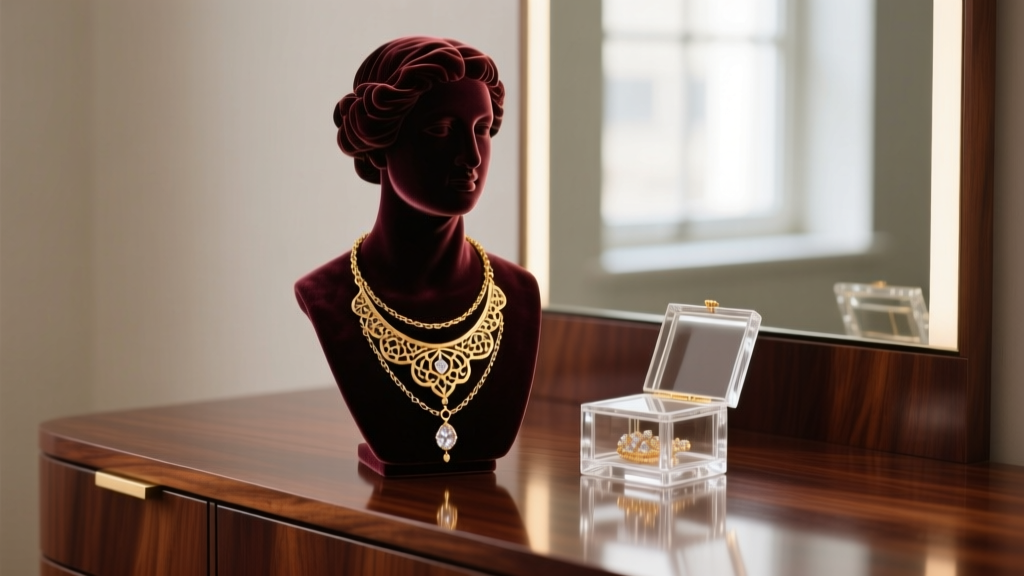
If you collect high-value or vintage pieces, velvet busts are mandatory. However, not all busts are created equal. Cheap displays use cardboard cores wrapped in synthetic velvet, which can off-gas volatile organic compounds (VOCs) that degrade silver and gold plating. Always seek busts made from archival-quality polyethylene foam or acid-free linen. These materials are chemically inert and will not trigger galvanic corrosion or tarnishing on your metals.
Material-Specific Display Rules
Different materials react uniquely to open-air displaying. According to GIA's pearl care guidelines, organic gemstones require specific moisture levels that standard display cases can disrupt.
- Sterling Silver: If displaying silver openly, place 3M Anti-Tarnish Strips (which use a copper-based polymer to absorb hydrogen sulfide) discreetly behind the display or in the nearby vicinity. Replace these strips every 6 months.
- Pearls and Coral: Never store or display pearls in airtight glass shadow boxes or sealed plastic environments. Pearls contain trace amounts of water and conchiolin (an organic protein). Sealed environments dry them out, leading to 'crazing' (micro-cracking) and peeling. Display them on open velvet busts where ambient room humidity (40-50%) can reach them.
- Gold and Platinum: Highly unreactive. These can be displayed on any open-air tree or wall mount without fear of tarnish, though dust accumulation will require periodic ultrasonic or mild soap cleaning.
Environmental Controls and Hardware
The hardware you use to hang your necklaces is just as critical as the display itself. According to National Park Service museum conservation guidelines, using reactive metals to hang artifacts causes localized corrosion.
Never use standard steel pushpins or cheap wire hooks to hang necklaces on fabric displays or shadow boxes. Standard steel contains iron, which will oxidize (rust) in humid conditions, permanently staining your display fabric and potentially transferring rust to your jewelry chains.
Instead, invest in 304 or 316L stainless steel pins, or solid brass hooks. These alloys resist oxidation and are safe for long-term contact with precious metals and delicate textiles. For shadow boxes, use stainless steel screw-eyes with a wide enough radius (at least 1/4 inch) so that snake and herringbone chains can drape naturally without folding.
Common Beginner Mistakes to Avoid
- Overcrowding the Tree: Hanging more than two necklaces per peg guarantees tangling. The microscopic friction between moving links will weave them together over time. Allocate one peg per chain.
- Ignoring Clasp Types: Lobster clasps are secure, but spring-ring clasps can easily catch on the links of neighboring necklaces if displayed too closely. Keep spring-ring chains separated.
- Direct Sunlight Exposure: Displaying jewelry on a vanity directly in front of a south-facing window exposes gemstones (like amethyst, kunzite, and topaz) to UV radiation, which can permanently bleach or alter their color over time. Position displays in shaded areas or use UV-filtering window films.
Mastering the art of displaying necklaces elevates your daily dressing routine while preserving the structural integrity and finish of your collection. By matching the display method to the chain weave and respecting the environmental needs of your specific metals and gemstones, you ensure your pieces remain pristine and ready to wear. For more foundational care tips, refer to comprehensive resources like Blue Nile's jewelry care education center to keep your collection shining for decades.


