Key Necklace Gold Trends: 2026 Styling & Layering Guide
Discover the 2026 key necklace gold trend. Learn how to choose karats, layer lengths, and style vintage or minimalist gold key pendants for any neckline.

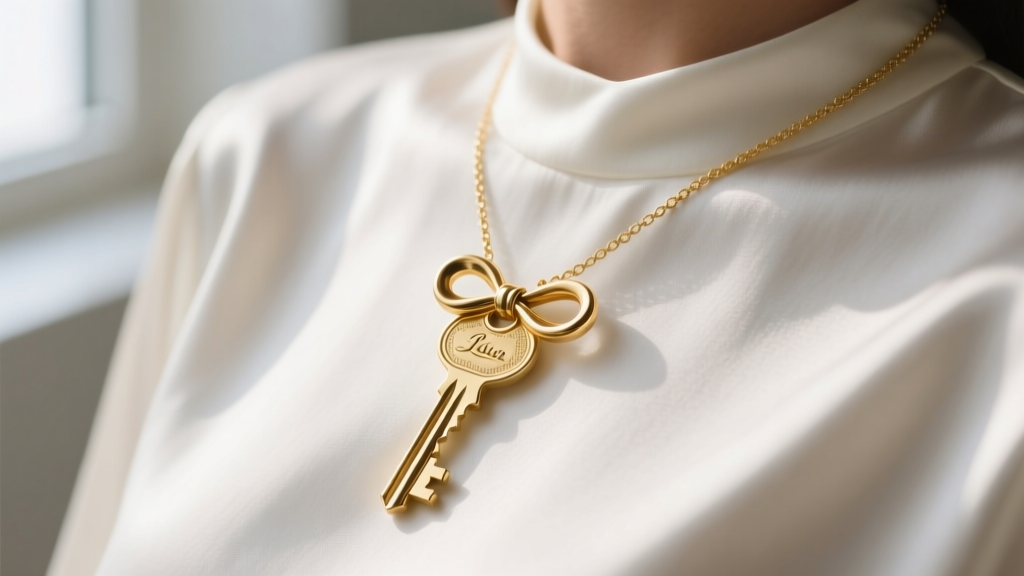
The 2026 Evolution: From Novelty to Architectural Staple
The gold key necklace has entirely shed its early-2010s novelty reputation. In 2026, the motif has been reclaimed by high jewelry houses and independent artisans alike, transforming into a symbol of architectural elegance and quiet luxury. No longer confined to bulky, rhinestone-encrusted padlocks or oversized novelty charms, today's key necklace gold designs lean heavily into either hyper-minimalist geometric lines or meticulously researched Art Deco and Victorian skeleton revivals.
According to trend forecasts from WGSN, the modern consumer is gravitating toward 'narrative jewelry'—pieces that hold symbolic weight (keys representing autonomy, new beginnings, or guarded secrets) without sacrificing everyday wearability. The 2026 silhouette favors elongated, slender key shafts with simplified, abstract bows (the top loop of the key) and subtle, geometric bitting (the teeth of the key). This refined approach allows the pendant to act as a sophisticated focal point rather than a costume accessory.
Metallurgy and Karat Selection: What to Buy
When investing in a solid gold key pendant, understanding the metallurgy is critical. Because keys feature intricate, protruding details (especially the bitting), they are prone to bending or snapping if cast in overly soft alloys. The Gemological Institute of America (GIA) notes that pure 24k gold is far too malleable for detailed pendants. Therefore, alloy selection dictates both the color and the structural integrity of your piece.
| Karat | Gold Purity | Durability (Vickers Hardness) | Best For | Avg. Price Range (3g-5g Pendant) |
|---|---|---|---|---|
| 10k Gold | 41.7% | High (130-150 HV) | Intricate skeleton keys, daily wear | $150 - $250 |
| 14k Gold | 58.3% | Medium-High (110-130 HV) | Minimalist keys, balanced color/strength | $250 - $450 |
| 18k Gold | 75.0% | Medium (80-100 HV) | Heirloom pieces, rich yellow hue | $450 - $800 |
| 22k Gold | 91.6% | Low (40-60 HV) | Thick, brutalist geometric keys only | $700 - $1,200+ |
Expert Tip: If you are purchasing a Victorian-style skeleton key with delicate filigree in the bow, insist on 10k or 14k gold. An 18k or 22k cast will easily warp if caught on a heavy knit sweater. Conversely, if you prefer a solid, blocky, brutalist key design, 18k gold provides a richer, deeper yellow tone that elevates the luxury feel of the piece.
Chain Mechanics: Gauges, Bails, and Weight Distribution
A common failure point in pendant styling is mismatching the chain gauge to the pendant's weight. A solid 14k gold key pendant typically weighs between 3.5 and 6 grams. Suspending this weight on a delicate 0.8mm cable chain will inevitably lead to chain stretch, kinking, or clasp failure.
The Ideal Chain Pairings
- 1.2mm to 1.5mm Box Chain: Offers excellent structural rigidity and a modern, reflective surface that complements geometric key designs. Ensure the pendant's bail (the loop connecting the key to the chain) has an inner diameter of at least 4mm to slide over the box links smoothly.
- 1.5mm Rope Chain: The twisted links provide a vintage texture that pairs beautifully with antique-revival skeleton keys. The rope pattern also hides minor scratches better than polished box chains.
- 1.0mm Paperclip Chain: For lighter, hollow-cast, or minimalist 2D key silhouettes (under 3 grams), a paperclip chain offers a trendy, elongated link structure that feels incredibly modern for 2026 layering.
Layering Frameworks: The Rule of Asymmetry
Layering a key necklace gold piece requires a strategic approach to avoid visual clutter. The most prominent styling methodology this year is the 'Asymmetrical Cascade.' Instead of stacking pendants of identical sizes, you anchor the key as the mid-point focal piece and surround it with contrasting textures.
'The key pendant is inherently directional and linear. To balance its vertical drop, pair it with horizontal or circular motifs—like a solid gold hoop or a bezel-set coin—at varying lengths to create a dynamic, non-uniform neckline.' — JCK Trend Report
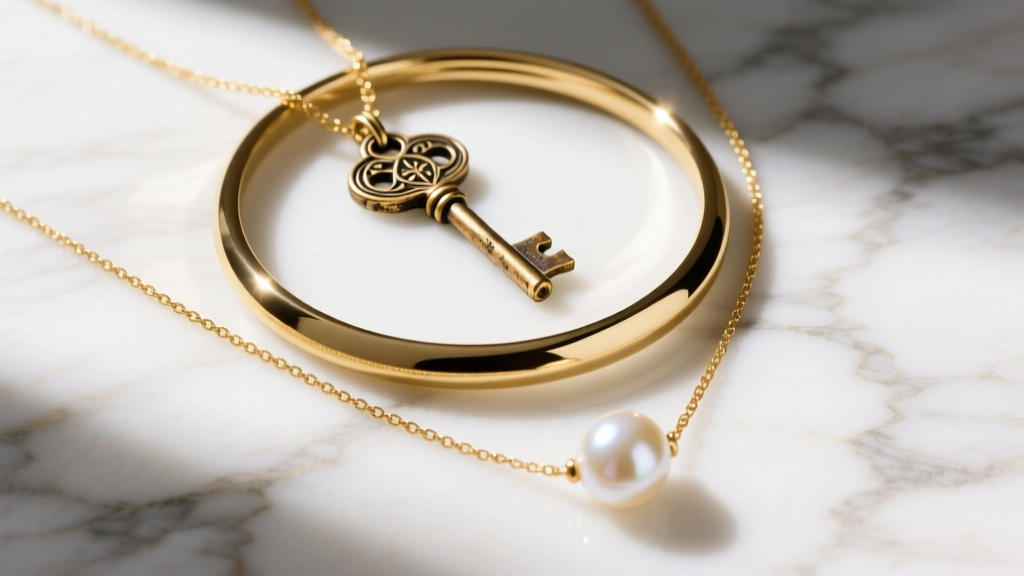
The 3-Piece Cascade Formula
- Base Layer (16 inches): A 1.0mm gold choker chain featuring a small, 5mm freshwater pearl or a tiny horizontal bar. This draws the eye to the collarbone.
- The Anchor (18 inches): Your primary 14k or 18k gold key pendant. Ensure the key itself is roughly 1.25 to 1.5 inches in length for optimal visibility.
- The Counterweight (20 to 22 inches): A longer, heavier chain featuring an asymmetrical element, such as a raw gemstone drop or an oversized, hammered gold disc. This elongates the torso and prevents the key from looking isolated.
Neckline Matching Guide
The structural nature of a key pendant means it interacts very specifically with garment necklines. Here is how to style your gold key necklace based on your wardrobe:
- Deep V-Necks & Wrap Dresses: Opt for an 18-inch or 20-inch chain. The vertical line of the key pendant should perfectly bisect the V of the neckline, creating a continuous, elongating visual line down the sternum.
- Crew Necks & T-Shirts: Wear the key as a standalone piece on a 16-inch chain, resting just above the fabric line. This creates a deliberate contrast between casual cotton and refined gold.
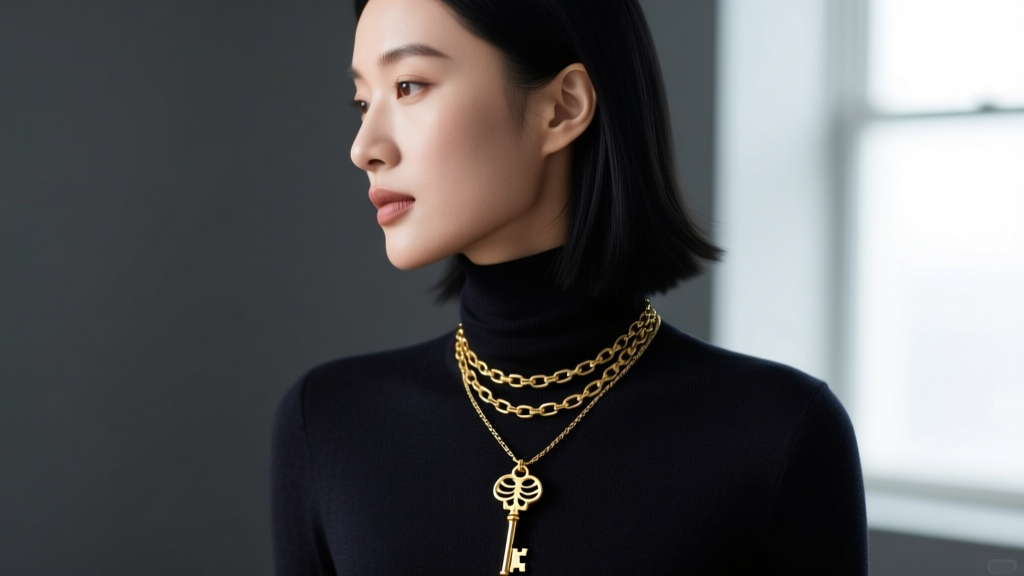
- Turtlenecks & Mock Necks: This is where layering shines. Use a 20-inch rope chain with a heavier, vintage-style skeleton key worn over the fabric. The dark, solid backdrop of a black or navy turtleneck makes the gold alloy's reflective properties pop dramatically.
- Off-the-Shoulder & Boat Necks: Avoid long chains that will tangle in the horizontal fabric lines. Instead, use a 14-inch choker-length key necklace with a small, minimalist horizontal key motif to accentuate the exposed collarbones without overwhelming the shoulder line.
Final Thoughts on Heirloom Potential
As the market shifts away from gold vermeil and hollow-cast fast fashion, a solid gold key necklace stands out as a permanent fixture in a curated jewelry wardrobe. By prioritizing the correct karat weight for your specific design preference and paying close attention to chain gauge mechanics, you ensure that your piece not only aligns with the sophisticated 2026 aesthetic but remains structurally sound for decades of daily wear.


