How to Style and Restore a Zelda Wind Waker Skull Necklace
Style, size, and restore your Zelda Wind Waker skull necklace. Expert tips on chain pairing, antiqued silver care, and preventing skin discoloration.

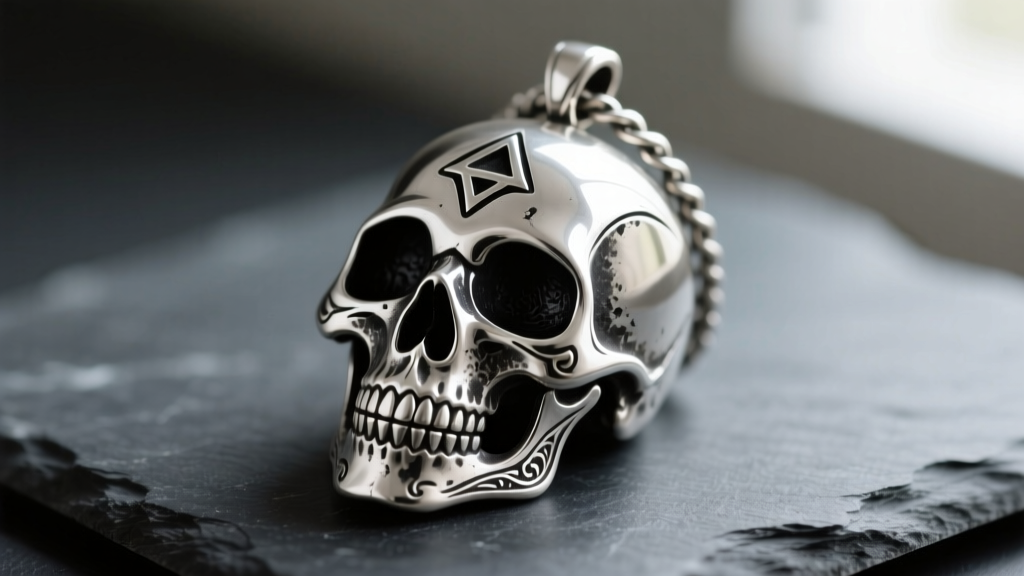
The Anatomy of the Wind Waker Skull Pendant
Since its original release, the Helmaroc King motif has remained one of the most iconic symbols in Nintendo history. As of 2026, the Zelda Wind Waker skull necklace has transcended mere cosplay, becoming a staple in alternative streetwear and gaming-inspired fashion. However, wearing a chunky, intricately detailed pendant requires specific styling and maintenance knowledge. Whether you own an official mass-produced zinc-alloy piece or a custom-cast .925 sterling silver artisan replica, understanding the metallurgy and structural demands of this specific pendant is crucial for longevity.
The typical Wind Waker skull pendant measures between 35mm and 45mm in height, featuring deep, cel-shaded-style recesses meant to mimic the game's distinct art style. Because of this three-dimensional topography, the pendant is inherently front-heavy. This weight distribution dictates everything from the chain gauge you select to the way it rests against various necklines.
Step 1: Selecting the Correct Chain Gauge and Style
The most common failure point for gaming jewelry is the chain. The bail (the loop at the top of the skull) on a standard Wind Waker pendant usually has an inner diameter of 5mm to 7mm. You must select a chain that slides through this bail freely but is thick enough to support the pendant's weight without kinking or snapping.
| Chain Style | Recommended Gauge | Weight Capacity | Verdict for Skull Pendant |
|---|---|---|---|
| Wheat Chain | 2.5mm - 3.5mm | High (Up to 60g) | Best Overall. The woven pattern prevents kinking and complements the rustic skull aesthetic. |
| Rope Chain | 3.0mm - 4.0mm | Very High (Up to 80g) | Excellent. Highly durable, but ensure the bail is large enough to accommodate the 3D twist. |
| Box Chain | 2.0mm - 3.0mm | Medium (Up to 35g) | Fair. Prone to kinking if the heavy skull swings too far and bends the square links. |
| Snake Chain | 3.0mm+ | Low (Under 20g) | Avoid. The heavy skull will permanently bend and crease the smooth, tubular links. |
For a pendant weighing 25g to 45g, a 3mm sterling silver or stainless steel wheat chain is the gold standard. It offers the tensile strength required to hold the skull securely while providing a textured backdrop that does not compete with the pendant's intricate horns and jawline.
Step 2: Sizing for Necklines and Streetwear
Because the Zelda Wind Waker skull necklace features protruding elements (specifically the lower jaw and side horns), it is prone to flipping upside down if it sits too high on the chest. To keep the pendant anchored and facing forward, you must match the chain length to your wardrobe.
- 20-Inch Chain: Sits at the collarbone. Best for deep V-necks or open-button shirts. Avoid wearing this length under tight crew-neck t-shirts, as the skull will constantly flip and the horns may catch on the cotton fabric.
- 22-Inch Chain: Sits just above the sternum. This is the most versatile length for everyday wear, allowing the skull to rest flat against the chest wall, utilizing gravity to keep the bail aligned.
- 24-Inch Chain: Sits on the mid-sternum. The absolute best choice for layering over hoodies, heavy flannel, or streetwear outerwear. The extra length ensures the pendant hangs completely free of collar seams, preventing friction and flipping.

Step 3: Preserving the Cel-Shaded Antiqued Finish
The visual appeal of the Wind Waker skull relies heavily on contrast. The recessed areas (eye sockets, nasal cavity, and jaw hinges) are intentionally blackened, while the raised surfaces are polished. In metallurgy, this is known as an antiqued or oxidized finish, typically achieved using liver of sulfur or commercial blackening solutions like Black Max. According to the Gemological Institute of America (GIA), improper cleaning is the fastest way to ruin this intentional patina.
How to Clean Without Stripping the Oxidation
- Never use liquid silver dips or ultrasonic cleaners. These chemical baths will strip the black oxidation from the deep recesses, leaving you with a flat, washed-out grey skull that loses its cel-shaded depth.
- Use a treated polishing cloth. A Sunshine cloth or similar micro-abrasive cloth should only be used on the raised, high-friction areas of the skull (the forehead, the tips of the horns, and the jawbone).
- Use a soft brush for dust. To clean the eye sockets and teeth, use a dry, ultra-soft makeup brush or a clean, soft-bristled toothbrush to dislodge dead skin cells and lint without polishing away the dark patina.
For those who own raw brass or unsealed copper replicas, the metal will naturally tarnish over time. You can re-antique these pieces at home using a liver of sulfur solution, a technique heavily documented by Rio Grande Jewelry Supply, to restore that deep, shadowy contrast.
Step 4: Troubleshooting Base Metal Reactions and Green Skin
If your Zelda Wind Waker skull necklace is made from a base metal alloy (commonly a zinc, copper, and nickel blend found in official mall-kiosk merchandise), you may experience skin discoloration. The copper in the alloy reacts with the salts, acids, and sweat on your skin, creating copper chloride—commonly known as verdigris, which leaves a green or black smudge on your chest.
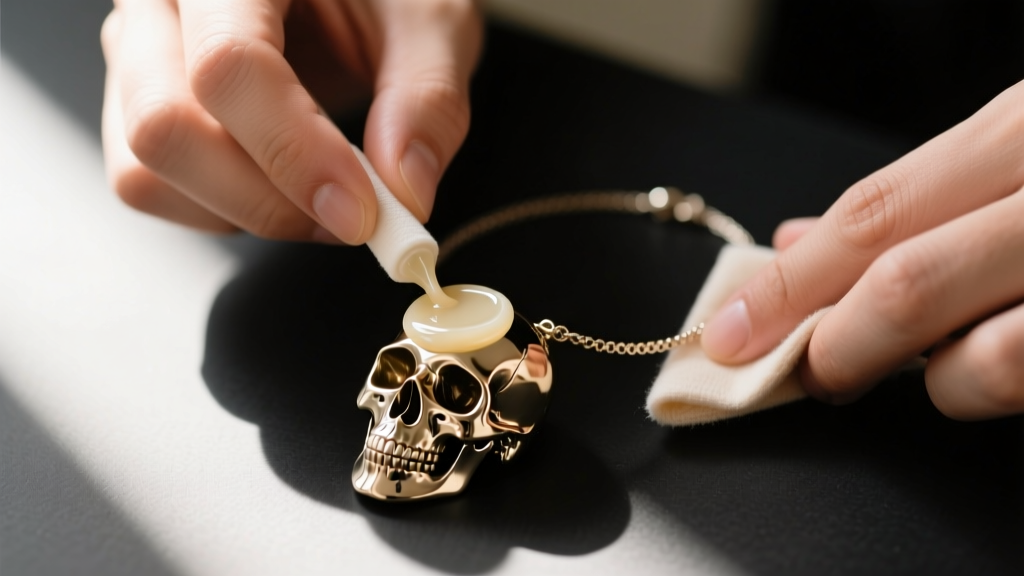
The Renaissance Wax Solution
To permanently solve this without ruining the pendant's look, you need to create an invisible barrier between the alloy and your skin. The museum-conservation standard is Renaissance Wax. This micro-crystalline wax is acid-free and dries completely clear.
- Ensure the back of the skull pendant is clean and dry.
- Apply a tiny dab of Renaissance Wax to a lint-free microfiber cloth.
- Rub a thin, even layer over the entire back surface of the pendant, including the inner curve of the jaw.
- Let it dry for 10 minutes, then gently buff it with a clean side of the cloth.
This coating will prevent the acidic sweat reaction and stop the green stains. You will need to reapply the wax every 3 to 4 months, depending on how often you wear the necklace and your skin's natural pH levels.
Long-Term Maintenance: Bail Wear and Jump Rings
Finally, inspect the bail of your necklace every six months. The constant friction of a heavy silver or steel chain rubbing against the inside of the pendant's bail acts like a slow-motion saw. Over a period of two to three years of daily wear, this friction can wear a groove entirely through the metal, resulting in the loss of the pendant.
Pro-Tip: If you wear your Wind Waker necklace daily, have a jeweler solder a hardened steel or sterling silver jump ring inside the bail. The chain will rub against the jump ring instead of the pendant itself. When the jump ring eventually wears thin, it can be replaced for a few dollars, saving your irreplaceable Helmaroc King skull from falling off and getting lost.


