Gold Necklace Allergy? Why Your Skin Reacts and How to Fix It
Experiencing a gold necklace allergy? Discover why your skin reacts to gold jewelry, which alloys cause rashes, and how to find truly hypoallergenic options.


The Hidden Truth Behind Your Gold Necklace Allergy
You bought a beautiful gold necklace, but after a few hours of wear, your skin is red, itchy, and irritated. If you are experiencing a gold necklace allergy, the first thing you need to know is that you are almost certainly not allergic to gold itself. Pure gold (24-karat) is a biologically inert metal, meaning it rarely reacts with human tissue. In fact, pure gold is so hypoallergenic that it is sometimes used in medical implants and dental work.
The true culprit behind your contact dermatitis is the alloy. Because pure gold is far too soft to be fashioned into durable jewelry chains or secure pendant clasps, jewelers must mix it with harder base metals. According to the American Academy of Dermatology, nickel is the most common cause of allergic contact dermatitis, affecting up to 20% of the population. When you sweat, the moisture acts as an electrolyte, leaching microscopic nickel ions from the alloy directly into your stratum corneum (the outermost layer of skin), triggering a Type IV hypersensitivity reaction.
Decoding Karats: Which Gold is Actually Safe?
To understand your allergy risk, you must understand karats. The karat system measures the purity of gold on a scale of 24. The lower the karat, the higher the percentage of allergenic base metals like nickel, copper, and zinc. Here is a precise breakdown of how karat weight impacts your skin:
| Karat | Gold Purity | Alloy Content | Allergy Risk | Best Use |
|---|---|---|---|---|
| 24k | 99.9% | 0.1% | Zero | Investment pieces (too soft for daily chains) |
| 22k | 91.6% | 8.4% | Very Low | High-end pendants, delicate wear |
| 18k | 75.0% | 25.0% | Low (if nickel-free) | Everyday luxury chains, engagement jewelry |
| 14k | 58.3% | 41.7% | Moderate to High | Standard durable chains, affordable pendants |
| 10k | 41.7% | 58.3% | Very High | Budget jewelry, high friction pieces |
If you have sensitive skin, 18k yellow gold is generally the safest choice for daily wear, provided the remaining 25% is alloyed with silver or palladium rather than nickel.
The White Gold Trap
White gold is the most frequent trigger for a gold necklace allergy. White gold does not exist in nature; it is created by alloying yellow gold with white metals. Historically, and still commonly today, jewelers use nickel to achieve a stark white color and increase tensile strength. To mask the slightly yellowish tint of the underlying alloy, white gold is plated with rhodium, a platinum-group metal.
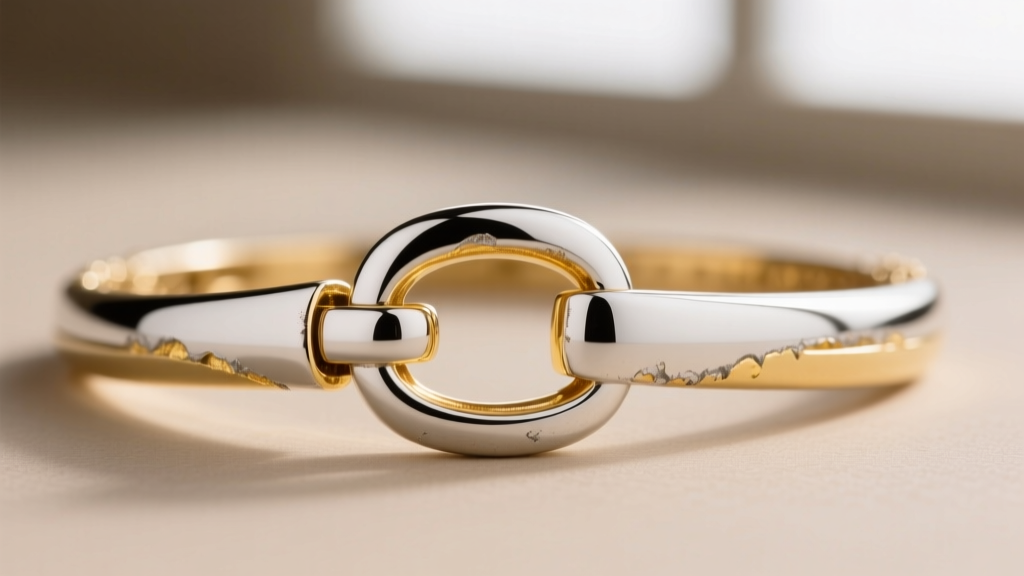
The problem? Rhodium plating on a necklace chain is typically only 0.75 to 1.0 microns thick. Due to the constant friction against your collarbone and the acidic nature of human sweat, this microscopic barrier wears away in 6 to 18 months. Once the rhodium breaches, your skin comes into direct contact with the nickel-rich alloy underneath, resulting in a sudden, confusing rash on a necklace you have worn safely for a year.
Green Skin vs. True Contact Dermatitis
It is vital to differentiate between an allergic reaction and simple metal oxidation. If your skin is turning green or black, but is not itchy, raised, or red, you are not experiencing an allergy.
This harmless discoloration is caused by copper oxidation. Many 14k and 10k gold alloys contain high amounts of copper to add warmth and strength. When copper reacts with the acids in your lotions, perfumes, or sweat, it creates copper chloride, which leaves a dark smudge on the skin. While unsightly, this is a chemical reaction on the surface of your skin, not an immune system response. A true gold necklace allergy, conversely, presents as localized eczema: redness, flaking, intense itching, and sometimes tiny fluid-filled blisters directly beneath the chain or clasp.
4 Actionable Fixes for Your Favorite Necklace
If your favorite piece is causing a reaction, you do not necessarily have to throw it away. Here are four professional and practical solutions to neutralize the allergy trigger:
- 1. Professional Rhodium Re-Plating: Take your white gold chain to a bench jeweler for a fresh rhodium dip. This typically costs between $40 and $80 depending on the chain's thickness and length. It will restore the hypoallergenic barrier for another 12 to 24 months. Ensure the jeweler polishes the piece first to remove any embedded skin oils or oxidation.
- 2. Nano-Ceramic Jewelry Coatings: Skip the outdated "clear nail polish" hack, which yellows, chips, and traps bacteria within days. Instead, invest in a nano-ceramic jewelry sealer (like Jewelers Secret). These polymer-based coatings bond to the metal at a molecular level, creating an invisible, sweat-proof barrier that lasts up to 6 months before requiring a simple reapplication.
- 3. Upgrade the Clasp: Often, the allergy is localized strictly to the back of the neck where the clasp rests. The spring-ring or lobster clasp contains internal steel or nickel springs. Have a jeweler swap the clasp for a solid 18k yellow gold or platinum S-hook or magnetic clasp, eliminating the primary point of friction and nickel exposure.
- 4. The Palladium Swap: If you are buying a new white gold pendant, specifically request "palladium white gold." Palladium is a hypoallergenic platinum-group metal that creates a naturally white alloy without the need for nickel or rhodium plating. It costs roughly 20% to 30% more than standard nickel-white gold but is a permanent, lifetime fix for sensitive skin.

How to Shop for Hypoallergenic Chains in the Future
When shopping for a new necklace, do not rely solely on the word "hypoallergenic," as it is an unregulated marketing term in many regions. Instead, look for specific metallurgical markers. According to the Gemological Institute of America (GIA), understanding the exact alloy composition is key to avoiding skin reactions.
If you are shopping in or importing from Europe, look for compliance with the EN 1811:2011 Nickel Directive. This strict regulation mandates that any jewelry intended for prolonged skin contact must not release more than 0.5 micrograms of nickel per square centimeter per week. Jewelry stamped with "Nickel-Free" or conforming to EU standards is vastly safer for allergy sufferers.
Expert Styling Tip: If you absolutely love the silvery look of white gold but suffer from severe nickel allergies, bypass gold entirely and opt for Platinum 950. Platinum chains are alloyed with 5% ruthenium or iridium—metals that are exceptionally gentle on the skin. While a platinum chain will cost roughly 40% more than its 14k white gold counterpart, it will never require re-plating and will never trigger contact dermatitis.
By understanding the hidden alloys in your jewelry and taking proactive steps to barrier or replace them, you can wear your favorite necklaces comfortably and confidently, free from the irritation of a gold necklace allergy.


