Gold Necklace Dragon Trends: 2026 Mythic Jewelry Guide
Discover the 2026 gold necklace dragon trend. Explore karat weights, casting techniques, chain pairings, and styling tips for mythic fine jewelry.

The Evolution of the Gold Necklace Dragon in 2026
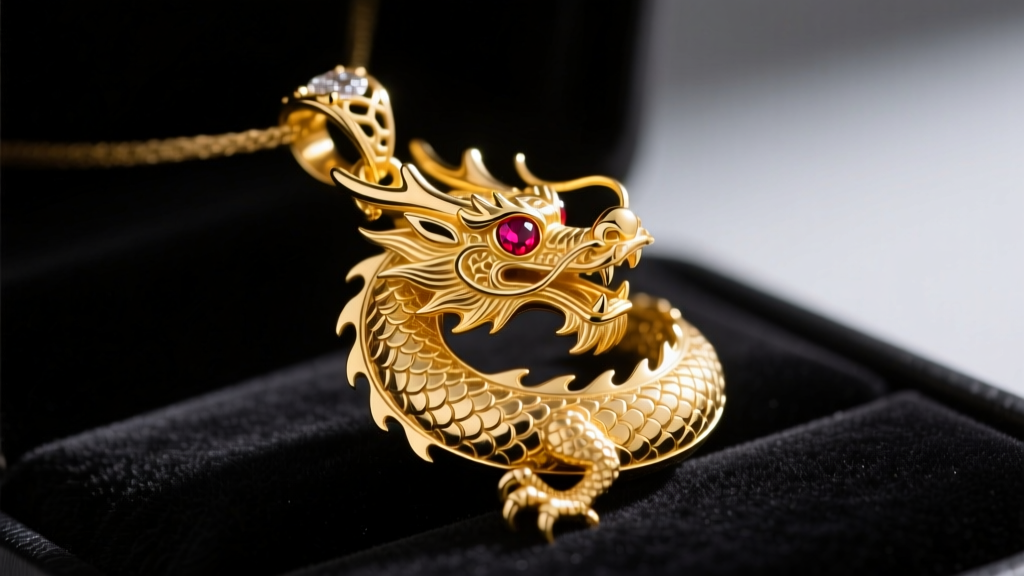
Once relegated to niche subcultures, fantasy conventions, and heavy metal aesthetics, the mythic serpent has undergone a radical transformation in fine jewelry. In 2026, the gold necklace dragon has emerged as a dominant motif in both haute joaillerie and contemporary artisan collections. This shift is not merely a fleeting fad; it represents a broader consumer desire for talismanic jewelry that conveys power, protection, and individuality. According to trend forecasts highlighted by the World Gold Council, narrative-driven and mythological motifs have seen a 34% year-over-year increase in bespoke commission requests.
Modern interpretations have shed the clunky, hollow-cast designs of the early 2000s. Today's gold necklace dragon is a masterclass in micro-sculpture, featuring articulated wings, micro-pavé diamond scales, and gemstone-set eyes. Whether you are a collector of statement pieces or looking for a subtle, stylized wyrm to layer over everyday streetwear, understanding the metallurgy, craftsmanship, and structural requirements of these pieces is essential before making an investment.
Anatomy of a Luxury Dragon Pendant
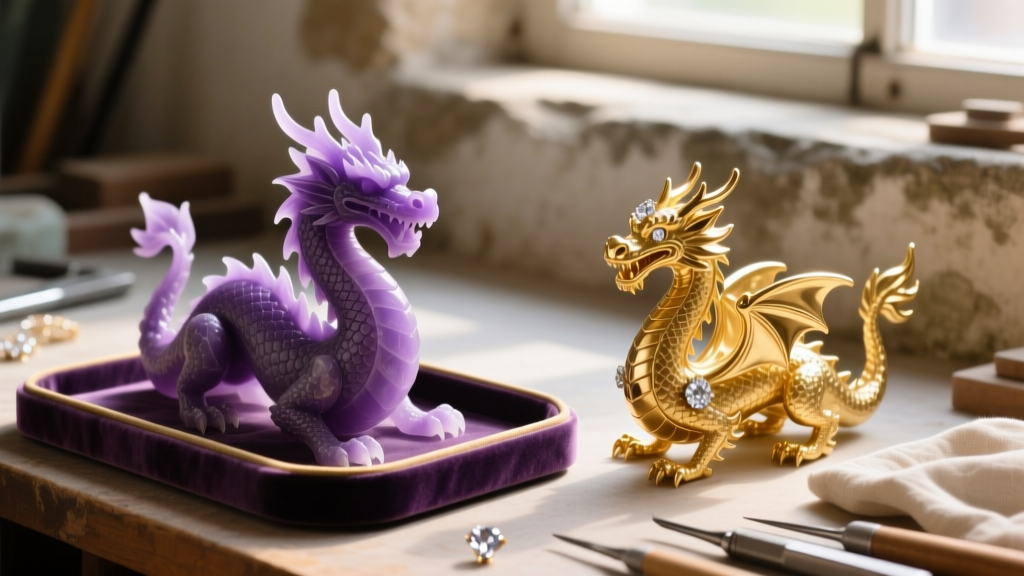
Creating a high-end dragon pendant requires advanced metallurgical and sculpting techniques. The most revered pieces in 2026 are born from a hybrid of digital precision and old-world hand-finishing. Artisans typically begin with a high-resolution 3D CAD model, printed in jeweler's resin at a 25-micron layer height to capture the microscopic texture of individual scales and the serrated edges of claws.
However, the true magic happens during the lost-wax casting process. Because dragon designs feature extreme variations in thickness—from the bulky, coiled body to the gossamer-thin membranes of the wings—jewelers must strategically place 'sprues' (the channels through which molten gold flows). Poor sprue placement results in porosity, particularly in the thin wing tips, leading to structural weaknesses. Master casters use centrifugal casting combined with a vacuum assist to ensure the dense gold alloy fills every microscopic crevice of the mold.
Gemstone Accents and Enamel Work
To elevate a gold necklace dragon from a simple metal casting to a fine jewelry masterpiece, designers incorporate strategic gemstone accents. The eyes are the focal point, most commonly set with cabochon rubies or tsavorite garnets. Rubies (Mohs hardness 9) offer unparalleled durability and a fiery red hue that contrasts beautifully with yellow or rose gold. For the scales, artisans are increasingly utilizing guilloché enamel or PVD (Physical Vapor Deposition) nano-coatings to introduce iridescent blacks, deep emeralds, or sapphire blues without compromising the metal's integrity.
Metallurgy: Choosing the Right Karat Weight
When selecting a gold necklace dragon, the karat weight dictates not only the color and price but also the structural viability of the design. A dragon with sharp, protruding claws and delicate wing bones requires a specific alloy hardness to prevent bending during daily wear. The Gemological Institute of America (GIA) notes that alloying metals like copper, silver, and zinc drastically alter the physical properties of gold.
| Karat Weight | Gold Purity | Vickers Hardness (Approx.) | Best Use Case for Dragon Pendants | Price Tier |
|---|---|---|---|---|
| 14k Gold | 58.5% | 140 - 160 HV | Intricate claws, sharp spikes, and everyday wear durability. | Accessible / Mid-Range |
| 18k Gold | 75.0% | 120 - 135 HV | Rich color for detailed scale work; ideal balance of luxury and strength. | Premium / Luxury |
| 22k Gold | 91.6% | 90 - 100 HV | Heritage styles, heavy coin-style dragons, and smooth bezel designs. | Investment / Haute |
For a highly detailed, three-dimensional dragon pendant with sharp talons and thin wings, 14k or 18k gold is mandatory. 22k gold, while prized for its deep, buttery yellow hue and investment value, is simply too soft to hold sharp edges and will quickly show abrasion marks on the high-relief scales if worn daily.
Chain Pairings: Structural Integrity Meets Aesthetics
A common failure point in mythic jewelry is pairing a heavy, solid-gold pendant with an inadequate chain. A well-crafted, solid 18k gold dragon pendant measuring 45mm in height can easily weigh between 18 and 35 grams. Suspending this weight requires a chain with high tensile strength and a secure clasp mechanism.
- Wheat Chains (4.0mm - 5.0mm): The woven, four-strand structure of a wheat chain offers exceptional tensile strength (often exceeding 150 lbs of pull force). Its continuous, braided pattern mimics the organic flow of reptilian scales, making it the top aesthetic and functional choice for dragon pendants.
- Rope Chains (4.5mm - 6.0mm): Rope chains reflect light brilliantly due to their twisted, faceted links. They provide a vintage, regal feel that complements antique-finished or rose-gold dragons. Ensure the links are soldered to prevent unraveling under the pendant's weight.
- Cuban Link Chains (5.0mm+): For a modern, streetwear-inspired look, a thick Cuban link chain offers a bold, geometric contrast to the organic curves of the dragon. However, the heavy links can sometimes compete visually with the pendant.
"Never rely on a standard spring-ring clasp for a pendant over 15 grams. Always upgrade to a locking lobster clasp or, preferably, a box clasp with a double figure-eight safety latch to prevent catastrophic loss."
2026 Styling Trends: Necklines and Layering
The way we style statement pendants has evolved. The gold necklace dragon is no longer just a standalone piece hidden beneath a t-shirt; it is a focal point of modern wardrobe architecture.
The Turtleneck Canvas
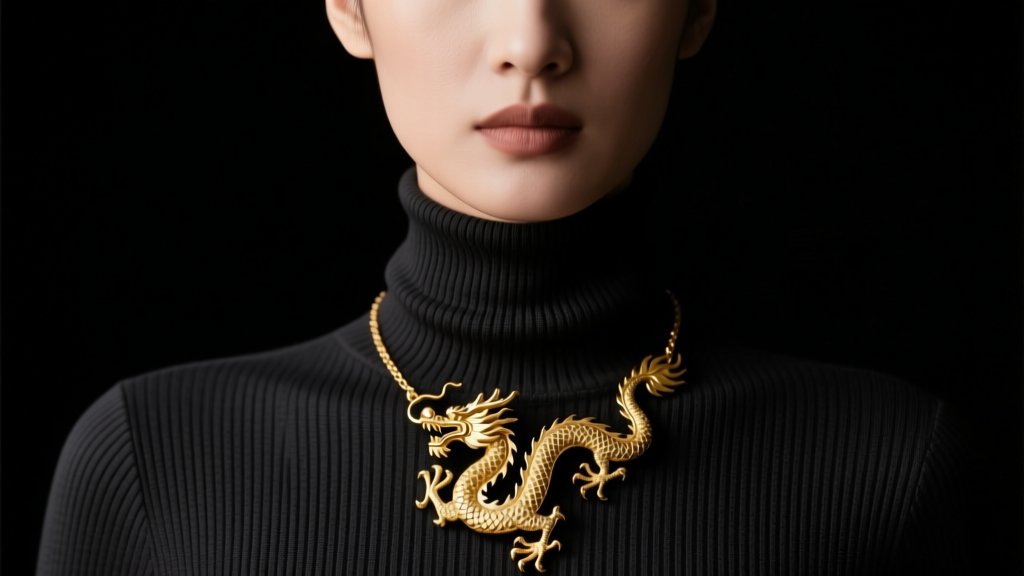
Dark, ribbed turtlenecks and mock-necks serve as the ultimate canvas for high-karat gold. The stark contrast between a black or charcoal wool blend and the reflective scales of an 18k yellow gold dragon creates a striking, cinematic silhouette. This styling technique draws the eye directly to the chest, allowing the pendant's micro-details to catch ambient light.
Asymmetrical Layering
For a more avant-garde approach, 2026 trends favor asymmetrical layering. Pair your dragon pendant on a 24-inch wheat chain with a simpler, 18-inch geometric bar necklace or a raw, uncut diamond solitaire. The key to successful layering is maintaining a minimum 4-inch gap between the chains to prevent tangling and to ensure the dragon remains the undisputed centerpiece of the arrangement.
Investment Tiers and Market Pricing
The market for dragon motif jewelry is highly stratified, catering to everyone from entry-level enthusiasts to high-net-worth collectors. Understanding these tiers helps set realistic expectations regarding craftsmanship and material quality.
1. Mass-Market & CAD-Cast ($400 - $1,200)
These pieces are typically produced in large batches using 14k gold. To keep costs down, manufacturers often use electroforming or hollow-casting techniques. While they offer the look of a large gold necklace dragon, they are lightweight, prone to denting, and lack the micro-detailing of artisan pieces. They are perfect for trendy, seasonal wear but hold little intrinsic value beyond their scrap gold weight.
2. Artisan & Boutique Solid Casts ($1,500 - $5,000)
This is the sweet spot for serious jewelry enthusiasts. These pendants are solid cast, hand-polished, and feature intricate scale texturing. Artisans often incorporate antique or oxidized finishes to highlight the recesses of the scales, creating a 3D effect. You can expect premium gemstone accents, such as ethically sourced sapphires or rubies, and custom-fitted, heavy-duty bails.
3. Haute Joaillerie & Custom Commissions ($10,000+)
At the apex of the market, master jewelers create fully articulated dragons with moving wings and hinged jaws. These pieces utilize complex pavé diamond settings across the scales, gradient sapphire accents, and mixed-metal techniques (such as combining platinum claws with 22k gold bodies). These are wearable sculptures, often requiring hundreds of hours of bench time to complete.
Final Thoughts on the Mythic Trend
The gold necklace dragon has firmly cemented its place in the 2026 fine jewelry landscape. It bridges the gap between ancient symbolism and modern luxury, offering a deeply personal talisman that refuses to compromise on high-end aesthetics. By prioritizing structural integrity through proper karat selection, investing in high-tensile chains, and understanding the nuances of lost-wax casting, you can acquire a piece that is not only visually breathtaking but engineered to become a lasting family heirloom.


